Over 80 community gardens sell produce in Shoprite and Checkers stores
Read more
Food For Mzansi
foodformzansi.co.za

Over 80 community gardens sell produce in Shoprite and Checkers stores

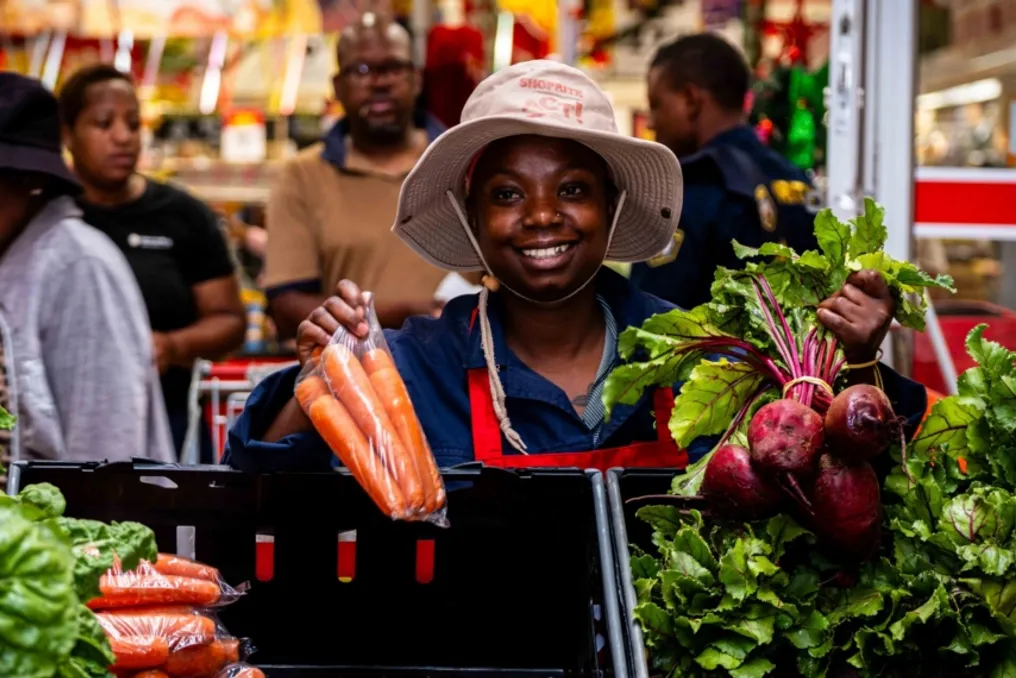
More than eighty community garden plots in South Africa were able to present their fresh produce directly to customers, gaining valuable retail experience and opening new opportunities to transform small-scale farming into a sustainable business.

Gardeners from South Africa, Botswana, and Namibia recently swapped their garden beds for trading halls as Shoprite and Checkers held their annual 'Market Day' initiative. This event gave over 80 community food gardens the chance to sell their freshly harvested spring crops directly to customers while learning about competition in a formal retail environment.

The product range varied from spinach and fresh greens to various seasonal vegetables, allowing local producers to bring their products closer to consumers and giving novice farmers insight into commercial trade.

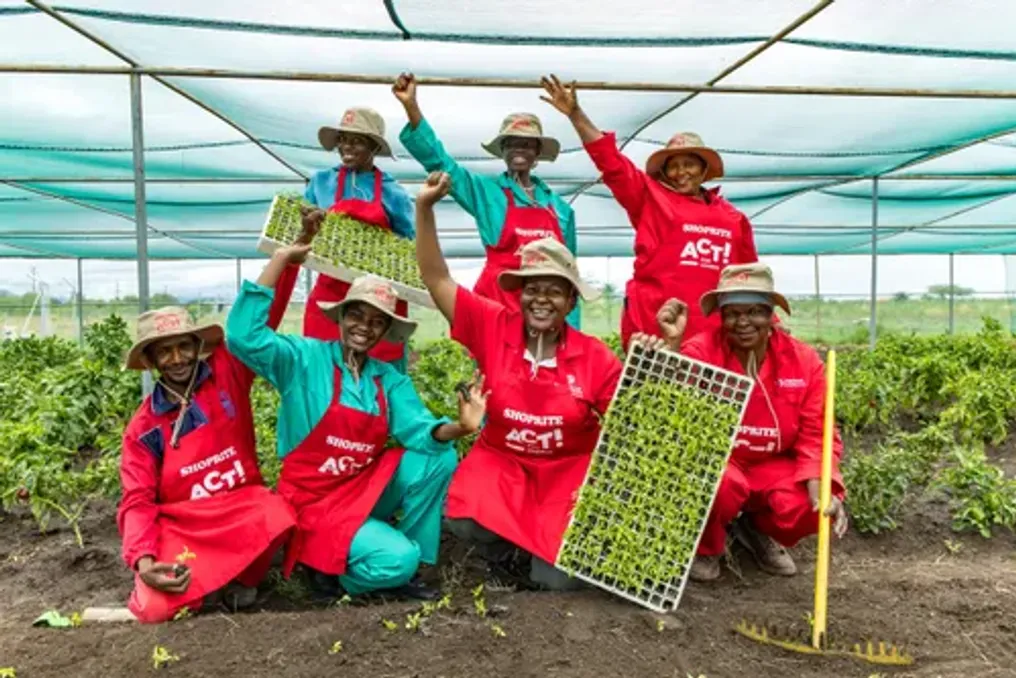
The participating gardens are part of more than 320 community food gardens supported by the Shoprite Group in South Africa under its food security programs.

While 'Market Day' provides an immediate source of income, its long-term value lies in helping gardeners develop the skills necessary to create sustainable agricultural enterprises. Participants gain practical experience in areas such as product presentation, pricing, customer interaction, communication, and record-keeping—all critical skills for farmers aiming to move beyond their local communities.

Sanjiv Ragubir, Director of Sustainability for the Shoprite Group, noted that this initiative goes far beyond selling fresh produce. He explained that bringing together producers and buyers creates an opportunity to build confidence among budding entrepreneurs while strengthening the connection between consumers and the people who grow their food.

For gardeners who often struggle to access established markets, this experience offers a valuable opportunity to understand the expectations of retail buyers.

One participating project was the Qholaqhwe Garden project near Putaditjhaba in the Free State. What started as an initiative to create jobs for youth in the village and supply vegetables to the kindergarten cafeteria has grown into something much larger. The project has expanded into agro-processing and agricultural training, demonstrating how community food gardens can become platforms for rural economic development.

Malebane Minah, Managing Director of the Qholaqhwe Garden project, stated that the growth of the garden changed her perception of what agriculture can achieve. For Minah, one of the greatest achievements of the project has been its ability to train others in practical agricultural skills.

Other participating projects included the We Can Women’s Development cooperative, which sold its produce at Shoprite Paledi in Polokwane, and the Vukasechaba Massive Fresh Produce primary cooperative, which traded at Checkers Columbine Square in Gauteng.

This initiative comes amid an alarming rise in household hunger levels in South Africa. According to the latest South African Food Security Index prepared by the Shoprite Group, 12% of households in South Africa faced hunger in 2025, the highest figure since 2010. This index, in its third year, analyzes food availability, household access to food, and dietary diversity.

The results underscore the importance of initiatives that help communities produce their own food and create income opportunities from surplus harvests. Through the Act for Change program, Shoprite supports community food gardens by providing training, seedlings, and infrastructure, helping producers improve production and strengthen long-term sustainability.

The retail chain is also running the second annual 'Act for Change Food Garden Competition,' offering collective support of 1 million rand, tailored to the needs of winning gardens. The competition recognizes community gardening projects that contribute to local nutrition, environmental sustainability, and community development. Applications close on Sunday, November 15, 2026, and can be submitted free of charge via the competition platform without internet access at actforchangefoodgardencompetition.datafree.co.

For Ragubir, the impact of these initiatives extends far beyond the harvested vegetables. He stated: 'Market Day is a manifestation of ethics, according to which where vegetables grow, hope also grows.' For the gardeners who brought their produce to supermarket shelves, this experience has also been an opportunity to develop business skills, connect with buyers, and take another step toward turning community food production into a permanent source of livelihood.
Similar stories

Jardins Circuit Show 'Entre Vales' Celebrates Historic Gardens and Floral Gastronomy in the Coffee Valley
Read more
g1.globo.com

Jardins Circuit Show 'Entre Vales' Celebrates Historic Gardens and Floral Gastronomy in the Coffee Valley

The Coffee Valley and the hilly region will host the first Gardens Circuit Show, named 'Entre Vales,' starting Saturday, October 31st, and the event will run until November 21st. This show will offer public visits to private gardens and selected historical areas in locations such as Engenheiro Paulo de Frontin (RJ), Vassouras (RJ), and Vale das Videiras (Petrópolis).

The circuit's proposal consists of 'talk-class' meetings, where topics such as botany, ecological methods, soil management, and floral gastronomy will be discussed. The project emphasizes spaces created and maintained by women, establishing a link between the Atlantic Forest biome and various cultural traditions. This initiative coincides with the Atlantic Flower Spring Festival.

Over four weekends, participants can explore properties ranging from 19th-century old farms to sites featuring contemporary art interventions and syntropic agriculture practices. At each stop, the hosts, landscape architects, and managers will guide the public through the designated routes.

Check out the full schedule

On the first weekend, October 31st, there will be talk-classes at Casa Ecotudo and Viveiro Muda Tudo (Vale das Videiras) on rooftop gardens, ecological techniques, and native plants, featuring environmentalist Bárbara Pellegrini and a tribute to landscape architect Terezinha Cunha. At 3 PM, at Fazenda das Palmas (Engenheiro Paulo de Frontin), environmentalist Luiza Braga will lead a meeting on organic gardens, syntropic agriculture, and country art.

On Sunday, November 1st, Uaná Etê Ecological Garden (Engenheiro Paulo de Frontin) will host a tour to the Music Labyrinth, accompanied by musician Cristina Braga and landscape architect Maritza de Orleans e Bragança.

The second weekend brings two events on November 7th. At Fazenda Cachoeira Grande (Vassouras), a historic and high-altitude tropical garden will be presented, addressing seasonality and sculptural trees near the lake, with Núbia Cafarelli. Later, at Fazenda Floresta (Vassouras), rural producer Yolanda Capute will discuss garden management on producing properties, fertilization, and drought strategies.

In the third weekend, on November 14th, Vale Zirá e Flor Gourmet (Vassouras) will host a meeting focused on solar orientation, well-being, and floral gastronomy, including a themed lunch and music by Cláudio Nucci, led by Ana Lúcia Furtado. The following Sunday, November 15th, Fazenda São Pedro da Juréa (Vale das Videiras) will present work on forest recovery of slopes and riparian forests using native Atlantic Forest species, with urban planner Teresa Serra.

Finally, on the fourth weekend, November 20th (holiday), Sítio Santa Maria – Casa de Campo Orleans e Bragança (Vassouras) will have its unprecedented opening of the sculpture garden, with Maritza de Orleans e Bragança discussing plant adaptation to natural resources and focal points. The circuit concludes on November 21st (Saturday), when Fazenda Velha de Santa Rita (Vassouras) will display Land Art installations integrating stones, water, and botany, functioning as an open-air gallery, with landscape architect Beatriz Calmon.

Five community garden projects in South Africa to receive R1 million in support
Read more
iol.co.za

Five community garden projects in South Africa to receive R1 million in support

Community garden projects across South Africa have been given the opportunity to expand their activities and strengthen their social impact with the launch of the second 'Act For Change Food Garden' competition on October 20, 2026. Five winning gardens will receive a total support package of one million rand.

The competition evaluates applications not only based on the volume of food produced but also on broader social influence, skills-sharing initiatives, operational models, and contribution to local food security. Winners will receive tailored assistance, which will be determined after a needs assessment and may include training, resources, and infrastructure upgrades to increase yields.

To participate, applicants must meet specific requirements: the applicant must be over 18 years old and represent a community garden project; private home gardens, private companies, and closed corporations are ineligible. Participants are required to provide a brief history of their garden, information on its role in the community, and photographs. The application deadline is November 15, 2026, and results will be announced before April 2027. Participation is free and conducted via an offline-capable online portal.

The first competition, which attracted nearly 600 applications, already yielded tangible results for last year's winners, who implemented the received support nationwide.

Examples of Support Implementation

In Mogoto village in the Limpopo province, the first prize winner, ACFS Khunadi Food Garden, used the support to install a shade net structure, which protected crops. Bertha Magoge, representing the garden, noted that the support improved infrastructure and food production, ultimately allowing them to reach more community members.

In the Eastern Cape, the second prize winner, Ngxanga School Garden in Libode, installed a new irrigation system, thereby expanding its planting area. Project Manager Neziswa Mlenzana reported that the upgrade allowed the garden to hire three local young people permanently and dedicate the environment to student participation.

Meanwhile, the third prize winner, P Agricultural Group in Soweto, uses this platform to change the urban perception of agriculture. Project Manager Fetole Raseropo observed that this initiative helps people view farming not just as rural activity, but as a viable opportunity for learning and earning.

Other recipients of support are implementing practical changes on the ground. The Hope Park Children’s Health Campus Garden in Gauteng launched a second site, while Plenty Green Africa in Tsakana revised its plan using new knowledge in soil health, pest control, and seed sowing.

In Gonubi, a food security project is restoring soil using wood chip mulch and vermicomposting, leading beneficiaries to now apply these permaculture methods at home.

Significance for Communities

Sanjiv Ragubir, Director of Sustainability for the competition sponsor, Shoprite Group, emphasized that community gardens contribute to solving food access and economic opportunity issues by making fresh produce affordable, creating chances for learning and earning, and uniting communities.

The retail group recently reached a significant milestone of 300 supported community gardens as of July 2026. Furthermore, gardens already participating in the program will have the opportunity to display and sell their fresh produce in stores across South Africa, Botswana, and Namibia during the October 27 fair.

Popular