Poisonous fish found on UK beach contains toxin thousands of times more dangerous than cyanide
Read more
Aaj Tak
www.aajtak.in

Poisonous fish found on UK beach contains toxin thousands of times more dangerous than cyanide

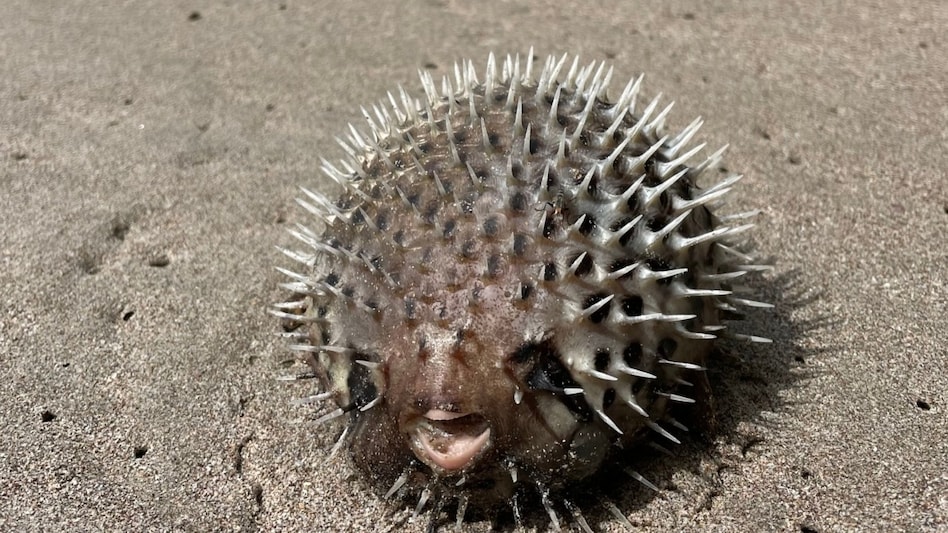
When walking along the sea, one should not touch suspicious fish, even if it is dead. A recent discovery of such a fish on a well-known beach in the UK has caused concern. This fish is a pufferfish, and its body contains a toxic substance that can be thousands of times more dangerous than cyanide. It is important to note that the poison remains deadly even after the fish dies.

According to The Sun, the incident occurred in the Dorset area, in Shstdandane, on Noll Beach. Local resident Owen Butty noticed a strange, about 17-inch object near the shore. Initially, he thought it was a small maritime marker or a plastic bag. However, upon getting closer, he realized it was a dead fish whose body was inflated like a balloon. Owen had previously seen pufferfish while diving abroad, so he assumed it was one.

To confirm, he photographed the fish and sent the images to the Dorset Wildlife Trust and a marine life expert. After inspection, the fish was identified as a pufferfish.

The most dangerous feature of the pufferfish is the poison called tetrodotoxin, contained in its body. This is an extremely potent neurotoxin that affects the body's nervous system. It can lead to muscle paralysis and, in severe cases, death due to respiratory problems.

The poison can be present in specific parts of the fish's body, such as the liver, ovaries, intestines, and skin. This is why touching or consuming it is extremely dangerous. If the pufferfish is not properly cleaned, the poison from its toxic organs can enter the edible meat, causing serious food poisoning. In some countries, the consumption of this fish is only permitted under strict rules and special preparation.

The danger associated with touching the pufferfish cannot be ignored. Its body may have small sharp spines. If these spines get into the skin and the poison enters the body, it can cause serious problems. Therefore, the safest way is to keep a distance from such fish if spotted on the shore. The key point is that the poison in the fish's body does not disappear after its death.

Pufferfish are usually found in warm seawater. Their natural habitats are the Indian, Pacific, and warm parts of the Atlantic Ocean. The discovery of such a fish on the cold coast of the UK is quite unusual. It is speculated that recent storms Austen and Boalo might have brought this fish from its usual range hundreds of miles away. However, the true reason for its appearance off the coast of the UK has not yet been established.

The name pufferfish is related to its unique defense mechanism. When the fish senses a threat from a predator, it fills its body with water or air, inflating like a balloon. This significantly increases its size, making it a difficult target for a predator to swallow. Once the body is inflated, it takes on a spherical shape, which is its most distinguishing feature.

Owen Butty, who spends a lot of time in the Dorset marine areas and is knowledgeable about local marine fauna, reported that he did not expect to see a pufferfish on the local beach. A representative from the Dorset Wildlife Trust also called it a rare sight for the marine areas of the UK. The organization advised people never to touch a pufferfish if they see it on the shore, but instead to report it to the relevant authorities.

Meanwhile, the National Trust, which owns Shstdand beach, stated that it had not received official notification of the fish's discovery. Overall, although the fish found on the shore may seem small and strange, the poison contained within it can be extremely dangerous. Therefore, curiosity that prompts one to approach or touch such a fish could result in serious consequences.
Similar stories

Tuna fishing: humanity has explored marine predators for 44 millennia
Read more
super.abril.com.br

Tuna fishing: humanity has explored marine predators for 44 millennia

Tuna is an extremely valued food globally, ranging from simple sandwiches to expensive sashimi cuts. Although it was historically an accessible source of canned protein, modern bluefin tuna reach millionaire values in auctions. Annually, millions of tons are caught, sustaining a global industry valued at approximately US$ 40 billion.

However, humanity's relationship with these fish is much older than imagined. Biologists and archaeologists have deeply investigated this bond, analyzing various materials such as skeletal remains of tuna at archaeological sites, rock art, fresco and vase paintings, in addition to historical records and ethnographic accounts of indigenous communities.

This research, conducted in collaboration with 18 international experts, allowed for an understanding of the time, place, and reasons behind the first tuna fishing activities, offering new perspectives on how past catches compare to current volumes.

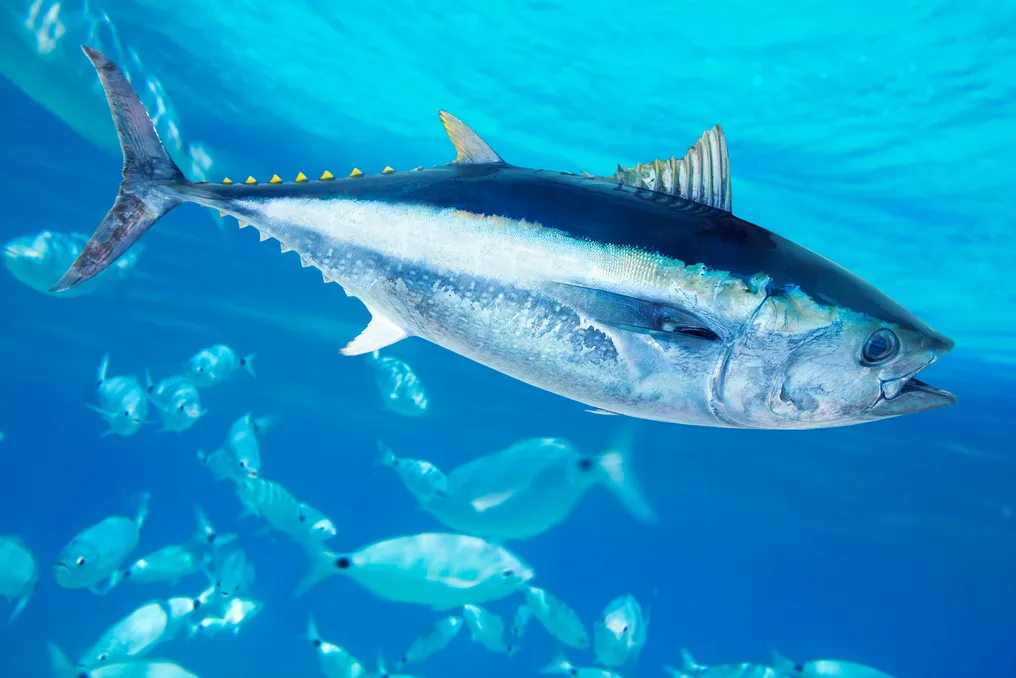
The term 'tuna' encompasses 15 species, with eight belonging to the genus *Thunnus*, and skipjack tuna (*Katsuwonus pelamis*) being the most commercially traded. These fish are large open-ocean predators, capable of exceeding 3 meters and living for over 40 years. The Pacific bluefin tuna, for example, can migrate 8,000 kilometers in the North Pacific in just a few months.

Ecologically, tuna is a top predator and an indicator of ocean health. However, most scientific studies focus on the last 75 years, comparing population health to 1950, raising questions about the older history of fishing before the last century.

The oldest evidence of tuna fishing, identified by skeletal remains that were likely skipjack tuna, dates back about 44,000 years and was found in Timor-Leste, Southeast Asia. This primitive practice is remarkable because most regions of the globe lack records of tuna fishing older than 10,000 years or from more recent periods.

In other areas, ancient fishermen in Japan and Korea caught tuna at least 7,000 years ago, establishing a culinary and large-scale capture tradition that continues to this day. In the Northeast Atlantic and the Mediterranean Sea, one of the world's oldest and most important fishing grounds exists, focused on Atlantic bluefin tuna.

Ancient tuna bones discovered at a Neanderthal site in Gibraltar, dating back about 26,000 years, suggest that Neanderthals might have consumed carrion. Later, between 9,000 and 11,000 years ago, thousands of tuna bones were deposited in a cave in Greece overlooking Bay of Kiladha. From about 8,000 years ago, the number of archaeological sites in Europe with tuna remains increases significantly.

These early fishermen employed various techniques, such as hooks and lines, harpoons, traps, or nets, often utilizing geographical features to guide fish close to the coast. The cultural importance of these fish is documented in ancient art and texts, with the ancient Greeks considered worthy of sacrifice to Poseidon.

3,000 years ago, the Mediterranean already had an established commercial fishing of Atlantic bluefin tuna, characterized by large-scale trade and the use of specialized nets and traps. During the 16th and 17th centuries, annual catches could reach tens of thousands of tons, facilitated by the predictable migration of the Atlantic bluefin tuna and coastal access.

For over 5,000 years, indigenous peoples of the Northwest Coast of North America, especially in the Nuu-chah-nulth territory, maintained a complex fishing of Pacific bluefin tuna. Ethnographic accounts describe how, during peaks of warm water in late summer, fishermen would navigate at night, using bioluminescent plankton as aid.

With terrestrial observers signaling, fishermen would light bonfires in canoes to attract the tuna, which were then attacked with spears. Bluefin tuna vertebrae have been found in 23 archaeological sites in this region. In Southern California, indigenous peoples also fished Pacific bluefin tuna, albacore tuna, yellowfin tuna, and skipjack tuna for 6,000 years, leaving skeletal traces.

Commercial and sport fishing only consolidated in Southern California in the 19th and 20th centuries, driven by the popularity of tuna during the World Wars. The industry developed around canning factories in Los Angeles and San Diego, benefiting from Japanese and Portuguese immigrant communities.

When comparing the quantity of tuna spines in archaeological sites with modern catches, it is clear that even the largest ancient fisheries, such as those in the Mediterranean, probably took only thousands of tons over millennia, an insignificant volume compared to the millions of tons caught today.

This contrast raises crucial questions about the consequences of rapid ocean exploitation and how to manage tuna populations sustainably. Although not all answers are simple, in certain regions, the combination of efficient enforcement, monitoring, and catch control has managed to stabilize stocks despite the intensity of fishing.

The long trajectory of tuna fishing demonstrates human capacity to innovate in locating, catching, and sharing this resource. This ability, when directed towards international cooperation and scientific management, can help maintain global tuna stocks at sustainable levels, even if they never return to pre-commercial abundance.

Decline in Marine Life Observed 16 Years After Gulf of Mexico Oil Spill
Read more
www.aajtak.in

Decline in Marine Life Observed 16 Years After Gulf of Mexico Oil Spill

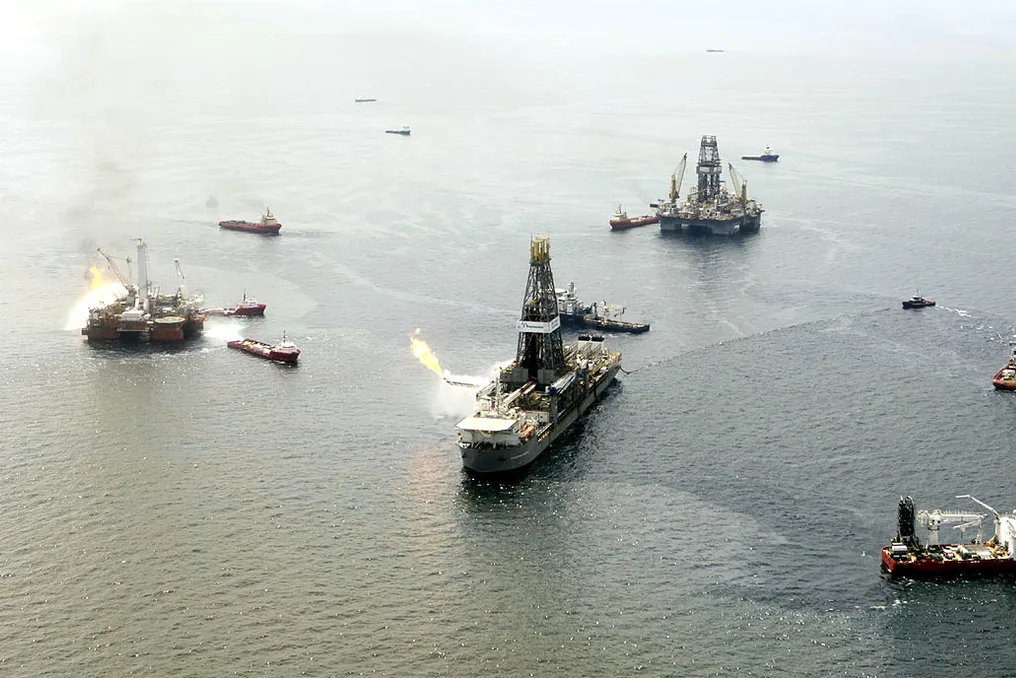
The consequences of the oil disaster that occurred in the Gulf of Mexico near America in 2010 continue to affect marine life sixteen years later. According to a new study, the fish population in the deep waters of the sea has decreased by 63.5 percent since the incident. Furthermore, the number of small organisms, such as shrimp and krill, has decreased by 62 percent, while the number of squid and octopuses has dropped by approximately 59.7 percent.

These species have not yet recovered their former numbers. This study was published in the scientific journal PNAS. After the accident, oil continued to flow from the well in the sea for about five months, damaging many organisms living in the ocean. Scientists analyzed long-term data to determine exactly how the spread of oil affected the marine animal population and why they have not been able to recover after so many years.

As a result of the explosion on the Deepwater Horizon drilling platform, related to oil extraction by BP, which occurred on April 20, 2010, 11 employees died. After this, oil continued to leak from the underwater well for about five months, during which time about 13.4 billion gallons of oil entered the sea.

Researchers studied an area of the Gulf of Mexico where various organisms live between the surface and the seabed, called the 'twilight zone,' where little sunlight penetrates. In 2011, scientists determined the number of marine inhabitants using nets at different depths and sonar. Approximately three and a half years later, they repeated the survey, finding a significant reduction in the marine animal population. The numbers of many species fell to one-third or one-quarter of the 2011 level.

Between 2011 and 2015, the fish population decreased by 63.5 percent, and small organisms like shrimp and krill by 62 percent. Meanwhile, the number of squid and octopuses decreased by approximately 59.7 percent, and the krill population decreased by almost 72 percent. The population of lanternfish remained at about one-third of the initial level. Since these small animals are food for larger fish and other marine creatures, their decline could cause feeding problems for other organisms.

According to scientists, the damage was caused not only by the crude oil itself but also by the chemicals used to clean it up. These chemicals promoted the breakdown of oil into small droplets, allowing organisms in the deep layers of the sea to come into contact with the oil. The research group also checked factors such as water temperature, oxygen levels, and food availability.

Despite the studies conducted, no definitive explanation has been found for such a sharp drop in animal numbers. Therefore, scientists believe that the oil leak is the main cause of this damage, although the study does not prove that it was the only factor contributing to the decline.

Animals living at different depths of the sea are interconnected: some rise from deep waters at night, while large predators and other fish descend in search of prey. The reduction in small organisms could lead to larger fish and other marine animals receiving less food, which will affect many inhabitants of the sea.

The results of this study show that the damage from oil pollution can persist in the sea for many years. Even 16 years after the accident, the marine animal population has not returned to its previous level. Scientists emphasize the importance of adhering to safety measures during oil extraction and the need to understand the harm caused to animals in deep-sea conditions before any extraction or mining operations begin.

Popular