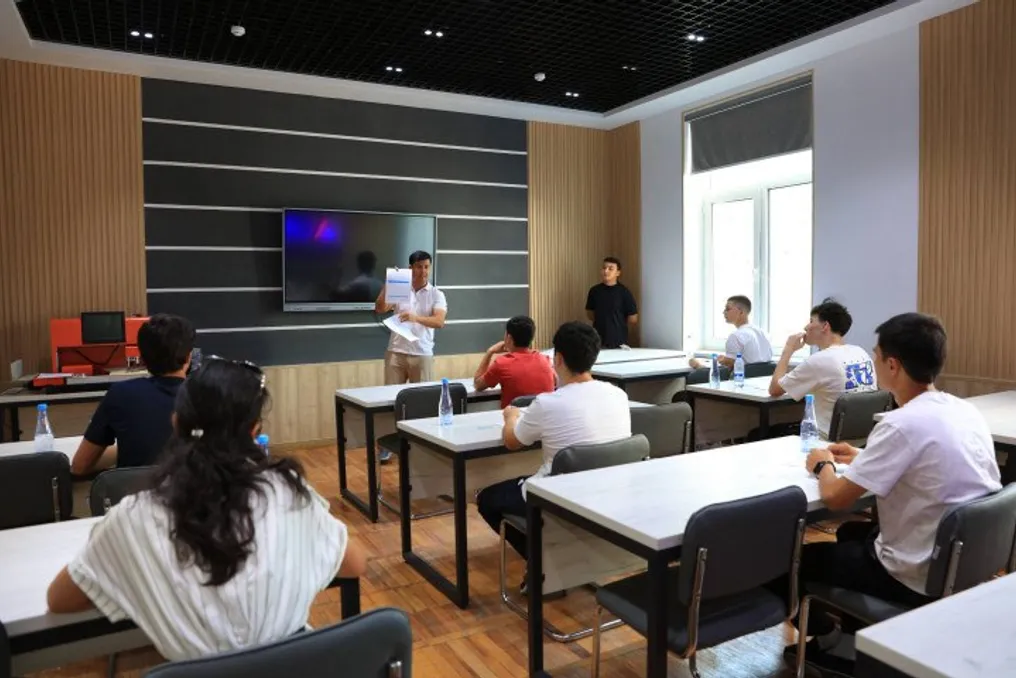
Fees for state accreditation of educational programs in Uzbekistan may be reduced by fourfold
Read more
Podrobno.uz [uz]
podrobno.uz

Fees for state accreditation of educational programs in Uzbekistan may be reduced by fourfold

Educational institutions in Uzbekistan now have the opportunity to pay for state accreditation significantly cheaper, provided that a number of established requirements are met. According to the innovation, instead of the full amount of the basic fee, only 25% can be paid.

This change applies to both comprehensive and special state accreditation. The Ministry of Justice has officially registered amendments to the regulations governing the amounts and procedure for calculating these fees for educational organizations.

The new rules stipulate that when an educational institution applies, the basic accreditation fee can be reduced to one-fourth of the initially established amount. This benefit is provided if the institution meets at least one of the five listed criteria.

Conditions for receiving reduced fees

The first condition is compliance with state assignments. Accreditation is required if it is necessary for implementing tasks outlined in the documents of the President of Uzbekistan, the Head of the Presidential Administration, or the Cabinet of Ministers.

The second condition relates to having international accreditation: if at least half of the active educational programs have already been accredited by organizations included in the registry recognized in Uzbekistan, this allows for a reduction in the scope of additional evaluation work.

The third option is conducting remote accreditation, which is possible for special state accreditation. The benefit is also available if the organization simultaneously applies for special state accreditation for ten or more educational programs.

The last condition concerns the assessment of similar programs: if related programs do not require re-verification of the general material and technical base, personnel resources, and other infrastructure during accreditation, the scope of work is reduced.

It should be noted that a unified Ministry of Education and Science operates in Uzbekistan, which is responsible for administering the activities of all types of educational institutions—from kindergartens and schools to colleges and universities. This department also establishes standards for educational activities and handles licensing and accreditation.


Similar stories

Uzbekistan Ministry of Education warns about scammers offering illegal student transfers to courses
Read more
podrobno.uz

Uzbekistan Ministry of Education warns about scammers offering illegal student transfers to courses

Offers in Uzbekistan are circulating regarding the transfer of students to the third year for a significant sum of money, which can lead to financial losses and legal problems. The Ministry of Education of Uzbekistan strongly urges citizens to ignore such offers and familiarize themselves with the current rules for transferring between higher education institutions.

The warning was initiated following an incident in Namangan region. According to information from social networks, employees of the regional department of the Department for Combating Economic Crimes under the Prosecutor General's Office conducted an operation and detained an individual who promised to enroll a citizen in the third year of a private university for 18 million soums. The detention occurred at the moment of receiving the funds, and a criminal case has been initiated on this basis.

The Ministry of Education condemned such illegal schemes, emphasizing that the process of entering a university or moving from one educational institution to another must be carried out strictly in accordance with established norms. Applications are accepted annually from July 15 to August 5 through the specialized electronic platform of the Agency for Assessment of Knowledge and Qualifications, and the transfer itself takes place after successfully passing special tests.

There is also an additional mandatory condition: enrollment orders for non-state universities must be entered into the HEMIS system no later than October 1. If student information is missing from this system, diploma issuance in their name is impossible.

As part of the warning, the ministry drew citizens' attention to offers such as 'we will enroll you directly into the third year without exams,' 'we will transfer you after the official deadlines expire,' or 'we will process the documents later.' Citizens are advised to use only official resources, regularly check for the student's data in the HEMIS system after enrollment, and avoid handing over documents or money to third parties.

Any suspicious activities or identified violations can be reported by calling 1253 (Anti-Corruption Agency) or 1006 (Ministry).

Furthermore, annual psychological diagnostics are provided in Uzbekistan for kindergarten pupils, schoolchildren, students, and teachers, the results of which determine the need for routine observation or involvement of a school psychologist and specialists.

Number of Uzbeks Going Abroad for Study Decreased by One Third
Read more
podrobno.uz

Number of Uzbeks Going Abroad for Study Decreased by One Third

There is a decline in interest in studying abroad among citizens of Uzbekistan. In the first nine months of 2026, 16,522 people traveled to foreign countries for educational purposes. This figure is 8.1 thousand people, or 33%, less than in the same period last year.

Changes in Popular Destinations

The list of most sought-after countries for study has changed. While Tajikistan led the way last year, Russia now holds the top spot. Previously, Tajikistan held the first position, but in the current period, it dropped to seventh place in the ranking.

According to data from the National Committee on Statistics, in January-September 2025, 5.5 thousand Uzbeks chose Tajikistan for their studies, whereas in 2026, this number decreased to 904 people.

Russia is currently the leader, with 3.8 thousand Uzbek citizens traveling there in nine months. The Republic of Kyrgyzstan is in second place with 2.8 thousand people, and the Republic of Korea is in third place, having accepted 2.1 thousand students.

Among other popular destinations, Turkey remains, chosen by 1.8 thousand Uzbeks during the reporting period. Additionally, 1.2 thousand people went to China for education, and 1.1 thousand to Kazakhstan.

European countries and the USA did not make it into the top seven most popular destinations. 784 Uzbek citizens traveled to the United Kingdom for study, 374 to Germany, and 231 to the United States. Furthermore, almost 1.3 thousand Uzbeks chose other countries for their studies.

The trend of a decrease in the number of Uzbeks leaving the country for study was observed previously as well. In the first two months of 2026, this figure was 3.9 thousand people, which is 1.2 thousand less than the previous year.

Uzbekistan plans to link university budget funding to national rating results
Read more
podrobno.uz

Uzbekistan plans to link university budget funding to national rating results

An initiative is being considered in Uzbekistan to change the rules of the national rating of higher education institutions, which involves linking financial revenues to state universities with the results of this rating. According to the draft order, universities will be divided into three tiers depending on the number of points scored. This new system could potentially take effect from January 1, 2027.

The proposed distribution structure includes assigning 20% of universities with the best performance to the first category, the next 40% to the second, and the remaining 40% to the third. The amount of funds allocated to a university will directly depend on its category. For institutions that have financial independence, the payment calculation will be based on the amount the state allocates per student under the state order or grant.

For other state universities, the size of the funding will be determined based on the volume of budget funds intended to cover their expenses. After the Ministry of Higher Education, Science, and Innovation publishes the rating results, it is obliged to transfer the corresponding funds to the treasury accounts of the universities within fifteen working days, while the universities retain the right to independently dispose of the received money.

Changes to evaluation criteria

The draft also provides for modifying the criteria for evaluating universities. Instead of using three separate metrics—graduate employment rate, job search duration, and average income—the introduction of a unified graduate quality index is planned. This index will be assessed in a range of 20 to 40 points, depending on the university's category.

Furthermore, it is proposed to adjust the deadlines for providing data for participation in the rating: the data submission date is moved from February 1st to June 1st. Universities will have to upload information for the past reporting period to a specialized platform, after which the agency will verify the data and calculate the final scores.

For educational institutions in Uzbekistan that are included in the top thousand international rankings, such as THE, QS, and ARWU, the creation of a separate national rating is provided for. In this case, results from narrow subject areas will not be taken into account. Universities that have been operating for at least three years and have already graduated undergraduates can participate in the national rating. Starting in 2027, the calculation of faculty staff numbers will be based on the sum of full-time equivalents.

These changes are currently in the stage of a draft order from the National Agency for Quality Assurance in Education and will only come into force after official approval and publication of this document. It was previously reported that the development of a Graduate Quality Index for universities in Uzbekistan was underway, which should consider parameters such as employment level, employment stability, income level, and assigned job category.

Popular