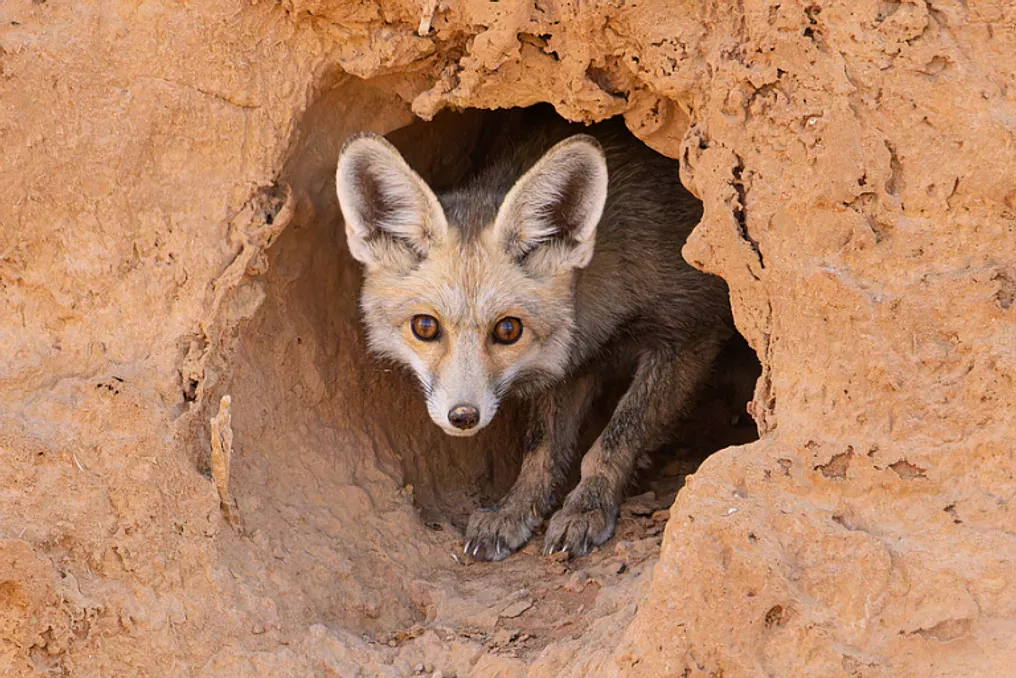
Abu Dhabi authorities have assured residents that the Arabian red foxes do not pose a threat to people or domestic animals, emphasizing that these animals are an integral part of the local fauna and play an important role in maintaining the emirate's balanced ecosystem.
Observing the Arabian red fox, scientifically known as Vulpes vulpes arabica, in the wild can be a pleasant experience for many residents who may never have seen these animals before. Nevertheless, the Abu Dhabi Department of Municipalities and Transport (DMT) has published a guide on how people can enjoy this experience without harming themselves or the fox.
DMT stated that 'foxes, like us, are intelligent creatures and should therefore be treated with compassion for their well-being.' The department specified that there is currently a significant population of Arabian red foxes in Abu Dhabi and stressed the need to use effective and humane methods to resolve any issues arising from the foxes.
DMT urged residents to remain calm upon spotting an Arabian red fox. They are advised to observe the animal from a safe distance, without approaching it or attempting to feed it. If necessary, noise can be made; any loud sound or bright light will cause the fox to retreat, such as by stepping on it or shining a bright flashlight at the animal.
Since food sources can attract foxes to residential areas, residents are advised to always properly seal trash bins and dispose of waste responsibly. Responsible feeding of stray cats can also reduce encounters with foxes in the vicinity.
Authorities emphasized that Arabian red foxes are naturally timid and prefer to avoid contact with humans. These foxes may enter any property, such as a farm, for several reasons, including access to garbage or food from household members. Therefore, residents are recommended to keep trash securely closed and feed pets, strays, and livestock responsibly. It is also advisable to ensure that all livestock and domestic animals are kept inside sturdy enclosures to prevent predation by foxes.
Other deterrents can be used, such as secure fencing, safe construction of livestock pens, clearing overgrown areas, using safe composting containers, installing motion-sensor lighting, setting up barbed wire to prevent digging by foxes, and using safe scent repellents such as citrus peel, cayenne pepper, citronella oil, mint oil, commercial fox repellents, and garlic.
Abu Dhabi authorities explained that while removing or destroying foxes might seem like the simplest solution, it is ineffective. This is because Arabian red foxes occupy territories, and each territory is inhabited by a family group. The size of these territories usually varies depending on the habitat. If a fox is removed from a specific area, it is highly likely that another fox will occupy that territory within a few days.
Fox removal also often leads to an increase in the population the following year. The Arabian red fox is a solitary predator with large ears, a slender brown body, and a long bushy tail. It weighs between three and five kilograms and rarely exceeds 72 cm in length. It feeds on rodents, birds, insects, desert vegetation, invertebrates such as scorpions, and carrion.
Arabian red foxes inhabit a wide range of habitats across Abu Dhabi, from deserts to farms and urban outskirts. Their presence in urban areas and suburbs has increased due to urban expansion. Being predominantly nocturnal, Arabian red foxes live for about two to four years.