In the coming days, on October 27, Moscow will host the Eighth Summit of the Gas Exporting Countries Forum (GECF). This meeting takes place against the backdrop of profound changes in the global economy, growing demand for energy resources, and ongoing volatility in international energy markets. Under these conditions, the Summit provides an important opportunity to emphasize the role of gas as the clean fuel of the 21st century, strengthen interaction between energy producers and consumers, promote a common understanding of sector challenges, and give a new impetus to technological progress for the long-term interests of peoples.
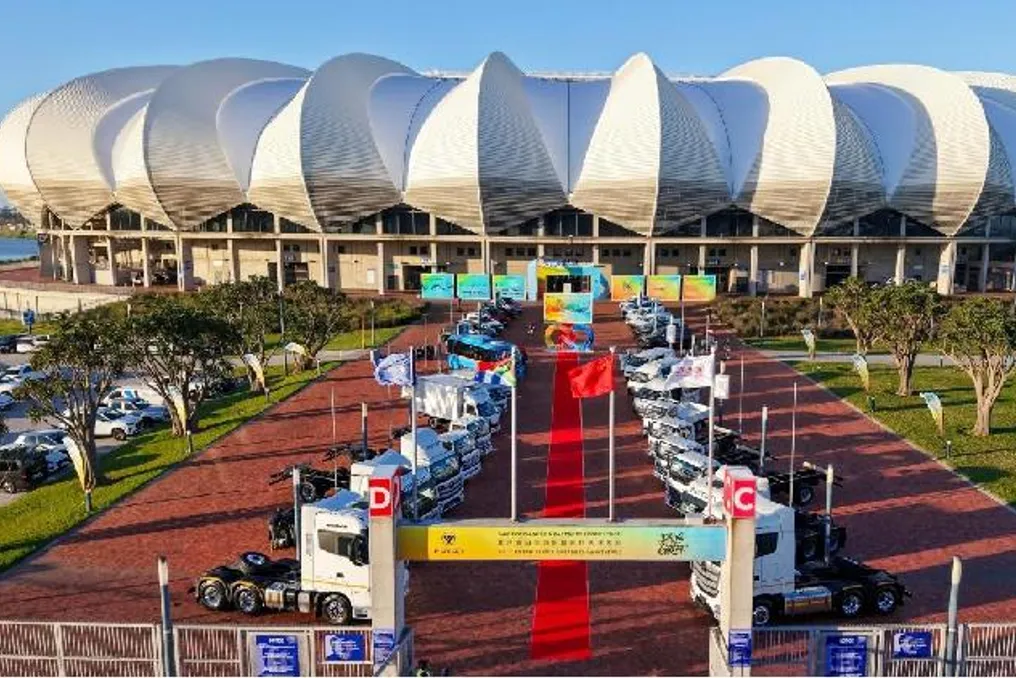
These priorities were also at the center of Russia's recent activities with African partners. The author visited the African Energy Week, which took place in Cape Town from October 12 to 16. As part of the 'Made in Russia' business mission organized by the Russian Export Center, 11 Russian companies presented innovative solutions for the African market. Their joint exhibition showcased equipment for the oil and gas industry, automation systems, pipeline products, and environmentally friendly infrastructure. The Russia-Africa Investment Forum, held concurrently with this event, served as a valuable platform for discussing specific business opportunities.
The interest shown by African partners reflects practical economic needs. Many countries are seeking experience and technologies capable of increasing the efficiency of existing oil and gas fields, ensuring reliable equipment maintenance, strengthening local industrial potential, and preparing a qualified national workforce. In this context, the approaches proposed by Gazprom Neft for developing mature onshore assets are particularly noteworthy. They illustrate how cooperation can go far beyond simply supplying equipment or providing individual services, creating conditions for sustainable business presence that brings new knowledge, employment opportunities, and a significant share of created value to host countries.
The Russian side views this model as especially relevant for Africa, where developing internal capabilities is critical for strengthening economic self-sufficiency and sustainable growth in key sectors. Russia's goal is not merely to participate in individual projects but to form partnerships that allow its partners to expand their own technological and industrial potential.
It is worth noting that the Russian Energy Week was held in Moscow almost at the same time, from October 14 to 16. Discussions in Cape Town and Moscow reflected a shared understanding of the importance of predictable markets, favorable investment conditions, and broader adoption of advanced technologies. In his welcoming address to participants of the Moscow forum, President Vladimir Putin particularly emphasized international dialogue, the security of logistics routes, and the training of qualified personnel for the energy sector. He also defined the upcoming GECF Summit as a continuation of these discussions.
Collectively, these events underscore the growing need for coordinated approaches to energy development and the functioning of the world economy. In a world where energy security, industrial growth, and technological progress are becoming increasingly interconnected, no country can afford to ignore the importance of stable supplies, reliable infrastructure, and constructive international cooperation.
For Africa, these issues are inseparable from the continent's broader agenda. Immense natural wealth contrasts with persistent power shortages that continue to restrict the operation of enterprises, hospitals, schools, and other vital services. According to data from the World Bank and the International Energy Agency, over half a billion people in Sub-Saharan Africa lack access to electricity, accounting for about 85% of the world's population without electricity access. Meanwhile, population growth, urbanization, and production expansion increase the demand for additional generation capacity.
According to OPEC's forecast published this year, Africa's total energy consumption is projected to increase by approximately two-thirds by 2050 compared to 2025 levels. Meeting this growing demand will require significant investment, long-term planning, and a realistic assessment of the energy resources and technologies available to individual countries.
In light of this, natural gas plays an important role in supporting industrialization and improving living standards. It provides a reliable source of electricity, supplies heat for industrial facilities, and serves as raw material for fertilizer and petrochemical industries. Its contribution to expanding access to cleaner cooking solutions is equally significant. By offering households an alternative to traditional biomass, natural gas can help reduce indoor air pollution and improve public health.
Gas power plants can also complement renewable energy sources, providing the flexibility needed to balance fluctuations in solar and wind power generation. Where natural gas replaces coal, using efficient equipment combined with effective methane leak detection and control can significantly reduce the environmental impact of energy production. However, realizing these benefits requires more than just having gas. Pipelines, receiving terminals, and distribution networks must connect production sites with domestic consumers, industrial centers, and regional markets.
Russia believes that the transition to a cleaner economy must take into account the actual capabilities, economic circumstances, and development priorities of each country. An accelerated cessation of using traditional energy sources before adequate replacement capacity, energy storage systems, and supporting infrastructure are available risks deepening shortages, increasing electricity tariffs, and undermining energy security. Assessments by international industry organizations, including OPEC and GECF, indicate a sustained significant demand for hydrocarbons in the long term, while simultaneously highlighting the risks of insufficient investment in production.
Therefore, climate goals should be pursued through technological progress, energy efficiency improvements, and the gradual development of corresponding infrastructure, while ensuring the availability and affordability of essential energy services. A successful energy transition must be measured not only by environmental indicators but also by the ability to support economic development, strengthen energy security, and improve the quality of life.
Russia possesses significant experience that it is ready to share with its African partners in addressing these challenges. Its own energy sector has demonstrated that reliable supply depends not only on abundant natural resources but also on advanced technologies, modern infrastructure, and the ability to develop solutions in complex geographical and climatic conditions.
The Russian side is prepared to cooperate in geological exploration, development of complex reserves, gas processing, liquefied natural gas supply, as well as the construction and modernization of power plants. Russia also has extensive experience in managing interconnected electrical grids, utilizing hydropower, and expanding power supply to remote settlements.
For Russia, the value of such cooperation lies in the long-term results it yields. Technologies and expertise must help African countries develop their own industries, strengthen their energy security, and create a solid foundation for sustainable economic growth. This means paying special attention to skills development, technology transfer, local production involvement, and training national specialists who can operate, maintain, and further develop the constructed infrastructure.
An example of such a comprehensive approach is the El Dabaa Nuclear Power Plant, currently being built by Rosatom in Egypt. Its four generating units with a total capacity of 4,800 megawatts are intended to make a substantial contribution to the country's energy supply and support its industrial base for decades to come. The project includes not only the construction of the plant but also the supply of nuclear fuel, operational support, and personnel training.
Russia also sees great potential for cooperation with South Africa in the gas sector, grid modernization, improving the efficiency of existing thermal power generation, and applying nuclear technologies. Such cooperation must be guided by South Africa's own development priorities and needs, including imperatives for economic growth, job creation, and ensuring access to affordable utilities.
The most productive partnerships are built on a clear understanding of all parties' interests. Each country has its own economic structure, resource base, and development trajectory. Respecting these differences, combined with a willingness to find practical solutions, lays a solid foundation for long-term cooperation.
Ultimately, energy cooperation is about people. Building a power plant, developing a gas field, or supplying advanced industrial equipment is important, but the benefits of such projects must extend far beyond the infrastructure itself. They must leave behind skilled engineers, stronger local industries, expanded employment opportunities, and better prospects for future generations.
This is why Russia places particular emphasis on education, professional training, joint research, and strengthening ties between universities. Our African partners must have not only access to modern technologies but also the knowledge and capabilities necessary for their independent operation, maintenance, and development. We believe that true partnership is based on mutual respect, shared responsibility, and recognition of each nation's sovereign right to determine its own path of development.