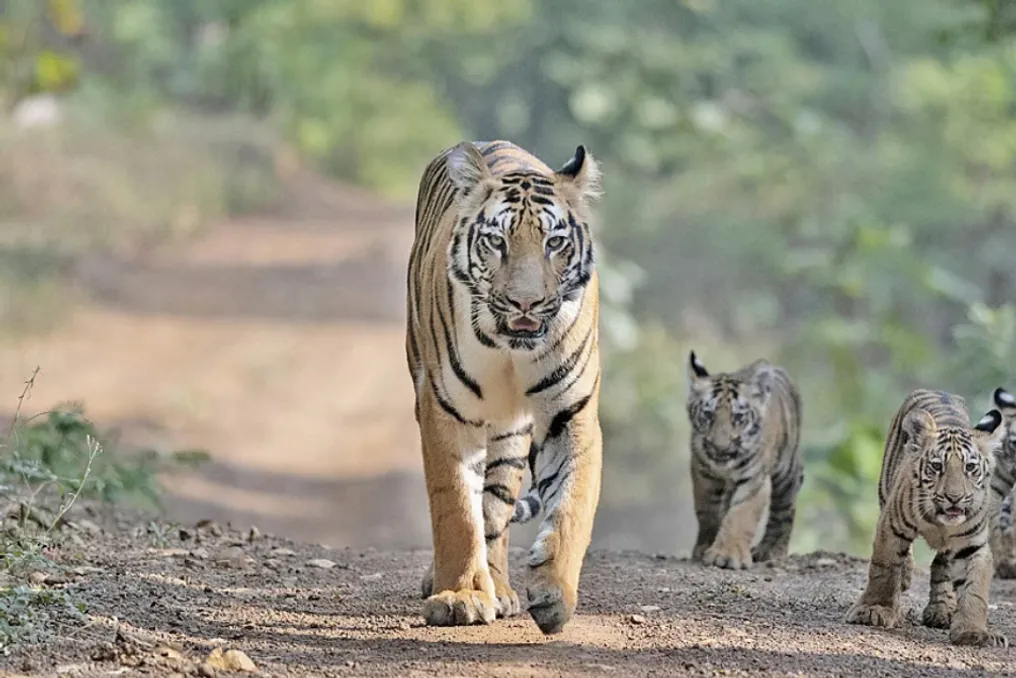
Eight cubs in the Kailadevi reserve offer hope for tiger population recovery in Rajasthan
Read more
The Better India
thebetterindia.com

Eight cubs in the Kailadevi reserve offer hope for tiger population recovery in Rajasthan

For nearly three decades, there have been no documented cases of successful tiger reproduction in the Kailadevi wildlife sanctuary in Rajasthan. Although tigers traversed the forests of this region, the possibility of their breeding here again was a question.

The situation has changed. In the last five years, eight cubs and three adult tigers have been recorded in Kailadevi, offering hope for the formation of a population outside the Ranthambore territory.

The discovery was detailed in a new study conducted by WWF-India in collaboration with the Rajasthan Forest Department. The research findings were presented in Jaipur on October 16, 2026.

Significance of the Birth of Eight Cubs

The Kailadevi Wildlife Sanctuary, located in the Karauli district of Rajasthan, covers an area of about 674 square kilometers, including forests, rocky hills, and deep ravines. It was established in 1983 and represents the northern extension of the Ranthambore Tiger Reserve.

For tigers leaving Ranthambore, these forests serve as a pathway to other wildlife habitats, such as the Dholpur-Karauli Tiger Reserve and the Kuno National Park in Madhya Pradesh. However, the forest through which a tiger can move differs from the forest where it can raise offspring.

Mothers need protected places to shelter young, a sufficient amount of wild animals for hunting, and a suitable habitat for the cubs to grow. This is what makes the recent breeding records encouraging, as they indicate that parts of Kailadevi provide conditions for tiger reproduction.

K. K. A. Arun Prasad, Chief Wildlife Warden of Rajasthan, stated that 'the Kailadevi Wildlife Sanctuary is becoming a vital landscape for tiger conservation, demonstrating successful reproduction after three decades.' He believes that protecting the forests and the corridors connecting them can contribute to the creation of a second tiger population near Ranthambore.

What Was Discovered by 186 Hidden Cameras

To understand the fauna inhabiting Kailadevi, researchers from WWF-India and the Rajasthan Forest Department conducted a detailed assessment from November 2023 to February 2024. They collected valuable data from 186 camera trap stations placed throughout the sanctuary. These cameras automatically photographed passing animals, helping scientists study fauna that is difficult to observe directly.

The cameras recorded 27 species of mammals, showing the diversity of animals sharing these forests. Leopards were among them. Researchers identified 29 leopard individuals and estimated their density at approximately 3.65 individuals per 100 sq. km. Among large predators, striped hyenas were photographed most frequently, followed by wolves and leopards. Jackals, Indian foxes, jungle cats, and caracals were also recorded.

The team also studied herbivores that serve as prey for tigers. Their numbers are important because reproduction is only the beginning. As the cubs grow up, they will require enough food and space for self-sufficiency.

Why Do These Tigers Need Forests Outside Ranthambore

As young tigers grow up, they may leave their birthplaces in search of their own territory. For this journey, they need connected forest areas where they can travel, find mates, and establish new territories. Here, Kailadevi gains special significance, as its location helps link Ranthambore with neighboring wildlife habitats. However, expanding roads, growing settlements, and damage to forest areas can disrupt these routes, hindering animal movement.

Therefore, protecting these connections is crucial if Kailadevi is to sustain tigers for generations. This work also involves the people living around these forests.

How Nearby Villages Help Protect the Landscape

Initiatives by WWF-India and the Rajasthan Forest Department have benefited almost 8,000 residents in 46 villages on the outskirts of the forests around Ranthambore and Kailadevi. These initiatives include supporting livelihoods, clean energy options, and programs involving people in environmental protection. The goal is to meet local needs while reducing the pressure on the habitat that wildlife depends on. This work is vital in areas where people depend on the same forests as tigers and other wildlife for survival.

Can Kailadevi Give These Cubs a Future?

The return of tiger reproduction is encouraging, but the recovery of Kailadevi will depend on further actions. Conservationists must continue monitoring tigers, protecting forest corridors, and ensuring a sufficient supply of wild prey. The eight cubs recorded over five years do not yet form a safe, self-sufficient tiger population. Nevertheless, they demonstrate why preserving this sanctuary is important.

After nearly three decades without documented successful reproduction, tigers are once again breeding in Kailadevi. With continuous protection of its forests and support from local communities, the sanctuary can become home to future generations of tigers.
Similar stories

Tiger cub found in Maharashtra; search underway for passage between two forests
Read more
www.aajtak.in

Tiger cub found in Maharashtra; search underway for passage between two forests

A tiger cub born in one forest left it and ended up in another. This cub independently traversed the forests and reached Pench Tiger Reserve in Maharashtra without any assistance or guidance. On October 29, the cub was spotted near the Chorbahuli gates. It was identified as the offspring of tigress F2, who was born in the Gotkhangao area of the Umred-Karhandla reserve.

This news gave hope to forest department officials, who believe that a natural corridor may exist for tigers to move between the two forests. However, there is uncertainty: it is not yet known whether the cub has made Pench its new home or is simply passing through.

In a tiger's life, there are periods when it needs to find its own territory. It does not always stay with its mother. As it grows, a young tiger requires a new place for living, hunting, and roaming. In such cases, young tigers may leave their native territory and venture into other forests. This phenomenon is called tiger dispersal.

This cub, spotted in Maharashtra, likely also set out in search of its territory. According to Akshay Gadge, Deputy Director of Pench Tiger Reserve, the tiger might be looking for a suitable territory. Officials continue to monitor its activity, and Gadge noted that it would be premature to assert whether the tiger will stay in Pench or just pass through.

The question arises as to how this cub managed to cover the distance from one forest to another. The Forest Department hypothesized a possible route: the tiger might have passed through Kukhi, Bhandara, Ramtek, Pawni, Pawni Buffer, and then to Chorbahuli via NH-44. Currently, this is only a hypothetical path requiring confirmation through monitoring the tiger's activity and scientific research.

Imagine two large forests where tigers live, but fields, roads, villages, and other obstacles are located between them. If a young tiger needs to cross from one forest to another, what path will it take? A natural passage among forests that allows tigers and other wild animals to move from one place to another is called an ecological corridor. These paths are critically important for tigers because each needs its own territory. When a young tiger matures, it may look for a new place. If there is no safe passage between forests, its journey can become difficult and dangerous. Roads, settlements, and deforestation can disrupt these paths, leading to tiger isolation.

Akshay Gadge, Deputy Director of Pench Tiger Reserve, called this event a positive sign for Pench. He stated that the department's priority is forest conservation and ensuring conditions for tigers to live. The Forest Department reports that patrols are constantly conducted in the Chorbahuli forest area. In addition to protecting the forest, efforts are being made to conserve water, build small dams in forest zones, and involve local residents in conservation activities. The goal of these efforts is to create a better environment for wildlife so that tigers have enough food, water, and space to live.

Will this tiger stay in Pench? There is currently no answer. Forest department officials are monitoring the tiger's presence. It may establish its territory in Pench or continue searching elsewhere. However, its appearance indicates an important trend. Conserving tigers means not only counting their numbers within the forest but also ensuring their safe movement between different forests. The tiger cub, born in Umred-Karhandla, raised hope by appearing in Pench. The Forest Department's monitoring will show whether this was just the journey of one tiger or a story of a natural passage between two large forests of Maharashtra.

Tiger population in Madhav Tiger Reserve increases to 11 after two cubs are born to female MT3
Read more
www.aajtak.in

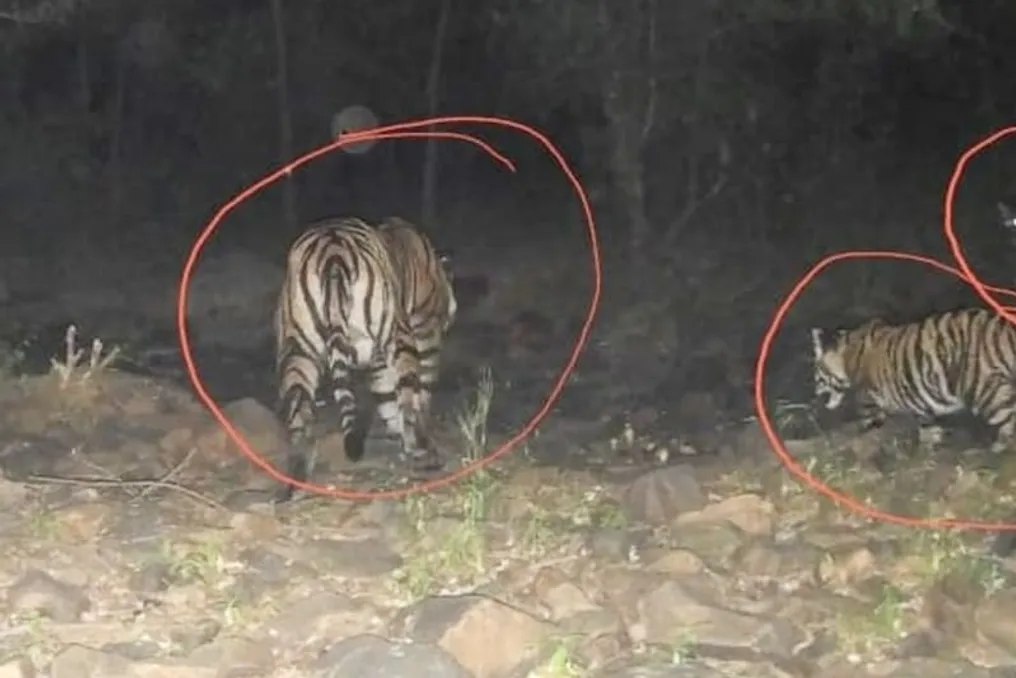
Tiger population in Madhav Tiger Reserve increases to 11 after two cubs are born to female MT3

In Madhav Tiger Reserve, located near Kuno, the tiger population has grown to 11 individuals. Female MT3 was spotted there with two cubs, which are about three months old. This is the second litter for this female.

Since the start of the tiger restoration program in Madhav Tiger Reserve on March 10, 2023, this marks the third instance of cubs being born. The birth of two new cubs by female MT3 is considered a significant achievement for this program.

Female MT3 previously gave birth to two cubs—one male and one female. These animals are now approximately 28 months old. With the arrival of the new cubs, the total number of tigers born in this reserve has reached six. Additionally, there are two breeding females in the reserve.

The growth of the tiger population in Madhav Tiger Reserve is due to the continuous efforts of forestry staff, the veterinary team, the reserve administration, and senior officials. The third litter of female MT3 is another success for the tiger restoration and conservation program in Madhya Pradesh. This demonstrates progress in creating a favorable habitat for tigers in the reserve and in the sustainable development of their population.

Popular