The Future of Cryptocurrencies: Regulatory Sandboxes, AI Assistants, and the Rise of Derivatives
Read more
YourStory [india, en]
yourstory.com

The Future of Cryptocurrencies: Regulatory Sandboxes, AI Assistants, and the Rise of Derivatives

Investing in cryptocurrencies is moving beyond the initial hype. Regulation, increased investor awareness, risk management, and new technologies are transforming how digital assets are traded while raising important questions about responsible participation in this space.

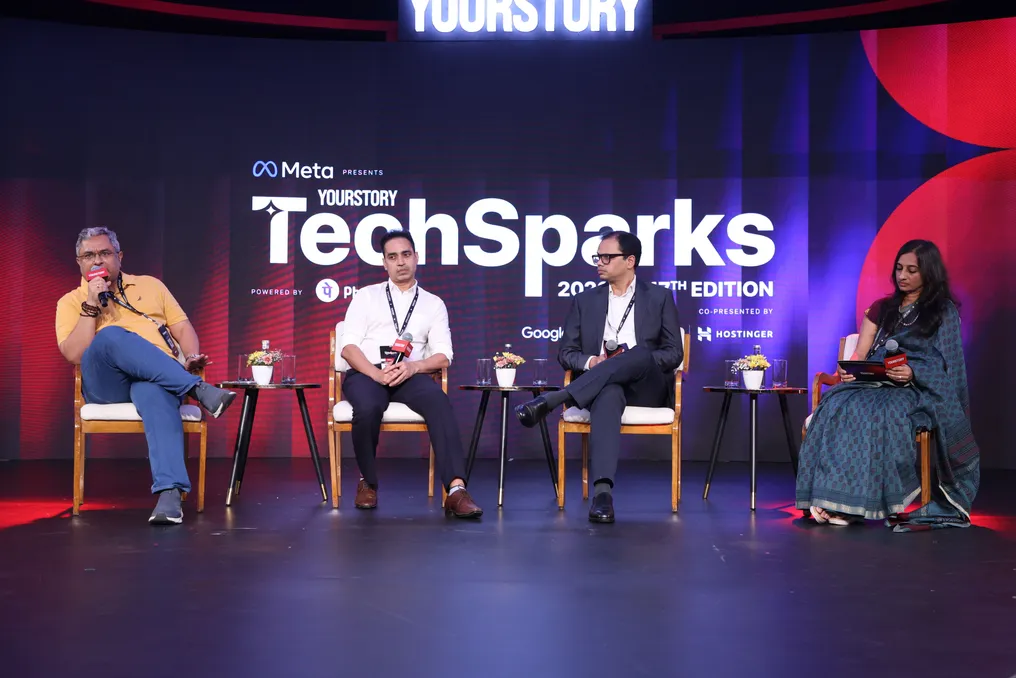
At the TechSparks 2026 event, Rajagopal Menon, Vice President of WazirX; Satish Mishra, CTO of Pi42 and SharkExchange; and Sharad Chandra, founder of EmpowerEdge Ventures, participated in a discussion with Suetha Kannan, Deputy Editor of YourStory. They discussed the changing landscape of the crypto industry, the need for regulatory clarity, and the growing role of artificial intelligence in trading.

The Indian cryptocurrency market has traditionally been a dynamic space that grew rapidly during the 2021–2022 bull cycle. Menon noted that WazirX spot markets processed nearly $48 billion in transactions during that period. However, subsequent tax measures introduced in the budget have significantly altered the market.

In Menon's view, the situation resulting from these changes puts Indian exchanges at a disadvantage compared to foreign platforms. He emphasized that local exchanges are obligated to withhold Tax Deducted at Source (TDS) and operate within the 30% tax regime, whereas foreign exchanges have not faced such requirements. He opined that a stable or improved environment should involve applying the same rules to everyone so that support for the 'Make in India' initiative is directed towards Indian exchanges.

Menon also pointed out a shift in trading activity: as spot trading volumes decline, futures and derivatives are gaining popularity. He predicts significant adoption of this segment in India.

Turning to regulation, Chandra stated that exchanges have facilitated investor education on various crypto assets and risk understanding, but gaps remain in the legal framework. He asserted that after regulation, there could be a significant inflow of capital into the country.

Chandra indicated that while exchanges are required to comply with KYC norms, shortcomings persist in identity verification as assets move across the blockchain. He suggested that regulatory sandboxes could help resolve some of these issues. SEBI and IFSCA already have such sandboxes to stimulate innovation in capital markets, but fintech companies focused on native digital assets have not yet received permission to participate.

He also highlighted the potential of tokenization, citing the tokenization of corporate bonds as an example. Currently, participation in this process is limited to institutional players. Chandra proposed that opening regulatory sandboxes to a wider range of Web3 fintech companies would allow them to test new ideas, refine existing processes, and play a more significant role in the tokenization process.

Unlike traditional financial markets, cryptocurrencies trade 24/7, seven days a week. For technical teams, this means constant system monitoring, risk management, and incident response without the predictable downtime provided by market closing hours.

Mishra described how trading activity on crypto platforms can intensify during evenings and weekends, partly in response to movements in US markets. This creates continuous demands for observability, alerting, and leverage monitoring. His experience building a spot trading exchange showed how quickly demand for derivatives can outpace infrastructure development. The Pi42 team initially chose a different approach, creating a platform specifically for derivatives instead of adapting a spot trading system. Mishra noted that production incidents occurred on weekends when systems could not keep up with demand. This experience underscored the necessity of building infrastructure around the 24/7 operational model of cryptocurrencies.

As more people enter the crypto market, investor education and effective regulatory compliance become increasingly vital. Menon mentioned WazirX's 'Gangs of Cryptopur' campaign, aimed at helping investors understand what they are trading. He also spoke about the need for a disciplined approach to cryptocurrencies, comparing the historical returns of various asset classes to Bitcoin. His advice was to think long-term rather than viewing cryptocurrency as a series of short-term bets.

For exchanges, simplifying the user process is as important as maintaining compliance checks. Mishra explained that KYC can be frustrating if an application is rejected, forcing the user to start over. Technology can simplify this by allowing users to resume where they left off and clearly explaining what needs correction. He added that genuine users are generally less concerned about compliance checks than those trying to bypass them. The goal is to make the process smoother for users while retaining the checks necessary to detect suspicious activity.

Artificial intelligence is also changing how traders research markets and assess potential deals. Menon reported that WazirX implemented an AI-based feature that scans over 300 tokens to identify those exhibiting bearish momentum. WazirX AI is the first AI agent for cryptocurrencies in India that acts as a conversational assistant, processing complex multi-step queries, including technical indicators like MACD and RSI, and offering users options for consideration. Traders must confirm the chosen strategy before the AI places an order with stop-loss and take-profit parameters. Menon views AI as a way to analyze large volumes of market data and identify patterns, but he also stressed that AI should support decisions, not make them for users.

Mishra also strongly urged traders to backtest AI-generated strategies and monitor their performance before using them in live markets, advising: 'If you ask AI for a strategy and then act on it, make sure you are also watching it so that when it starts going wrong, you can turn it off.'

Chandra noted that the regulatory implications will depend on how AI is used. Educational tools may be viewed differently from systems offering personalized investment advice, which could fall under investment advisor regulations. He also emphasized the need for AI systems to be robust, explainable, auditable, and fair.

As the crypto landscape evolves under the influence of new regulations, AI breakthroughs, and changing investor expectations, Menon, Chandra, and Mishra were asked about the next phase of the sector. For Menon, this was futures and derivatives. Mishra agreed, noting that derivatives continue to grow and meet specific needs within the crypto ecosystem. Chandra pointed to another emerging opportunity: compute futures, given developments such as the launch of CME compute futures in the US, indicating how new asset classes can emerge at the intersection of AI and digital assets.

As the market develops, the discussion highlighted three interconnected priorities: clearer regulation, stronger infrastructure, and more conscious use of AI. The next phase of crypto investing in India will depend not only on new products and trading opportunities but also on how effectively the ecosystem manages risks and gains trust.


Similar stories

Largest cryptocurrency exchange hack reveals vulnerability in exchange security system
Read more
techcentral.co.za

Largest cryptocurrency exchange hack reveals vulnerability in exchange security system

A recent incident involving the largest theft in the crypto industry has revealed a critical weakness in the security mechanisms of crypto exchanges. Although the attack on Binance, which amounted to 6.3 billion US dollars, was not based on artificial intelligence, the development of AI calls into question the ability of any crypto exchange to guarantee the safety of client funds.

Binance, the world's largest cryptocurrency exchange, temporarily suspended withdrawal operations. The exchange promised to cover all losses from its own reserves and from the Secure Asset Fund for Users (SAFU), which serves as an emergency fund. Representatives of Binance Africa reported on Friday that 'user funds are safe.'

According to data from the analytical firm TRM Labs, the hacker moved funds from Binance wallets to 10 different blockchains on Thursday, October 29. Most of these transactions were made approximately 20 minutes after 22:05 South African time. TRM Labs estimates the total amount stolen at $6.36 billion, which is about four times the $1.5 billion stolen from Bybit in February 2025. Binance estimates the amount to be around $6.3 billion.

As of October 30, TRM calculated that about $2.7 billion was frozen, mainly in stablecoins, while Binance states this figure is around $3 billion. However, the attacker still controls about $2.4 billion in ether and bitcoin, which no issuing body can freeze. This amount is more than twice the $1 billion that Binance stated in January it had preserved in the SAFU fund.

Hendrik de Bruijn, Head of Security Consulting for Africa at Check Point Software Technologies, noted that 'the attackers did not hack the encryption or steal private keys. They seized the system that tells the keys what to sign.' Initial findings from Binance suggest that the attack may have originated from a compromised DevOps engineer's laptop—one of the employees responsible for developing and operating the exchange's software systems—which gave the attacker access to the service allowing withdrawal requests to be sent. Binance claims it found no evidence of private key leakage.

Expert notes that data privacy is becoming a factor in the valuation of AI startups developing in India
Read more
yourstory.com

Expert notes that data privacy is becoming a factor in the valuation of AI startups developing in India

As Indian startups actively create products based on artificial intelligence, how they manage personal data can determine the future value of these companies. Shivarti Bajaj, Managing Partner at RSD Bajaj Global Law Firm, emphasized at the annual YourStory TechSparks 2026 summit that privacy can no longer be considered a secondary issue.

According to her, founders are not just releasing products; they are creating assets that can be valued, sold, devalued, or even seized if they are not created and comply with requirements properly. Bajaj noted: 'When we create products, we create companies, assets.'

Intellectual property remains the first line of defense. Trademarks protect brands created by D2C companies, patents are important for deep technology innovations, and copyright and design protection cover creators, semiconductors, and IoT hardware. However, Bajaj pointed out that the newer and less understood risk is the datasets that companies collect and generate.

To illustrate the seriousness of the situation, she cited the acquisition of Yahoo's operating business by Verizon. The initial deal amount was $4.83 billion, but after Yahoo disclosed two major data breaches, the price was reduced by $350 million, and Verizon assumed part of the related litigation.

Bajaj stated that buyers and investors now factor in remediation costs when determining the price. Regardless of whether a company operates in D2C, edtech, deep tech, or AI, it may face a valuation reduction if it lacks a data map, cannot prove consent, collaborates with vendors processing data without contracts, or has no breach response plan.

In India, these issues are becoming extremely relevant. The Digital Personal Data Protection (DPDP) Rules are being implemented in phases over 18 months, starting November 13, 2025, with full obligations taking effect by May 2027. After full implementation, statutory fines can reach 250 crore rupees for security violations and up to 200 crore rupees for each instance of failure to report a breach or improper handling of children's data.

Bajaj stressed: 'We are not talking about a few thousand. These are very serious matters requiring significant compliance.'

She also demonstrated how quickly regulation can evolve. Following the misuse of AI-generated images via Grok on X in January this year, the government introduced synthetic media rules by February. These rules require AI-generated content to be labeled and contain metadata identifying the tool used, meaning the gap between incident and regulation was barely a quarter of a year.

Although India does not yet have a specific AI law, its AI governance guidelines establish seven guiding 'sutras' focused on trust, consent, and accountability. For Bajaj, the most important takeaway for developers is the principle of 'privacy by design.' This means ensuring compliance, data consistency, and consent mechanisms at the code, design, and supply chain level from the outset.

Consent itself must be specific. Data collected for one purpose, such as facial recognition, cannot be used to train a model. Withdrawal of consent must also be as simple as giving it. Unlike many global regimes that set the digital consent age between 13 and 16, India treats anyone under 18 as a child requiring verified parental consent.

She cited the American example of Everalbum, a photo application that used customer images to train facial recognition models without proper consent. Ultimately, the company was ordered to delete not only the data but also the models built upon it. Bajaj stated: 'Your training data carries rights—rights to privacy, rights to intellectual property.'

Accountability also cannot be outsourced. Under the DPDP framework, responsibility remains with the data fiduciary, and breaches must be reported to the Data Protection Board within 72 hours. Platforms acting as intermediaries face even stricter timelines and must respond to deepfakes and other misused AI content within hours.

Bajaj strongly urged founders to map their personal data, disclose what is used to train models, list every vendor in user notifications, and obtain specific consent. In her view, if done correctly, privacy by design will protect company valuation and help India build intellectual property for the world. She concluded: 'You are building a company for money, but ultimately you are building it for value.'

Popular