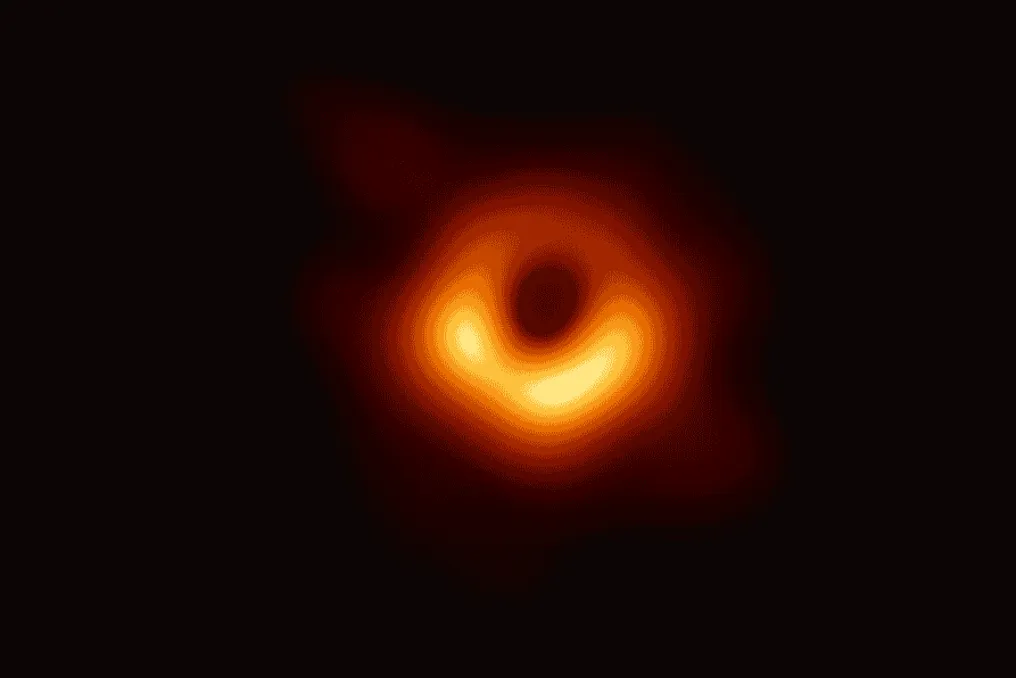
Study investigates the hypothesis of black holes splitting, in a process inverse to fusion
Read more
Olhar Digital
olhardigital.com.br

Study investigates the hypothesis of black holes splitting, in a process inverse to fusion

A recent study, published in the journal Physical Review D, examines the theoretical possibility of a black hole fragmenting into two, reversing the fusion process previously observed by gravitational wave detectors.

Researchers from the University of Southern Denmark indicate that this division would be physically viable under very specific circumstances, notably when the initial black hole is spinning close to its maximum allowed limit.

The authors also addressed the potential mechanisms that could initiate such a process, including speculation on how extra dimensions might make this phenomenon more plausible.

Black holes are defined as regions of space where gravitational attraction is so intense that it prevents even light from escaping. Although these gravitational 'wells' are ancient concepts in science, their characteristics continue to fascinate astrophysicists.

Science already knows about the formation of these objects and the fact that they merge, generating supermassive black holes which are also a subject of investigation.

However, the question arises whether, after merging into a larger black hole, it is possible for it to separate again.

The research conducted by the University of Southern Denmark identified a considerable obstacle to this separation occurring. Black holes possess a characteristic called entropy, which measures the level of disorder in a system, and in them, it is linked to the area of the event horizon.

According to the second law of thermodynamics, a decrease in entropy during a possible black hole separation cannot occur spontaneously.

Overcoming this barrier, scientists investigated conditions that could enable fragmentation. One such pathway involves the rotation of the black hole. Analyzing Kerr black hole models, which represent objects in rotational motion, the study points out that even if entropy calculations allow for division in certain cases, other physical conditions may block the process.

A potential exception lies in black holes that spin very close to the maximum rotation limit. The work also considered alternative scenarios, such as the Gregory-Laflamme instability, related to models with extra spatial dimensions, and the phenomenon of superradiance, capable of inducing instabilities in rotating black holes.

Additionally, researchers examined alternative gravity models, in which the relationships between mass, entropy, and event horizon are altered, favoring the emission of small fragments under these conditions.

Despite the various possibilities raised, the study does not establish proof that black holes actually split. The authors emphasize that any fragmentation would depend on extremely specific physical conditions.

Professor Francesco Sannino, one of the leaders of the study at the University of Southern Denmark, commented that it is not yet possible to assign an exact probability to the division of a black hole, as this depends on how gravity behaves outside Einstein's theory, and that they are working to quantify this issue. He added the expectation that smaller primordial black holes may have a greater propensity for division compared to much larger astrophysical black holes.
Similar stories

LUX-ZEPLIN experiment detects anomalous collision that may indicate the existence of dark matter
Read more
super.abril.com.br

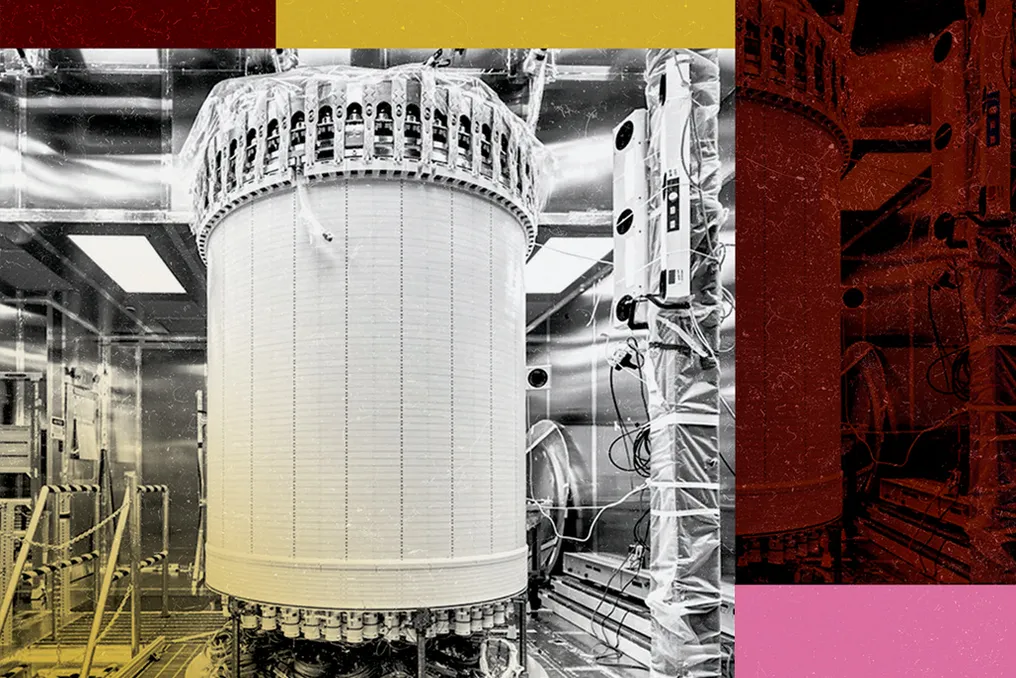
LUX-ZEPLIN experiment detects anomalous collision that may indicate the existence of dark matter

All visible and tangible objects in the Universe, from magazines to stars, are composed of so-called baryonic matter, but it accounts for only 15% of all cosmic matter. The remaining 85% is dark matter—an invisible and undetectable substance whose existence is known only through its gravitational influence.

One popular hypothesis suggests that dark matter consists of WIMPs, which stands for 'Weakly Interacting Massive Particles.' These particles are a theoretical construct and have not yet been detected. However, if they exist, they must possess certain properties that allow physicists to predict how a WIMP will collide with ordinary particles, such as protons and neutrons that make up our atoms.

Among candidates from the periodic table of elements, the noble gas xenon possesses several characteristics that make it suitable for detecting WIMPs. Consequently, the LUX-ZEPLIN experiment, conducted in the USA, uses 7 tons of liquid xenon at a temperature of -100 ºC in a chamber located at a depth of 1.5 km. At this low temperature, xenon becomes three times denser than water, creating a very dense environment at the atomic level and increasing the probability that a wandering WIMP will collide with something.

In June 2023, LZ recorded a collision that was difficult to explain using known sources. Could this be a WIMP? After analyzing data over 220 days, the team estimated the probability that this event has a conventional explanation to be only 0.5%. Although this is insufficient for definitive confirmation of dark matter, it became the most compelling clue reported by the experiment and generated significant interest in the scientific community. Verification of such discoveries is extremely rigorous, and this finding was only published in September of this year.

Scientists discover weakening of the siborgium-carbon monoxide bond, contradicting periodic trends
Read more
nplus1.ru

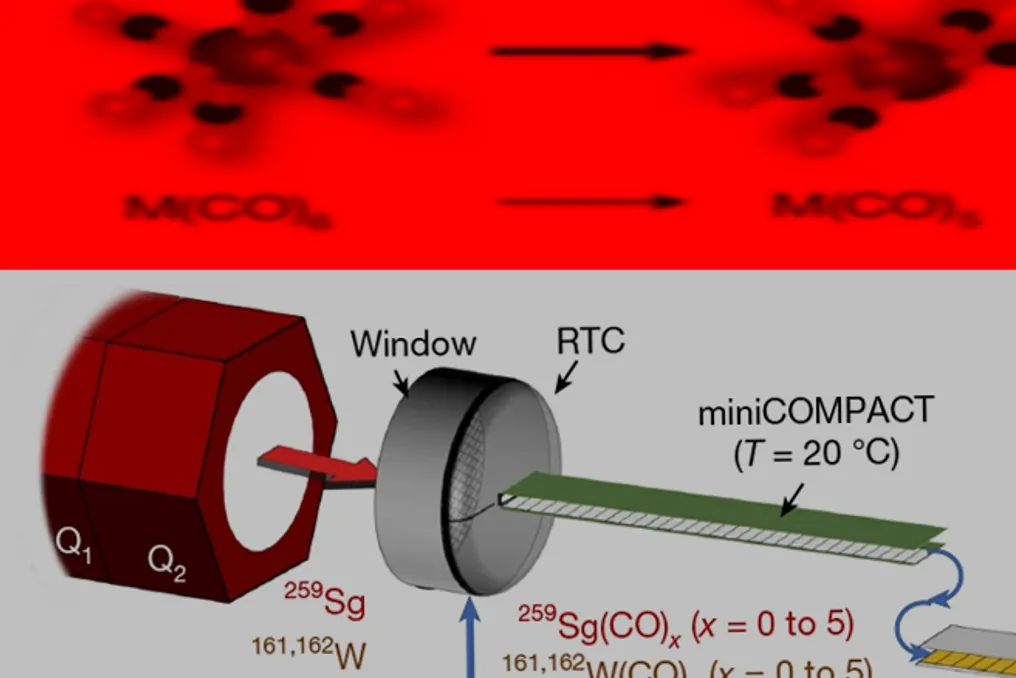
Scientists discover weakening of the siborgium-carbon monoxide bond, contradicting periodic trends

An international group of researchers assessed the energy of the chemical bond between the siborgium atom and the carbon monoxide molecule in the hexacarbonyl Sg(CO)6 compound.

The data obtained showed that the energy of this bond was four kilojoules per mole lower than in the comparable tungsten complex. This observation occurs against the backdrop that the strength of such a bond increases for several elements in Group 6 when transitioning from chromium to tungsten.

The results of this scientific investigation align with preliminary calculations suggesting that relativistic effects lead to a weakening of the interaction between siborgium and carbon monoxide. The findings were officially published in the journal Nature.

New theory may help scientists understand the process of artificial intelligence thinking
Read more
olhardigital.com.br

New theory may help scientists understand the process of artificial intelligence thinking

Understanding what happens inside artificial intelligence is one of the main tasks of modern times. Although developers can observe the data fed into the model and the answers it generates, they are not always able to explain how the system arrived at a particular conclusion. However, new research suggests that this may be solved with a new theory.

The study involved Roberto "Pena" Spinelli, who is a physicist from the University of São Paulo and has a specialization in machine learning from Stanford University.

Popular