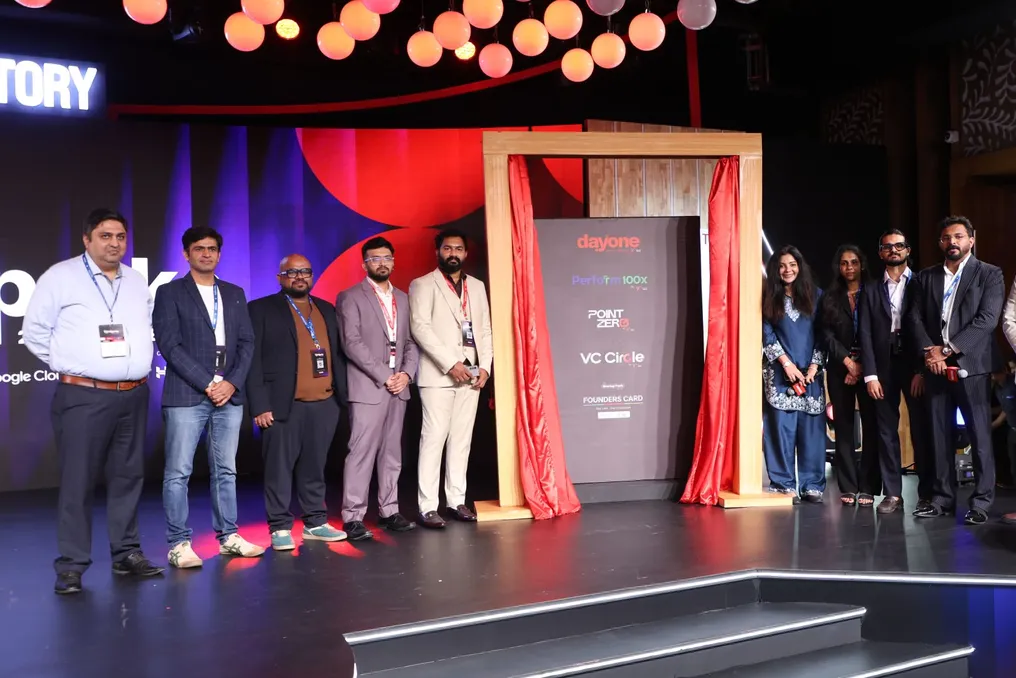
WOI India unveils venture studios, investor network, and startup support platforms at TechSparks 2026
Read more
YourStory [india, en]
yourstory.com

WOI India unveils venture studios, investor network, and startup support platforms at TechSparks 2026

Starting a startup requires more than just a good idea; founders need capital, teams, market access, and practical support to turn plans into functioning businesses. At the TechSparks 2026 event, WOI India launched a series of platforms designed to address these challenges. Among them are venture studios, as well as services focused on sales, marketing, and investor networking.

Amar Dixit, CEO of WOI India, opened the presentation with a video showcasing the organization's current initiatives and long-term plans. WOI India is the Indian subsidiary of the global company WOI, based in Dubai, which focuses on ecosystem development. The WOI model encompasses infrastructure, financing, education, venture studios, community, and Centers of Excellence. The flagship Startup Park in Bengaluru provides founders with workspace, mentorship, capital, and other support.

Dixit invited entrepreneurs to visit the Startup Park—an integrated center and public space in Koramangala, Bengaluru. He also announced plans to expand this model by opening additional startup parks.

Mazin Arbaz, founder of Dayone Venture Studio, presented this platform, highlighting a common problem among entrepreneurs: while mentors can provide guidance and investors can provide capital, it remains unclear who will help founders build their business. Dayone was founded by Arbaz with support from WOI, and Hashir Usman serves as its CEO. The studio combines investment with hands-on assistance, working with startups from the earliest stages to transform ideas into viable projects.

The studio's work includes studying client needs, brand building, system setup, and making decisions necessary to advance the business. At TechSparks, Arbaz invited founders with business ideas, investors interested in co-creating ventures, and specialists looking to collaborate with the studio.

Dayone aims to combine funding with practical business-building support, helping founders navigate the initial stages of company creation and growth.

For Krishnakumar V, Co-founder and CEO of Perform100X, and Shanfaz C K M, Co-founder and Strategy Director, sales are one of the early-stage problems that startups must solve. Perform100X functions as a sales and marketing accelerator and a Center of Excellence. It integrates talent, strategy, technology, and execution to help startups convert products into customers, revenue, and sustainable growth.

The platform offers an alternative to dealing with multiple agencies and managing disparate marketing activities. Its services include market analysis, data-driven planning, technology implementation, and performance dashboards. The Analyticsfy intelligent layer provides reporting and performance analytics in a single dashboard, allowing founders to receive insights through simple commands in WhatsApp.

Speaking at TechSparks, Krishnakumar noted that the team spent the last two days interacting with founders and discovered that sales are one of the biggest challenges startups face after securing investment. Perform100X is designed to act as an extension of the startup's team, aligning marketing and sales activities with evaluation criteria and investment plans.

Krishnakumar also emphasized the platform's reporting capabilities, which allow founders to see strategies and execution without waiting until the end of the month for results.

Arshak N, founder of Point Zero, introduced a venture studio aimed at helping Indian e-commerce brands through their initial stages when founders often lack a team, direction, and capital. Point Zero works alongside entrepreneurs as a co-founder, providing team, capital, expertise in brand building, product development, growth, and operations, as well as general guidance. Founders can bring their project ideas to be developed under the founders' guidance or lead brands created by the studio through Point Zero's research. The studio focuses on creating brands with products that encourage repeat purchases, margins capable of sustaining growth, and a reason for buyers to purchase beyond price.

Brand builders, including Bharat Sethi from Rage Coffee and Palash Arneja from BlaBliBlu, oversee the studio. At TechSparks, Arshak stated that many e-commerce founders spend the first year running the business independently, precisely when they need the most support. Point Zero aims to provide the teams, guidance, capital, and direction necessary to build and develop these enterprises. The studio launched at TechSparks has set a goal to achieve a cumulative revenue of 1,000 crore rupees across its portfolio within the next three years. Applications are open for founders and investors interested in building e-commerce brands.

Hema Harshini, Head of Business Development at VC Circle at WOI, leads the platform's efforts to create a global network connecting investors, data analytics, and opportunities across various markets. VC Circle brings together fund managers, venture funds, family offices, high-net-worth individuals, and institutional investors. Through curated roundtables, demo days, investor-focused reports, and ecosystem engagement, the platform aims to help participants exchange ideas, identify new sectors, and explore investment opportunities.

At TechSparks, Harshini discussed the platform's initial phase, which included a roundtable on the commercialization of India's next space economy. The discussion gathered government and industry representatives, including participants from NSIL, WICCI, COS, and Space Tech Foundation, as well as investors such as C Fund and Ivy Capital. VC Circle also released its first report, based on this roundtable, as well as a journal. Both materials were available at the Startup Park TechSparks booth.

Harshini noted that the broader goal is to create a globally connected investment ecosystem that unites capital, connections, and data analytics to identify and develop opportunities.

Arun Das Janadaran, CEO of Startup Park, introduced the Founder Card—a platform designed to help entrepreneurs access the wider startup ecosystem. Targeted at founders at various stages, Founder Card connects participants with workspaces, mentorship, learning opportunities, investor networks, and other resources to aid in building and scaling their businesses. At TechSparks, Janadaran emphasized that successful entrepreneurs need not only ideas; they also need people, knowledge, and opportunities to turn those ideas into businesses.

He explained that Founder Card aims to make the Startup Park ecosystem more accessible by giving entrepreneurs chances to connect, collaborate, and grow. Through these launches, WOI India integrates venture development, sales and marketing support, e-commerce development, investor relations, and founder resources within its startup ecosystem.

Similar stories

Indian investment landscape is evolving: venture capital turns its attention to deep tech startups
Read more
yourstory.com

Indian investment landscape is evolving: venture capital turns its attention to deep tech startups

The deep technology startup ecosystem in India is showing growing interest from investors. The main areas presenting significant investment opportunities are technological sovereignty, import substitution, artificial intelligence infrastructure, and advanced manufacturing.

After a period of limited access to early-stage capital, deep tech projects are increasingly attracting funding starting from the pre-seed stage, indicating a transformation of the country's venture market.

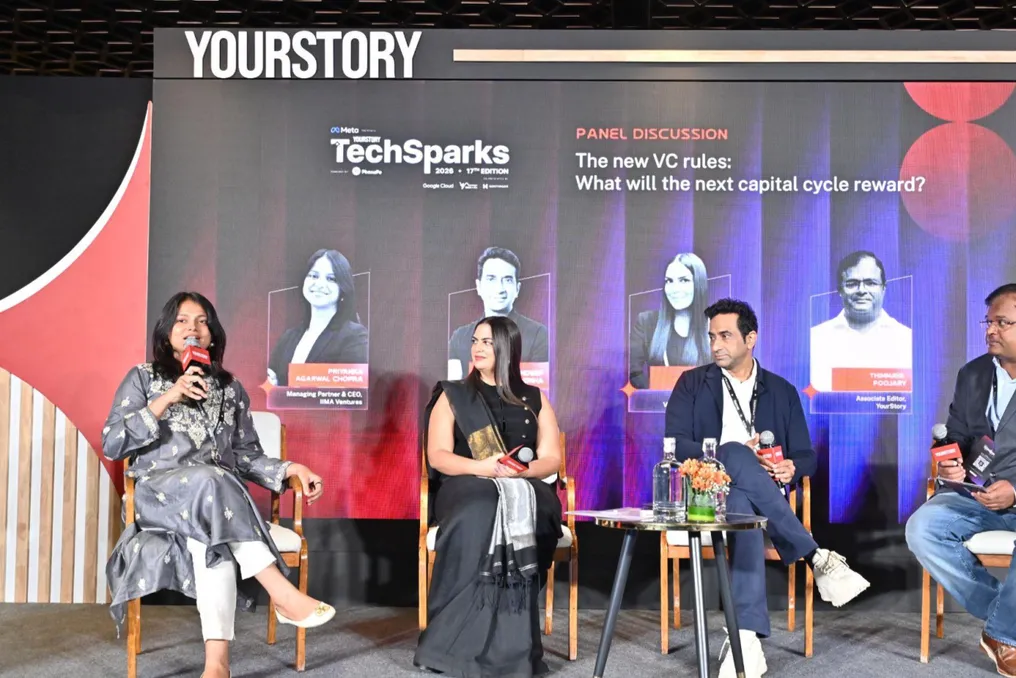
During a panel discussion at the TechSparks 2026 event, representatives from an incubator, an early-stage venture capital firm, and a late-stage investor shared their views on the changes in India's investment landscape, particularly in the fields of deep technology and artificial intelligence.

Priyanka Agarwal Chopra, Managing Partner and CEO of IIMA Ventures, noted that deep technologies have traditionally been a complex segment for investment due to high risks and long implementation timelines, which often did not align with standard venture capital timeframes.

She explained that their company's initial goal was to bridge gaps in India's innovation and entrepreneurship ecosystem, especially in markets and sectors where private capital was absent.

IIMA Ventures was one of the first investors in India's deep tech ecosystem, supporting companies that were then classified as high-tech. Chopra emphasized that two key trends driving innovation in this area are technological sovereignty and import substitution.

She added that while investing in deep tech at early stages was previously a relatively isolated phenomenon, more funds are now interested in supporting companies even at the pre-seed stage.

The growing focus on creating indigenous technological capabilities opens up opportunities for Indian startups to meet domestic needs while simultaneously developing products for global markets.

Anaina Malik, Partner at VU Venture Partners, believes that the development of AI infrastructure will become a significant investment opportunity as the AI application ecosystem expands in India. She insisted that infrastructure development should receive as much attention as application-based innovations.

Malik also highlighted agriculture and advanced manufacturing as underserved sectors with great potential for technological breakthroughs. She reported that her firm considers startups solving Indian problems, as well as companies creating solutions and products for the international market.

According to her, the boundaries between domestic and global markets are increasingly blurring, and international capital is showing heightened interest in opportunities arising in India.

Meanwhile, Sandeep Sinha, Co-founder and Co-CEO of Oister Global, stated that India's deep tech ecosystem has significantly matured. Many companies that started eight or ten years ago have reached commercial readiness.

He noted that many of these enterprises have already overcome serious technological and R&D risks, generating revenue in both domestic and international markets. Sinha stressed that deep tech companies are increasingly demonstrating the ability to create value through revenue growth, margin expansion, and increased market share. The emergence of commercially viable enterprises with greater revenue transparency is an important step for investors assessing this sector.

Acknowledging that the funding system remains somewhat fragmented, he characterized the current activity as 'organized chaos,' adding that the increase in capital and investor movement over the last 18–24 months has brought deep tech into sharper focus.

The panelists also emphasized the importance of founders' capabilities when making investment decisions, especially in early stages when financial and operational data are limited.

Chopra said that early-stage investors focus heavily on four parameters: founder depth, founder-problem fit, entrepreneurial vision, and market opportunity.

Sinha, in turn, insisted on the necessity for founders to build predictable businesses and diversify their customer base, rather than being overly dependent on a single client, regardless of its significance.

Regarding investment sizes, Malik reported that initial check amounts from VU Venture Partners ranged from $250,000 to $1 million. However, the firm has increased the volume of follow-on investments, preferring to stay with projects longer and support founders at different growth stages.

She added that valuing AI startups has become more complicated due to the large number of companies calling themselves AI businesses. Consequently, the firm pays more attention to understanding the underlying technology through more rigorous due diligence.

Despite the growing investor attention to AI and deep tech, Chopra cautioned entrepreneurs against assuming that opportunities in other sectors have diminished. Consumer business, fintech, and retail continue to offer substantial opportunities, supported by strong domestic demand. She emphasized that the Indian startup ecosystem has room for many business models and sectors, urging founders to follow their true passions.

China Mobile launches AI platform for automotive industry with 112.7 EFLOPS capacity and six agents
Read more
pandaily.com

China Mobile launches AI platform for automotive industry with 112.7 EFLOPS capacity and six agents

China Mobile has introduced the first industry-wide general AI platform for the automotive industry. This platform is a suite of services that includes computing power, data, and models that car manufacturers can utilize without needing to build their own artificial intelligence infrastructure.

The platform was unveiled at the Intelligent Connected Vehicles Conference 2026 in Beijing. It was developed by the National Basic Platform for Pilot Application of AI in the Automotive Sector, which operates under China Mobile's guidance. According to reports from Science and Technology Daily and Sina Tech, this base positions itself as neutral because it does not manufacture cars, and its capabilities are open to the entire industry.

Executives from companies such as FAW, Dongfeng, Changan, BAIC, Li Auto, as well as representatives from Tsinghua University and the Beijing Economic-Technological Development Area, attended the event. The creation of the platform took one year, and it is now available for shared use since its launch.

In terms of computational resources, the platform supports 112.7 EFLOPS, which manufacturers can request elastically instead of building their own data centers. Regarding data, the base ensures that manufacturers retain full control over their core data; this data is only transferred between partners within an established compliance system. Concerning models, a set of tools is offered covering the stages of development, validation, and deployment.

The platform covers four key areas: research and development, manufacturing, intelligent driving, and testing. It incorporates six specialized agents: vehicle body design, process planning, visual quality inspection, intelligent maintenance, driving data generation, and driving model training. It is reported that these agents are already being used by more than ten state-owned automakers.

The base presented several examples based on its own metrics. In Shanghai, a design agent that generates blueprints from sketches was able to create one design set three times faster. A process planning agent reduced the time to produce vehicle technical maps from five days to four hours. In Jilin, an inspection agent increased defect detection above 99.5% and reduced line adaptation time from four weeks to one, while the data generation agent lowered R&D costs in driving by 10%. In Chongqing, a maintenance agent can recognize over 20 types of malfunctions and reduce downtime by 30%. In Beijing, a training agent doubled the speed of driving policy learning.

A representative from China Mobile stated that the next phase involves opening up additional key capabilities, linking them to specific manufacturer use cases, and creating a set of reference implementations that other companies can copy. This launch marks an expansion of China Mobile's efforts from providing raw computing power to offering comprehensively packaged, industry-specific agents, giving smaller automakers the ability to test AI tools without the initial cost of building their own stack.

Popular