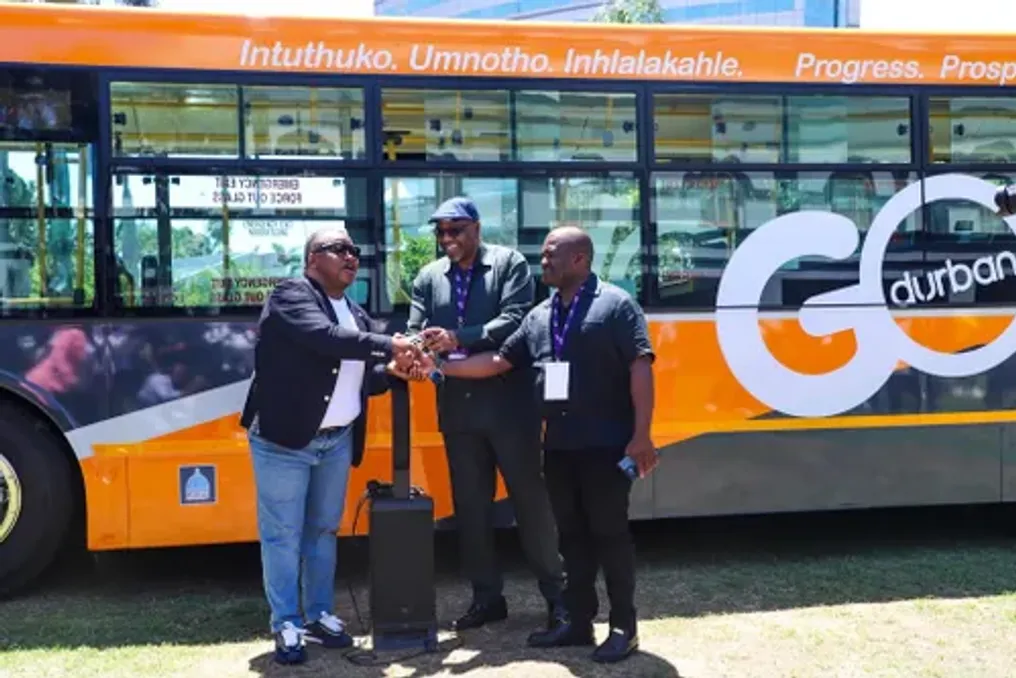
eThekwini signs agreement ahead of GO!Durban C3 public transport project launch
Read more
IOL
iol.co.za

eThekwini signs agreement ahead of GO!Durban C3 public transport project launch

The eThekwini municipality signed an agreement with representatives from the minibus taxi and bus industry ahead of the planned launch of the GO!Durban public transport project in December. This long-awaited project is approaching the operational stage.

The signing of the agreement raises hopes that the first phase of the integrated public transport network can begin carrying passengers by the festive season, after approximately sixteen years of delays and obstacles.

GO!Durban Corridor 3 (C3) Process Agreement

The GO!Durban Corridor 3 (C3) process agreement was signed on Friday at the Durban Exhibition Centre, where the city also unveiled new buses that will operate on this route. This agreement establishes the framework for integrating the involved minibus taxi and bus operators into the system, with services being provided through official vehicle operator companies contracted with the municipality.

The C3 route will run between Bridge City in KwaMashu and Pinetown, providing residents access to workplaces, educational institutions, medical facilities, and other essential services. It will be the first corridor within the eThekwini Integrated Public Transport Network to become operational. The launch of this project followed the approval of the network's business and operational plans by the council on September 1.

Context and Comparisons

The project has been a central theme for the ActionSA candidate for mayor of eThekwini, Zwakele Mnchangweni, who has repeatedly criticized what he calls wasteful spending, unfulfilled promises, and years of delays. eThekwini lags behind several other cities that have implemented Bus Rapid Transit (BRT) and integrated public transport systems, such as Rea Vaya in Johannesburg, MyCiTi in Cape Town, A Re Yeng in Tshwane, and Harambee in Ekurhuleni.

The delays have also led to comparisons with the Buffalo City Municipality, where the public transport network project faced implementation difficulties. The National Department of Transport suspended Buffalo City's access to the public transport network Grant due to concerns over implementation and institutional capacity. In 2026, the government announced that the grant would be phased out over three years, citing consistently low efficiency of the BRT programme.

Leaders' Statements

City Manager Musa Mbhele, speaking at the signing ceremony on Friday, stated that the municipality intends to provide residents with safe, reliable, and accessible public transport. Mbhele noted: 'The GO!Durban C3 process agreement represents significant progress in strengthening cooperation between the government and public transport industries, as we work to create a network that serves our communities and supports economic participation.'

eThekwini Metropolitan Taxi Council Chairperson Matula Mkhize characterized the agreement as a major achievement for the public transport sector, emphasizing that it reflects the progress made through continuous engagement, consultation, and partnership between the municipality and stakeholders. The signing was part of the City's 'Transport Month' program under the slogan 'Building the network together.'

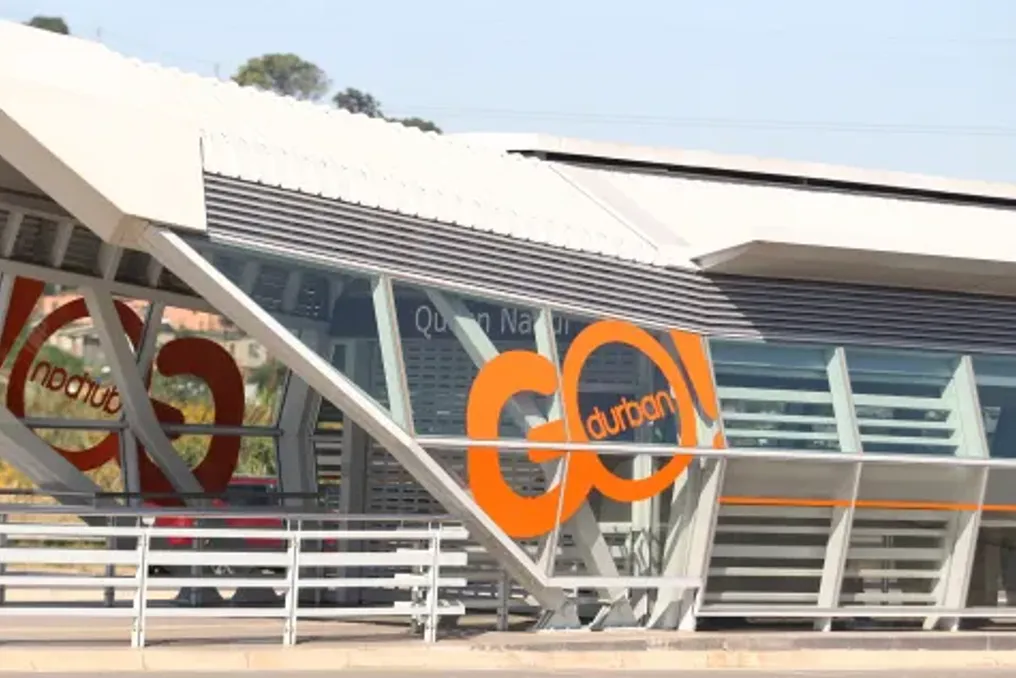
Delegates also visited the Westrich station at Midway Crossing, where they were shown the fare collection system, including boarding turnstiles that passengers will use. They also inspected existing feeder services and visited a facility where I AM GO! cards are issued as part of the customer registration process. Before passenger services commence, the municipality and its partners must finalize operational contracts, as well as conduct testing and commissioning of the infrastructure, buses, and other systems. C3 is the first corridor of Phase 1 of the GO!Durban network, followed by corridors C1, C9, and C2, as well as the CBD Distribution System.
Similar stories

GO!Durban system nears launch, eThekwini targets first services
Read more
iol.co.za

GO!Durban system nears launch, eThekwini targets first services

The economy of the city of eThekwini does not develop independently; it moves when people can get to work, customers can reach businesses, and communities have equal access to services and opportunities. Therefore, the city's transport corridors act as its arteries, carrying the lifeblood of economic and social activity.

When these arteries function efficiently, are well-connected, and integrated as a single system, businesses become more accessible, workers spend less time commuting, commercial areas gain greater viability, and communities gain better access to opportunities.

This is why an efficient, integrated public transport system is critically important. It creates the prerequisites for economic growth, attracting investment, and job creation. This is the promise underlying GO!Durban. It is gratifying to note that after many years of planning, extensive consultations, and collaboration with all stakeholders, GO!Durban is beginning its transition to operation.

This is a significant milestone for eThekwini, marking the shift from years of investment and planning to a modern public transport system that connects people to opportunities and unlocks the city's economic potential. The need for this is evident: as cities grow, the demand for urban passenger transport will continue to increase. Sustainably meeting this demand requires systems that are efficient, accessible, and future-proof.

GO!Durban is designed to meet this need by optimizing routes, connecting services, and simplifying journeys. It will reduce fragmentation and inefficiency while providing passengers with a more integrated travel experience. However, its value extends far beyond daily commutes. For a worker, it means less time spent traveling; for a student, easier access to education; for small businesses, an expanded customer base; and for historically peripheral communities, strengthened ties to the city's economic life.

Here, transport becomes an economic issue. Improved connectivity brings people closer to jobs and services, connects businesses with consumers, and creates conditions for investment and development. Well-connected transport corridors will support commercial activity, open up new development opportunities, and make eThekwini more attractive to investors. Consequently, GO!Durban should be viewed as an investment in the economy, as its benefits will extend to increased productivity and commercial activity.

Since mobility determines access to opportunities, it was crucial that the system be inclusive. Affordable fares, easily reachable infrastructure, and routes connecting underserved communities will help ensure that people of different incomes, ages, and abilities can travel safely, affordably, and with dignity.

The system also promotes our vision of a more sustainable city. More efficient movement of more people via public transport will help reduce road congestion and reliance on private cars, decrease emissions, and utilize limited urban space more rationally. As we respond to climate change, how we move around the city will become increasingly important for building a sustainable, climate-resilient eThekwini.

More than ten years ago, GO!Durban began with an ambitious goal: to create a city where people could move more easily between home, work, education, and healthcare; where businesses could reach wider markets; where connected transport corridors could support growth; and where communities could access opportunities.

Today, this goal is transitioning from the stage of plans and investments to the stage of operation. However, infrastructure alone will not determine the success of GO!Durban. Ongoing dialogue with public transport operators, passengers, communities, and businesses will be crucial. The people who manage, use, and are affected by the system must remain part of the discussion, guided by constructive participation and practical solutions during its development.

At the heart of this process lies a simple question: what becomes possible when Durban is better connected? After many years of planning, we are beginning to find out.

Launch of the GO!Durban system aims to increase economic accessibility for city residents
Read more
iol.co.za

Launch of the GO!Durban system aims to increase economic accessibility for city residents

The economy of the city of eThekwini does not develop independently; it depends on people's ability to get to work, customers to reach businesses, as well as on fair access of communities to services and opportunities. The city's transport corridors act as arteries carrying the lifeblood of economic and social activity.

When these transport arteries function efficiently, are integrated, and are in good condition, businesses become more accessible, workers spend less time commuting, commercial areas gain greater viability, and communities gain better access to opportunities.

This is why an efficient and integrated public transport system is crucial. It creates the prerequisites for economic growth, attracting investment, and job creation. This is the foundation of the GO!Durban concept. After many years of planning, extensive consultations, and collaboration with stakeholders, GO!Durban begins its operation.

This moment marks an important milestone for eThekwini, as it signifies a transition from a long period of planning and investment to the implementation of a modern public transport system that connects people to opportunities and unlocks the city's economic potential. The need for this is evident: as cities grow, the demand for urban passenger transport will continue to increase, and sustainably meeting this demand requires systems that are efficient, accessible, and future-proof.

The GO!Durban system is designed to meet this need by optimizing routes, connecting various services, and simplifying journeys. It will help reduce fragmentation and inefficiency while providing passengers with a more cohesive travel experience. However, its value extends far beyond daily commutes: for a worker, it means less travel time; for a student, easier access to education; and for small businesses, an expanded customer base. For communities historically located on the periphery, it means strengthening ties with the city's economic life. This is where transport becomes an economic issue: better connectivity brings people closer to jobs and services, connects businesses with consumers, and creates conditions for development and investment.

Well-connected transport corridors will support commercial activity, open up new development opportunities, and make eThekwini more attractive to investors. Therefore, GO!Durban should be viewed as an investment in the economy, as its benefits will extend to increased productivity and commercial activity. Since mobility determines access to opportunities, it was critical that the system be inclusive. Affordable fares, easily reachable infrastructure, and routes connecting underserved communities will help ensure that people of different incomes, ages, and abilities can travel safely, affordably, and with dignity.

The system also promotes our vision of a more sustainable city. More efficient movement of more people via public transport will help reduce road congestion and reliance on private cars, decrease emissions, and utilize limited urban space more rationally. In the context of combating climate change, how we move around the city is becoming increasingly important for building a sustainable, climate-resilient eThekwini.

More than ten years ago, GO!Durban began with the ambitious goal of creating a city where people could move more easily between home, work, education, and healthcare; where businesses could reach wider markets; where connected transport corridors could support growth; and where communities could get closer to opportunities. Today, this goal transitions from the stage of planning and investment to the stage of operation.

However, the mere existence of infrastructure is not enough for GO!Durban's success. Ongoing dialogue with public transport operators, passengers, communities, and businesses will be crucial. The people who operate the system, use it, and are affected by it must remain part of the discussion, guided by constructive interaction and practical solutions during its development.

At the heart of this process lies a simple question: what becomes possible when Durban is better connected? After many years of planning, we are beginning to find out.

Popular