How Artificial Intelligence Can Make India a Global Content Exporter
Read more
YourStory [india, en]
yourstory.com

How Artificial Intelligence Can Make India a Global Content Exporter

India established itself in the 1990s and 2000s as a global back office for software development. At TechSparks 2026, a flagship event by YourStory, one of the founders asked whether the country could achieve similar success in storytelling. He confidently answered yes, as artificial intelligence makes video production more economical and efficient.

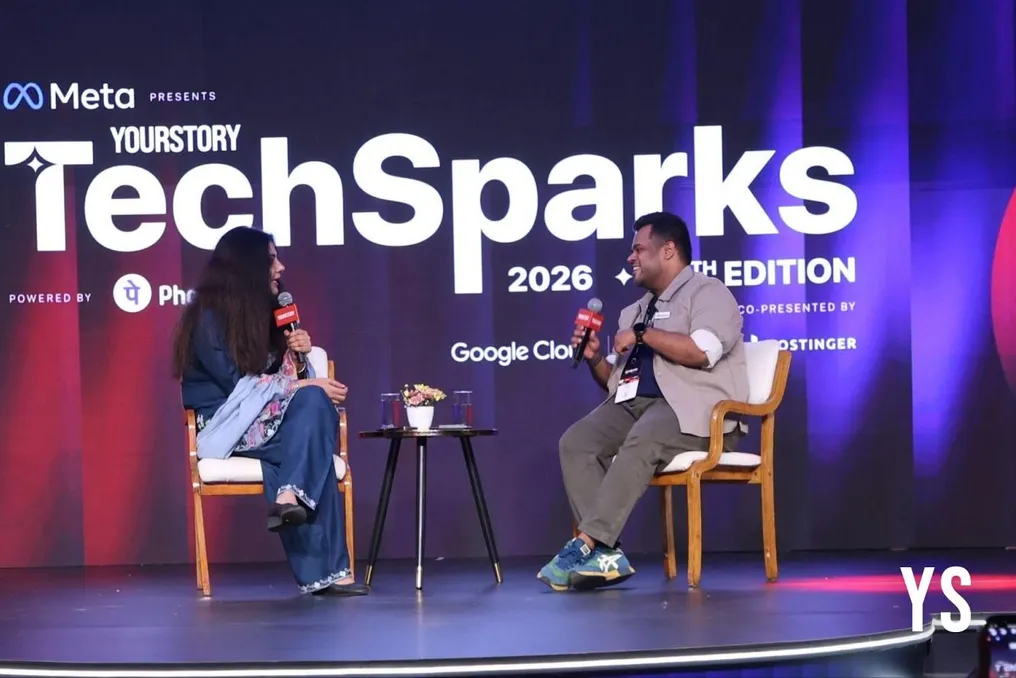
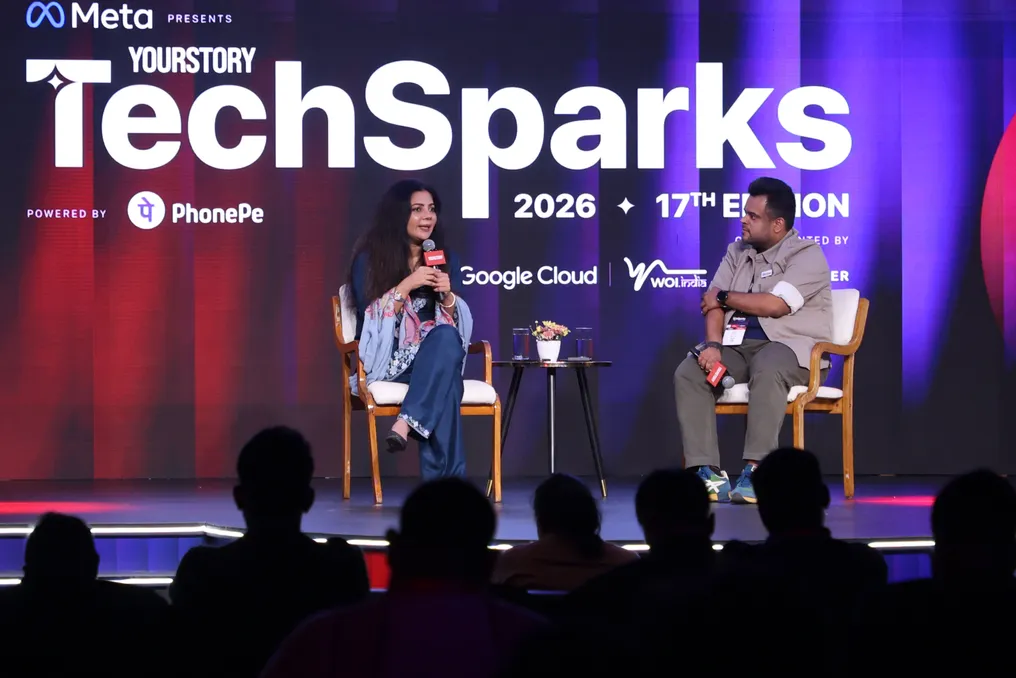
A session titled 'Can AI turn India into a global content export hub?' began with a demonstration of Dolphin AI by Saurabh Pandey, founder and CEO of Eloelo Group. This was followed by a discussion in a conversational format with Shraddha Sharma, founder and CEO of YourStory and The Bharat Project.

Pandey noted that India has long produced outstanding intellectual properties such as Baahubali, Kantara, and RRR, but rarely acted as an exporter. He compared this to Japan succeeding with anime, South Korea with dramas, China with microdramas, and the US with Hollywood, emphasizing that each of these countries used content to strengthen its soft power.

In Pandey's view, AI is changing this situation because tools previously available only to a limited number of markets are now open to everyone. Opportunities extend not only to the film industry but also to localized advertising, commercial videos, and social media content intended for international clients.

To illustrate his points, Pandey presented Dolphin AI, Eloelo's newest product. The company initially worked in live entertainment, then moved to microdramas through the Story TV app, and recently added a micro-learning application called Master.

Dolphin AI solves a common problem for content creators: creating a single video often requires stitching clips and edits from about twenty different tools. Dolphin AI replaces this process with an agent chat and a set of templates. A simple prompt allows for the creation of a complete video, while the system independently manages context and narrative continuity. Furthermore, it integrates with Claude and ChatGPT via MCP, helping authors create longer AI-based videos. The presentation concluded with a short demo reel.

When Sharma joined Pandey on stage, she reacted with pride to the demonstration, stating: 'This is amazing. It's real, and it's happening in India.'

The discussion then moved to implementation issues. Pandey reported that during the early access period, Dolphin AI generated approximately 15,000 videos in just eight days solely through organic search.

He then explained why this is important for storytellers. High-quality visual effects previously required huge budgets, which served as a filter determining who could create ambitious stories. Pandey stated: 'With AI, with tools like Dolphin AI, we aim for you to be able to release content without any gatekeepers.' He clarified that AI does not replace actors but replaces expensive locations; for instance, a historical drama no longer needs a real palace. Since distribution has become largely algorithmic, a storyteller from India can reach an audience in the US or Europe.

When asked about the reasons for India's lag, Pandey did not blame creativity. He compared South Korea, with 52 million inhabitants and a content export economy worth about $15 billion, to India's population of 1.4 billion. He countered: 'I would refuse to believe that we lack creativity.' In his opinion, success requires the combination of technology, aspiration, distribution, and capital, and Indian developers too often viewed the domestic market as the only significant one.

Regarding whether microdramas can become a viable business in India, Pandey cited the example of China, where this category brought in about $8 billion in revenue last year and is now growing to $10–11 billion, with one platform earning more than China's entire box office. In India, he said, the aggregate growth rate of the top four or five players exceeds 5,000 crore rupees, achieved in about 18 months.

Historically, high production costs were a barrier, consuming 50–60% of revenue. AI, according to Pandey, finally solves the supply problem. He compared this to the moment of rapid commercialization in the entertainment sector. Pandey expects platforms to consolidate around two or three players, similar to what happened in food delivery and e-commerce, but the supply will remain open. Eloelo released 200 new microdramas last month for its Story TV platform and collaborates with about 90 production companies, a number he predicts will double.

He advised new entrants to focus on the supply side. Small, agile AI studios, consisting of several editors, promo producers, and line producers, can supply microdramas and OTT content to platforms. He urged writers and producers to view AI as a brainstorming partner and proposed the idea of creating an AI-made 'Mahabharata.' Pandey concluded: 'The next Disney or the next major intellectual property can be created right now if the right supply engine appears, because the demand is very obvious.'

Pandey added that Eloelo, which grew from one platform to five, is currently not planning an immediate IPO and is focused on sustainable growth while building the foundation for India's global ambitions.

Sharma noted that Pandey's journey from a Flipkart employee to a globally operating founder serves as a reminder of what Indian ambition can achieve. She urged the audience to tell their teams and networks that the window of opportunity for development in this area is open. The session suggested that if India managed to turn code into global exports, stories could be next.
Similar stories

Vijay Subramaniam discusses the impact of artificial intelligence on the changing media landscape
Read more
yourstory.com

Vijay Subramaniam discusses the impact of artificial intelligence on the changing media landscape

The media industry has long functioned in isolated segments: agencies managed stars, studios created films, platforms distributed content, and brands paid for audience reach. However, these boundaries are blurring today. Creators are building their own enterprises, artificial intelligence is transforming the content creation process, and one story or character can become the starting point for films, series, and brand partnerships.

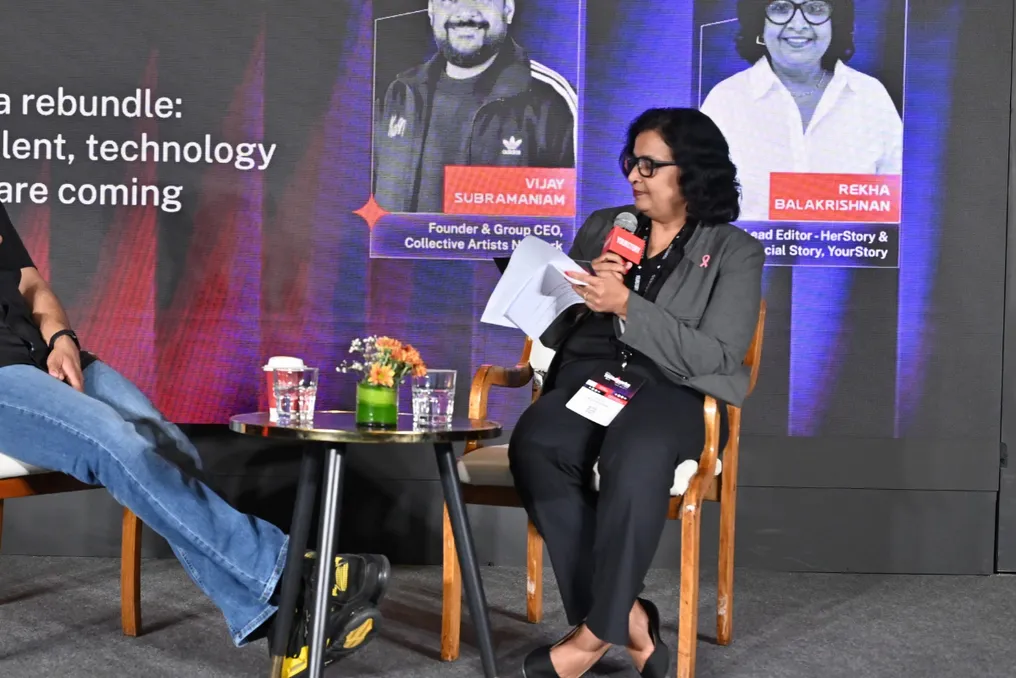
Collective Artists Network, founded by Vijay Subramaniam, operates in several such areas. During a fireside chat titled 'The Great Media Repackaging: Why Content, Talent, Technology, and Commerce Are Merging at TechSparks 2026,' Subramaniam discussed how his project integrates layers in communities of talent, marketing, and technology, as well as the role of AI in this overall scheme.

Having earned the nickname 'the AI man in the media industry,' Subramaniam stated that despite concerns, he confidently embraces this role because technology will remain here forever. He expressed the conviction that content creation should be equal in opportunity. Historically, only a few elites had the right to tell stories, but in his opinion, anyone who has a story should have the ability to tell and consume it. His company actively implements this idea, possessing, according to him, the world's largest portfolio of AI-enhanced content.

According to Subramaniam, the media business is recession-proof. He noted that during the COVID-19 pandemic, everyone was forced to stay home to consume content, meaning media risks losing nothing. The risk exists for media operators who fail to adapt to changes.

He also pointed out that the Indian media ecosystem is experiencing a decline of oligarchs for the first time. Citing successful post-pandemic projects like KGF, Mahavatar Narsimha, and Netflix shows, including the recently released Musafir Cafe, which became a Netflix hit, he emphasized that success is achieved by new faces and fresh talent, not by people who have controlled the industry for decades. He believes that these newcomers will prevail.

Regarding whether AI makes content cheaper and more profitable, Subramaniam answered affirmatively. He stated that business profitability will increase by two hundred percent, and storytelling will become democratic, allowing stories to be created from anywhere, such as Jabalpur or Coimbatore. However, he warned that this is not just about writing a prompt and getting 'AI sludge'; the same principles as in animation are required: production designer, costume artist, cinematographer. He added that AI will never replace a screenwriter and dialogue, as there must always be a person behind the project capable of conveying the director's vision.

The company built its tool G5 by working with four National Award-winning directors: Rajesh Mapushkar (for the film Ventilator), Hansal Mehta, Sanjay Puran Singh Chauhan, and Manu Anand. These directors defined what should be in the product, and this is being implemented in the current development.

Speaking about a fully AI-generated animated and visual series about the Mahabharata, set to release at the end of 2025, Subramaniam admitted that lessons were learned from the first release. He reported that they are proud to be the first in the world in this field, and thanks to technological improvements starting next month, viewers will see enhancements: the content now includes emotion, comedic timing, as well as genuine stress, grief, and other expressions.

Although creators' economies are rapidly evolving thanks to AI, new business models, and direct sales channels, the industry faces a question: what will determine success in the next five years—talent, stories, or access to the audience? For Vijay Subramaniam, the answer lies in recognizing that the audience is becoming increasingly unpredictable. He noted that any formula they try to use is inevitably broken.

Examples like Musafir Cafe challenge the belief that big-budget streaming shows must match the scale of Game of Thrones or House of the Dragon. Similarly, the success of films like Dhurandhar refutes the notion that audiences will not dedicate time to theatrical releases. In a situation where established formulas offer little guarantee, Subramaniam believes that the fundamentals of a successful creative business remain the same: finding the best storytellers, providing them with the necessary resources, and ensuring economic viability.

Murf AI Co-founder Claims Indian Voice AI Challenges Could Influence Global Technology
Read more
yourstory.com

Murf AI Co-founder Claims Indian Voice AI Challenges Could Influence Global Technology

The co-founder of Murf AI believes that the complexities associated with voice artificial intelligence in India have the potential to shape global technological trends. What Indian users consider ordinary conversation could become the most difficult test for voice AI, and solving this challenge will open up new possibilities worldwide.

Voice AI is capable of answering questions, confirming orders, or assisting with bookings. However, the question arises: can it correctly pronounce an Indian name, understand an address spoken in a mix of Hindi and English, and respond quickly enough to sound natural?

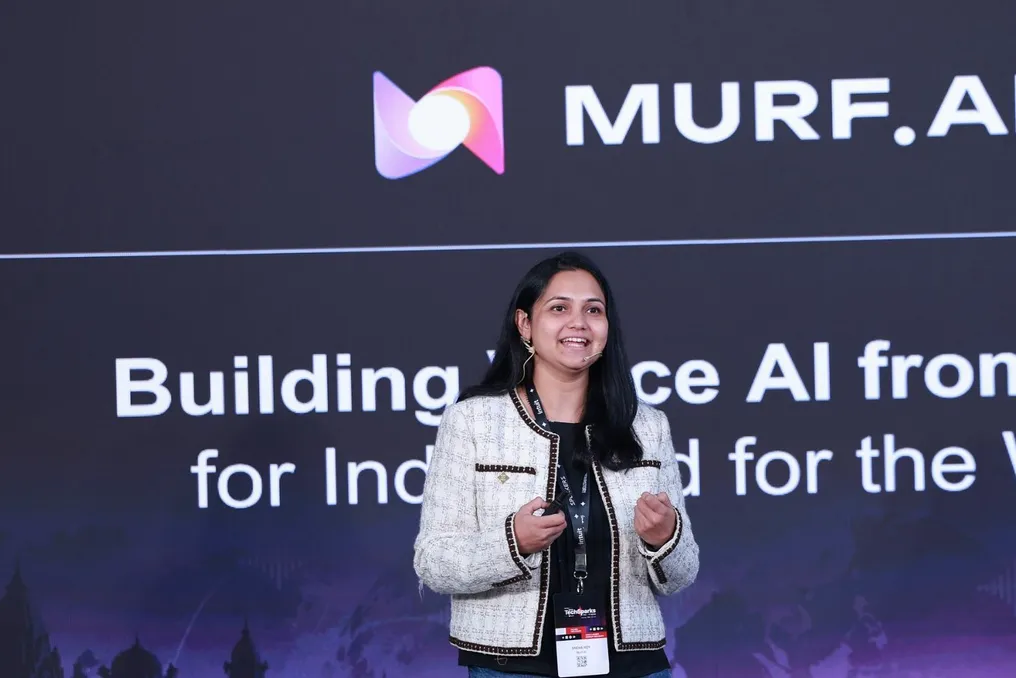
For Sneha Roy, co-founder and COO of Murf AI, such scenarios are not exceptional; they represent the baseline for creating voice AI that will function in India, and ultimately, globally.

During a masterclass at the TechSparks 2026 event titled 'Building Voice AI from India, for India and for the World,' Roy explained how India's linguistic complexity, infrastructure limitations, and economic considerations affect speech technology development.

She cited examples of products that were first adapted for Indian users before finding broader application. Google Maps implemented offline functionality for areas with limited internet access, and Netflix introduced a mobile-only plan that has since been adopted in 78 countries. Uber tested cash payments in Hyderabad before expanding this option to other markets.

Roy posits that voice AI can follow a similar path. For instance, when calling to check a delivery status in Bengaluru, a customer might mix English with a regional language, use a local pronunciation of an address, and expect the postal code to be spoken numerically.

A model built on standardized English may struggle with such nuances. Roy emphasized: 'If a customer has to change their manner of speaking so that the agent can cope, or constantly repeat their address or name, then we have not finished developing it.'

In her view, the task is to create systems that accommodate people's natural way of speaking, rather than requiring customers to adapt to the technology.

Natural speech is only one part of the problem. Voice agents must also react quickly and operate efficiently at scale when companies process millions of calls monthly. Roy reported that a complete voice agent pipeline, including speech recognition, language modeling, and speech generation, typically has a response budget of 500 to 800 milliseconds. She added that Murf has managed to reduce the latency of its text-to-speech model below 100 milliseconds, including network delays.

To achieve this, the company developed Falcon 2—a smaller speech model designed to run on a wider range of GPUs instead of depending on specific, high-performance hardware. Roy noted that this approach helped maintain low latency across different geographical regions while improving cost-effectiveness.

Similar engineering solutions could be beneficial for markets outside India, especially where computational infrastructure is limited or deploying voice agents at scale remains expensive.

Roy also highlighted the importance of a responsible approach to voice data. She mentioned that Murf collaborates with over 400 voice actors globally through long-term, royalty-based partnerships and does not clone voices without consent.

For clients with strict privacy requirements, the company offers APIs that can process data without storing it, as well as on-premise deployments for sensitive applications. Roy's central thesis is that India's linguistic diversity and infrastructural constraints should not be viewed as secondary requirements; they can help define what voice AI must do before it is ready for widespread adoption. As she put it: 'India is the capital of world specifications.'

Saurabh Pandey from Eloelo claims Dolphin AI can change the landscape of Indian storytelling
Read more
yourstory.com

Saurabh Pandey from Eloelo claims Dolphin AI can change the landscape of Indian storytelling

Saurabh Pandey, founder and CEO of Eloelo Group, posits that artificial intelligence is capable of overcoming barriers in the creation of Indian content. He noted that when James Cameron's epic sci-fi film 'Avatar' was released in the late 2000s, many Indians questioned why their own cinema did not reach such a level.

Eloelo is an Indian social gaming and live entertainment platform based in Bengaluru. It was launched in 2020 by former Flipkart executives, Pandey and Akshay Dubey. The platform combines interactive games with video and audio streaming, specifically tailored for youth and local markets in India.

At the 17th TechSparks event by YourStory, Pandey demonstrated Dolphin AI—an AI-powered video creation tool from Eloelo. The presentation focused on the topic, 'Can AI turn India into a global content export hub?' and was moderated by Shraddha Sharma, founder and CEO of YourStory and The Bharat Project.

Dolphin AI currently has a waiting list, and the platform releases invitation codes in batches. For now, Dolphin AI is available for free, as Eloelo provides generous starter credits allowing creators to produce initial videos and familiarize themselves with the solution. However, a credit-based pricing model is planned for the future. Pandey stated that the team primarily wants to study Dolphin AI usage patterns, and preliminary results look promising: approximately 15,000 videos were created in about eight days, mainly through organic search.

Pandey's main thesis concerns who has the right to tell big stories. He argued that in the age of visual effects, filmmaking depended on financial resources. A good storyteller conceiving a historical drama often could not afford the necessary visual effects, making budget the primary constraint on content. AI, in his view, is a game-changing tool. Since production typically consumes 50 to 60% of revenue in this category, it narrows budgets for distribution and disrupts the unit economics. By reducing production costs, AI gives creative imagination the necessary space to develop.

Meanwhile, distribution has become largely algorithmic. Content creators in India now compete for attention in the US or Europe on equal footing with any other market participant.

The discussion then moved to another growing segment of content—microdramas and short-form content. These formats have attracted many Indian startups, but few have become popular. Pandey noted that the combined turnover of four or five leading microdrama players in India exceeded 5,000 crore rupees in just 18 months.

He also pointed to South Korea, a country of 52 million people, which has built a $15 billion content export economy. In contrast, India has 1.4 billion people and possesses immense creative talent. The problem, he believes, lies in the lack of intent, technology, ambition, and capital. In his opinion, too many Indian content creators focus exclusively on the local audience. He emphasized that no one asks if a new large language model is being launched for India; it is simply launched for the entire world. Therefore, Indian stories should not be an exception.

Pandey does not expect microdrama to escape the same pattern observed in other sectors. Food delivery, quick commerce, e-commerce, and taxi services eventually ended up in the hands of two or three major players controlling 70–75% of the market, and he predicts a similar development in the content sector. According to him, the real opportunity lies on the side of content supply.

Eloelo released about 200 new microdramas last month, averaging five or six per day, and collaborates with around 90 production companies. His advice to future founders is to abandon the platform race and instead create small, AI-focused studios: a group of writers, editors, promo producers, and line producers who could supply microdramas, OTT platform content, and exportable intellectual property to major platforms.

He also addressed authors and producers who fear AI, advising them to use it as a brainstorming partner and to release more content. As an example, he mentioned an idea close to his heart: there is an AI Ramayana, but no one has yet created an impressive AI Mahabharata.

Pandey added that Eloelo has grown from one platform to five within one group, and an imminent IPO is not planned. The main focus is on sustainable and profitable growth.

Popular