NYU Abu Dhabi study shows economic benefits of weight-loss drugs like Wegovy and Ozempic
Read more
Khaleej Times
www.khaleejtimes.com

NYU Abu Dhabi study shows economic benefits of weight-loss drugs like Wegovy and Ozempic

According to a new study conducted by NYU Abu Dhabi, medications for diabetes treatment and weight management, including Ozempic and Wegovy, may bring economic benefits that extend beyond improving patient health. It was found that the use of these treatments is associated with increased employment and longer working hours.

Researchers used nationwide data from Denmark and found that people receiving treatment for type 2 diabetes were more likely to be employed, while those taking weight management drugs increased their working hours if they were already employed.

The study examined two drugs: semaglutide, marketed as Ozempic (for type 2 diabetes) and Wegovy (for weight control). Both medications belong to the GLP-1 receptor agonist class, which mimics the natural hormone regulating appetite and blood sugar levels.

The analysis was based on Danish population records from 2018 to 2024, examining changes in earnings, working hours, and employment before and after patients began therapy. Statistical methods were used to separate the effects of the treatment itself from general labor market changes.

Among patients receiving subsidized Ozempic treatment for diabetes, it was found that the therapy increased the probability of employment by 4.1 percentage points. Furthermore, this group demonstrated an increase in working hours by 19.5 hours per quarter.

However, the results were different for patients who self-paid for Wegovy to correct their weight. Although the drug did not lead to a significant increase in the probability of employment, those who were already employed increased their workload by an additional 29.7 hours per quarter.

Weda Narasimhan, Assistant Professor of Economics at NYU Abu Dhabi, noted that this data underscores the need to consider the broader economic impact of medications, not just the direct costs. She added that separating employment and working hour analyses allows for a better understanding of the differences in outcomes between treatment groups and potential consequences for individuals and public finances.

Beyond employment issues, scientists investigated whether increased working hours and income could generate additional income through income tax and help offset public healthcare expenditures. In Denmark, Ozempic treatment for diabetes is subsidized, whereas patients using Wegovy for weight control pay the full cost themselves.

According to the study's fiscal analysis, the additional income from income tax related to increased earned income among patients taking these drugs could help cover public expenses for subsidized diabetes treatment.

Raul Santaeulalia-Llopis, an economics lecturer at NYU Abu Dhabi, stated that medical procedures should not be evaluated solely on their clinical outcomes. He emphasized that evaluating only metrics such as weight loss or blood sugar levels overlooks the broader picture, requiring consideration of factors beyond direct medical costs.

He noted that the study shows that when changes in employment, working hours, and subsequent tax revenues are taken into account, the financial calculation changes drastically. Nevertheless, Santaeulalia-Llopis stressed that understanding the broader influence of these drugs requires studying whether they contribute to sustainable lifestyle changes.

He questioned whether GLP-1 is a catalyst for a healthier and self-sustaining lifestyle, or if its economic dividends merely create a new form of pharmaceutical dependence. Santaeulalia-Llopis reported that current research with the Abu Dhabi Department of Health under the Thiqa obesity program is focused on this question.

The findings were published as a discussion paper by the Center for Economic Policy Research (CEPR). By analyzing diabetes treatment and weight control separately, the researchers highlighted how the economic effects of semaglutide can vary depending on the patient's health status, employment status, and method of financing the treatment. The study also suggests that assessing the broader economic impact of such drugs can help policymakers better understand their potential consequences for public finances and healthcare spending.

Similar stories

Scientific study points out that peels and discarded parts of fruits and vegetables are richer in fiber
Read more
super.abril.com.br

Scientific study points out that peels and discarded parts of fruits and vegetables are richer in fiber

There is a debate about whether consuming the peels of fruits and vegetables brings health benefits, and a new study reinforces this hypothesis. Parts such as peels, seeds, and stems are often thrown away after consuming fruits and vegetables, but some people already suspected that these residues could be more nutritious than the pulp.

The research, published in the scientific journal International Journal of Food Sciences and Nutrition, demonstrated that, in fact, the peels, seeds, and stems contain a higher concentration of fiber than the habitually ingested parts of these plants.

A group of scientists from King's College London initiated an analysis focused on the fiber content of twelve types of fruits and vegetables, including pumpkin, kiwi, watermelon, broccoli, bell pepper, pineapple, leek, fennel, cabbage, celery, cauliflower, and beetroot. The objective was to quantify and compare the amount of fiber in both the most consumed portions and the usually discarded parts, such as peels, seeds, and stems.

The investigation results indicated that, in ten of the twelve tested foods, the unconsumed portions showed a higher fiber content. A notable example was pineapple, where the peel and core had approximately 450% more fiber compared to the pulp. In pumpkin, the seeds and peel registered 9.25 grams of fiber per 100 grams, while the pulp contained only 2 grams.

Utilizing these food parts through an approach called 'root-to-tip' by the authors has the potential to significantly increase fiber intake among the population. This aspect is particularly relevant given that a significant portion of people do not meet the recommended daily fiber goal. Data from the Family Budget Survey (POF) reveals that 68% of Brazilians consume insufficient fiber.

However, one obstacle is that these parts of fruits and vegetables tend to be hard, difficult to chew, and often do not have a very palatable taste when eaten raw. For this reason, researchers suggest that these parts can be incorporated into recipes, being grated, crushed, baked, or using other preparation methods. In addition to potential nutritional gains, this practice can also contribute to reducing food waste and, in the context of restaurants, reducing kitchen operational costs.

The authors concluded that, although fruit and vegetable byproducts have been studied to increase fiber content, the level of fiber in many 'root-to-tip' components is still unknown. They state that these findings suggest that 'root-to-tip' consumption can promote higher dietary fiber intake while helping to reduce food waste.

Gynecologist from UAE spoke at summit on the biggest health threat of this century
Read more
www.khaleejtimes.com

Gynecologist from UAE spoke at summit on the biggest health threat of this century

According to research, by 2030, nearly one in five women worldwide is expected to face obesity, while among men, this figure is one of seven. Consequently, the topic of weight management has gained particular relevance.

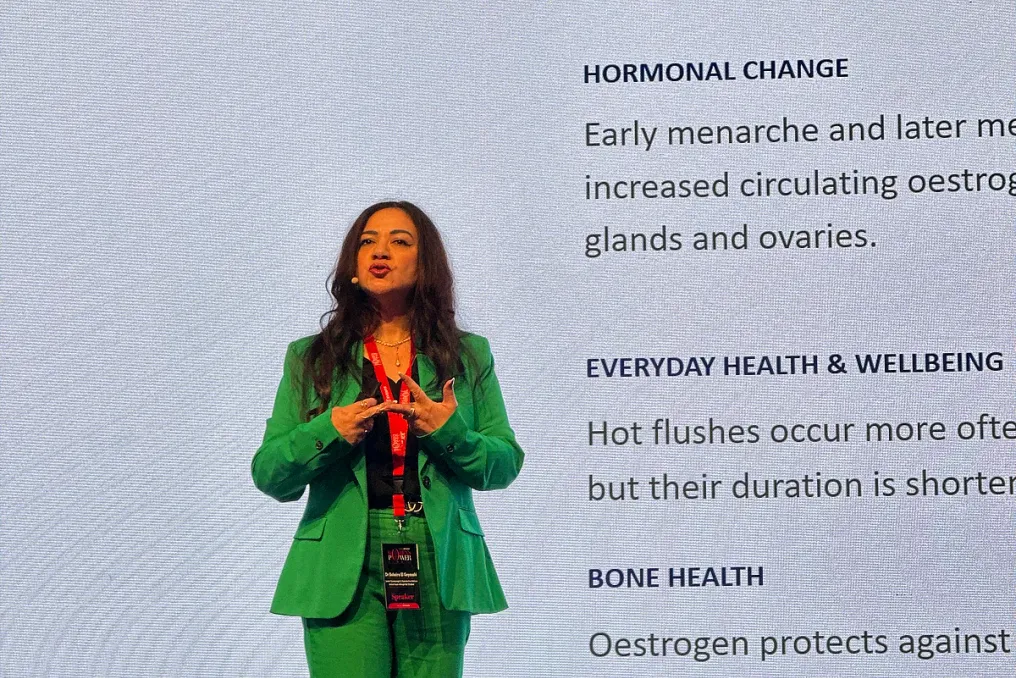
During the opening of the Women's Summit by Gulf Times in Dubai on Wednesday, Dr. Bohaira El Geoushi, a consultant gynecologist and reproductive medicine specialist, used this fact to emphasize the pervasive danger posed by obesity and the importance of properly addressing this issue. She stated: 'Obesity is recognized as the biggest health threat of this century that can be acted upon.'

Dr. El Geoushi noted that obesity is a chronic condition requiring lifelong management, adding that excess weight may only be one of the visible changes. She stressed that 'timely and personalized care is crucial.'

In her words, obesity is just the tip of the iceberg, as it affects a person at all stages of life. It can lead to a range of health problems, including insulin resistance, polycystic ovary syndrome (PCOS), osteoporosis, high blood pressure, heart and bladder problems, dementia, and even cancer.

Dr. El Geoushi also pointed out that solving this problem must take into account many factors. She acknowledged the numerous roles and difficulties women face in daily life, whether at home or at work. She urged: 'We must be proactive in managing our own lives... we must fix this now.'

Despite presenting alarming data, Dr. El Geoushi offered useful recommendations. She believes that a helpful conversation about weight management should be respectful and include goal setting and practical plans. 'The dialogue should focus on improving women's daily lives.'

She also refuted the idea that weight loss is always a difficult task. Dr. El Geoushi observed that often losing 5–10% of body weight is sufficient. If going to the gym is not feasible, she recommended activities such as walking, Pilates, or yoga.

Ozempic and Wegovy users seek supplements to mitigate side effects, raising concerns about risks
Read more
g1.globo.com

Ozempic and Wegovy users seek supplements to mitigate side effects, raising concerns about risks

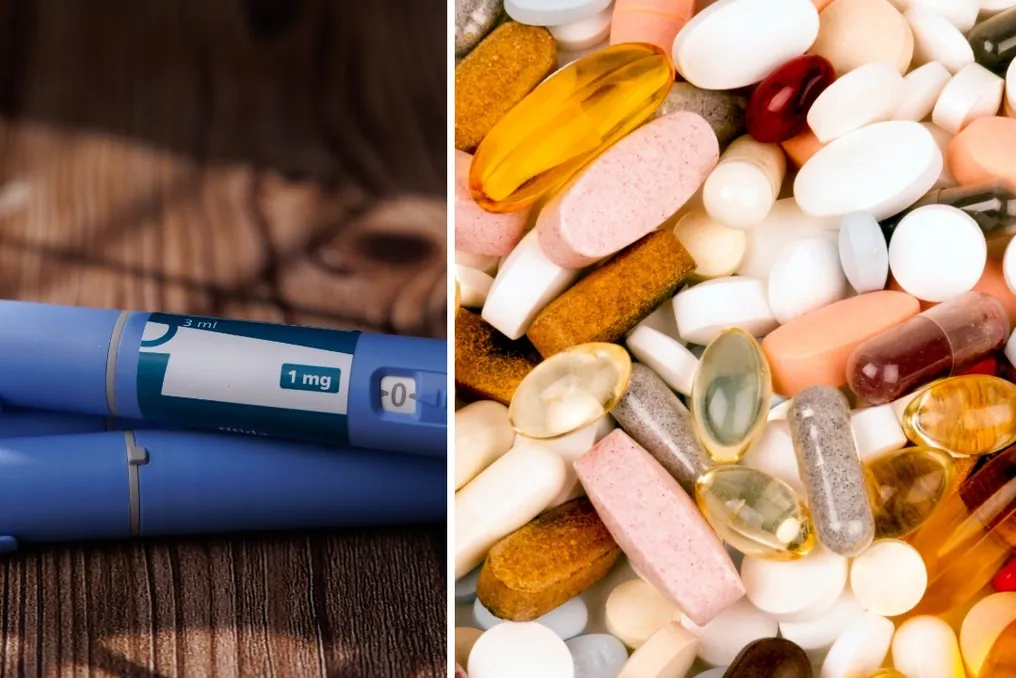
Individuals using GLP-1-based medications, such as Ozempic and Wegovy, have been seeking supplements to alleviate adverse effects. For Allison Vecchio, 42, these drugs were described as a 'reset button for life,' but they came with negative consequences, including gastrointestinal discomfort, brittle nails, and weakness so severe that it sometimes prevented her from getting out of bed.

A nurse at the Fort Pierce emergency room in Florida reported that her symptoms improved after starting a supplement regimen containing fiber, collagen, and electrolytes, a package estimated to cost between $200 and $300 per month. She emphasized the need to 'truly take control' so that simple weight loss translates into real health improvement.

GLP-1 medications, including Ozempic and Wegovy, manufactured by Novo Nordisk, represent a significant medical advancement in recent years due to their effectiveness in managing obesity and type 2 diabetes, in addition to contributing to the reduction of cardiovascular risk. A study conducted by JPMorgan indicated that approximately ten million Americans used them in the previous year, a number projected to reach 25 million by 2030.

However, the side effects of these drugs have motivated many people to turn to dietary supplements that lack adequate regulation. Supplement sales in the United States have grown sharply in recent years, exceeding $74 billion in 2025, according to the Nutrition Business Journal. Despite user confidence, this growing popularity—partially driven by social media—has generated warnings from doctors and led regulatory bodies to consider new guidelines on the marketing of these items.

Vitamins and supplements do not require prior approval from the U.S. Food and Drug Administration (FDA), which complicates the assessment of their scientific validity. With social media influencers playing an increasingly prominent role in promoting these products, some medical experts have called for greater oversight of supplement online marketing. Rob Fried, CEO of Niagen Bioscience, a company that recorded $129 million in sales last year, warned that corporations 'can hire an influencer, or even hundreds of influencers on TikTok... to make any claim that aids in sales.'

Supplement Sales Skyrocket

Vecchio, who has 25 thousand followers on TikTok, maintains contracts with three brands and is also part of the TikTok Shop's HealthPro creator program, intended for licensed healthcare professionals.

Terri Hart, 52, residing in Pittsburg, Kansas, a TikToker with over 12,000 followers, works mainly on commission, evaluating products offered by brands to influencers and promoting those she finds most useful. Hart uses magnesium, electrolytes, vitamin B12, and other supplements, which, according to her, helped compensate for what she described as 'terrible' nausea, fatigue, and constipation after starting GLP-1 in 2023. These items cost about $110 monthly, an expense not covered by her health insurance plan. Hart mentions that TikTok income helps cover this expense, stressing that she is not a medical professional and advises her followers to consult doctors before following her advice. She states: 'I establish my authority through my life experience.'

TikTok Shop reached over $1 billion in dietary supplement sales in 2025, representing 5.4% of all supplement e-commerce, according to the Nutrition Business Journal. Concurrently, overall vitamin and supplement sales in the US grew by 5% in 2024 and 7% the previous year. Erika Craft, a data analyst at the Nutrition Business Journal, observed that the products are 'attracting new consumers and expanding established supplement usage routines.'

However, in the absence of prior FDA endorsement, consumers are unaware of the exact composition of many supplements, explains Jonathan Bonnet, an associate clinical professor at Stanford and medical director of the Ardmore Institute of Health, located in Ardmore, Oklahoma. He warns: 'If you cannot know what you are taking, it is difficult to know what risks you are running.'

According to a Nutrition Business Journal survey, almost half of GLP-1 users began consuming new vitamins and supplements shortly after starting medication, with probiotics, proteins, and fibers being the most popular. Research conducted by Boston Consulting Group this year showed that GLP-1 users spend about 20% more on protein, fiber, and collagen—the latter being a protein essential for maintaining skin structure—compared to the period before starting treatment.

Popular