Number of Cobra Sightings in Residential Areas of Egypt is Increasing
Read more
Egypt Independent
www.egyptindependent.com

Number of Cobra Sightings in Residential Areas of Egypt is Increasing

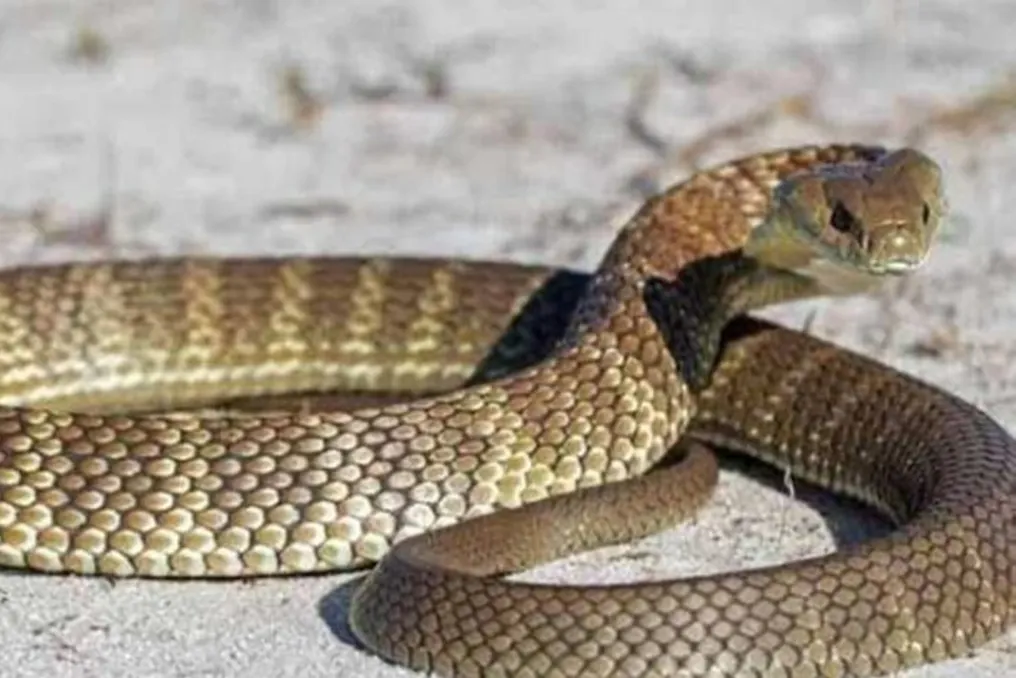
There has been an increase in sightings of cobras in residential areas of Egypt, causing concern among the country's residents.

Mohamed Youssef, head of the Central Administration of Nature Reserves of the Ministry of Environment, explained that studies have shown that the appearance of dangerous animals in populated areas is usually linked to factors such as environmental changes that force them to move.

During a phone interview for the program 'Hadith Al-Kahira' (Cairo Talk), Youssef added that the appearance of animals in human habitats requires a detailed study of the circumstances of each specific case, and hasty conclusions about the reasons for their presence cannot be drawn.

He noted that cobras are very sensitive to the temperature of their environment and may move in search of warmth, food, or shelter. Changes in ecological conditions can prompt these animals to leave their usual habitats.

Youssef advised citizens to exercise caution and strongly recommended not to approach a cobra or attempt to interact with it upon encountering one. Instead, they should immediately notify the relevant services, such as Civil Defense, emergency services, or the governorate's operations center.

Similar stories

Second Stage of Air Quality Response Plan (GRAP-2) to be Introduced in Delhi-NCR
Read more
www.aajtak.in

Second Stage of Air Quality Response Plan (GRAP-2) to be Introduced in Delhi-NCR

Amid rising air pollution in the Delhi-NCR region, the second stage of the Graded Response Action Plan (GRAP) will be implemented. This decision was made by the Commission for Air Quality Management (CAQM) after the Air Quality Index (AQI) exceeded the mark of 300.

During today's meeting, CAQM decided to introduce GRAP-2. The official order regarding this will be issued by the commission shortly.

Poisonous fish found on UK beach contains toxin thousands of times more dangerous than cyanide
Read more
www.aajtak.in

Poisonous fish found on UK beach contains toxin thousands of times more dangerous than cyanide

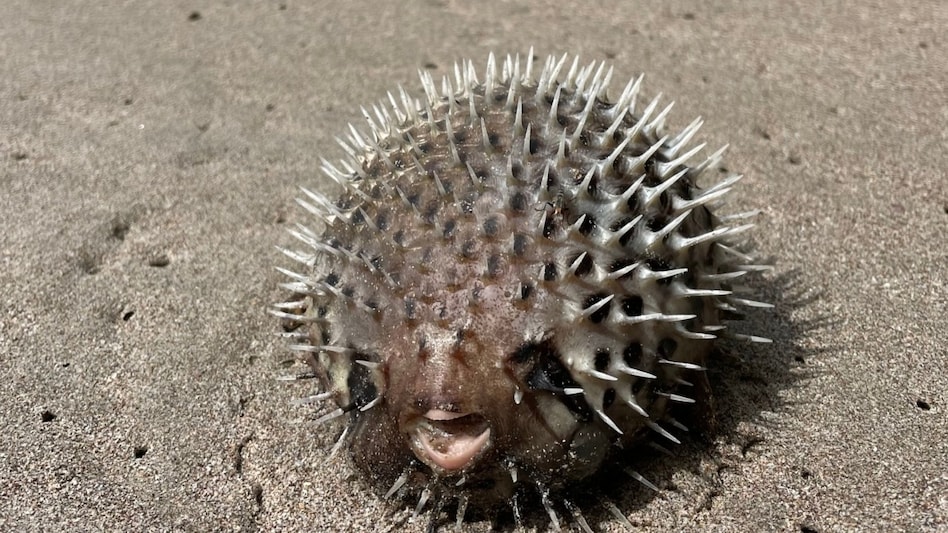
When walking along the sea, one should not touch suspicious fish, even if it is dead. A recent discovery of such a fish on a well-known beach in the UK has caused concern. This fish is a pufferfish, and its body contains a toxic substance that can be thousands of times more dangerous than cyanide. It is important to note that the poison remains deadly even after the fish dies.

According to The Sun, the incident occurred in the Dorset area, in Shstdandane, on Noll Beach. Local resident Owen Butty noticed a strange, about 17-inch object near the shore. Initially, he thought it was a small maritime marker or a plastic bag. However, upon getting closer, he realized it was a dead fish whose body was inflated like a balloon. Owen had previously seen pufferfish while diving abroad, so he assumed it was one.

To confirm, he photographed the fish and sent the images to the Dorset Wildlife Trust and a marine life expert. After inspection, the fish was identified as a pufferfish.

The most dangerous feature of the pufferfish is the poison called tetrodotoxin, contained in its body. This is an extremely potent neurotoxin that affects the body's nervous system. It can lead to muscle paralysis and, in severe cases, death due to respiratory problems.

The poison can be present in specific parts of the fish's body, such as the liver, ovaries, intestines, and skin. This is why touching or consuming it is extremely dangerous. If the pufferfish is not properly cleaned, the poison from its toxic organs can enter the edible meat, causing serious food poisoning. In some countries, the consumption of this fish is only permitted under strict rules and special preparation.

The danger associated with touching the pufferfish cannot be ignored. Its body may have small sharp spines. If these spines get into the skin and the poison enters the body, it can cause serious problems. Therefore, the safest way is to keep a distance from such fish if spotted on the shore. The key point is that the poison in the fish's body does not disappear after its death.

Pufferfish are usually found in warm seawater. Their natural habitats are the Indian, Pacific, and warm parts of the Atlantic Ocean. The discovery of such a fish on the cold coast of the UK is quite unusual. It is speculated that recent storms Austen and Boalo might have brought this fish from its usual range hundreds of miles away. However, the true reason for its appearance off the coast of the UK has not yet been established.

The name pufferfish is related to its unique defense mechanism. When the fish senses a threat from a predator, it fills its body with water or air, inflating like a balloon. This significantly increases its size, making it a difficult target for a predator to swallow. Once the body is inflated, it takes on a spherical shape, which is its most distinguishing feature.

Owen Butty, who spends a lot of time in the Dorset marine areas and is knowledgeable about local marine fauna, reported that he did not expect to see a pufferfish on the local beach. A representative from the Dorset Wildlife Trust also called it a rare sight for the marine areas of the UK. The organization advised people never to touch a pufferfish if they see it on the shore, but instead to report it to the relevant authorities.

Meanwhile, the National Trust, which owns Shstdand beach, stated that it had not received official notification of the fish's discovery. Overall, although the fish found on the shore may seem small and strange, the poison contained within it can be extremely dangerous. Therefore, curiosity that prompts one to approach or touch such a fish could result in serious consequences.

Abu Dhabi Authorities Issue Guidelines for Observing Arabian Foxes
Read more
www.khaleejtimes.com

Abu Dhabi Authorities Issue Guidelines for Observing Arabian Foxes

Abu Dhabi authorities have assured residents that the Arabian red foxes do not pose a threat to people or domestic animals, emphasizing that these animals are an integral part of the local fauna and play an important role in maintaining the emirate's balanced ecosystem.

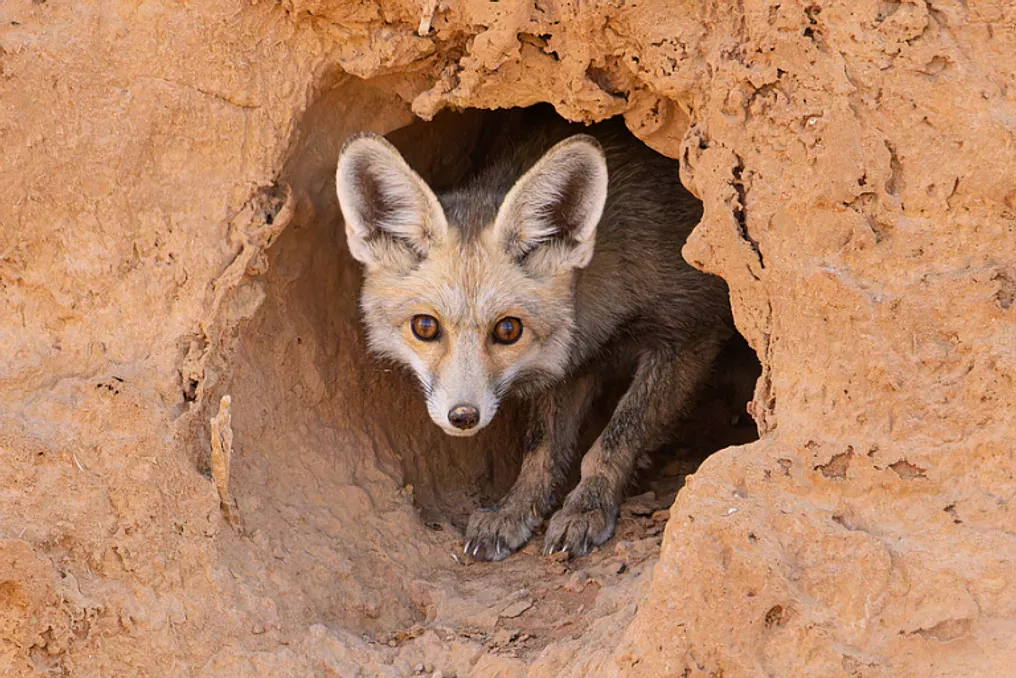
Observing the Arabian red fox, scientifically known as Vulpes vulpes arabica, in the wild can be a pleasant experience for many residents who may never have seen these animals before. Nevertheless, the Abu Dhabi Department of Municipalities and Transport (DMT) has published a guide on how people can enjoy this experience without harming themselves or the fox.

DMT stated that 'foxes, like us, are intelligent creatures and should therefore be treated with compassion for their well-being.' The department specified that there is currently a significant population of Arabian red foxes in Abu Dhabi and stressed the need to use effective and humane methods to resolve any issues arising from the foxes.

DMT urged residents to remain calm upon spotting an Arabian red fox. They are advised to observe the animal from a safe distance, without approaching it or attempting to feed it. If necessary, noise can be made; any loud sound or bright light will cause the fox to retreat, such as by stepping on it or shining a bright flashlight at the animal.

Since food sources can attract foxes to residential areas, residents are advised to always properly seal trash bins and dispose of waste responsibly. Responsible feeding of stray cats can also reduce encounters with foxes in the vicinity.

Authorities emphasized that Arabian red foxes are naturally timid and prefer to avoid contact with humans. These foxes may enter any property, such as a farm, for several reasons, including access to garbage or food from household members. Therefore, residents are recommended to keep trash securely closed and feed pets, strays, and livestock responsibly. It is also advisable to ensure that all livestock and domestic animals are kept inside sturdy enclosures to prevent predation by foxes.

Other deterrents can be used, such as secure fencing, safe construction of livestock pens, clearing overgrown areas, using safe composting containers, installing motion-sensor lighting, setting up barbed wire to prevent digging by foxes, and using safe scent repellents such as citrus peel, cayenne pepper, citronella oil, mint oil, commercial fox repellents, and garlic.

Abu Dhabi authorities explained that while removing or destroying foxes might seem like the simplest solution, it is ineffective. This is because Arabian red foxes occupy territories, and each territory is inhabited by a family group. The size of these territories usually varies depending on the habitat. If a fox is removed from a specific area, it is highly likely that another fox will occupy that territory within a few days.

Fox removal also often leads to an increase in the population the following year. The Arabian red fox is a solitary predator with large ears, a slender brown body, and a long bushy tail. It weighs between three and five kilograms and rarely exceeds 72 cm in length. It feeds on rodents, birds, insects, desert vegetation, invertebrates such as scorpions, and carrion.

Arabian red foxes inhabit a wide range of habitats across Abu Dhabi, from deserts to farms and urban outskirts. Their presence in urban areas and suburbs has increased due to urban expansion. Being predominantly nocturnal, Arabian red foxes live for about two to four years.

Popular