Millions of liters of water are being lost in South Africa due to aging and leaking infrastructure, while communities face prolonged water supply interruptions. Municipal systems are experiencing growing difficulties maintaining water supply amidst dwindling reservoirs, increased demand, and heightened strain on existing reserves.
This crisis affects major urban centers. In Gauteng, supply issues are observed in Johannesburg, Tshwane, and Ekurhuleni, while in some areas of Pinetown East in KwaZulu-Natal, interruptions have persisted for nearly two weeks.
The worsening situation has once again raised questions about the long-term deterioration of infrastructure, water losses, and the ability of municipalities to manage increasingly strained supply systems.
Johannesburg Water reported that several systems, including Sandton, Midrand, Randburg, Roodepoort, Kommandō, and Central, have faced supply restrictions. Midrand was particularly affected due to low inflow volume and high demand; some systems received small volumes, while others had no water supply at all.
Representatives from Johannesburg Water and the major supplier Rand Water are assessing the affected systems and implementing measures to improve supply. However, the DA party warned that Gauteng is entering a period they call a 'water deficit,' accusing municipalities of restricting water supply to prevent reservoir depletion.
DA's spokesperson for water resources and sanitation, Steven Moor, stated that the party received confirmation that Rand Water is limiting water supply to Johannesburg after the city allegedly exceeded its quota. Moor referenced the Department of Water and Sanitation dashboard from October 30th, which showed the overall storage level of Rand Water reservoirs at 31.1% against a target of 60%. He also noted that the Ikemhof system was at 7%, Zwartkops at 16%, Palmier at 28%, and Marlton at 34%.
The Ikemhof system is critical for parts of Johannesburg, including the Kommandō system, which supplies water to reservoir complexes serving areas such as Crosby, Brixton, and Hursthill. According to DA estimates, Johannesburg, Tshwane, and Ekurhuleni collectively lose about one billion liters of treated water daily due to physical losses.
The department separately reported significant losses in Gauteng. Deputy Minister of Water and Sanitation Jack Bloom stated that in Johannesburg, the proportion of unpaid water was about 49%, including physical losses of 26%. In Tshwane, this figure reached 45% (with physical losses at 34%), and in Ekurhuleni—about 30% (with physical losses at 22%).
Bloom specified that physical losses through pipe bursts and leaks across Gauteng are estimated at approximately 431 billion liters annually. He emphasized that 'every leak fixed and every correctly registered meter delivers water to people who currently do not have it.'
WaterCAN's coordinator for civil science and education, Nomsa Daele, noted that the interruptions reflect years of insufficient investment in municipal infrastructure. She reported that various areas went without water for over a week, and in informal settlements, water was not delivered to community tanks for several days.
Daele stressed that the water problems in Johannesburg did not arise overnight and will not be solved instantly, as 'years of infrastructure aging worsened while necessary replacement investments lagged.' WaterCAN also mentioned that areas such as Nanas Farm, Lowlie, Ivory Park, and Crosby experienced outages, as did Brainstown, Morningside, Sunninghill, Woodmead, and parts of Randburg and Northcliff.
Daele added that reducing unnecessary consumption is important but cannot replace infrastructure investment. She also demanded transparency regarding the revenue collection scheme for Johannesburg Water. 'We need clarity on the collection and the total bill. The city must openly and transparently explain how the revenue designated for Johannesburg Water is managed. We cannot fix a broken system without investment.'
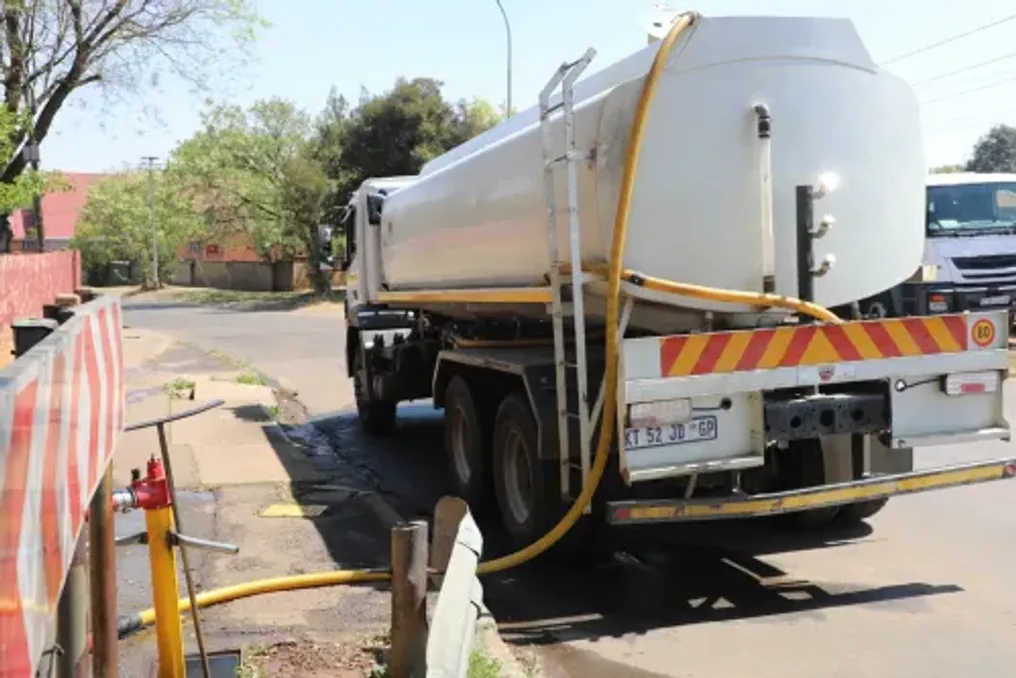
In KwaZulu-Natal, the municipality of Ethekwini reported that reduced supply from the major supplier uMngeni-uThukela Water at the Durban Heights water treatment plant led to a decrease in flow through the Southern Aqueduct, lowering the levels in the Nordend and Shalcross reservoirs. The municipality confirmed that the Pinetown East reservoir system is entirely dependent on the Shalcross reservoir for its water supply. It was confirmed that the Washington Heights and Intake reservoirs are empty, and the municipality could not provide exact timelines for restoring normal supply, organizing water delivery via tankers for affected communities.
Johannesburg Water also cautioned residents against purchasing water from private tankers in affected areas, as the company cannot guarantee the source or quality of the water, nor its compliance with the SANS 241 drinking water standard.
At the national level, Deputy Minister David Makhubo stated that the Water Crisis Committee will work to resolve water issues across the country, including supply interruptions and lack of access to clean water in communities. Furthermore, the Provincial Office of the South African Human Rights Commission in Gauteng is preparing to release its report on the investigation into the provision of water and sanitation services on Monday. The investigation examined 'persistent water and sanitation challenges across the province, including supply interruptions, inadequate infrastructure, wastewater treatment failures, and pollution.' The Commission considered how these issues affect the constitutional rights of communities to water, health, and dignity.