South African Swimming: Swimmers Face Requirement to Pay R55,000 Expenses for Beijing Championship Participation
Read more
IOL
iol.co.za

South African Swimming: Swimmers Face Requirement to Pay R55,000 Expenses for Beijing Championship Participation

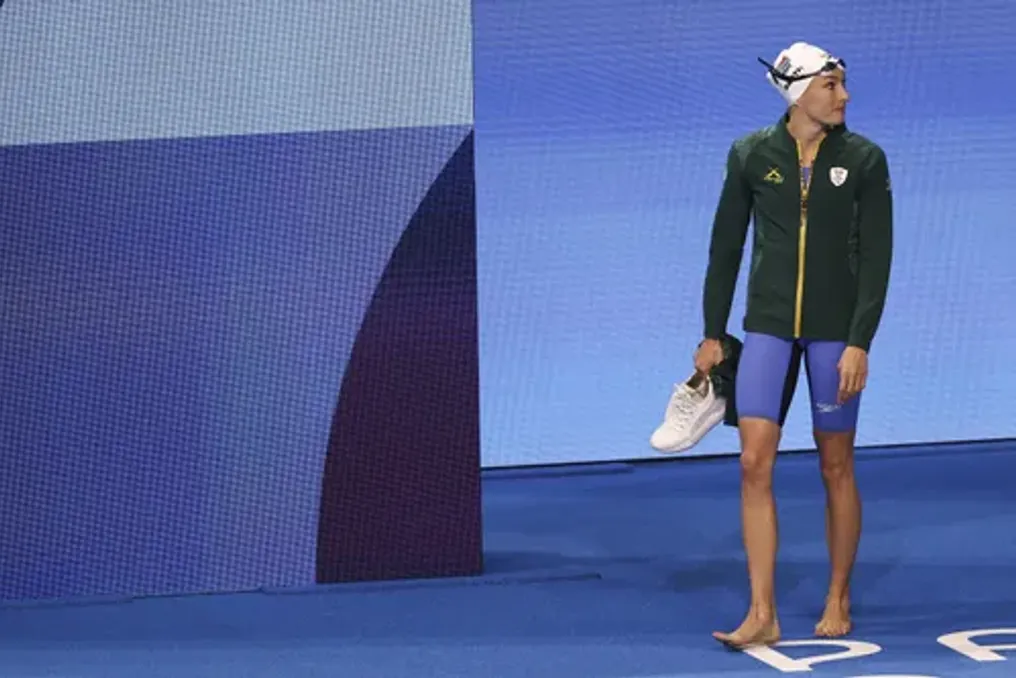
Members of the South African national team selected for the upcoming short-distance World Swimming Championships in Beijing have received a financial notification from Swimming South Africa that has sparked a scandal regarding the requirement to pay for the competition.

According to a leak of an official circular obtained by IOL Sport, athletes are facing a strict financial condition: they must contribute up to R55,000 (excluding visas) from their own funds, or face immediate exclusion from the team.

The circular, distributed to provincial presidents on October 28 under the leadership of Acting President Ziki Molusi, sets out a clear and non-negotiable payment schedule. Swimmers who rely on the federation for booking international travel must cover approximately R55,000 to cover costs for flights, accommodation, and official administration.

The first installment of R40,000 must be paid by November 10, and the remaining balance of R15,000 by November 25.

Athletes who aim to avoid these high costs by organizing their own travel face less favorable conditions. The circular stipulates that such self-funded swimmers must still transfer about R37,000 to the federation's bank by November 10 to cover accommodation and administrative costs. Furthermore, they must themselves pay for Chinese entry visas, international travel insurance, and domestic connecting flights to Johannesburg.

The warning from the governing body is unequivocal: failure to meet the full payment requirement will result in the athlete's suspension.

These revelations highlight the harsh reality faced by parents. The father of a swimmer selected for the Beijing team, who wished to remain anonymous for fear his child would be blacklisted from future teams, reported that supporting his son's international participation costs approximately half a million rand annually. Although the Gauteng Department of Sport provided some subsidy assistance for these expenses, the constant demand for personal payments remains burdensome.

The same parent noted that when another of his sons participated in an event in neighboring Botswana, the invoices issued by the federation were significantly higher than commercial rates available to the general public, including a substantial equipment fee of R5000. He characterized the federation's approach as an inflexible system where families either pay or their children are excluded from participating.

This information sharply contrasts with statements made by sports administrators, who refer to the SASCOC 'Operation Excellence' initiative and development funding from World Aquatics to show that national teams are protected from financial difficulties. However, in practice, OPEX provides targeted support only to select medal contenders, and the extent to which the financial burden on traveling athletes is alleviated through aquatic grants remains unconfirmed.

This financial burden echoes the sharp assessment made by the country's most decorated Olympic champion, Tadjana Smith, on the program Carte Blanche, where she revealed the true picture of her success in winning four Olympic medals. Smith stated: 'I would describe my relationship with Swimming South Africa as absent.' She continued: 'The reason for my success was exclusively due to the people in my support group. Over a 16-year period, about 10 million rand was invested, mostly coming from my parents and support group, and sponsors only appeared later, after Tokyo.'

While commercially successful athletes like Pieter Kotsze may earn independent prize money at world tournaments, the leak of the Beijing document proves that for the new generation of South African talents, national pride remains an expensive luxury affordable only through personal means.
Similar stories

Threat of Global Suspension of ASA Activities Due to Management Issues Jeopardizes South African Athletes
Read more
iol.co.za

Threat of Global Suspension of ASA Activities Due to Management Issues Jeopardizes South African Athletes

South African athletics is on the cusp of a new bright period, supported by a stream of young talents regularly winning medals at junior and senior championships, as well as setting new world records.

However, while this promising generation establishes itself, the Athletics South Africa (ASA) faces the threat of international isolation. The root of this problem lies in the suspension of President James Moloi's powers and systemic management failures that have led to a harsh ultimatum from World Athletics.

This mandate could halt the development of athletics in the country before the current momentum gains traction. The contrast between track results and leadership conduct could not have been more evident.

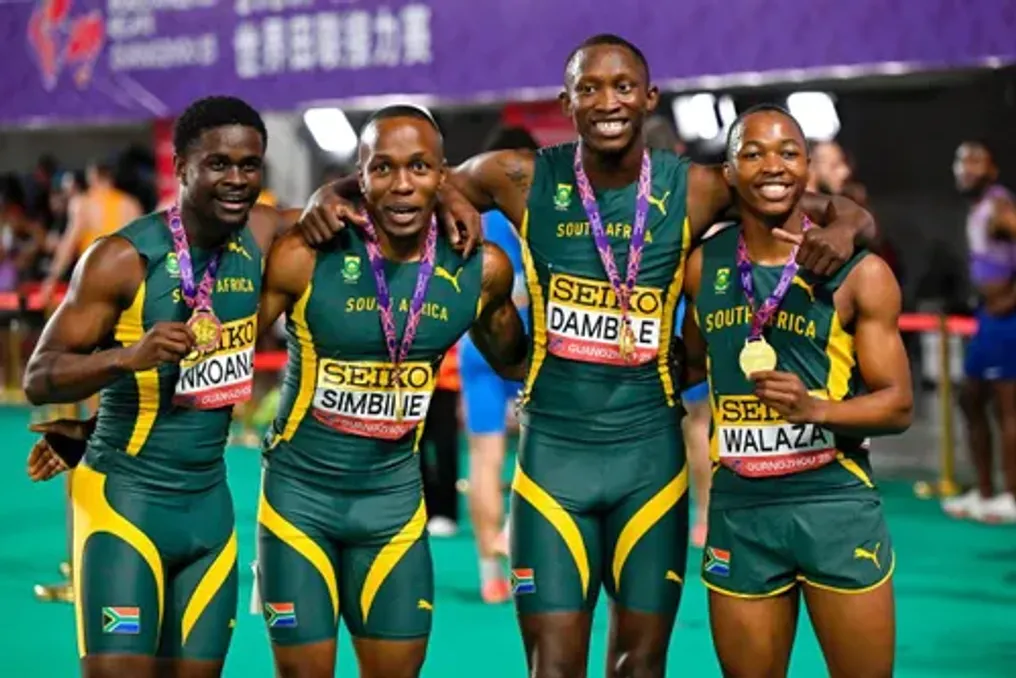
The historic silver medal in the 4x100m race at the Paris Olympics, secured by young athlete Bayanda Walaza and veteran participant Akani Simbin, marked the arrival of a new powerful era in South African sprinting. Walaza subsequently demonstrated his world-class level by winning double gold in the 100m and 200m races at the World Athletics Junior Championships in Lima.

Continuing to gain momentum, middle-distance specialist Sinesifo Dambile and outstanding 400m runner Zakiti Nene continue to deliver world-class performances on the international stage. In middle distances, 800m indoor world champion Prudence Sekgodiso has firmly established herself among the global elite. On track distances, Tyla Kavanagh recently set a record in Romania, running 30:50 and breaking the national record in the 10km, becoming the first South African woman to run under 31 minutes.

Failures in Administrative Management

Nevertheless, this emerging era is overshadowed by administrative failures. Following an official directive from Monaco, World Athletics demanded the immediate removal of Moloi and presented a nine-month plan for reforming the federation's statutes.

Crucially, the global body warned that failure to implement these fundamental governance reforms within six months would lead to temporary suspension under Article 13. Article 13 of the World Athletics Statutes grants the global governing body the right to suspend member federations that fail to adhere to proper governance, integrity, or constitutional standards.

Suspension under Article 13 voids the federation's international rights, prohibiting its athletes from competing, earning ranking points, or setting recognized records. If the suspension is activated, the consequences for South African athletics will be immediate and catastrophic.

The ban will deprive local athletes of the right to national selection, representing the flag, recognition of official records, and world ranking points. It will exclude South Africa's top talents from the World Athletics Championships in Beijing in 2027 and freeze their path to the Los Angeles Olympics in 2028.

At the center of the dispute is Moloi, who was suspended in October 2025 following a forensic audit conducted by Forvis Mazars, one of the leading global auditing and consulting networks. The audit revealed systematic misuse of the ASA corporate credit card in 399 transactions between May 2023 and April 2024.

The audit detailed over 300,000 rands in unauthorized expenses and breaches of monthly limits in nine out of twelve months, citing purchases of personal clothing, ATM cash withdrawals, and unexplained hospitality receipts. The investigation, led by the head of South African athletics Zahele Dlamini, followed independent disciplinary hearings chaired by former judge Bashir Wagla, which found Moloi guilty of financial misconduct and recommended his immediate removal.

World Athletics subsequently approved the findings of the Wagla commission, instructing ASA to immediately dismiss Moloi. In addition to the president's removal, the nine-month plan requires ASA to rewrite its statutes, restore decision-making powers to its High Council, eliminate provincial voting conflicts, establish strict term limits, and mandate that the council include representatives from both women and active athletes.

While athletes continue to usher in a new bright era through dedicated training and world-class performances, management issues must not be allowed to derail their progress. The ASA Executive Committee has a clear duty to act decisively and fully implement the required reforms.

Popular