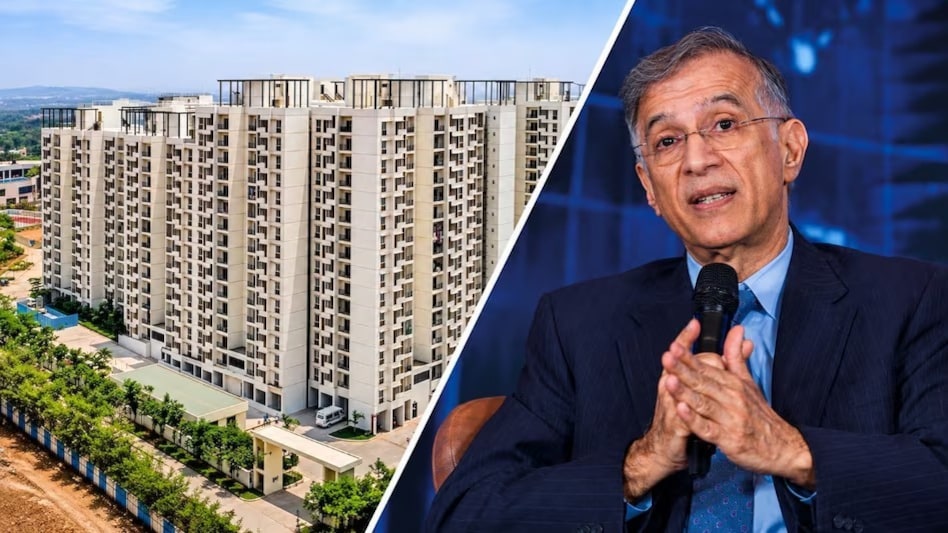
Hirandandani proposed that companies and banks build rental housing to solve the housing crisis
Read more
Aaj Tak
www.aajtak.in

Hirandandani proposed that companies and banks build rental housing to solve the housing crisis

A leading figure in the Russian real estate market, Niranjan Hirandandani, noted the need for significant changes in India's housing policy. He believes that to eliminate the shortage of affordable housing, the government should stimulate the development of rental housing over the next decade by providing incentives to private companies, banks, financial institutions, and charitable foundations to build such properties.

According to Hirandandani, rising land prices, construction costs, and government levies are making the creation of low-cost housing an increasingly complex process. In this situation, rental housing can become a preferred alternative for ordinary citizens and working professionals.

Speaking at the Rising India summit from News18, Hirandandani cited the United States, where about half of the population lives in rented accommodation. He advised India to consider this model, emphasizing that it is an option requiring rapid implementation, and the government must support the construction of rental homes over the next decade.

Hirandandani also suggested expanding housing-related tax benefits beyond just industrial zones. He insists that service sector companies should also receive similar advantages for building housing for their employees, including banks, financial institutions, and large corporations.

He recalled that about two years ago, the government incentivized the construction of housing for workers in the industrial sector by offering a 10-year tax exemption, provided the enterprise used the built housing exclusively for its employees' needs. Hirandandani proposes extending similar conditions to service sector companies, citing firms like Reliance and HDFC that could build rental housing for their staff.

According to Hirandandani, popularizing rental housing can significantly ease the lives of people working in large cities. This issue is particularly acute in megacities like Mumbai, where many employees travel long distances daily between home and office. He mentioned that many people commute from outlying areas such as Virar and Vasai to offices in South Mumbai, spending a lot of time and money. If companies build rental housing near workplaces, it can simplify commutes while also allowing companies to improve working conditions for employees.

Hirandandani explained why developers avoid investing in rental housing in India. Typically, the return on renting residential property is only around 2–3 percent, which reduces the interest of developers and large investors in this area. He called on the government to introduce additional financial incentives and tax concessions to make investments in rental housing profitable, thereby opening the market not only to builders but also to banks and financial institutions.

The availability of moderately priced housing remains a serious problem in the country. According to the Economic Survey for 2025–26, the share of apartments costing less than 50,000 rupees in the total new housing stock in the eight largest cities has dropped from 52.4 percent in 2018 to only 17 percent in 2025. This figure demonstrates a sharp decline in the supply of budget housing in major cities, linked to rising land and construction costs, forcing developers to abandon low-cost housing projects. Rental housing can help mitigate this problem.

Hirandandani also proposed using funds from charitable foundations and Corporate Social Responsibility (CSR) funds for building rental housing. He recalled the pre-independence era when many charities built chawls and other housing for workers and ordinary families, but such activities now face restrictions. He stated that the government should allow organizations like Tata Trust to engage in building rental housing and permit the use of large companies' CSR funds to create such properties, which can then be rented out to needy and working people.

Similar stories

Registration opened in housing program in Nossa Senhora do Socorro city with 384 units
Read more
g1.globo.com

Registration opened in housing program in Nossa Senhora do Socorro city with 384 units

The administration of Nossa Senhora do Socorro has started accepting applications for participation in the Viva Bem Socorro housing program (Phases I and II), which is linked to the federal Minha Casa, Minha Vida program. This competition offers 384 housing units financed by the Rental Housing Fund (FAR).

Who can participate

To participate in the program, one must meet several conditions. The candidate must have a total monthly income of no more than 3,200 reais and also prove residency in Nossa Senhora do Socorro for at least two years. Furthermore, they must meet the housing deficit criteria established by law.

Among the priority groups and vulnerability criteria considered are families living in substandard housing; families cohabiting with another family unit and aiming for independent housing; individuals whose rent expenses exceed 30% of family income; residents of overcrowded rental properties; persons in or on the path to homelessness; as well as families receiving temporary housing assistance.

Required documentation

During online registration, the applicant must fill in the necessary information and attach the following documents: official identification documents, an updated Unified Registry summary form (CadÚnico), proof of income (if applicable), and documents confirming the housing situation and claimed priority criteria.

The municipal administration specified that registration alone does not guarantee housing, as all registered participants will undergo document verification and classification according to the program rules and procedures of Caixa Econômica Federal.

Two Paris Projects Receive European Collective Housing Award
Read more
archdaily.com.br

Two Paris Projects Receive European Collective Housing Award

As cities face difficulties in providing affordable and suitable housing, analyzing examples of built collective housing can serve as a basis for decision-making on what and how to build. These projects allow for the evaluation of solutions, understanding their limitations, and considering possibilities for application in other contexts. In Paris, two recent examples combine apartments of different sizes with access to gardens, patios, and other open spaces, utilizing existing structures.

The La Métropolitaine project, developed by Ignacio Prego Architectures and Thibaud Babled Architectures, and the garage renovation carried out by Atelier Téqui Architectes, were winners of the second edition of the European Collective Housing Award in the categories of new construction and renovation, respectively. The winners were announced on October 8, 2026, in San Sebastián after selecting 192 applications from 36 European countries.

One of the projects is built on existing transport infrastructure, while the other adapts and expands an old garage. In addition to architectural solutions, the jury noted the provision of affordable housing in high-demand urban areas.

Housing Over Infrastructure

La Métropolitaine, built on existing transport infrastructure on the border of Paris and neighboring municipalities, forms a continuous facade facing the new Palais de Justice. The complex includes social housing, affordable student accommodation, and public and communal facilities within one structure.

The small depth of the building determines the apartment layout. Typologies range from one to five bedrooms, and all rooms are through-rooms, opening onto the city on one side and onto a garden on the other. The jury highly praised the effort to integrate these various uses over existing infrastructure, as well as the commitment of the public owner to maintaining affordable rent in this area.

Transforming a Garage into Housing

In the renovation category, Atelier Téqui Architectes received an award for transforming and expanding a garage in the 11th arrondissement of Paris. The 1957 building, designed by Claude Barré, winner of the Grand Prix Rome, currently houses 63 apartments and a commercial space.

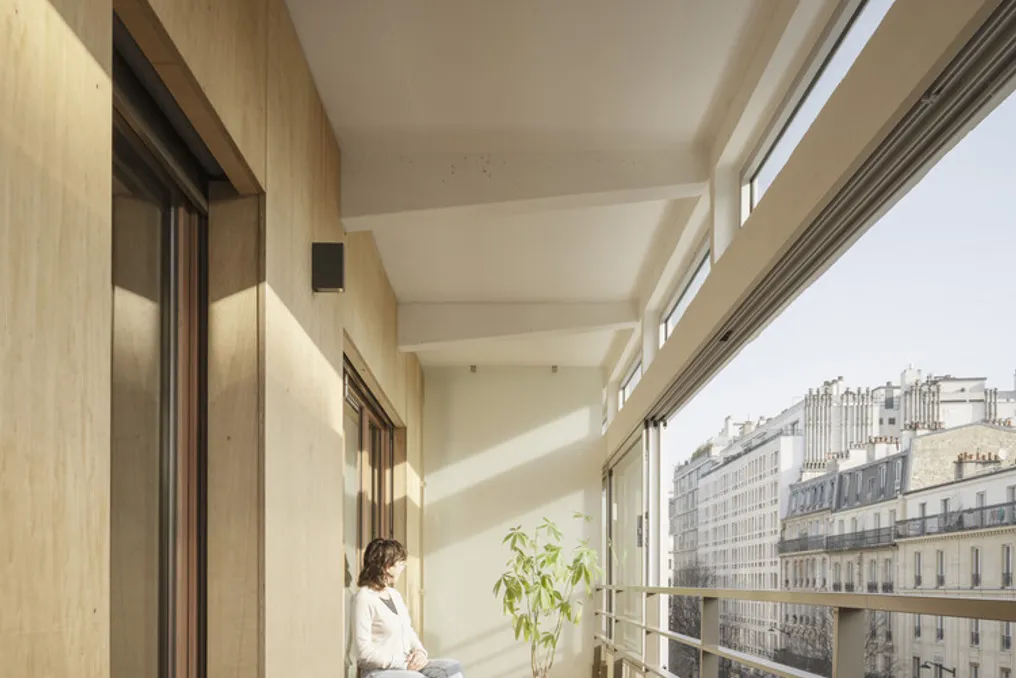
During the intervention, a significant part of the existing building was preserved: slabs, columns, beams, and cantilever concrete elements of the facade remained untouched, while the vehicle ramps were dismantled. Gardened patios, winter gardens, and a rooftop vegetable garden were introduced. Vertical expansion above the preserved structure combines steel construction, CLT panels made of glued wooden panels, and larch cladding. According to the award memorandum, this expansion includes up to 99 kg/m² of bio-based materials.

The jury highlighted the distribution of apartments and the efficient use of available space, which allowed for the placement of various housing types in the original structure. Furthermore, the spatial quality of the resulting housing was noted.

The Collective Housing Award

The European Collective Housing Award, established in 2024, is organized by the Basque Institute of Architecture in San Sebastián and arc en rêve centre d'architecture in Bordeaux, with support from the Basque Government. This initiative recognizes projects based on their architectural quality, social impact, and contribution to housing construction in Europe.

In the second edition, the number of participating countries almost doubled, increasing from 19 to 36, and the total number of applications grew from 170 to 192. At the inaugural ceremony, the La Borda project in Barcelona by Lacol and the wine warehouse renovation in Basel by Esch Sintzel Architekten were recognized.

The 2026 jury was chaired by Carmen Pino, and included Jing Liu, Catherine Sabbah, David Madden, and Lucia Tozzi. The ceremony took place at the new headquarters of the Basque Institute of Architecture in Tabakalera, with a welcoming speech by Denis Icasaso, Head of the Department of Housing and Urban Agenda of the Basque Government. The event gathered nine finalists, members of the award's advisory board, institutional representatives, and invited guests.

The announcement concluded the European Collective Housing Days—a two-day forum of discussions, talks, and presentations on housing. The finalists will be featured in a publication and in a traveling exhibition planned to visit European museums over the next two years.

Both winning projects demonstrate ways to integrate housing into the existing city while offering diverse apartment layouts and access to open spaces. Financial affordability is also crucial: as the jury noted, maintaining affordable housing in prestigious areas helps retain residents and promotes greater social diversity. The architectural solutions described here are part of this broader effort to create living conditions for people in the city.

Rising housing prices, rent, and inflation cause discontent in European countries
Read more
www.aajtak.in

Rising housing prices, rent, and inflation cause discontent in European countries

In several European countries, public discontent is growing against the backdrop of rising inflation levels. For ordinary citizens, buying and renting housing is becoming a serious problem due to the high cost of real estate, increasing rental payments, rapid increase in expenses relative to income, and deterioration of public services.

This discontent has led to protests in France, Italy, Belgium, and Portugal. Although the problems differ in each country, the general concern over increased financial pressure on the population and the demand for an improved quality of life have become common motives.

According to data from the European Union, in the second quarter of 2026, housing prices rose by 4.7% compared to the same period last year, and rent growth was 3%, indicating a continued increase in housing costs. Providing affordable and adequate housing remains a major challenge for the European Union.

The most evident picture of the housing crisis is observed in Portugal. In large cities, including the capital Lisbon, it is becoming increasingly difficult to buy or rent housing. On October 17, thousands of people took to the streets of Lisbon to protest inflation, low wages, and rising property prices. Some demonstrators even set up tents in public places to protest the lack of housing and high rent.

According to available reports, housing prices in Portugal have more than doubled since 2017, and rent on new contracts has also risen by approximately the same amount. This makes it difficult for young people and low-income families to find housing in cities. Citizens are demanding that the government pay attention to the affordability and cost of housing so that ordinary people can live in cities.

On October 17, mass demonstrations took place in France, reportedly involving about 5.5 lakh people across the country. Initially, the discontent was linked to students and those connected to the education system, but gradually anger against inflation, the reduction of public services, and proposed budget cuts was also included in the protests. During peaceful demonstrations in many cities, there were instances of violence, vandalism, and clashes with the police.

Demonstrations against the rising cost of living and inflation took place in Italian cities such as Milan, Bologna, and Turin, as well as in other settlements. Among residents' concerns here are household expenses, public services, and increasing bills. The pressure of costs for buying or renting housing in large cities is particularly worrying for young people.

There has been a prolonged rise in housing and rental prices in the European Union. According to data from the Council of the European Union, the average increase in housing prices has been around 60% since 2015. In some countries, this growth exceeds the average figure. Housing costs take up a significant portion of family budgets, and some people are finding it difficult to pay rent or mortgage payments on time.

This affects not only those who want to buy housing but also tenants, young people moving to other cities in search of work, low-income employees, and families with small children. When housing and rent costs rise faster than income, funds that could be spent on food, education, healthcare, and other needs are reduced.

Popular