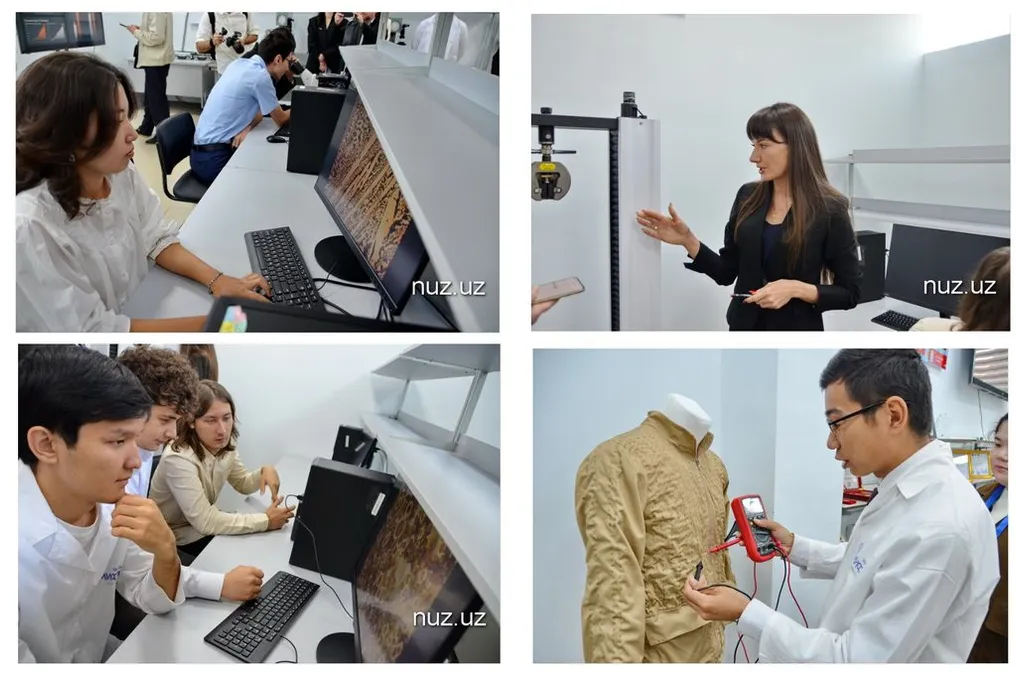
A meeting titled 'Central Asia – Atom 2050' was held in Tashkent, gathering over 900 students from Central Asian countries. The young participants presented their ideas regarding the improvement of nuclear energy and the training of future qualified personnel.
The key idea of the event was the establishment of a Youth Platform for Atomic Cooperation in the region. Alexey Likhachev, head of Rosatom, approved this concept and suggested making such meetings regular, planning the next program for 2027.
The event took place at the Tashkent branch of the National Research Nuclear University 'MIFI'. The total number of participants exceeded 900: 200 were present physically, and the remaining more than 700 connected remotely.
Leaders of the atomic structures of Uzbekistan, Kazakhstan, Kyrgyzstan, and Tajikistan, as well as representatives of the state corporation Rosatom, took part in the discussion. Among those present were corporate CEO Alexey Likhachev, Director of the Atomic Energy Agency under the Cabinet of Ministers of Uzbekistan Azim Akhmedhajaev, and Deputy Chairman of the Atomic Energy Agency of Kazakhstan Timur Zhantikin. Additionally, the Deputy Minister of Energy of Kyrgyzstan Mirlan Parkhanov and the General Director of JSC 'TAUZ Hydro' Abdulvakil Rasulov were observed at the meeting. Tatiana Terentyeva, Deputy General Director of Rosatom for Personnel, moderated the event.
Participants of the international youth advisory council Impact Team 2050 shared the results of four national nuclear dialogues. These dialogues took place from September to October 2026 in Uzbekistan, Kazakhstan, and Kyrgyzstan, with young people from Tajikistan participating. A total of 1,050 people from 18 different universities were involved in these discussions. The organizers collected 800 questionnaires in which students indicated obstacles to choosing a profession in the atomic sphere and ways to increase its attractiveness.
The main problems identified during the survey include a shortage of practical experience and experienced mentors, as well as a lack of information about available professions and educational opportunities. Participants from Kyrgyzstan and Tajikistan expressed particular concern regarding the safety of atomic technologies most frequently.
Nevertheless, the study results showed that the priority for young people is concrete opportunities to start a career. Practical experience and mentorship were named by 69% of respondents, clear career paths by 62%, industry openness by 54%, and support at the beginning of a career by 47%.
Reports were presented by leaders of the Impact Team 2050 council: Mukhiddin Umidov, a postgraduate student at the Institute of Atomic Energy of NIIA MIFI from Uzbekistan; Diana Gamazova, a council mentor from Kazakhstan and head of the project 'Atom Energy for Central Asia'; and Bektan Kydiyev, a council leader from Kyrgyzstan and chairman of the Association of Students of Kyrgyzstan.
After the presentations, the young delegates discussed their proposals with industry representatives and received feedback from them. The main goal of the meeting was to form a Youth Platform for Atomic Cooperation in Central Asia, which could serve as a permanent venue for exchanging ideas, developing joint projects, and direct communication between young specialists and industry management.
Participants suggested holding platform sessions in different countries of the region to ensure regular exchange of experience among young people and joint work on initiatives in the field of atomic technologies. Alexey Likhachev, CEO of Rosatom, supported the idea of holding the 'Central Asia – Atom 2050' meeting annually, noting that the next stage of the youth program could take place in 2027 under the auspices of the Impact Team 2050 council.
Likhachev commented: 'One of the key ideas of the atomic youth of Central Asia was the proposal to make today's event annual. This will allow future atomic specialists from all countries of the region to regularly exchange experiences, participate in additional professional education programs with the involvement of leading lecturers from NIIA MIFI, and work together on projects for the development of atomic energy and technologies. I am confident that this initiative will lay the foundation for long-term and strong youth cooperation and will allow young atomic specialists to jointly create the future of the Central Asian nuclear industry. We fully support this format and are ready to work with colleagues in the nuclear sector in the countries of the region so that the next youth program can take place in 2027 under the auspices of the Impact Team 2050 council.'
Tatiana Terentyeva, Deputy General Director of Rosatom for Personnel, emphasized that the development of the industry requires not only informing young people about opportunities but also considering their opinions and requests. She stated: 'It is important not only to tell young people what we can offer but also to hear what they themselves need from the nuclear industry. To design the future and shape the strategic and international agenda in dialogue. Today, young leaders told us how they want to see the future of the industry and showed that they are ready to take responsibility for its creation. Our task is to give them all the opportunities for this. The 'Central Asia – Atom 2050' meeting is an important part of this great joint work.'
Impact Team 2050 functions as an international youth advisory council under the CEO of Rosatom. Alexey Likhachev announced the creation of the council in 2021 at the Global Impact Conference. The council unites young leaders from different countries to discuss issues of nuclear technology development, sustainable development, and international cooperation. Its tasks include preparing proposals for interaction with international youth, attracting young specialists to educational and partnership projects, and promoting the peaceful use of atomic energy.
In 2027, with the support of Rosatom, the 'Atom 2050' project will also begin. It will involve 100 young people from different countries. Together with scientists, engineers, experts, strategists, and futurists, they will try to answer the question of what the world might look like by 2050 and what role atomic and related technologies will play in its development. Participants can expect excursions to Rosatom facilities, meetings with experts, 'knowledge laboratories', and joint development of future scenarios. At the end of 2027, the team will present its vision of the future to decision-makers who determine the development of technologies, industries, and countries.