CIQTEK introduces CryoHe — the first commercial cryogenic NMR probe in China with enhanced sensitivity
Read more
Pandaily
pandaily.com

CIQTEK introduces CryoHe — the first commercial cryogenic NMR probe in China with enhanced sensitivity

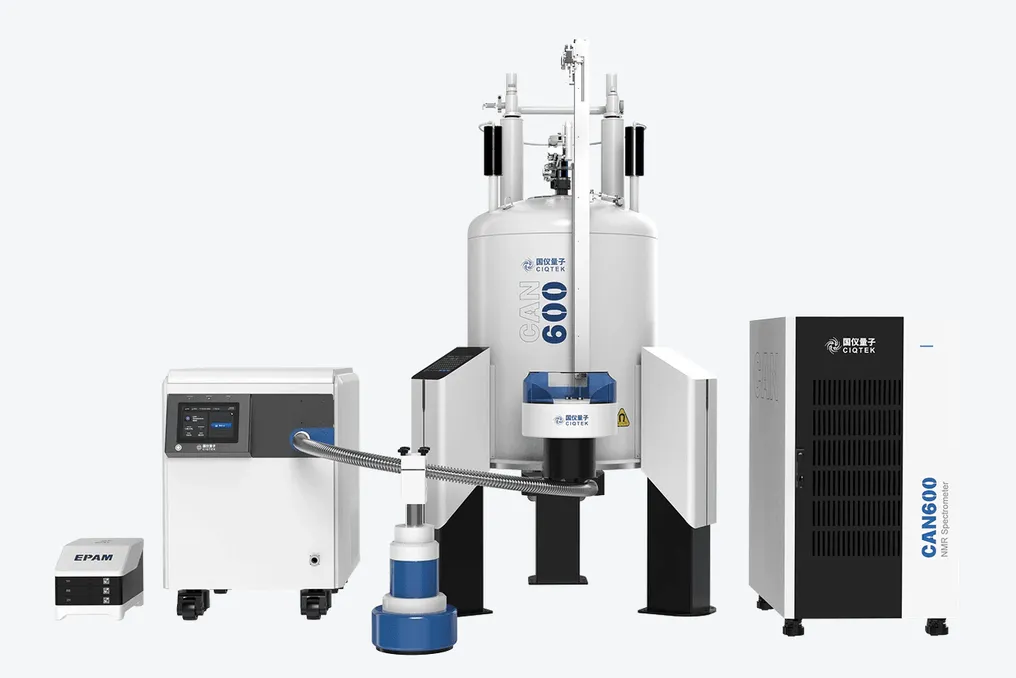
CIQTEK has announced its CryoHe series of cryogenic NMR probes, as well as the high-field solid-state NMR spectrometers of the CAN-S series. The company claims these are the first commercial products of this type developed in China. Both products were unveiled on October 31st at the Second Conference on Analytical Science and Instruments in Wuhan, according to Science and Technology Daily, citing IT Home. CIQTEK states that both devices are ready for mass production.

Nuclear magnetic resonance spectrometers are fundamental tools for determining molecular structure, such as studying the backbone of a new drug molecule, the folding method of a protein in solution, or the concentration of a metabolite in a sample. The instrument's sensitivity is largely determined by the probe placed inside the magnet that captures the weak signal; cooling is the primary method for increasing sensitivity in liquid NMR.

The CryoHe probe utilizes closed-cycle cryogenic cooling to maintain the key radiofrequency coil at a temperature of approximately 20 K, equivalent to about minus 253 degrees Celsius. This suppresses thermal noise in the coil and front-end electronics. CIQTEK asserts that this increases proton (1H) sensitivity by approximately three times compared to a standard room-temperature probe, and launch reports indicate an increase of more than threefold. According to the product page, the 54 mm diameter probe is suitable for CIQTEK's CAN series spectrometers, allows observation of 1H, 13C, 15N, 31P, and 19F nuclei among others, features a Z-axis gradient of at least 50 G/cm, and includes automatic tuning and matching, as well as a 2H cryogenic preamplifier for field locking.

The engineering challenge was overcoming the temperature differential. The liquid sample must remain near room temperature and not freeze, while the coil, located about 2 mm away from it, is at 20 K—a difference of nearly 280 degrees over the thickness of a coin. CIQTEK Chief Engineer Shi Zhifu noted that any heat leak, vibration, or temperature drift reduces sensitivity, so the team employed closed-cycle cooling, low-vibration design, and precise temperature control.

CIQTEK focuses on structural biology, drug screening, natural products, synthetic chemistry, and metabolomics—areas where samples are often scarce or diluted. The CAN-S spectrometer is designed for solid-state samples instead of liquids. It can directly study local structure, coordination environments, interfacial states, and molecular motion within materials such as battery cathode electrodes, solid electrolytes, catalysts, crystalline drug forms, polymers, and composites. Its field strength was not specified in the reports.

High-end cryogenic probes have long been supplied predominantly by manufacturers from Germany and Japan, leading to long procurement times and high purchasing and maintenance costs for laboratories in China. Kong Xueqian, head of the Advanced NMR Center at Jiaotong University Shanghai, stated that this launch provides users in the fields of batteries, catalysis, and medicine with an additional option and a more stable supply chain.
Similar stories

Iluvatar CoreX demonstrated Tiangai 300 GPU performance, claiming 1.05x superiority over H200
Read more
pandaily.com

Iluvatar CoreX demonstrated Tiangai 300 GPU performance, claiming 1.05x superiority over H200

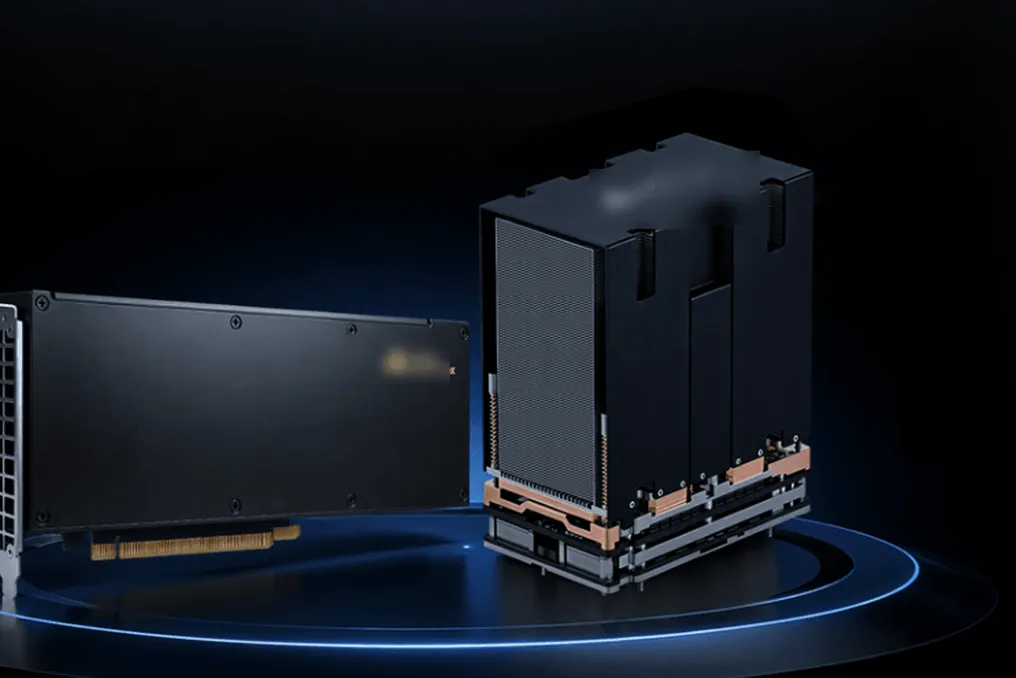
Iluvatar CoreX unveiled the general-purpose Tiangai 300 GPU in a working state on real hardware during its media day on October 28th in Shanghai. Previously, the company's public materials regarding the chip focused solely on architecture and roadmap, not on functioning systems.

The main claim concerns performance comparison. Iluvatar CoreX asserts that Tiangai 300 is the first domestic general-purpose GPU whose measured performance reaches the level of NVIDIA H200. Furthermore, third-party testing, after data conversion, showed that the total throughput of one card is 1.05 times greater than that of H200. It is important to note that the company did not disclose the testing methodology, models used, or workload conditions, so this result cannot yet be independently verified.

This chip is intended for integration into the IXL144 supernode, which the company previously presented at the China International Industry Fair. One such IXL144 rack combines 144 GPUs, 18 CPUs, and approximately 10.1 TB of GPU memory, which Iluvatar CoreX calls the densest GPU supernode in the industry. According to its own estimates, this configuration reduces the cost per million effective tokens by 40% compared to mainstream international solutions.

Information on heterogeneous deployment was also presented at the open day. Iluvatar CoreX reported implementing the first domestic AFD disaggregation scheme between GPU and XPU, which reduced inference latency by 60%. AFD disaggregation typically involves splitting model computation stages, such as attention and forward propagation layers, across different processor types so that each performs the task it is most efficient at.

Regarding peripherals, the company stated that its Tongyang TY1200 chip outperforms NVIDIA Thor T5000 in conducted tests, again without publishing details. The TY1200, previously announced with 300 TOPS of dense computing for AI and embodied intelligence PCs, is also named the first domestic peripheral product capable of performing physics simulation with GPU acceleration based on MuJoCo-Warp—a function critical for training robots in simulation.

Overall, these demonstrations move Iluvatar CoreX's next-generation product line from paper specifications to working systems. The next point to watch will be independent benchmarks with disclosed workloads.

Ultraviolette Company Unveils New Electric Motorcycle X-47 Venom with Radar and 343 km Range
Read more
www.aajtak.in

Ultraviolette Company Unveils New Electric Motorcycle X-47 Venom with Radar and 343 km Range

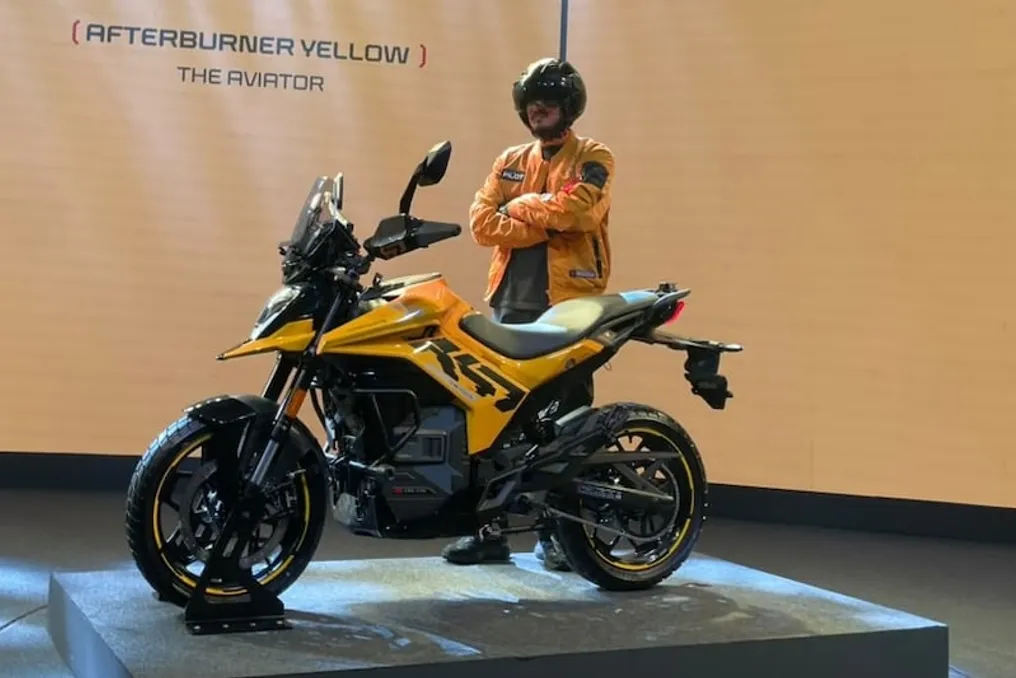
The electric company Ultraviolette Automotive has released its powerful X-47 Venom motorcycle. This electric bike is equipped with numerous advanced features and is based on the new generation VX-100 architecture from the company.

The VX-100 architecture will be used in the company's future products. Thanks to changes in the battery, engine, and controller, the motorcycle's weight has been reduced and efficiency increased. The total weight of this motorcycle is about 180 kilograms, which is 20 kilograms lighter than the previous generation. Ultraviolette claims that the new battery is 15% lighter and provides 25% greater energy density.

The motorcycle is equipped with the new Light Fury engine, which operates up to 9000 rpm and features soft magnet components. Ultraviolette launched the X-47 Venom with an introductory price of 2.65 lakh rupees, but this offer is valid only for the first 5000 units. After that, the standard price will be 3 lakh rupees, representing a current discount of 35 thousand rupees.

The stated price applies to the variant with a 7 kWh battery. The company has not yet announced prices for the 11 kWh battery variant. Pre-orders for this motorcycle began on October 22, and deliveries will start in November.

The Ultraviolette X-47 Venom is available in two battery configurations: 7 kWh and 11 kWh, with the claimed range for the top variant reaching 343 kilometers. Information regarding the range for the 7 kWh battery variant was not disclosed. The motor in this model has a power output of 30 kW.

The company states that this motorcycle is capable of accelerating from 0 to 60 kilometers per hour in just 2.7 seconds, and to 100 kilometers per hour in 5.9 seconds. It supports DC fast charging up to 12 kW and has a maximum speed of 155 kilometers per hour.

Popular