Alcohol molecules found in giant cosmic cloud capable of holding the entire Earth
Read more
Aaj Tak
www.aajtak.in

Alcohol molecules found in giant cosmic cloud capable of holding the entire Earth

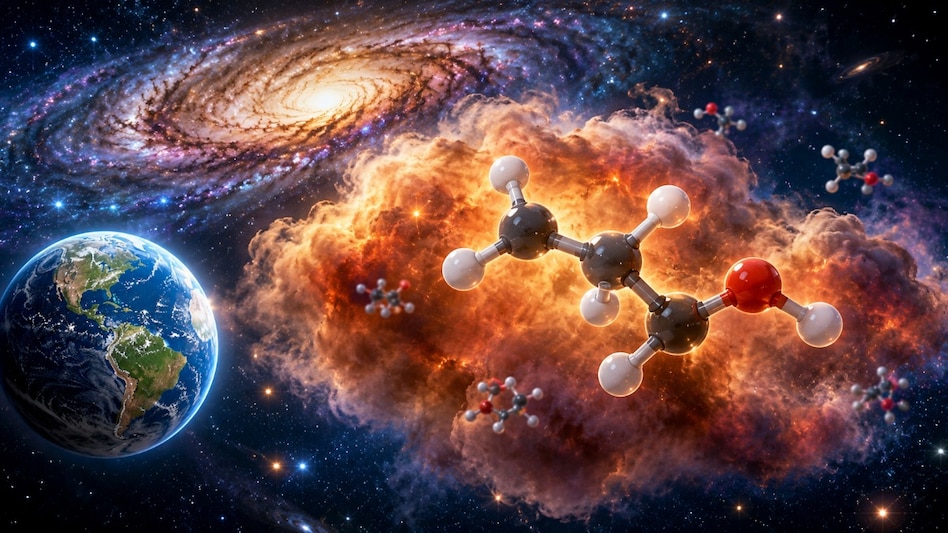
Alcohol lovers on Earth might be interested to know that 'alcohol' also exists in space. A massive gas and dust cloud was discovered near the center of our Milky Way galaxy, containing various alcohol molecules. Scientists identified propanol here, which is considered the largest alcohol molecule found in space to date.

It is important to note that this is not potable alcohol, but a chemical substance. According to researchers, this discovery may help understand the processes of forming complex organic compounds necessary for life in space.

The attention of scientists is focused on a giant molecular cloud called Sagittarius B2, located near the center of the Milky Way. It is approximately 26 thousand light-years from Earth. This region is rich in gas and dust and is a site of active formation of a large number of new stars, hence it is called a stellar nursery.

Various alcohol molecules were found in this cloud, including methanol, ethanol, vinyl alcohol, ethyl formate, and propanol. According to scientists, the amount of methanol and ethanol in Sagittarius B2 is so vast that an estimated 10 trillion liters of these substances are present. However, this does not mean that the alcohol has accumulated in liquid form, like a sea or a pond; these molecules are distributed among the cosmic gas and dust.

The characteristic of the discovered propanol is that it is the largest alcohol molecule ever found. One of its types is isopropanol, which is used in hand antiseptics. Another type is common propanol. Scientists detected the presence of isopropanol in Sagittarius B2 using a radio telescope located in Chile. These discoveries were published in two studies in the scientific journal Astronomy & Astrophysics.

Researchers involved in this project emphasize the exceptional importance of discovering both forms of propanol, as their chemical structures are very similar, and they can exist under similar conditions. By comparing their quantities, scientists can understand exactly how such complex chemical compounds are formed in space.

The main question facing scientists is how such complex organic molecules form in space. To date, about 125 different molecules have been identified in space. Scientists believe that most of them are formed by the collision and combination of small molecules or atoms. However, explaining the presence of such complex substances as vinyl alcohol and propanol solely by this process is difficult.

In 2001, scientists recorded signals of vinyl alcohol in Sagittarius B2 using a 12-meter radio telescope. This was the last of three stable molecules of the C2H4O group discovered in space. At that time, a scientist from the National Radio Astronomy Observatory of the USA, Barry Turner, stated that the discovery of vinyl alcohol was an important key to understanding the process of forming complex organic substances in space.

Another interesting discovery in the Sagittarius B2 cloud is the detection of a chemical substance called ethyl formate. This is the substance that gives raspberries their distinctive taste. Notably, it has a rum aroma. Because of this, scientists once jokingly remarked that the center of our galaxy might taste like raspberry and smell like rum. Nevertheless, this does not mean that real raspberries or rum exist in space; these are simply properties of chemical molecules.

The significance of these discoveries for scientists is not limited to the fact that alcohol-related compounds are in space. In fact, these compounds can help them understand how complex organic molecules necessary for life are formed and distributed in space. This is why they continue to closely observe giant molecular clouds like Sagittarius B2. Scientists hope this will help determine whether there are chemical conditions necessary for life in the universe besides Earth.

Similar stories

What is fiberglass and why is it becoming more popular than marble and tile
Read more
www.aajtak.in

What is fiberglass and why is it becoming more popular than marble and tile

Nowadays, people are increasingly using a special material instead of traditional marble and tile in their homes, and this material is called fiberglass. Demand for it in the market is growing, so it is important to understand what fiberglass is and what its features are.

Fiberglass is a modern and very strong material. It is made by mixing fine glass fibers with a plastic resin composition. In technical terms, it is also called 'glass-reinforced plastic' (GRP). This material is very light, yet possesses strength capable of competing with steel.

It is precisely because of these qualities that the demand for fiberglass sheets in the construction and interior design of residential and commercial buildings is rapidly increasing compared to marble and tile. Fiberglass has numerous advantages.

Marble and tile are quite heavy, which requires significant labor and time for their transportation and installation. In contrast, fiberglass is very light, allowing it to be easily installed on walls or roofs. The lightness of the material reduces the load on the building, as it does not add unnecessary weight to the overall structure.

Fiberglass is resistant to damage. While marble and tile can crack or break from falling heavy objects, fiberglass does not break as easily due to its flexibility and strength. It is not affected by sun, rain, or moisture, nor does it suffer from rust or termite infestation.

Unlike tile, where gaps can lead to water leaks and dampness, fiberglass is completely waterproof. Therefore, it is considered the best choice for bathrooms, kitchens, and roofs.

Furthermore, fiberglass is available in a wide range of designs and variations. While marble is difficult to cut and process, fiberglass can be molded into any custom shape, mold, or curved design. It can be given the appearance of marble, wood, or any other decorative tile, giving it a very modern and attractive look.

Marble can develop permanent stains from acid, tea, or oil, and its shine dulls. Fiberglass does not absorb stains and only needs to be cleaned with a damp cloth, eliminating the need for regular polishing.

Fiberglass is an excellent thermal insulator. It prevents excessive heating indoors in summer and severe cooling in winter, which contributes to energy savings. Whereas marble and tile become very cold to the touch, fiberglass does not have such properties.

Today, fiberglass is most often used to make bathtubs, roofing sheets, designer wall panels, kitchen countertops, and doors. Being economical, it provides a modern look and a long service life, which is what prompts people to abandon traditional marble and tile in favor of this material.

Video from Casa de Pedra cave demonstrates optical illusion of waterfall against solar halo
Read more
g1.globo.com

Video from Casa de Pedra cave demonstrates optical illusion of waterfall against solar halo

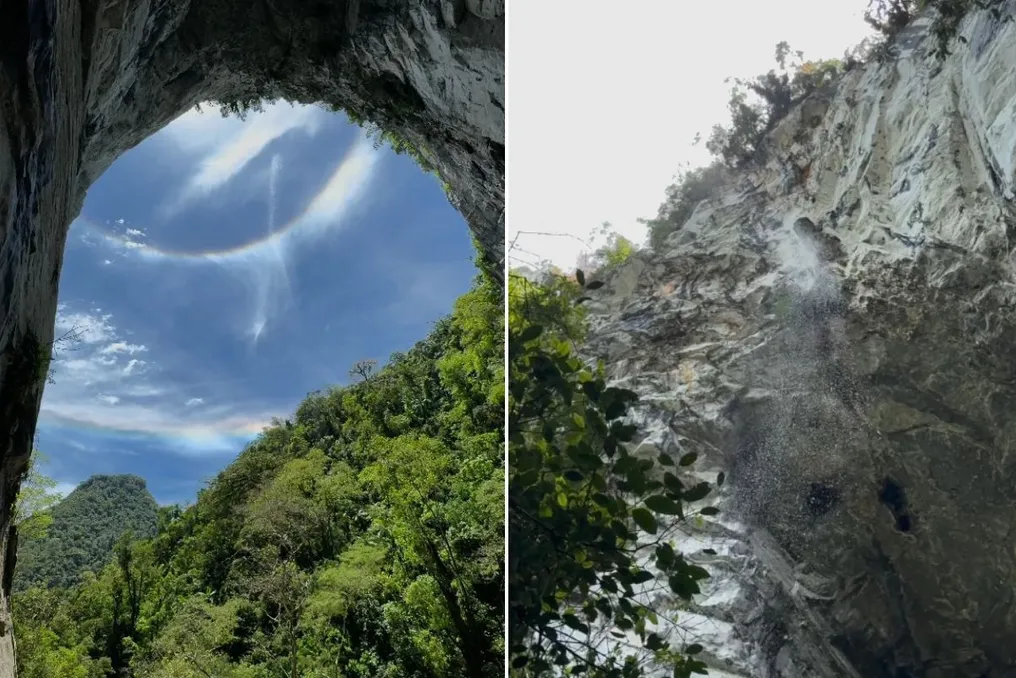
A video captured at Casa de Pedra, considered the world's largest cave entrance, located in Iporanga, SP, generated significant international attention due to an optical illusion. This illusion made it appear as if a waterfall was descending from the sky while a solar halo was present, a phenomenon characterized by the ring formed around the Sun.

The water observed does not come from a river, but rather from a natural discharge emerging from the fissures in the rocky ceiling, functioning like a natural shower. The appearance of a fall coming from the sky was created by the way mountain guide Giba Morais positioned the iPhone 15 Pro camera during the recording.

The footage gained even more prominence because the waterfall appeared to occur under the solar halo. This phenomenon happens when sunlight passes through ice crystals found in high clouds, which act as prisms, refracting the light.

Content Virality

Giba informed g1 that he resides in the region of Curitiba, PR, and traveled specifically to hike Casa de Pedra on the 17th. He was accompanied by three friends and a local monitor. Giba reported being surprised upon arriving at the cave entrance, which is 197.1 meters high.

He commented: 'At that moment, I noticed a natural phenomenon called a solar halo happening and looked for the best angle to record the scene [...] It was an extraordinary moment, where nature presented us with an image that ended up reaching people all over the world.'

After the expedition, the guide shared the video on social media and was surprised by the public response. The images exceeded eight million views, and several global media outlets contacted Giba. Internet users reacted with comments such as: 'Is this real?', 'Glitter falling from the sky 🤩', 'Who poked the rainbow bag? 😂' and 'My God 😮😮😮 What perfection is this???'.

Learn About Casa de Pedra

The title of being the world's largest cave entrance was validated by researchers from the University of São Paulo (USP) after a complex scientific expedition involving advanced technology, several days of hiking, and risky situations.

During the route, the Atlantic Forest shows signs of life, with animals such as Arapongas, wild pigs, jaguars, and ocelots recorded in the area of the State Tourist Park of Alto Ribeira (Petar). This region houses more than 400 caves, but none with the magnitude of Casa de Pedra.

The area was closed to tourism in 2003 after a flash flood hit a group in transit, resulting in the death of a guide and a tourist. Despite the vast experience of local residents, they warn that conditions can change rapidly within minutes when it rains. Currently, internal visits to Casa de Pedra remain restricted until the Petar Speleological Management Plan is implemented. However, it is permitted to take the approximately three-hour hike to the portico, the route followed by Giba.

Star Mountains Range: Inaccessible Region with Unique Nature in Western New Guinea
Read more
www.aajtak.in

Star Mountains Range: Inaccessible Region with Unique Nature in Western New Guinea

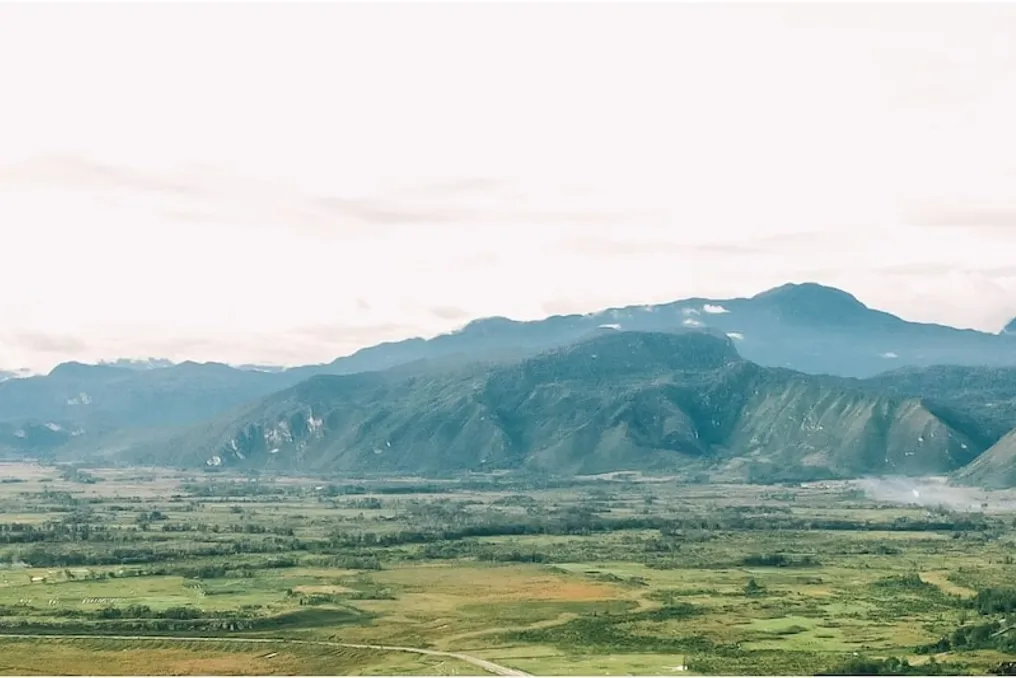
There are places on the planet characterized by harsh conditions: snow-capped mountains, dense forests, and valleys that are extremely difficult to reach. One such place is the Star Mountains, known for its rugged geography, thick forests, and unusual natural environment. Its remoteness makes visiting practically impossible for ordinary people, although some scientists have attempted to reach it by helicopter after great effort. Reports suggest that extraterrestrial beings may reside in this region.

The Star Mountains are located in the mountainous terrain of Western New Guinea. This mountain range extends from Papua in Indonesia to Papua New Guinea itself. Here, one can see high peaks, deep gorges, and dense forests. The main feature of this area is its geographical location, which places it among the most inaccessible corners of the world.

Most of the territory here lacks roads. To reach remote villages, one must walk, and in some places, air travel is the only realistic option. This is why tourism has not developed here as much as in other popular mountain areas. According to data from the Papua Insects Fund, settlements such as Abmisibil and Mabilabol are located in the vicinity. The forests around the Star Mountains are rich in biodiversity; the structure of vegetation and forests changes at different altitudes.

According to One Earth magazine, animals adapted to the specific environment, including tree kangaroos, inhabit the high-altitude regions of New Guinea. Nevertheless, confirming the presence of each specific species in the Star Mountains requires separate scientific verification. The mountain range is also known for its high peaks, among which Mount Juliana, or Puncak Mandala, is mentioned, with an estimated height of approximately 4700 meters. The altitude, impassable trails, and complex weather make mountaineering in this area very challenging.

The report on the mountain geography of Papua also mentions glaciers and the high-altitude environment of this region. However, the assertion that no one goes there is incorrect. A local tribe resides in this area, and scientists have visited it. In fact, most of the Star Mountains is out of reach for ordinary tourists. This remoteness lends the region an air of mystery and requires constant research to understand its unique nature.

Popular