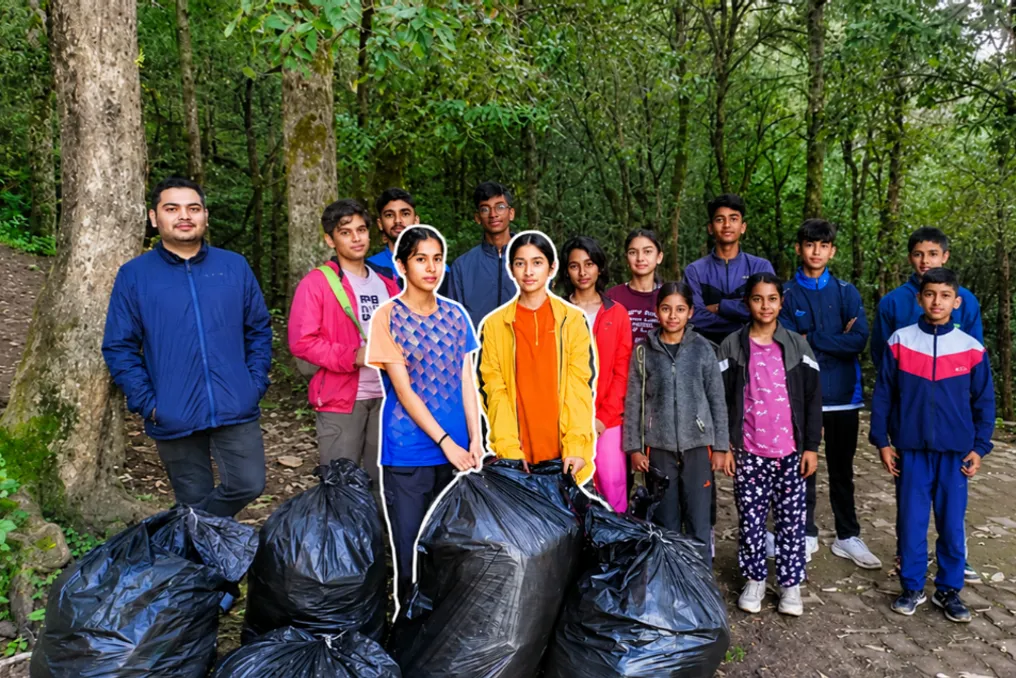
In Pauri Garhwal, Uttarakhand, it was impossible to ignore the trash along the roadsides. However, instead of just walking past, two schoolgirls, Manvi Rawat and Anshika Gaur, decided to act differently. They started collecting garbage independently, without expecting help from others.
Initially, their efforts did not receive support; people mocked their actions, turning a simple attempt to clean up the surroundings into a test of resilience against criticism. Nevertheless, they continued their work.
What began as a small cleanup campaign transformed into the organization Pauri Eco Warriors—a student initiative aimed at engaging youth in the fight against plastic pollution and waste. Today, the group has grown significantly: besides the two founders, it includes over 40 students, and about 15–18 volunteers participate in each cleanup event.
Manvi and Anshika's activities went beyond simple waste collection. Through tree planting initiatives, distribution of saplings, and holding the Maulyaar festival dedicated to environmental action, they strive to make nature conservation a shared responsibility, rather than a one-time event.
From Mockery to Movement Creation
The problem addressed by these two students is familiar to many cities and villages in India. Public spaces, roadsides, and water bodies accumulate plastic wrappers, single-use packaging, and other waste. In mountainous regions where settlements and natural landscapes coexist, trash can become an environmental issue that extends beyond the point of disposal.
For Manvi and Anshika, the first step was eliminating the visible trash around them. Their decision was not easy, and the ridicule they faced illustrates one of the social barriers that can hinder people's participation in community work.
Why Cleanup is Important in a Mountain Town
The landscapes of Pauri Garhwal are part of a larger mountain ecosystem where forests, rivers, settlements, and roads are closely interconnected. Trash left in public places can be carried by rainwater into drains and waterways, and discarded plastic can remain in the environment long after a person throws it away.
Cleaning up trash helps remove existing waste, but it does not prevent the problem from recurring on its own. Pauri Eco Warriors aims to develop this idea by combining cleanup drives with tree planting, sapling distribution, and environmental awareness campaigns. The organization's mission is to protect the mountains, forests, and rivers of the district through community-managed conservation and the implementation of more sustainable practices.
Maulyaar: Taking Conservation Beyond Cleanup
The founders also incorporated their efforts into community events through the Maulyaar festival. This celebration brings together activities such as eco-runs, tree planting, cleanups, and information campaigns. Environmental awareness ultimately lies not only in knowing about the harm of plastic pollution but also in transforming that knowledge into habits and collective action.
What Happens After Cleanup?
The achievements reported by Pauri Eco Warriors go beyond that of a typical student group. The initiative reports planting over 10,000 trees, cleaning more than 15 rivers, attracting over 500 active volunteers, organizing more than 25 events, operating in over 30 villages, and receiving five awards.
These figures indicate that the effort has grown far beyond the initial cleanup campaigns organized by the founders. For Manvi and Anshika, the journey from being mocked for picking up trash to creating a student initiative serves as a reminder that community work can start small. Furthermore, this does not replace the responsibility of local authorities to ensure effective waste management, but it allows more people to be involved in protecting their common spaces.