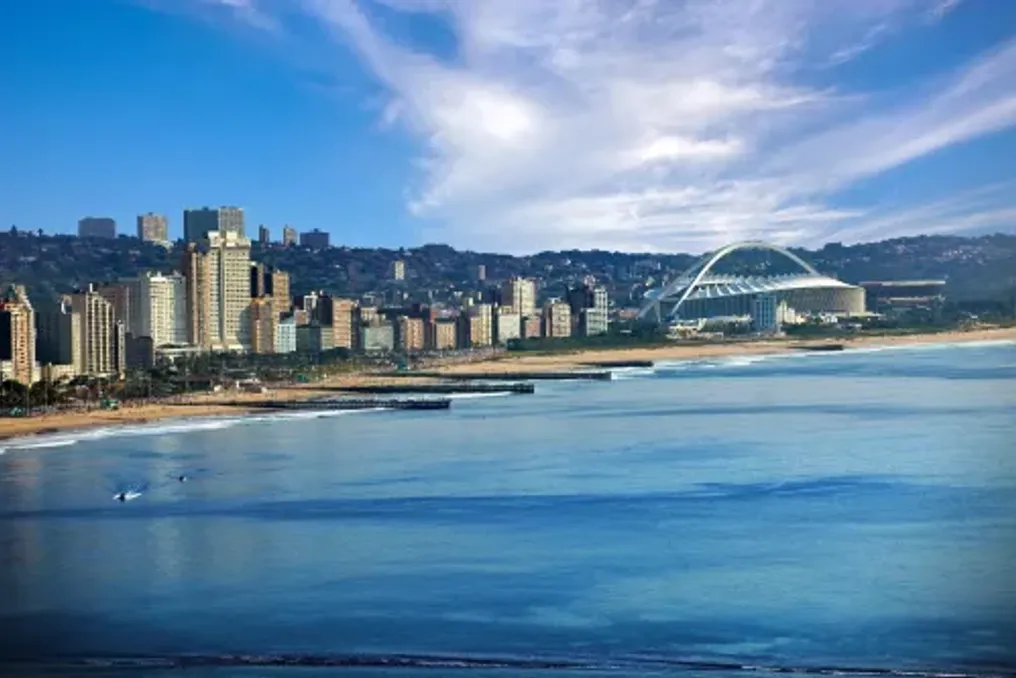
Johannesburg needs systemic changes, not just promises, to solve its income crisis
Read more
IOL
iol.co.za

Johannesburg needs systemic changes, not just promises, to solve its income crisis

The city of Johannesburg is facing a serious financial crisis that requires deeper solutions than mere political promises. In July, the city, along with 69 other municipalities, received notification of the suspension of the Equity Distribution tranche from the National Budget. According to the Minister of Finance, the reason was financially inefficient management, adoption of an unjustified budget, failure to repay debts to creditors (mainly Eskom and Water Boards), and a R10 billion deal with staff, which the Minister deemed 'unacceptable.'

This incident is considered one of the worst possible for the municipality five months before municipal elections. Although the city began addressing problems, including repaying debt to Eskom, and eventually received the allocated funding, claiming that the economic capital of Mzansi has completely emerged from the crisis would be an exaggeration.

The question arises as to what the new mayor and their Mayoral Committee will do, given that infrastructure debt exceeds R200 billion, the city collects less than 95% of due rates and fees, and the population continues to grow while being ambitious yet under economic pressure.

The article's author suggests considering these issues collectively to assess whether the city possesses sufficient resources to fulfill its duties to residents, whether it has enough capacity for effective governance, and if political parties and candidates have convincing answers for voters.

Analyzing the situation reveals a tension between the issue of management and accountability on one hand, and a structural fiscal problem on the other. This problem is characteristic of most municipalities, with 66% in financial difficulty. Add to this a decade of leadership instability in Joburg, constant billing crises, frequent power and water outages in the same areas, and the problem of cross-subsidization, which is difficult to solve without creativity. Therefore, voters demand better leadership.

Any candidate who promises to solve the financial crisis without fundamentally altering the financing model offers only a partial solution. The author believes that beneath the loud headlines about mismanagement, looting, 'state capture,' and incompetence lies a deeper problem: in 1998, a municipal financing model was developed for a dream society, not for the existing society.

The reality is that 35.9% of the city's workforce is unemployed, which is higher than the national rate of 33.6%; 40% of the population lives on meager social benefits, and two out of three residents earn less than R3000 per month. The question arises as to where residents will get the money for the services they consume. It is also noted that over 76.6% of surveyed residents reported unreliable water supply, and 70.3% reported poor road and drainage conditions.

It cannot be assumed that neighbors are not using municipal services due to payment problems. It must be remembered that you and I together owe 70% of the R484 billion owed to municipalities. Furthermore, in the financing model of provinces and municipalities, the same resident is viewed differently: 95% of provincial budgets are financed from the national fund, most healthcare and education expenses are subsidized, whereas municipalities receive less than 10% of expenses from the same source, requiring residents to cover the remaining 90%.

In light of this, the author suggests that candidates answer five key questions: what is the plan to repay debt to Eskom, how will the billing crisis be resolved, what is the position on increasing transfers from the national fund (additional discretionary funding or targeted grants), how to protect residents from the rising cost of living without additional transfers, and what is the plan for sustainable servicing of both solvent and insolvent residents.

Previously, during a survey before the presentation of the White Paper on Local Government, 80% of residents stated that municipalities should improve billing, debt collection, and cut wasteful spending, while 37% supported an increase in national transfers. The author concludes that residents best understand their problems and have solutions, and the task lies with the leadership, which is ready to make difficult decisions.
Similar stories

Johannesburg residents demand explanations over disputed bills and unreliable municipal services
Read more
iol.co.za

Johannesburg residents demand explanations over disputed bills and unreliable municipal services

Johannesburg residents are questioning the quality of services they receive in exchange for their municipal payments. Issues such as incorrect billing, delays in dispute resolution, and unreliable waste collection are intensifying demands for greater accountability ahead of local elections.

The Randpark Ridge Village Association (RRVA) asserts that residents should not spend months contesting municipal bills while basic services remain unstable.

The association's chairperson, Inderan Govender, stated that residents have the right to accurate billing, effective management, and noticeable improvements in their neighborhoods.

These concerns arose against the backdrop of the National Treasury confirming that it does not maintain a national database of incorrect or disputed municipal bills; however, the Treasury warned that unresolved disputes can have financial consequences for both municipalities and residents.

Govender noted that residents are increasingly expressing dissatisfaction with bills containing erroneous charges, estimates based on approximate readings, and unexplained adjustments.

He emphasized: 'When bills contain incorrect charges, estimates based on approximate readings, or unexplained adjustments, residents remain frustrated and unsure if they are paying the correct amount. Resolving these issues can also be a lengthy and complex process.'

RRVA advises residents to report billing discrepancies through official city channels, keep records of requests and reference numbers, and escalate unresolved issues through relevant municipal structures and ward councillors, where appropriate.

Govender added: 'Ultimately, residents should not spend months trying to correct a bill that should have been accurate in the first place. The city must ensure efficient handling of requests and provide residents with clear feedback and practical solutions.'

Another serious problem for the association is the unreliable waste removal system. Govender reported that trash was not always collected on schedule, despite residents continuing to pay for the service.

He explained: 'Unreliable waste collection is more than just an inconvenience. When trash accumulates, it can attract pests, create unpleasant and potentially unsanitary conditions, contribute to illegal dumping, and ultimately affect the cleanliness, environmental health, and overall appearance of our neighborhood.'

Furthermore, he noted that this problem places an additional burden on residents and community volunteers who are forced to maintain the cleanliness of public areas.

Acknowledging the difficulties in managing competing demands for service delivery across Johannesburg, Govender stated that residents need to see a tangible link between their municipal payments and the services they receive.

He concluded: 'Paying for a service that is provided inconsistently undermines public trust. Residents should not constantly report the same problems or take responsibility for fixing failures in basic municipal services themselves.'

The National Treasury confirmed that it does not hold a national record of incorrect or disputed municipal billing. Consequently, it does not support a centralized database indicating which municipalities are most affected.

The Treasury stated that protracted billing disputes can have financial implications for both municipalities and residents, especially if disputed amounts remain unresolved for extended periods.

In the event of a valid dispute submission, the collection of debt related to the disputed amount is generally suspended until the matter is resolved. Nevertheless, residents are obliged to continue paying current fees and any undisputed overdue payments. Interest also continues to accrue automatically during the dispute review.

The Treasury clarified: 'The handling of interest must be determined in accordance with the municipality's approved credit control and debt collection policy and applicable subordinate legislation.'

It was added that incorrect charges, along with corresponding interest or penalties, must be cancelled if the dispute is deemed valid.

The Treasury pointed out that municipalities are responsible for maintaining accurate billing systems and resolving disputes in a reasonable timeframe. Furthermore, the Auditor-General conducts annual audits of municipalities, during which client accounts may be checked for overbilling, underbilling, and other irregularities.

It remains important for residents to distinguish between disputed and undisputed charges when resolving a billing complaint.

South Africa's economic problems call into question Godongwana's mini-budget
Read more
iol.co.za

South Africa's economic problems call into question Godongwana's mini-budget

The unfavorable economic situation in South Africa, characterized by weak growth, increasing national debt, and rising pressure on the cost of living, will be under close scrutiny during Finance Minister Enoch Godongwana's presentation of the Medium-Term Budget Policy Statement (MTBPS) today. This comes against a backdrop of public demands for increased investment, improved public spending, and assistance for struggling households.

According to the Presidential office, President Cyril Ramaphosa is also expected to attend Parliament to present the MTBPS. Godongwana will present the National Treasury's economic outlook, government priorities, and plans for revenue and expenditure over the next three years, thereby setting the direction for the next national budget.

Presenting the economic assessment ahead of the statement, Siseko Maposa, director of the consulting firm Surgetower Associates Management Consultancy, warned that the government can no longer hide the country's deep economic problems behind optimistic promises. In his view, the 2026 MTBPS is unlikely to conceal the serious structural crises facing the country, despite eloquent rhetoric, as was the case in previous cycles.

Maposa pointed to persistently low growth, high national debt, and a population growing faster than the economy as key issues. He estimated the national debt at between 77.5% and 78.5% of GDP and noted that transport and logistics disruptions, along with global energy shocks driving up fuel prices, have intensified pressure on households.

Maposa also cautioned that simply cutting spending will not solve the country's economic problems, as debt servicing consumes a significant portion of government revenue. He stated that 'defensive austerity alone will not save the fiscal structure.' Instead, Maposa advocated for targeted investments in infrastructure and logistics, arguing that these sectors can stimulate economic activity, boost productivity, and help pull the economy out of stagnation.

The question of whether the government's efforts to control debt are making tangible progress is also a point of criticism from the EFF, which disputes the focus on achieving a primary budget surplus. The 2026 budget projected a primary surplus of 0.9% of GDP in 2025/26, expected to rise to 1.6% in 2026/27 and 2.3% by 2028/29. The government also forecasts debt stabilization at 78.9% of GDP. A primary surplus occurs when government revenues exceed expenditures, excluding interest payments on debt, which the Treasury believes helps reduce borrowing needs and interest costs.

However, the EFF argued that improving these figures is insignificant if unemployment remains high and people continue to struggle to access basic services. The party stated: 'Celebrating a surplus while unemployment rises is celebrating the wrong balance sheet.'

Beyond debates over debt and spending, the government is also facing calls for immediate assistance to households grappling with rising transport and food prices. Dr. Mmusisi Maimane, leader of Build One South Africa (BOSA), called for a temporary reduction in the general fuel levy, arguing that high fuel prices place additional pressure on consumers. Maimane insisted that a special allocation of 10 billion rand intended for fuel assistance be used to reduce the levy by 3 cents per liter in November. BOSA also demanded an investigation into the road insurance fund component within the fuel levy, expressing concern over the efficiency and management of this fund.

Fiscal policy is also being criticized for its role in addressing social problems related to harmful alcohol consumption. Kashefa Anser, project lead for the Rethink Your Drink campaign aimed at reducing alcohol harm from the DG Murray Trust, wants the MTBPS to clarify whether the government intends to implement a Minimum Unit Price (MUP). This policy would set a minimum price for a standard drink, making cheap hard liquor less accessible, especially to heavy consumers. Anser noted: 'These events show that the government understands that pricing and packaging sizes influence consumption patterns, and if we want to tackle alcohol harm, we must prevent excessive consumption.'

The campaign advocates for introducing MUP alongside changes to alcohol excise duties, not instead of them. Anser emphasized: 'MUP gives the government another lever to reduce harmful consumption without relying solely on tax increases. But it is not a replacement. If excise duties are reformed, MUP must accompany them. The strongest approach is to use both tools together.'

Cosatu party committee coordinator Matthew Parks stated that workers are besieged because 'unemployment is rising to dangerously high levels at 43.8%, the economy continues to develop sluggishly with an anemic growth of 1.2%, and working communities suffer from poverty, inequality, crime, and corruption.' He added: '2026 was particularly difficult due to the war in the Middle East, which led to a sharp rise in oil prices, hitting South Africa with gasoline prices increasing by more than 25% and diesel by 50%. This triggered inflation, caused two repo rate hikes, and pushed workers into even greater destitution.'

Discussion on who bears the costs when municipal bills are unpaid in South Africa
Read more
iol.co.za

Discussion on who bears the costs when municipal bills are unpaid in South Africa

Taxpayer representatives and economists in South Africa are calling for greater transparency in debt collection, write-off procedures, and law enforcement by local authorities, as the question arises of who covers the costs when municipal bills remain unpaid.

The discussion centers on whether municipalities collect all due funds from residential, commercial, and government accounts, and whether an disproportionately heavy burden falls on businesses when other customers default.

Duncan Hifield, Deputy Chairperson and representative of the Umhlanga Ratepayers' and Residents' Association (URRA), noted that high rates on commercial property alone do not allow for determining the extent of cross-subsidization of the residential sector. Transparent data on billing, revenue collection, and recoverable debt across all client categories is necessary to ascertain who pays and where the income goes.

URRA's position is that businesses and honest residents should not automatically become a source of additional income whenever collections fall short. The municipality is obliged to disclose evidence showing who receives the bills, who makes the payments, and where the revenue loss occurs, stated Hifield.

He also emphasized that when comparing cities, one must consider full municipal accounts and the quality of services provided, rather than just the ratio of commercial to residential expenses, as true value is determined by valuations, discounts, tariffs, and supplementary charges.

Hifield added that it is impossible to responsibly claim equal enforcement or quantitatively assess its unevenness between three cities without comparable data on collection and enforcement. He clarified that having written policy is not proof of consistent implementation.

"Every municipality must separately publish collection figures, overdue debt, payment arrangements, write-offs, and enforcement outcomes for residential, commercial, and government accounts. Property tax debt must also be separated from debt for electricity, water, and other services," said Hifield. He explained that fairness requires transparent assistance to needy households, consistent action against defaulters, and reliable dispute resolution, rather than selective targeting of easier-to-find clients.

"Our central message is simple: Durban cannot build a stronger municipal revenue base while making life more difficult for businesses and limiting residents' ability to afford housing," he concluded. He added that protecting vital revenue requires a growing economy, reliable services, and fair collection. Businesses and residents share a common interest in a municipality that collects what is owed and demonstrates value for every rand spent.

Independent economist Ulrich Jobert noted that businesses effectively compensated for residential sector defaults because they faced immediate service disconnection if municipal bills were not settled. He questioned whether city administrative bodies, especially in Durban and Johannesburg, maintain up-to-date systems and issue accurate bills across all areas, compared to Cape Town, where stronger administration might lead to reduced cross-subsidization.

Jobert also pointed out that councils face low returns on infrastructure investment in historically neglected settlements compared to other areas. He also highlighted how anti-payment rhetoric before 1994 shaped attitudes towards paying taxes and fees, which persists to this day. At the same time, he noted that many services, including electricity and water, are provided in settlements, while poorer segments of the population receive them for free.

"But these funds come from somewhere. So, in any case, there is a lot of subsidization," commented Jobert.

Chief Economist of Efficient Group, Douwe Rudd, stated that local authorities would largely not exist without business. He explained that they cannot exist for several reasons: businesses employ people, pay taxes, and pay more taxes than individuals. Without their employment and tax contributions, local authorities will cease to function. Business is critical.

Rudd noted that when starting a business, rates and taxes increase, whereas they should decrease to stimulate economic growth, employment, and tax revenue. He stressed that local municipalities, being the primary point of contact for essential services, influence business far more than the Ministry of Finance. If the local government fails, the entire economy collapses.

"This is perhaps our biggest challenge in South Africa, concerning various bodies, namely collapsing local authorities. If businesses pay taxes, they expect the local authority to provide certain services. And as we know, this is not happening," said Rudd.

Popular