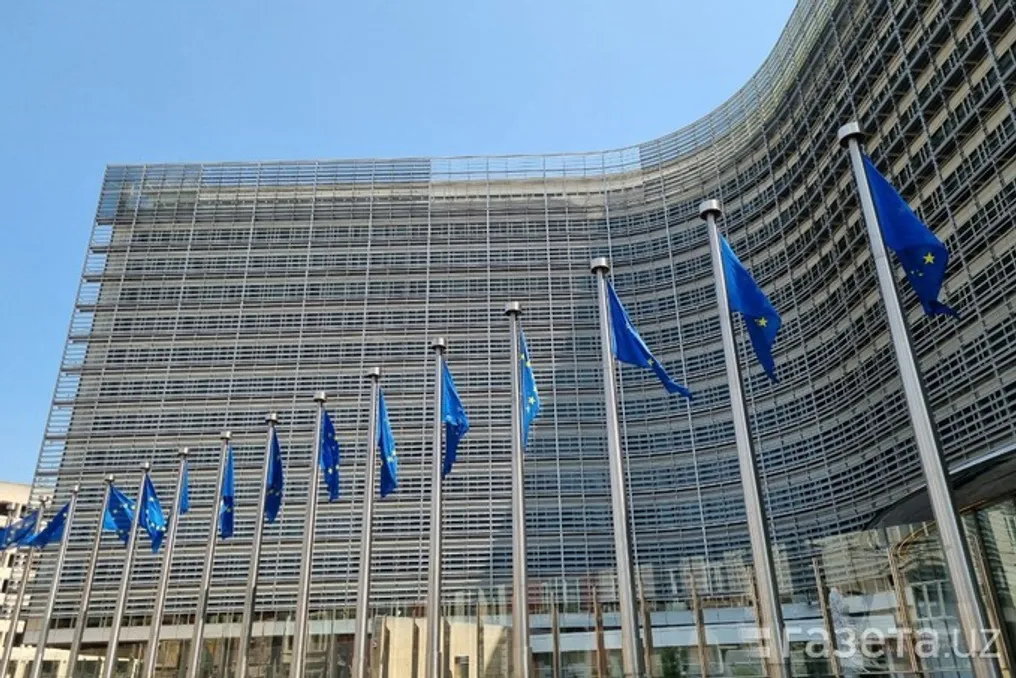
Eldor Aripov: Strategic autonomy of Central Asia must ensure expanded partner choice, not a dilemma
Read more
Gazeta.uz
gazeta.uz

Eldor Aripov: Strategic autonomy of Central Asia must ensure expanded partner choice, not a dilemma

Eldor Aripov, Director of the Institute of Strategic and Interregional Studies at the President of Uzbekistan, stated that the concept of Central Asia's strategic autonomy should not imply the need to choose between external partners, but rather should increase the region's spectrum of opportunities.

Speaking at the first Forum of Analytical Centers 'Central Asia — European Union' in Brussels, Aripov noted that Central Asia is no longer viewed solely through the prism of Russian, Chinese, or Afghan influence, gaining its own strategic significance. At the same time, closer ties with the European Union should contribute to expanding the region's access to investments, technologies, markets, and transport routes, rather than imposing a choice between external players.

Central Asia gains strategic importance on its own merits

Previously, international interest in Central Asia largely depended on its proximity to Russia and China or its role in the context of Afghanistan. However, changes are now evident: Central Asia's economy demonstrates annual growth exceeding 6%, which is roughly double the global average. By 2050, the region's population is projected to reach 100 million people.

Furthermore, the region is strengthening its position as an important transport hub amid problems with traditional maritime, Middle Eastern, and northern routes. Central Asia also possesses large reserves of resources vital for modern technology and industry. Aripov specifically highlighted the strengthening of internal connectivity among the region's countries, as they increasingly put forward a common agenda when interacting with external partners. More than ten 'Central Asia plus' formats already exist, leading to the development of common infrastructure and deepening economic interdependence.

According to Aripov, the region is transforming from a collection of five separate national markets into a more integrated economic space, making it a more reliable and attractive partner for the global community and Europe.

Principles of Partnership with the EU

Aripov believes that cooperation between Central Asia and the EU should be based on three key principles. The first is complementarity, meaning that interaction with Europe should not be seen as replacing the region's existing relations with other partners. He emphasized that the goal is to add new opportunities, not replace old ones, stressing that strategic autonomy should mean 'more choice.'

The importance of cooperation with the EU lies in increasing the number of markets, routes, sources of investment, and technologies for Central Asian countries. At the same time, the new partnership should not lead to replacing one form of dependence with another. The second principle is resilience to external shocks, which for Central Asia means the ability to maintain development pace and independence even in an unstable world. An example could be cooperation with the EU in renewable energy, reducing dependence on fossil fuels, as well as creating legal opportunities for Central Asian citizens to find employment in European states, which will help diversify migration flows.

The third principle is long-term commitment. Although the geopolitical situation has increased Europe's interest in the region, Aripov insists that rapprochement should continue regardless of the factors that initially accelerated it. He noted that truly strategic partnership must have value independent of current political trends, requiring projects designed for decades, not just the next political cycle.

Key Areas of Cooperation

One of the most important aspects mentioned by Aripov is the formation of joint value chains. In light of the growing interest of the EU in Central Asia's critical minerals, cooperation should not be limited to a model of raw material export followed by processing in Europe. Deeper cooperation is necessary, covering geological exploration, environmentally responsible extraction, production, research, and human resource training.

The goal of this interaction should be to unite Central Asia's industrial development with Europe's economic security. Simultaneously, there is a need to simplify the entry of Central Asian products into the European market by supporting certification, compliance with technical standards, and enhancing the competitiveness of local businesses.

Water and climate issues are also highly significant. Since rising temperatures, glacier melt, and stress on water resources are already affecting agriculture and energy, the EU can provide expertise, financial tools, and technologies for implementing water-saving methods and modernizing irrigation. In the transport sector, the EU has included the Trans-Caspian Transport Corridor in its Global Gateway priorities, but Aripov stressed that the effectiveness of these projects is determined not only by the length of the routes or the volume of cargo, but by how quickly, cheaply, and predictably companies can move goods.

Achieving this efficiency requires improving border and customs procedures, digital system compatibility, and better coordination of transport infrastructure. Furthermore, cooperation must address human capital. Aripov reminded that management and infrastructure development skills take much longer to develop than building the objects themselves. Next steps could include joint educational programs, research centers, and professional training, including in AI and digital technologies.

Labor mobility is also important. Given the labor shortage in some European sectors and the availability of labor resources in Central Asia, the parties can develop cooperation in recognizing qualifications, language training, and creating legal employment channels.

Afghanistan and Regional Stability

Addressing the future of Central Asia, Aripov specifically highlighted Afghanistan, stating that it is impossible to seriously discuss the long-term development and transport connectivity of the region while ignoring Afghanistan. For the countries of the region, the situation in Afghanistan is not an abstract security threat but a direct problem that directly affects the economic prospects of the entire Central Asian space.

Therefore, Uzbekistan, according to Aripov, consistently promotes an approach that combines security issues with economic development, education, and the creation of practical opportunities for the residents of Afghanistan. Achieving long-term stability, he said, is not possible through isolation but requires closer economic ties with neighboring states.

What are the next steps?

The main criterion for evaluating the new stage of relations between Central Asia and the EU will be the transition from declarations to real practical implementation. Aripov emphasized that Central Asia and the European Union have sufficient strategies and political plans, but the decisive factor now is their realization.

For Central Asia, cooperation with the EU must expand its opportunities without limiting ties with other partners. In turn, for the EU, the result of the interaction should be a more stable and economically strong Central Asia capable of independently realizing its priorities. If the cooperation yields tangible results in the fields of trade, transport, education, and human capital, the strategic nature of the relationship will be evident in practice, not just in documents.

Similar stories

MTN Nigeria's revenue growth resumed in the third quarter despite fintech segment challenges
Read more
techcentral.co.za

MTN Nigeria's revenue growth resumed in the third quarter despite fintech segment challenges

MTN Nigeria's business activity growth accelerated again in the third quarter, following a noticeable slowdown observed during the first three months of 2024. Nevertheless, the company's fintech division continues to recover after the suspension of airtime credit services.

Service revenue increased by 19.7% year-on-year, reaching ₦1.61 trillion in the first three months leading up to September, which is higher than the 13.2% growth rate in the second quarter. The growth showed monthly acceleration, reaching 21.6% in September. Over nine months, service revenue grew by 23.7%, totaling ₦4.6 trillion.

Earnings before interest, taxes, depreciation, and amortization (EBITDA) increased by 32.8% to ₦951 billion in the reported quarter, and the EBITDA margin expanded by 5.8 percentage points to 58.7%. Net profit after tax rose by 36.5% to ₦457.6 billion.

MTN Nigeria is the largest operation in the JSE-listed MTN group, where its wholly-owned subsidiary, MTN International (Mauritius), holds 73.39% of the shares.

Management Commentary on Results

CEO Karl Torola stated that the company demonstrated a 'very strong third quarter, reversing the temporary slowdown of the second quarter.' He noted that the growth is increasingly driven by volume increases, supported by growing user numbers, deeper data penetration, increased usage frequency, and rising demand for home broadband, facilitated by continuous investments in network coverage, capacity, and quality.

Data revenue grew by 31.4% to ₦981.4 billion in the quarter, while voice revenue increased by 9.3% to ₦503.3 billion. Subscriber numbers grew by 10.9%, reaching 94.7 million, and active data users grew by 12%, totaling 57.2 million. In the third quarter, active data users consumed an average of 17.2 GB per month.

The growth this quarter was slightly below the company's medium-term forecast for service revenue growth, which was 'no less than 20%,' but the nine-month figure meets this forecast. MTN Nigeria confirmed its forecast, as well as its expectation for the EBITDA margin 'to be in the mid to upper 50% range.'

Fintech Sector Challenges

Fintech segment revenue decreased by 58.1% in the quarter, amounting to ₦20.3 billion, and by 25.9% over nine months, reaching ₦97.5 billion. MTN Nigeria attributed this to the suspension of its airtime and data lending service from April to June.

The service was resumed 'under a new multilateral model,' and its revenue increased by 78.5% compared to the second quarter. MTN Nigeria plans to restore the service 'to expected levels by the end of November 2026.' The results do not disclose partner names. Optasia, listed on the JSE and providing airtime loans to MTN customers, relaunched the XtraTime service on June 24, and its own forecasts already indicate a slower second half.

Loan losses also increased. Expected loan losses for MTN Nigeria on trade receivables rose to ₦15 billion over nine months compared to ₦2.4 billion, which is 'mainly due to the revaluation of XtraTime receivables.'

The company's mobile bank, MoMo PSB, migrated to the new Alipay+ platform in August following MTN's deal with the Alipay owner to transform MoMo into a super-app. This transition led to wallet losses. Active MoMo wallets fell to 3.2 million by the end of September from 3.8 million by the end of 2025 after decommissioning outdated wallets. When measured only on the new platform, monthly active users were 3.2 million, an increase of 11.6% year-on-year.

Wallet balances increased more than fourfold to ₦43.8 billion since December, helping to double the core mobile money revenue. The planned structural separation of the fintech business from MTN Nigeria, approved by shareholders in April, is still awaiting regulatory approval.

Johannesburg Cash Flows

MTN Nigeria paid out ₦859.7 billion in dividends over nine months: a final dividend of ₦15/share for 2025 and an interim dividend of ₦26/share, compared to ₦5/share the previous year. MTN International (Mauritius) received ₦655.6 billion, excluding withholding tax. This amounts to approximately $490 million at the end-of-September exchange rate.

These payouts mark a turning point compared to 2024, when foreign exchange losses caused MTN Nigeria's total equity to be in negative territory. Equity stood at ₦843.9 billion by the end of September versus minus ₦458 billion at the beginning of 2025.

MTN Nigeria has repaid all its foreign currency debt, and its borrowings are now fully denominated in Naira at fixed rates. A stronger Naira, at a rate of ₦1,329 per dollar at the end of September compared to ₦1,475 the previous year, generated a net foreign currency gain of ₦80.1 billion over nine months.

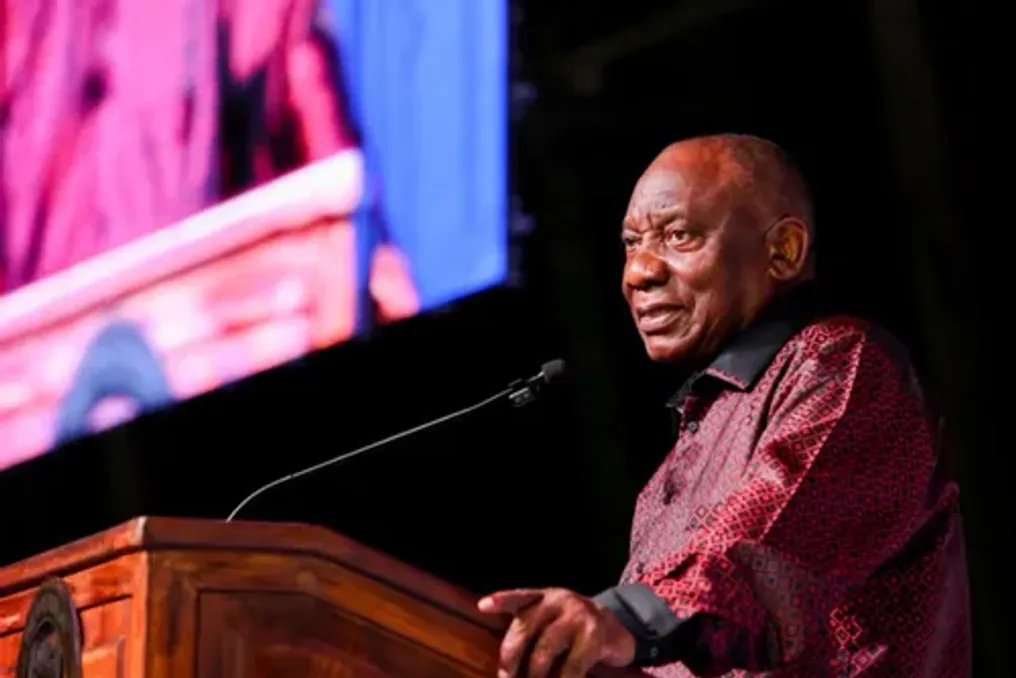
Durban Chamber of Commerce Representatives Inform Ramaphosa About City Port Issues
Read more
iol.co.za

Durban Chamber of Commerce Representatives Inform Ramaphosa About City Port Issues

The Durban Chamber of Commerce held a gala dinner to mark its 170th anniversary, which resulted in a rare moment of open dialogue between business and government. At the event, President Cyril Ramaphosa met with the General Manager of the Durban Chamber of Commerce, Palaso Phili.

During this event, Ramaphosa advocated for the necessity of a partnership based on mutual trust and responsibility, asserting that South Africa does not need additional consultative forums. He used Durban as an example of successful cooperation, referencing the Presidential Working Group on eThekwini, as well as the recovery from the 2021 unrest and the 2022 floods. Ramaphosa presented a vision of Durban as an attractive center for industrial investment with an efficient port, developing tourism, and a growing manufacturing base, where growth is measured by opportunities for youth, women, people with disabilities, and small businesses.

However, Palaso Phili's response brought the discussion back to practical reality. Her presentation was not merely a list of complaints but an operational report on the state of the local economy. Phili stated that the Port of Durban has fallen into disrepair again. She reported the loss of vessels waiting outside the port for weeks and manufacturers forced to halt production due to a lack of raw materials delayed at the port for over ten days.

Phili emphasized that the problem is not limited to logistics but directly affects employment. She called for support for Transnet Group General Manager Michelle Phillips, diagnosing a structural issue—Transnet's debt of 150 billion rand. She proposed transferring this debt to the National Treasury Department so that Transnet could focus on fixing the port's operations rather than servicing the debt.

A second key point raised by Phili concerned that Durban is the main entry point for cheap imports. Since the Port of Durban is the largest in the country, counterfeit, undervalued, and cheap goods first enter here, negatively impacting local industry. The Chamber works with Ayabonga Khwe, Commissioner of the International Trade Commission (ITAC), but insists on the full application of the International Trade Act 72 of 2002. She warned the president that one cannot speak of reindustrialization while allowing deindustrialization through the port.

Finally, Phili presented statistics on the development gap for small and medium enterprises (SMEs). In Brazil and China, SMEs account for about 80% of the workforce, whereas in South Africa, this figure is only around 40%. She reframed traditional barriers—issues with electricity, infrastructure, rent, access to finance, and labor laws—as evidence of the failure of the national employment strategy. She noted that Durban can become a city of opportunity only with the participation of not just large businesses.

Partnership That Must Deliver Results

The significance of the evening was not the celebration itself, but the agreement reached. Phili stated that private investors are ready to help restore the port, and both leaders appeared to agree with the diagnosis presented. The president stated that the eThekwini model should serve as a benchmark for the entire country, and the general manager expressed readiness to work 'shoulder to shoulder' with his office.

Against the backdrop of upcoming local elections, it became clear that the Durban business community is not asking for favors. It demands a functioning port, fair adherence to trade rules, and an environment conducive to small business growth. The Chamber has survived 170 years through adaptation, and last week its leadership demonstrated that it continues to adapt, transforming from a lobbying group into an organized problem-solving partner.

Now, the question, as Phili noted, is whether the partnership Ramaphosa spoke of can go beyond empty words. Apparently, the Chamber has done its part by presenting its problems. Now the entire country will be watching what happens to its port, factories, and small businesses.

Popular