Jetour deepens 'Travel+' strategy by integrating technologies and expanding travel possibilities
Read more
Khaleej Times
www.khaleejtimes.com

Jetour deepens 'Travel+' strategy by integrating technologies and expanding travel possibilities

Thanks to advancements in artificial intelligence and new energy technologies, the capabilities of vehicles are constantly expanding. Ke Chuandeng, President of Jetour International, stated that the future of automotive evolution lies not only in improving power and performance but also in the seamless integration of intelligent interaction, energy solutions, and mobility services, transforming vehicles into smart companions for travelers.

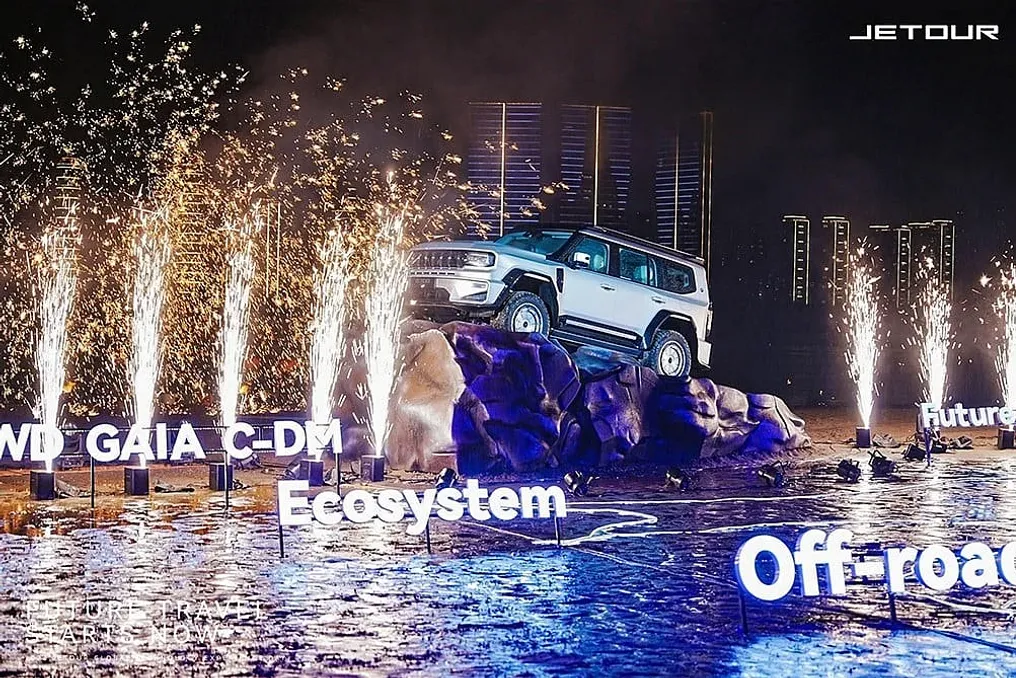
From October 20 to 23, 2026, the Jetour Global Technology Day 2026 was held in Wuhu, Moganshan, and Shajiu Lake. The event demonstrated Jetour's efforts to integrate technology, practical experience, and environmental protection into the field of travel under the 'Travel+' philosophy, showcasing advanced technological demonstrations, off-road tests, and ecological preservation initiatives.

Since its establishment in 2018, Jetour has shaped its product and brand around user needs in travel, gradually building a portfolio that covers city trips, long expeditions, and outdoor recreation. Following the 'Travel+' strategy, the company has developed its service and community networks, including vehicle customization, travel stations, and owner clubs. These endeavors link product functionality, tourism services, and user engagement to ensure a richer travel experience.

As Jetour's global business grows, it is extending the 'Travel+' concept to markets worldwide. As of September 2026, Jetour's cumulative global sales exceeded 2.56 million vehicles. The brand has entered over 100 countries and regions, winning the loyalty of more than 50 million fans and establishing over 300 owner clubs. By adapting to local road conditions, usage habits, and cultural characteristics, Jetour continuously improves the suitability of its products for various mobility needs. Through localized services and community development, the company also forms 'Travel+' initiatives tailored to the needs of users in each region.

The development of future travel experiences depends on the further refinement of intelligent and energy technologies. During the Jetour Global Technology Day 2026, the Group presented cutting-edge developments, including its major model in the automotive sector, chip strategy, the AiMOGA robot, Robotaxi, and integrated solar energy storage and charging systems. These demonstrations highlighted the company's research into intelligent technologies, autonomous driving, and energy solutions, offering new perspectives on the evolution of future mobility.

In various travel scenarios, Jetour showcased its technologies through specialized exhibitions and off-road tests. At the event, the Jetour G700 model, equipped with 'SOLAIR' technology, attracted interest from international guests. Its 'SOLAR' system uses flexible photovoltaic coating to generate up to 6 kWh of electricity per day, with a peak power of 640 watts. The generated energy can be stored in the vehicle's traction battery to power the vehicle itself and electronic devices. Furthermore, its 'AIR' system collects moisture from the air using external equipment mounted on the car and converts it into clean water through heating, condensation, filtration, and disinfection, producing up to 5 liters of water daily. Together, these technologies provide energy and water in remote areas, offering new solutions for off-road trips and long-distance road journeys.

At the global off-road experience media event in Moganshan, Jetour introduced the C-DM Super Hybrid, intelligent XWD all-wheel drive, and GAIA architecture. Features such as visual AI working with chassis sensors and V2L external power demonstrated the vehicles' capabilities in complex terrain conditions and when using off-grid energy. Meanwhile, the G700 Ark Edition underwent emergency navigation drills at a specially equipped testing base and was tested by global media representatives, showcasing its capabilities in water navigation and the GAIA Ark technology.

For Jetour, the future of travel is not just about vehicle specifications. It is also about expanding lifestyles and relationships with users. Through partnerships with FIBA, football clubs, and international marathons, Jetour links its brand with sporting events, regional cultures, and local communities. These initiatives create more opportunities for users worldwide to interact with the brand, taking 'Travel+' beyond vehicle usage into the realm of cultural exchange and lifestyle.

Concurrently, Jetour continues to integrate environmental protection into travel. The 'Travel+' concept extends beyond exploring distant places to include initiatives for conserving the crucian ibis and Tibetan antelope in China, as well as global projects to protect cheetahs, sea turtles, bharal, and harpy eagles.

From applying technologies and expanding travel scenarios to engaging users globally and preserving the environment, Jetour continues to enrich the practical meaning of 'Travel+'. Looking ahead, Jetour will maintain a focus on real user needs in mobility, deepening the integration of technological innovations with diverse travel scenarios and enabling travel to connect people with a wider world.
Similar stories

Experts discuss the prospects of eVTOL flying cars by 2026 and obstacles to their mass adoption
Read more
olhardigital.com.br

Experts discuss the prospects of eVTOL flying cars by 2026 and obstacles to their mass adoption

Despite expectations that flying cars will appear by 2026, the most advanced projects are currently only prototypes undergoing testing. However, the fact that eVTOL (Electric Vertical Take-Off and Landing — electric vertical take-off and landing vehicle) is moving out of the concept stage is not in doubt.

Fernando Martini Catalano, Professor at the Department of Aerospace Engineering and Director of the School of Engineering San Carlos (EESC-USP), confirmed that this will happen. He explained how these aircraft work and what barriers prevent them from beginning full operation.

Fernando Castro Pinto, a lecturer at the Department of Mechanical Engineering of the Polytechnic School UFRJ, also participated in the discussion. Two companies dominate the sector: Joby Aviation from the USA and Eve Air Mobility, a division of the Brazilian company Embraer.

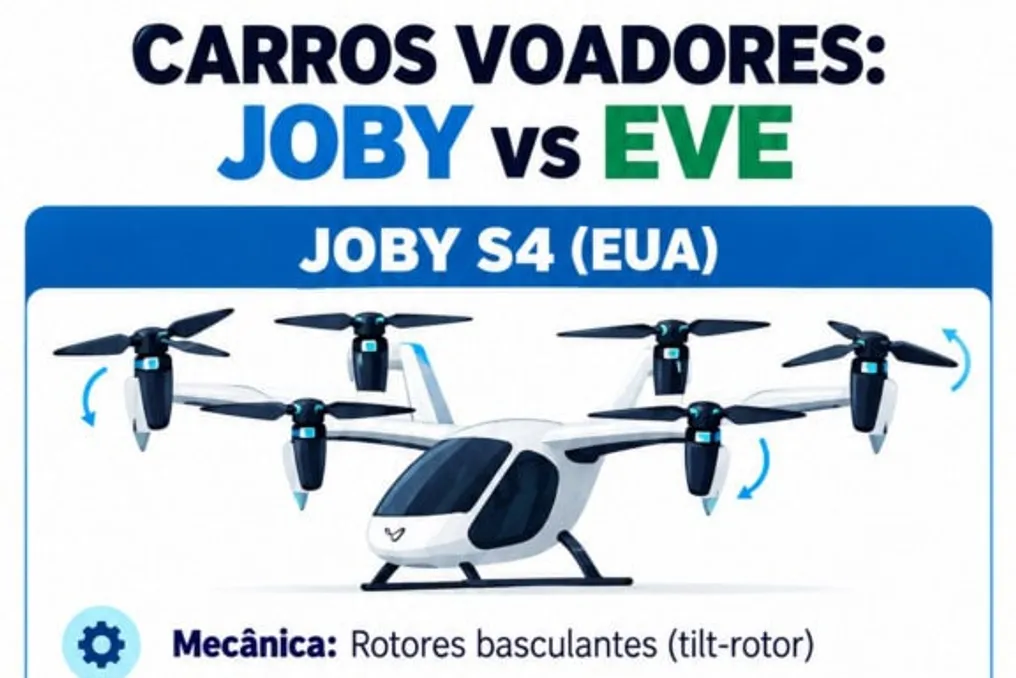
Currently, there is a race between companies to meet the requirements of aviation authorities such as Anac (National Civil Aviation Authority) and the FAA (the equivalent of Anac in the USA). Joby is focusing on conquering the American and Middle Eastern markets using the Joby S4 model, capable of carrying one pilot and four passengers with a tilt-rotor propulsion system. Eve, meanwhile, is betting on the simplicity of its mechanical design and the experience of global certification gained from Embraer.

Joby has partnered with Toyota to ensure large-scale automotive production. Demonstrative and experimental flights of the Joby S4 with passengers are expected to begin in the USA in late 2026 – early 2027. Simultaneously, commercial transport by this American company is expected to start in Dubai, United Arab Emirates.

Eve's eVTOL, codenamed Eve 100, is also designed for one pilot and four passengers. Its technical advantage lies in the 'lift + cruise' design, which uses separate rotors for vertical takeoff and a rear propeller for horizontal flight, providing simpler mechanics and lower maintenance costs compared to the Joby project.

Like Joby, the Eve project is in the testing and certification phase. Although mass production has not yet begun, the factory in Taubaté (São Paulo state), designed by Embraer, is capable of assembling up to 480 aircraft annually. Embraer and Eve management predicts final certification and the start of commercial operation by the end of 2027 or during 2028.

Morgan Stanley estimates the global eVTOL and Urban Air Mobility (UAM) market at $1 trillion (5 trillion Brazilian reais) by 2040, including passenger transport, cargo delivery, and necessary digital and physical infrastructure (vertiports). However, the bank recently lowered its 2030 forecasts by 75%, bringing them down to $12 billion (60 billion reais), because regulatory barriers proved higher than anticipated.

Technical and safety issues are the main obstacle. Fernando Castro Pinto notes that the main technological challenge is similar to the battery problem in electric vehicles: the more energy required, the larger the battery, the heavier the aircraft, and the more energy is needed. Fernando Martini Catalano adds that the weight of batteries remains too high relative to the energy they provide.

Furthermore, Fernando Pinto pointed out other obstacles to implementation in Brazil: the need to obtain a driver's license and comply with traffic rules. He emphasized that an accident at 30 meters altitude would have much more serious consequences than on the ground.

Consolidating eVTOL fleets will require not only a high level of qualification exceeding standard driving licenses but also harmonious coexistence with civil aviation and helicopters, adhering to routes and airport restrictions. The pilot must possess commercial class pilot skills, understanding all limitations related to routes, radio communication, and attentiveness.

When will flying cars become a reality? Catalano believes it will take seven to ten years, noting that the aircraft itself is only part of the problem; the entire ecosystem, including vertiports, charging logistics, noise reduction, and urban legislation, is necessary. Fernando Pinto, on the other hand, predicts decades for mass transport, as infrastructural bottlenecks such as the capacity of the urban power grid, as well as the evolution of battery technologies and the creation of a legal framework, must be resolved.

Catalano suggests considering medical emergency transport, organ transport, and cargo transport as the initial entry of eVTOL into cities, as these can become faster and more accessible solutions compared to helicopters, especially since not all hospitals are equipped with helipads, and a vertiport can be a cheaper and more urgent alternative.

The main challenge, according to experts, is to make the use of flying cars relatively inexpensive so that they do not remain a luxury item but serve a real benefit to the population.

Honda XL750 Transalp Analysis: Highway Performance Versus Off-Road Limitations
Read more
autopapo.com.br

Honda XL750 Transalp Analysis: Highway Performance Versus Off-Road Limitations

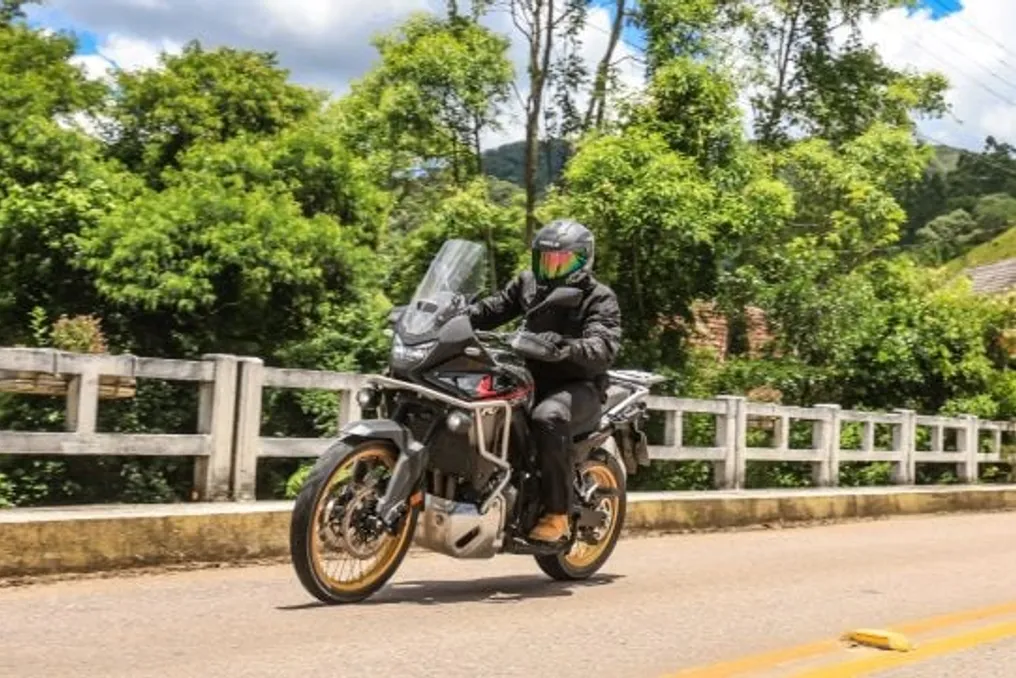
The first contact with the Honda XL750 Transalp occurred while descending the Serra do Rio do Rastro in Santa Catarina, an environment suitable for any mid or large trail motorcycle. After ten days of practical use, which included urban traffic and daily commutes, it became clear that the Transalp occupies a specific niche: highways and touring.

This model returned to the market with a distinct look from its predecessor, the 700, presenting a more imposing appearance and a design that appeals even off-road. Unlike the new CB 750 Hornet, which faced criticism for dropping the four cylinders, the Transalp avoided this scrutiny, as its adventure proposal benefits off-road riders who generally adapt better to less-cylindered engines.

Performance and Handling

Although it shares the same base as the CB 750 Hornet—a 755 cc twin-cylinder engine producing 69.3 hp and 7.04 kgf·m—the Transalp demonstrates different behavior. Its acceleration is smoother at low RPMs, and the engine reaches most of its capacity near 7,000 rpm, providing a noticeable increase in speed and power.

The practical recommendation is to operate the engine at higher RPMs, avoiding a lack of power in lower ranges, especially in higher gears. Even though it is considered 'weaker' in this range, the bike ensures safe riding on any type of road. The setup reveals its maximum potential at higher speeds, during tours and on highways, a moment when its size ceases to be an obstacle and the engine operates within its ideal range.

The ergonomics of the Transalp were pleasing from the first contact, and despite its dimensions being classified as intermediate to large, nothing seems excessive while the bike is moving. Maneuvering it is not difficult, even considering 21-inch front and 18-inch rear wheels, along with 200 mm and 190 mm suspensions, respectively. What truly stands out is the feeling of control in all situations.

Off-Road Capabilities and Equipment

Off the asphalt, the bike performs its role well. Although it is not a CRF nor was it specifically designed for it, it can handle lighter trails without issues. The onboard electronics assist in this regard: among the six available riding modes, the Gravel and customizable User 1 and User 2 modes allow disabling both ABS and traction control (HSTC).

The equipment list is robust, including full LED lighting, the mentioned driving assistance systems, and a 5-inch TFT display. This display is accessed via a joystick located on the left wrist and shows all necessary information to the rider. ABS contributes to greater safety during braking, and HSTC minimizes rear wheel slip; both are disableable in specific modes.

Areas for Improvement and Urban Use

Identified flaws include the lack of smartphone connectivity, a feature already available on the European panel but not yet implemented in South America. Additionally, the USB port is not conveniently positioned near the handlebars, being located under the passenger seat, which requires removing the upholstery to access the phone.

With more time spent with it, overheating became the main negative point. The engine heats the rider's legs, and this discomfort occurs predictably: on trips or cold days, the wind helps cool the unit, eliminating the annoyance. However, at low speed, without airflow and with high temperatures, the heat can rise to the point of bothering the passenger as well. None of these situations prevent the ride, but they serve as an important warning.

There is also a minor annoyance: when stopping and resting the left foot on the ground, the fairing under the seat lifts and touches the rider. During riding, with the foot on the pedal, this is not a problem, but when stopped, it may be necessary to adjust the position slightly further forward on the seat.

In the context of urban traffic, the benefits are limited. The first advantage is the available power when needed, which is useful for overtaking or getting out of difficult situations. The second advantage lies in the handlebar height, which exceeds the rearview mirrors of small cars, facilitating lane splitting. However, against SUVs, whose mirrors are higher, this maneuver is not feasible, although these vehicles still represent a minority.

In summary, the bike is too large and heavy for daily city use; besides the overheating issue, this weakens the justification for the Transalp's proposal in this scenario. Despite being versatile and having more qualities than defects, the final cost is considerable. The suggested retail price is R$ 65,545, potentially reaching R$ 70 thousand at dealerships. For those planning to use it according to its vocation—highway, touring, and leisure rides—the proposal remains valid. For those seeking to face daily urban traffic, the weight, size, and heat make the choice harder to justify at this price.

Study projects electric motorcycles could surpass combustion engines in ten years in Brazil
Read more
autopapo.com.br

Study projects electric motorcycles could surpass combustion engines in ten years in Brazil

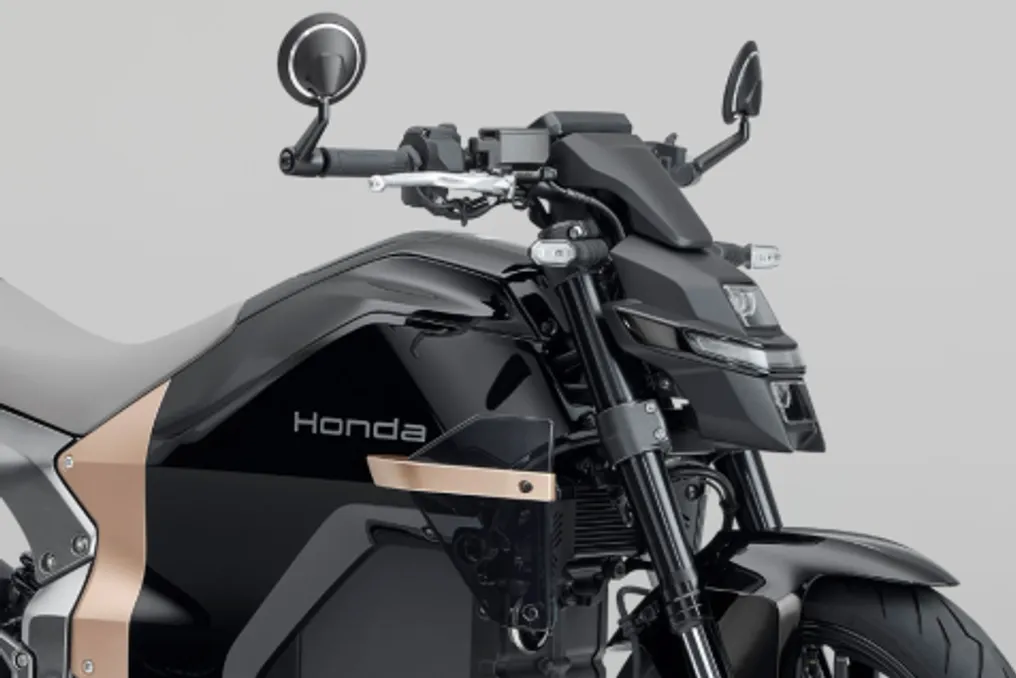
Electric motorcycles accounted for 1.28% of two-wheeled vehicle sales in Brazil during the first half of 2026. Although this is a modest share, it represents a significant increase compared to the 0.39% recorded in 2024, forcing the industry to make decisions about its production over the next decade.

A study prepared by Luiz Vicente F. de Mello, a motorcycle specialist at Bright Consulting, predicts that the point at which electric bikes will overtake combustion engine motorcycles could occur sooner than currently suggested, reaching around five years in the most accelerated scenario.

Projection Scenarios

This is the most optimistic scenario among the three analyzed. In the baseline scenario, electric motorcycles are expected to become the majority between 2035 and 2037. In the conservative trajectory, the share of electric motorcycles will remain below 50% until 2040.

The projection was calculated using real market data, is periodically updated, and compared with more established markets, such as China and India.

Key Factors for Electrification

For these forecasts to materialize, the study identifies two crucial elements for the mass electrification of motorcycles in Brazil: battery range and available infrastructure.

According to Bright, electrification does not solely depend on advances in cell chemistry; a rapid battery swapping network can commercially compensate for range limitations, especially in high-intensity operations.

Instead of waiting for a battery that simultaneously offers greater range, lower weight, lower cost, and fast charging, a swapping system eliminates recharge time from the operational calculation.

The company Vammo, which provides electric motorcycle rentals for delivery drivers, has been using battery swap points since 2023, but its network is still limited to Greater São Paulo.

Change Starts with Self-Propelled Vehicles

In Mello's personal analysis, the transition does not begin with motorcycles. He observes that self-propelled vehicles are already starting this change, indicating that the transformation is already underway, observable in the indicators of stores in this segment. He states that the change starts at the base.

Mello points to 2026 as a dividing line. Until 2025, the market experienced a wave of mopeds. Starting January 1st of this year, with Contran Resolution 996/2023 in effect, mopeds began requiring registration in Renavam, licensing, annual licensing, and a driver's license.

He explains that because the moped now requires mandatory licensing and driving authorization, ACC noticed a decrease in this segment, which spurred the opening of many self-propelled vehicle stores.

Mello clarifies that the focus of these stores is not exclusively on scooters, but rather on small motorcycles, characterizing what he calls micromobility.

Urban Challenges and Specific Niches

Despite the start of the battery movement, Mello highlights urban infrastructure as the biggest obstacle. For him, smaller models aimed at micromobility have specific legislation but require special attention for circulation, with exclusive lanes considered ideal and a vital point for safety.

The problem is that most large Brazilian cities do not support such a change, and the specialist considers an urban restructuring of this magnitude utopian.

In contrast to professional use, there is the premium, sports, and leisure segment. In this niche, characteristics such as engine sound, vibration, torque delivery, and gear shifting are integral parts of the product, and Mello considers it unlikely that this sector will migrate to electric motorcycles at the same speed, keeping the combustion engine relevant for a considerably longer period.

Popular