Reliance's equity capital grew by 7% after the publication of second-quarter results
Read more
Business Standard
business-standard.com

Reliance's equity capital grew by 7% after the publication of second-quarter results

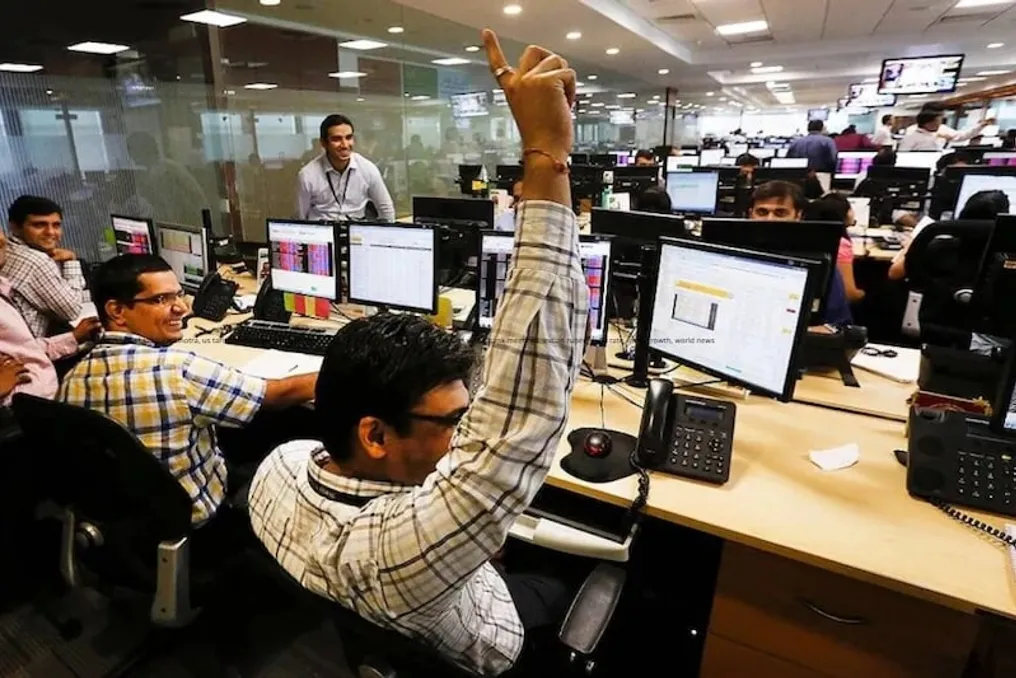
Shares of Reliance Industries, the largest company by market capitalization, showed the sharpest intraday growth in the last three years, reaching 7.12 percent, or ₹1,246.45, according to BSE data. This surge occurred on Monday after the company presented strong financial results for the quarter ending in September 2026.

According to BSE data, the largest capitalized asset recorded its most significant intraday jump since January 29, 2024, when it rose by 7.18 percent. Previously, on February 3, 2026, shares also increased by 7.11 percent.

At 10:04 AM, RIL led among Sensex and Nifty 50 stocks, showing a rise of 6.1 percent compared to the benchmark indices' rise of 1.2 percent. Trading volume was very high, with turnover of 42.59 million shares on NSE and BSE.

RIL's Second Quarter Results

RIL reported high double-digit growth in both consolidated and standalone revenue and net profit for the July-September 2026 quarter (Q2FY27). The growth was driven by a sharp increase in prices for transport fuel and petrochemical products (petchem). These results exceeded analyst forecasts, and profits and earnings before interest, depreciation, and taxes (PBIDT) reached record levels.

Consolidated net profit attributable to the company's shareholders grew by 40.6 percent year-over-year (YoY) to a record ₹25,548 crore in Q2FY27, compared to ₹18,165 crore in Q2FY26 and ₹20,946 crore in Q1FY27. Meanwhile, the company's declared net profit increased by 33.8 percent year-over-year to ₹29,550 crore.

RIL's consolidated net revenue also rose by 29.8 percent year-over-year, reaching an all-time high of ₹3.31 trillion in Q2FY27, higher than the previous year (₹2.55 trillion) and Q1FY27 (₹3.09 trillion), and exceeding the forecast of ₹3.14 trillion.

The Oil-to-Chemicals (O2C) division, which includes refining and petrochemical products, contributed over 80 percent to the year-over-year growth in RIL's consolidated gross revenue and earnings before interest and taxes (Ebit) in Q2FY27.

Broker Opinions on RIL

Analysts at Jefferies noted that the O2C division performed strongly, helping consolidated EBITDA surpass estimates by 6 percent, although the Retail segment lagged by 6 percent. They suggested that the growth in the main Retail segment and EBITDA decreased year-over-year due to the shift in the holiday season and ongoing pressure from QC construction. Jefferies analysts predict an increase in O2C profitability during winter due to refinery infrastructure damage in the Middle East and Russia.

The brokerage firm raised the consolidated EBITDA forecast by 6 percent/2 percent for FY27/28E, believing that the strong momentum in O2C will continue. They also noted that the stock is trading more than 2 standard deviations below the long-term average EV/Ebitda, indicating maximum pessimism. According to Jefferies, an improvement in profit figures and a recovery in growth in the Retail sector to mid-teens could lead to a revaluation of the stock, and they maintain a 'Buy' rating with a target price of ₹1,710.

Equirus Securities analysts maintain a 'Long-Term Hold' rating for RIL, as the recent correction improved the risk-reward ratio, offering a reasonable entry point given the potential for RIL's profit growth in the medium term. While the recovery of O2C and the growth of Jio provide profit visibility, sustained performance in the Retail sector and timely execution of new energy projects remain key factors for the next stage of revaluation.

Motilal Oswal Financial Services expects the digital segment to remain the main growth driver, contributing 80 percent to the increase in RIL's EBITDA, with a projected CAGR of 18 percent for the period FY26-28E. This growth will be stimulated by tariff hikes (by 15 percent in Q4), increased wireless market share, and continuous expansion of offerings for homes and businesses.

Motilal Oswal Financial Services analysts reiterated the 'Buy' rating with a revised target price of ₹1,520 (previously ₹1,560). They believe that RIL is currently trading at a 54 percent discount to its stake in Jio Platforms Limited, which they consider excessive. Although the energy segment provides short-term profit growth, they see the recovery of growth and profitability in Reliance Retail as a key factor for RIL's stock appreciation.
Similar stories

Fed decision triggers sharp stock market surge: Sensex rises by 600 points
Read more
www.aajtak.in

Fed decision triggers sharp stock market surge: Sensex rises by 600 points

On the fourth trading day, there was a sudden shift in the dynamics of the Sensex and Nifty indices on the stock market. After a slow start to trading, both indices began to rise rapidly. The Sensex index, comprising 30 shares from the Bombay Stock Exchange, jumped by 600 points, while the Nifty of the National Stock Exchange rose by more than 150 points.

This significant growth is linked to events in the US. The stock market opened in the green zone, recovering from the previous day's decline. Although the initial rise was moderate, the situation changed sharply after about an hour, and both indices continued their upward movement at high speed.

The Sensex opened at 73,268, slightly above the previous day's close of 73,246, and then quickly reached 73,862. Similarly, Nifty, starting from a close of 22,690, rose to 22,874.

Among the companies that showed strong growth during this sudden market wave, large corporations were prominent. In the category of large companies on the BSE, stocks such as Adani Ports Share (4.10%), Power Grid Share (4.05%), Kotak Bank Share (3.10%), ITC Share (2.50%), Eternal Share (2.36%), and HUL Share (2.10%), as well as Jio Platforms Share (4.10%), saw gains.

Regarding mid-sized companies, stocks like Apl Apollo Share (3%), Paytm Share (2.90%), and Nykaa Share (2%) demonstrated an increase. Among small companies, growth was noted in Acutaas Share (6.50%), GESHIP Share (5%), Manappuram Share (4.50%), and CUB Share (4.20%).

There are three main reasons explaining this rise in the stock market. One is related to the US. The US Federal Reserve (US FED) announced on Wednesday that it would maintain the current policy rate. Furthermore, there is a decrease in crude oil prices. At the time of writing, the price of Brent Crude fell to $113. Additionally, foreign investor sentiment improved: FPIs made purchases worth about 900 crore rupees in the previous trading day, injecting vitality into the market.

Stock Market Decline: Three Main Reasons, Losses of 700 Billion Rupees, and Popular Stocks Dropped by Up to 17%
Read more
www.aajtak.in

Stock Market Decline: Three Main Reasons, Losses of 700 Billion Rupees, and Popular Stocks Dropped by Up to 17%

A decline was observed in the stock market on the last trading day and throughout the fourth consecutive session. The Sensex index fell by 1250 points from its daily high, but after the market closed, it showed a significant recovery. Nevertheless, investors in the Indian market incurred losses amounting to about 700 billion rupees.

The market capitalization of the BSE reached 458 billion rupees on Thursday, and by Friday, it decreased by approximately 700 billion rupees to 451 billion rupees. The main reason for this sharp drop was the massive sell-off of stocks in the small and mid-cap segments.

After the sharp fall on Friday, the BSE Sensex recovered, declining by only 125 points and settling at 73,123.83. The Nifty index dropped by 87 points, reaching the level of 22,600. Previously, Nifty had touched the lower level of 22,372, and Sensex had touched 72,452.37.

On Friday, stocks of mid-cap and small-cap companies experienced a serious decline. At the close of trading, the BSE 150 Midcap index fell by 2.10%, closing at 15,143.47, while the BSE 250 Smallcap declined by 2.68%, ending trading at 6,440.65. Shares of Jammu & Kashmir Bank lost more than 16 percent, while Swiggy shares fell by approximately 17%. These two companies became the stocks of the day in the mid-cap and small-cap sectors.

Most stocks in the small and mid-cap segments were in a decline zone of more than 3 percent on Friday, leading to a significant reduction in investor portfolios. Among the top 30 BSE stocks, the largest drop was recorded by Tata Steel, which fell by 3.21 percent. Twenty stocks closed in the red, and the remaining ten closed in the green. Eternal's shares, conversely, closed with a gain of about 4 percent.

The primary reason cited for the decline is the crude oil situation, whose price reached $115 per barrel. Brent Crude Oil rose by 1.33% on Friday, reaching $114.67 per barrel. This rise is attributed to the Houthi attack on Saudi Arabia. Furthermore, foreign investors continue to increase their selling. On October 22, foreign investors sold Indian stocks worth 16,113.89 crore rupees, while DII supported the market by buying stocks worth 14,519.12 crore rupees.

Large-scale selling was observed among both retail investors and foreign participants in the small and mid-cap segments. The results of some companies' reports also influenced the market.

Reliance shares show sharp growth before Jio IPO; Sensex index rises by 800 points
Read more
www.aajtak.in

Reliance shares show sharp growth before Jio IPO; Sensex index rises by 800 points

The trading session on the stock market started splendidly on Wednesday. The Sensex and Nifty indices opened in the green zone and then demonstrated rapid growth. The BSE Sensex index, comprising 30 stocks, jumped by more than 800 points just minutes after opening, while the NSE Nifty also followed suit, rising by approximately 200 points.

This strong growth occurred against the backdrop of the upcoming launch of the country's largest IPO. Jio Platforms, owned by Mukesh Ambani, is preparing for an IPO placement worth over 30,200 crore rupees, which supported the overall market rise, causing a surge in the shares of both Reliance and Jio Financial Services.

At the opening of trading, the BSE Sensex started with a strong jump, reaching 74,337.93 compared to the previous closing level of 73,852.90. Its movement then accelerated, and it traded at 74,668, achieving a gain of over 800 points.

As for the NSE Nifty, its dynamics were similar to the Sensex. This index of 50 stocks opened above 23,000, compared to the previous closing level of 22,888.95, and, following the Sensex, rose by approximately 224 points, trading at 23,120.90.

The shares of Reliance Industries, owned by Mukesh Ambani, played a significant role in supporting this vigorous market growth. Since the Jio Platforms IPO opens to retail investors on Wednesday, Reliance shares have been showing impressive growth even before that. At the time of writing, Reliance shares were trading at 1234 rupees, showing a growth of 2.30 percent. Additionally, Jio Financial Services shares were trading at 216.30 rupees, increasing by more than 1 percent.

Popular