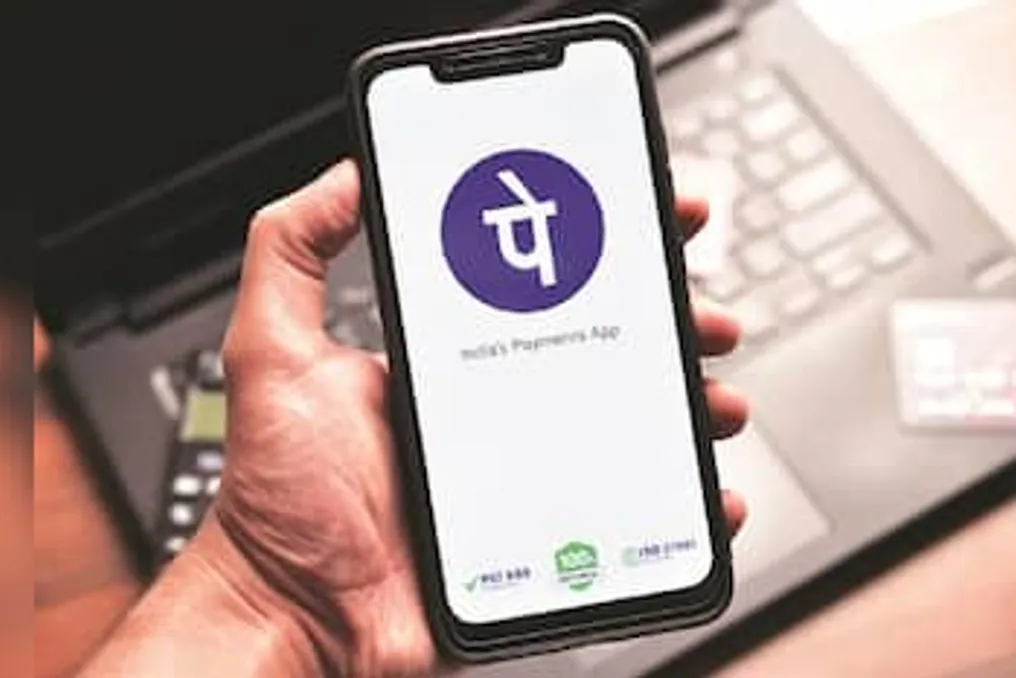
PhonePe Invest demonstrated a 50% growth in new customer acquisition after rebranding
Read more
Business Standard
business-standard.com

PhonePe Invest demonstrated a 50% growth in new customer acquisition after rebranding

The investment and trading platform PhonePe Invest, owned by PhonePe, showed significant growth in the number of clients in October 2026. Registration on the platform saw an 80% increase, and the growth in new customers reached 50%.

This growth resulted from the transformation of the platform from Share. Market to PhonePe Invest, which occurred in October 2026. Alongside the rebranding, new features and tools were introduced designed to provide investors with deep and practical analytical data on their portfolios.

Details about the new tools

One of the key additions is the Portfolio Optimiser feature—a comprehensive portfolio analysis tool that combines three capabilities: Build, Review, and Optimise, in a single interface. This tool addresses three main tasks for retail investors.

The 'Build' function simplifies the investment process for beginners, guiding them in building a portfolio. The 'Review' function provides more detailed portfolio analytics and reasoned research, allowing users to assess the status of their investments not only on PhonePe Invest but also across all other demo accounts in one place.

PhonePe Invest users can seamlessly import assets from all their demo accounts and view a consolidated portfolio. This provides a holistic view of the portfolio's status, asset allocation, and sector risk, as well as enabling the identification of undervalued assets and concentration risks at no cost.

The 'Optimise' capability allows for a one-click action to improve the portfolio by replacing undervalued stocks with stocks having better valuations.

Vijay Ajmera, Head of Business at PhonePe Invest, commented on the platform's development, stating: 'We are pleased with the response to the evolution of PhonePe Invest and the early success we see from our customers. The growth in new customers strengthens our confidence that there is potential to create a more comprehensive investment experience that goes beyond simple transactions.'

He added that the next phase of investing should help people better understand, evaluate, and manage their investments. With features like Portfolio Optimiser, the company aims to make research tools and portfolio analytics accessible to every Indian. He emphasized that by giving users the ability to view consolidated assets across multiple demo accounts, they help make informed decisions while maintaining control over their investments. Powerful new smart investing features will continue to be launched within the development of PhonePe Invest for every Indian investor.

Thanks to this evolution, the platform's investment and wealth offerings are integrated under the PhonePe brand, making investing more accessible to a wide range of users. PhonePe Invest offers access to diverse products, including stocks, ETFs, IPOs, mutual funds, as well as Futures and Options (F&O), supplemented by analytical tools and data designed to support investors at different stages of their investment journey.

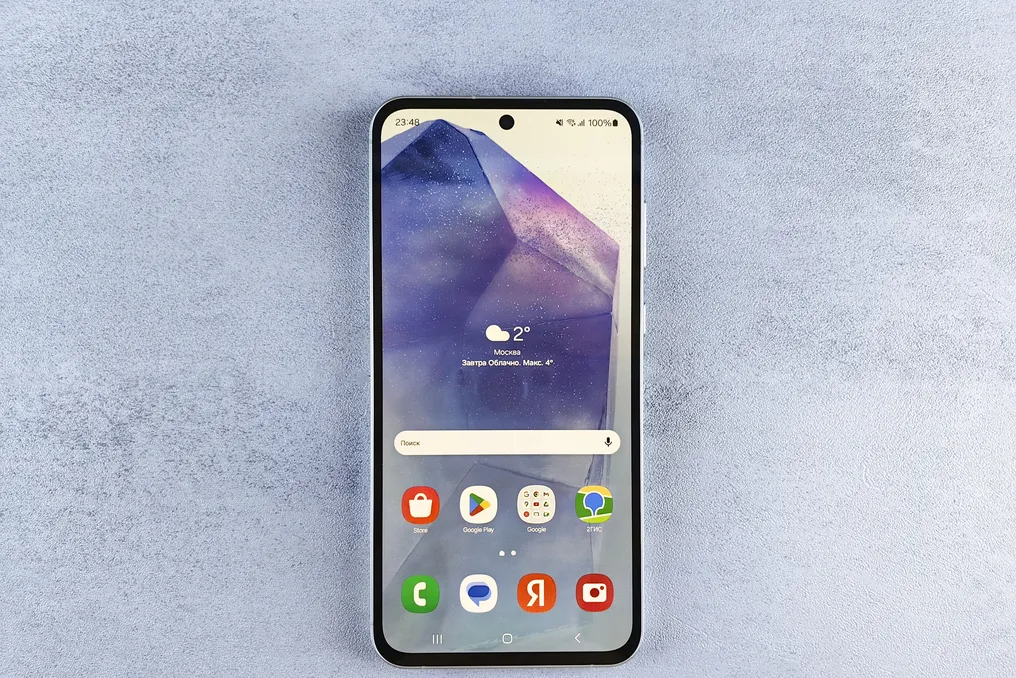
Similar stories

Ashwini Vaishnaw calls PLI scheme successful: 12 million jobs and ₹3.25 lakh revenue
Read more
www.aajtak.in

Ashwini Vaishnaw calls PLI scheme successful: 12 million jobs and ₹3.25 lakh revenue

The discussion about iPhone production in India goes beyond simply manufacturing one type of phone; it tests the country's ability to scale up new factories, jobs, and exports with the support of government incentives. The central government provided financial support to mobile companies through the Production Linked Incentive (PLI) scheme to increase production volumes.

According to Electronics and IT Minister Ashwini Vaishnaw, the government has allocated ₹19,000 crore in incentives for mobile manufacturing. As a result, this sector has generated ₹25,000 crore in direct taxes and ₹3 lakh crore in GST collection. He also noted that 25 lakh people are employed in electronics manufacturing, of whom 12 lakh work directly in mobile manufacturing.

However, there is another side to this story: the question is whether India imports components for assembling phones or is gradually starting to produce the parts and technologies that constitute the true value of the device. This debate is important for understanding the progress of the 'Make in India' and 'Made in India' concepts.

PLI stands for Production Linked Incentive. Simply put, it is a program that provides financial incentives to eligible companies for increasing domestic production. The goal of this scheme is to help companies set up factories in India, increase output, invest capital, and make India a more attractive manufacturing hub compared to other countries.

For example, if a company manufactures mobile phones in India and meets the program's criteria, it can receive incentives according to established rules. This increases the economic benefit for the company when expanding production in India. The government expects that in return, investments will come in, jobs will be created, production will rise, and exports will be stimulated. Thus, the state does not directly cover the cost of every phone but encourages companies that increase production according to specific conditions.

A few years ago, most of India's mobile phone needs were met through imports. Now, the situation has changed significantly. According to government data, in 2014–15, about 75 percent of the country's demand for mobile phones was covered by imports, whereas in the fiscal year 2024–25, this figure dropped to approximately 0.02 percent.

Mobile phone production has also accelerated. Government data shows that in 2014–15, the country produced about ₹18,000 crore worth of mobile phones, while in 2024–25, this volume grew to approximately ₹5.5 lakh crore. Over the same period, the total production of electronic goods increased from ₹1.9 lakh crore to ₹11.3 lakh crore.

The PLI scheme played a key role in this transformation. Thanks to it, companies received incentives for large-scale mobile device manufacturing in India. Furthermore, existing factories in the country have expanded, and foreign companies' supply chains have begun shifting towards India.

The most discussed example of these changes is the iPhone from Apple. The company and its manufacturing partners are increasing production in India. This allows India to increase its share in the global electronics supply chain. According to a recent Bloomberg report, about one in four iPhones produced globally is now manufactured in India. This indicates that India is not only producing phones for the domestic market but is also becoming part of the production system that meets global demand.

One factor driving Apple to increase production in India is the desire to reduce dependence on China. Companies refer to this strategy as 'China plus one,' which means establishing factories and supply chains in other countries alongside those already in China to lessen reliance on any single nation. For India, this can translate into opportunities such as investment, job creation, acquisition of technical expertise, and export growth.

Official data is crucial for assessing the results of the PLI scheme. According to information presented to parliament in July 2025, by June 2025, investments under the PLI scheme for large-scale electronics manufacturing reached ₹12,390 crore. During this period, total production reached ₹8.44 lakh crore, and exports under this scheme amounted to ₹4.65 lakh crore.

Furthermore, according to government data provided as of March 2026, the total investment under the scheme reached ₹20,587 crore, and production reached ₹11.61 lakh crore, with exports totaling ₹6.43 lakh crore. These figures reflect the overall achievements over the entire period of the scheme, not just the results for one year. Export growth means that phones manufactured in India are sold in other countries, allowing the country to secure its place in global markets and encouraging companies toward large-scale production.

What benefit does the PLI scheme bring to India? Debates regarding government support for mobile manufacturing have recently intensified. A Bloomberg video report asked how India can benefit if many expensive and critical iPhone components come from abroad.

Essential settings on Android phones to ensure greater durability and performance
Read more
g1.globo.com

Essential settings on Android phones to ensure greater durability and performance

When purchasing an intermediate Android smartphone in 2026, it is essential to pay attention to various technical details in the device's specifications. The focus should go beyond camera megapixels or just the price, seeking a well-balanced device that offers good performance, adequate storage space, and longevity.

RAM Memory: minimum 8 GB

The fluidity of the device is directly affected by the RAM memory. For the year 2026, a minimum of 8 GB of RAM is recommended so that using browsers, social networks, messaging apps, and multitasking occurs without constant freezing. Models equipped with 12 GB or more of RAM are more common and represent an advantage for users who game or wish to maintain a high level of performance for longer.

Storage: minimum 256 GB

Internal storage has become crucial due to the growing memory consumption by Android, applications, and personal data. With 256 GB, the user has more capacity to store videos, photos, documents, and games without the constant need to delete content. This capacity is considered more appropriate for those planning to use the device for several years.

Battery: at least 5,000 mAh

The battery remains one of the most important components for most consumers. In intermediate smartphones, 5,000 mAh is the safe benchmark to support more than one day of use without access to a power outlet. It is advisable to check if the battery uses silicon-carbon technology, as this allows manufacturers to incorporate larger charge capacities into thinner devices. Currently, models are available in stores with capacities exceeding 6,000 mAh, reaching up to 10,001 mAh.

Screen: 120 Hz is the standard

Screen quality directly impacts the user experience. Panels that use AMOLED or similar technology generally provide more vibrant colors, better contrast, and deeper blacks. Furthermore, a 120 Hz refresh rate ensures smoother browsing, faster animations, and fluid scrolling.

Updated Android

The Android support period and the availability of security updates have become decisive criteria when buying phones. Security updates and new versions of Android are vital to keep the device protected and compatible with the latest software. The ideal is to opt for models that offer support for at least five years. Some brands, such as Samsung, already provide six years of updates on certain intermediates, while others, like Motorola, show variations between two and seven years, depending on the specific model. It is recommended to consult the manufacturer's website for this information.

NFC: a differential for payments

NFC is a relevant feature to check before buying, as it is the technology used for contactless payments, but not all budget phones include this feature. The prices of intermediate Android models analyzed in the last week of October ranged between R$ 2,100 and R$ 7,000. Examples presented included the Jovi V70 (8 GB / 256 GB, 7,000 mAh, screen up to 120 Hz), Moto Edge 70 Pro (12 GB / 256 GB, 6,500 mAh, screen up to 144 Hz), Oppo Reno 16 (8 GB / 256 GB or 512 GB, 6,000 mAh, screen up to 120 Hz), Realme 16 (8 GB or 12 GB / 256 GB or 512 GB, 6,550 mAh, screen up to 120 Hz), and Samsung Galaxy A57 (8 GB / 128 GB or 256 GB, 5,000 mAh, screen up to 120 Hz).

L'Oreal notes business growth in India and expansion of presence in skincare and e-commerce
Read more
business-standard.com

L'Oreal notes business growth in India and expansion of presence in skincare and e-commerce

The French cosmetics giant L'Oreal reports that its operations in India are demonstrating significant growth. This growth is attributed to improved staff qualifications, increased product localization, accelerated e-commerce, and rising demand for hair and skin care products.

According to the company's latest report, the consumer goods division's business in India showed double-digit growth in the September quarter. Furthermore, the professional products segment noted impressive growth in emerging markets, particularly in Brazil and India.

In the third quarter of 2026, the SAPMENA-SSA region, overseen by L'Oreal, demonstrated adjusted growth of 19.2 percent, with India and Indonesia showing even faster growth rates due to demand for cosmetics and skincare products.

Supporting Growth Through Localization and Digitalization

During a visit to India several weeks ago, global CEO Nicolas Hieronimus noted a strong turnaround in the country, supported by enhanced team quality and a greater focus on developing products tailored for local consumers. He emphasized that the company is now creating much more for India than before.

The company is actively scaling up its e-commerce strategy, with a particular focus on express delivery. Simultaneously, L'Oreal is expanding its skincare brands, such as CeraVe and La Roche-Posay, launching them in new cities to meet the growing demand for specialized skin treatments.

Nicolas Hieronimus stated that India is one of the countries where the CeraVe brand is still in its early stages of development but is growing rapidly and entering new territories. The company also launched La Roche-Posay in India, which is positioned in a higher price segment, and L'Oreal expects these two brands to complement each other in the market.

To strengthen its local presence, L'Oreal completed the acquisition of a controlling stake in Innovist—an Indian personal hygiene company focused on digital technology that owns a portfolio of beauty and personal care brands. This acquisition is intended to accelerate L'Oreal's business development in India by strengthening access to the country's fast-growing digital beauty market.

Moreover, L'Oreal's corporate venture fund, BOLD, partnered with Nykaa, India's largest cosmetics retailer, to gain minority stakes in fast-growing Indian brands in the beauty, personal care, and health sectors. The goal of this collaboration is to identify and support new brands in a market where digital platforms play an increasingly vital role in product discovery and purchasing.

L'Oreal's recent investments reflect its strategy to deepen its presence in India by combining its global brand portfolio with locally relevant offerings and digitally driven distribution channels. Overall, in the third quarter of 2026, L'Oreal reported global sales of 11.56 billion euros, which is 7.2 percent higher compared to the same period last year. Sales reached 35.33 billion euros in the first nine months.

Popular