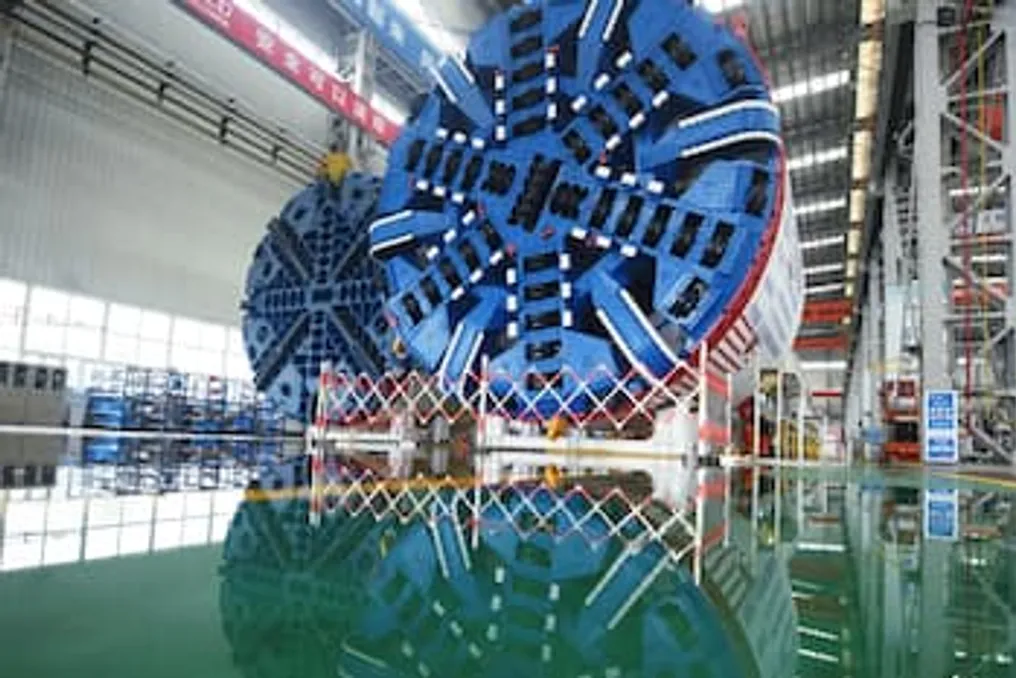
China's export controls on construction machinery could become a trade lever against India
Read more
Business Standard
business-standard.com

China's export controls on construction machinery could become a trade lever against India

China is tightening export controls on construction equipment, including tunnel boring machines—some of the most complex and large industrial devices in the world. These machines are used for building roads, railways, and subways under mountains. China holds a dominant position in the global market, and India is one of its major consumers.

Although construction sites may not seem like the most obvious bottleneck in the global economy, unlike artificial intelligence technologies, which Beijing has also proposed including in the list of restrictions, or rare earth elements used in smartphones and high-tech weaponry, China's control in this industry is strong but not absolute. The attempt to use this as leverage could encourage other countries to increase their own production.

Kyle Chan, a researcher at the Brookings Institution, noted that 'Beijing is increasingly viewing its position as a key global producer of construction equipment from a strategic perspective. This increases dependency risks and motivates other countries to try to reduce reliance on China.'

Nevertheless, this is difficult to achieve in the short term. While wars in Ukraine and Iran have highlighted the growing military importance of underground structures, the new restrictions are particularly significant for India as they come into effect later this month.

In addition to tunnel boring machines, the restrictions also cover other construction equipment, such as concrete spraying machines at great heights. Beijing cites the dual-use potential of such technologies in both military and civilian projects, stating that stricter rules will apply to 'sensitive countries and regions that have disputes with China.'

Indian leaders may view this wording as an allusion to them. The Himalayan border region between the two most populous countries in the world has long been a zone of tension, and tensions flared up again last month. India is building railway lines and roads in this area, aiming to reduce troop mobilization time, which will require a large number of tunnels.
Similar stories

Minister Goyal states India will become a major exporter to China and ASEAN in the coming years
Read more
business-standard.com

Minister Goyal states India will become a major exporter to China and ASEAN in the coming years

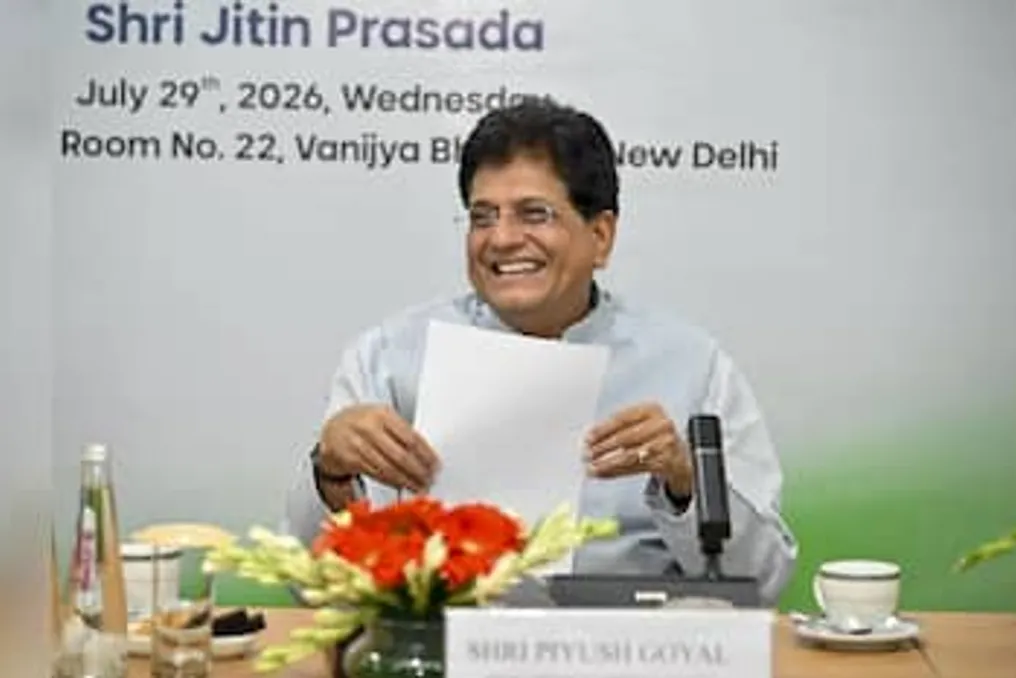
Commerce and Industry Minister Piyush Goyal stated on Tuesday that India is ready to welcome Chinese suppliers to meet growing import demands, while emphasizing that established legal procedures will be applied against any unfair pricing policies. He expressed hope that in the near future, India could become a significant exporter to both China and the ASEAN region.

Goyal reported that he had held meetings with his Chinese counterpart in Yaoundé, Cameroon, as well as in New Delhi during the BRICS Summit. He added that India is interested in promoting free and fair trade with all nations.

According to the minister, China provides India with vital raw materials and intermediate products. However, if any violation of fair play or pricing principles is discovered in any product, there is an established judicial process for its resolution. Otherwise, India believes in the rules of open trade and welcomes offers from suppliers wishing to meet India's growing needs.

These statements were made in response to a question about the prospects of trade relations between India and China. The minister was in the country on a two-day official visit. He also noted the desire to open markets in various countries on a mutual basis for Indian goods and services, expressing hope that India would become a major exporter to China and ASEAN.

Members of the Association of Southeast Asian Nations (ASEAN) include countries such as Brunei, Cambodia, Indonesia, Laos, Malaysia, Myanmar, the Philippines, Singapore, Thailand, and Vietnam.

According to the latest data from the Ministry of Commerce, the bilateral trade turnover between India and China increased by approximately 29 percent from April to September of the current fiscal year, reaching $91.76 billion, making Beijing India's largest trading partner in the first half of 2026-27. In April-September 2025-26, the bilateral exchange amounted to $71.24 billion.

Goyal's recent remarks came nearly two weeks after the minister stated on October 14 that India is working to restore relations with China, although a final decision on this matter has not yet been made.

In recent months, both sides have taken several steps to improve ties after facing intense pressure following the deadly clashes in the Galwan Valley in 2020. On September 12, Prime Minister Narendra Modi conveyed to Chinese President Xi Jinping that peace and tranquility along the border remain a 'substantial' foundation for the development of relations between India and China, even though both leaders welcomed 'stable progress' in bilateral relations. Both leaders met on the sidelines of the BRICS summit in New Delhi last month.

After more than four years of strained relations due to military confrontation in Eastern Ladakh, the two neighbors began to restore their ties following the meeting between Modi and Xi in the Russian city of Kazan in October 2024, which took place after the clashes subsided.

India has repeatedly raised concerns about the growing trade deficit with China. Bilateral trade between the two countries grew by 7.9 percent in 2025-26, reaching $127.7 billion compared to $118.39 billion in 2024-25. India's exports to China increased by 36.62 percent, amounting to $19.47 billion in 2025-26 compared to $14.25 billion the previous year. Imports, conversely, rose by 16 percent, reaching $131.62 billion during this period. The trade deficit widened to $99.19 billion in the last fiscal year compared to $85 billion in 2024-25, causing concern in the country.

There are also issues related to Chinese investment, as India has tightened its Foreign Direct Investment (FDI) policy for countries sharing a land border with it. When asked about new Chinese export restrictions on key equipment, including tunnel boring machines, the minister replied: 'We will work on it.'

Restrictions on the export of tunnel boring machines (TBMs) and related items could affect several Indian projects, including underground metros, high-speed rail lines, and tunnels in various locations, including border areas.

Popular