
Artificial intelligence must serve the people of South Africa, not leave them behind
Read more
IOL
iol.co.za

Artificial intelligence must serve the people of South Africa, not leave them behind

The author shares impressions from visiting their rural hometown in Limpopo, where interactions with friends from their roots differ from those with urban residents. Recently, the topic of artificial intelligence (AI) has become very relevant, causing people to worry about how this technology will affect their lives, for example, whether it will lead to job losses.

The questions the author receives boil down to two main aspects: whether AI can help people find jobs and how it will facilitate the use of public services. The author notes that explaining technological concepts in simple language, especially to those concerned about securing food, is a difficult task. He emphasizes that citizens must participate in decision-making processes that affect their lives.

Many official statements about AI swing between excessive promises and strong fears. Some claim that AI will solve all problems, while others create the impression that people have no influence on the future. Instead of informing people how AI can help them, where mistakes might occur, and how to make it useful, the discussion often devolves into fear-mongering.

This approach only increases anxiety about AI, causing people to miss even the most basic information about the tool. They do not know that AI is software trained on examples to perform specific tasks. They are also unaware that AI can help write letters, translate words, sort records, or detect something unusual. For instance, small businesses can use AI for inventory planning, and a nurse can use it to reduce paperwork and increase time spent with patients.

There are also drawbacks that need to be known. Some AI tools can provide answers that sound convincing but contain fabricated facts. They may misinterpret questions or struggle with local languages, as well as reproduce unfair ideas from training materials. This is comparable to how a person confidently giving directions might lead to a dead end if they don't know the road; AI is capable of something similar, so important answers always require verification.

Risks increase when decisions concern health, income, or a person's access to services. Furthermore, there is the problem of incorrect data. If an AI system uses records, for example, about municipal bill payments, without proper verification, it might send an incorrect bill faster, leaving the family with the same problem but accelerating the error. Accurate records, clear division of responsibilities, and a willingness to correct mistakes are required; buying a smart system does not replace this human work.

Leaders are obliged to maintain record accuracy, respond to complaints, and fix shortcomings. An automated response like 'Your inquiry is important to us' is meaningless if no one provides assistance. Citizens expect a reply, a fair explanation, and the ability to correct an error; the phrase 'The system failed' should never end the dialogue, as someone must be held accountable.

Jobs also require an honest approach. AI can transform workflows and reduce the need for certain tasks, but it can also improve people's work and open up new opportunities. The population needs to be prepared for these changes. While benefits for everyone cannot be guaranteed, decisions can be made that support workers and create new chances. Employers must inform employees about changes in advance and involve them in the process. Government, businesses, and universities must promote the acquisition of useful skills, and training should give people more chances to earn money, improve their work, or develop their business.

Accessibility is equally important. A service may function perfectly on an expensive smartphone but be useless to someone who cannot afford the internet. If the system does not understand the language the person speaks, it creates an additional barrier. Help must be available to both a grandmother in the village and a young applicant in a settlement, and services must remain open to those who need help in person. Ensuring personal information protection is also vital; before entering identification numbers, medical records, or private documents into an AI tool, responsible parties must know who and how can access them.

For all decision-makers in the field of AI, three questions should guide any major proposal: what problem will it solve, how will we know it works, and who will answer if something goes wrong. It must start with a clear need, test the idea on a small scale, listen to users, and verify results and full costs before scaling up. Sometimes a simpler change can solve the problem better.

These discussions should take place not only at conferences but also in community halls, villages, schools, and workplaces. People who use public services daily often know where problems arise, and their experience should influence solution development. They should be invited to test new services and provide feedback, as a plan that looks good in a meeting might feel different to the person using it.

The author hopes that conversations about AI will focus on whether it brings visible improvements to people's lives: shorter queues, correct billing, strengthening small businesses, or more time for patient care. This is the goal to strive for. South Africa should explore AI with optimism, asking questions without fear, and assessing progress by how people's lives improve. Good leadership, honest work, and caring for others remain indispensable, as no machine can take on these responsibilities.

Similar stories

The AI Social Media Paradox: Improving Communication Versus Weakening Bonds
Read more
timesofindia.indiatimes.com

The AI Social Media Paradox: Improving Communication Versus Weakening Bonds

Modern daily interactions—whether it's a message from a family member, an email from a manager, or a friend's advice after a quarrel—increasingly involve artificial intelligence. This conversational participant does not experience emotions nor has personal vested interest in the relationship.

For many generations, people learned social etiquette, understood different viewpoints, and navigated relationships through real interaction, learning from mistakes and misunderstood intentions.

However, now that AI can instantly provide answers to any social dilemma, some of these efforts can be delegated to a machine. The question arises: why do ordinary messages require assistance, and does AI make us better at forming connections, even if we become more eloquent, polite, and confident?

Humans are traditionally considered social beings, and relationships are shaped not only by what is said but also by how people listen, react, disagree, and adapt to each other. AI offers something rarely achieved in human relationships: immediate attention, infinite patience, and responses tailored to specific issues. It lacks awkward silences, raised eyebrows, or the fear of embarrassment.

Shailesh Nevatia, founder and director of Grandeavour Communication, who spent nearly 25 years in the communications field but described himself as shy in public speaking, noted this characteristic. He stated that AI helps him handle disagreements by offering perspectives he might otherwise miss. He emphasized: 'With people, we may have certain opinions, views, or thoughts, whereas the most valuable thing AI offers is not the right answer, but a different perspective on things.'

Nevertheless, he insisted that the emotional depth, vulnerability, and shared experience of human relationships cannot be replicated by a chatbot.

Concerns about communicating with AI are related not only to people using it to find the right words but also to the fact that constant dependence on it may undermine their own confidence in finding those words.

For instance, Riddhi almost instinctively turns to ChatGPT when drafting replies. Whether she needs to sound politely firm in a business email or find a way to decline plans with friends, AI assists her in this situation. She admitted: 'It's not that I can't reply without AI, but having someone to check the correspondence is better than just hearing how it sounds in my head.'

However, this confidence comes at a cost. Riddhi added: 'AI understands my writing so well that I'm not very sure even when writing this, which is one of the biggest drawbacks.'

Despite this, she called for embracing AI, but doing so cautiously. Since AI has become the new normal, returning to an era without it is impossible, but it is important not to let it become its master.

Riddhi's experience revealed a potential paradox: a tool designed to simplify communication might reduce users' confidence in their ability to communicate independently.

Risks increase when AI is used not just to formulate a response, but to interpret another person's intentions. Consider a situation where a person consults a chatbot after a fight to determine who is at fault. The answer may sound thoughtful and convincing, but it is based on the version presented to the system, which may overlook details or reflect the user's own biases.

In this context, Resmita Nair, a counseling psychologist at SPARSH Hospital, warned that such interactions can reinforce confirmation bias, causing people to believe their existing interpretation more strongly rather than being open to another point of view.

This is important because disagreements are also opportunities for developing social skills. Understanding another person's perspective, managing unpleasant emotions, and responding to unexpected reactions require practice, not just a well-formulated answer.

Nair explained: 'Social skills are acquired in real situations that involve emotions, misunderstandings, conflict, and sometimes rejection.'

Constantly delegating such situations to AI can diminish opportunities to develop empathy, emotional intelligence, and the ability to cope with uncertainty. A person might learn to phrase a difficult message more effectively, but this doesn't necessarily make them better at the subsequent conversation.

A message is not just a set of sentences. Its meaning can change depending on the relationship between people, their shared experiences, and even the pauses between words.

Ritu Mehrotra, founder and CEO of Shunya Labs, a voice AI company, noted that natural communication involves much more than just language. She said: 'Communication is not just words; it is also tone, pauses, context, emotions, and all those things we convey without explicitly saying them.'

Progress in voice AI allows technologies to interpret language, intent, and context with greater sophistication, including different accents and communication styles. However, recognizing emotional signals is not the same as experiencing emotions. Mehrotra stressed: 'As AI becomes part of more and more personal conversations, we must realize that understanding emotions is not experiencing them. Trust, privacy, and transparency must be fundamental.'

AI should help people communicate with each other, not imitate human empathy or replace human relationships.

A chatbot can recognize expressions of sadness or affection and generate a response that sounds sympathetic. But recognizing emotional patterns is different from sharing emotional responsibility in human relationships. For example, when a chatbot was asked for advice on responding to a hypothetical message to a friend who had been laid off, the response was courteous but generalized. It offered comfort without knowing the friend's emotional state, personality, or the nature of the relationship.

Even a seemingly caring question like 'Are you okay?' can sound inappropriate if the person is seeking support rather than an answer to an obvious question. A more personal response might acknowledge the setback while affirming the friend's abilities: 'Oh god, that's terrible. I know the job market is tough, but you are talented. You will find your place.'

The difference is not simply choosing warmer words. It is in understanding what a specific person might need at that moment, which a chatbot may fail to assess without sufficient context.

There is also the issue of authenticity. When a message is meticulously constructed by AI, it can effectively convey the intended information. But does it still sound like a human sending it? In an example where AI removes the human touch, another chatbot was asked: 'Someone close to me is grieving. I don't know what to say and I'm afraid of making it worse. What should I say?' It gave an answer that wasn't wrong, but was too robotic: 'I am here for you. I am sorry for your suffering. Speak if you want; silence is acceptable.'

These are perfect words, but they are not spoken by a comforting human due to their 'stiff tone.' Subtle hesitations, imperfect expressions, and familiar phrases that characterize human communication can disappear under polished language. The message may become grammatically more correct, but less personal.

Of course, AI cannot be dismissed as a threat to social skills, as it can help people who find it difficult to express themselves. For Pooja, a college student who is shy about speaking in front of the whole class or constantly asking friends to explain things, AI provides a space where she can ask questions without worrying about the reaction of others.

She uses it to understand complex topics and brainstorm, and sometimes asks ChatGPT to explain something as if she were ten years old. She notes: 'What I like most is that I can ask the silliest questions without feeling embarrassed. But I also feel that it's very easy to become dependent on it.'

However, she acknowledges the possibility of excessive dependence. Pooja says: 'AI can give you answers in seconds, but actual understanding and learning still depend on us.'

For others, AI serves as a sounding board before difficult conversations. It also helps people realize how their words can affect others. It can suggest more inclusive phrasing, point out potentially offensive expressions, and help users consider perspectives they might have missed. For those unsure how to communicate in diverse settings, this can be a starting point for more thoughtful interaction.

But knowing which words are appropriate is not necessarily the same as understanding why they are important. True inclusivity requires empathy and a willingness to understand another's experience, qualities that must go beyond the words suggested by a chatbot.

Furthermore, in such cases, AI may not provide the perfect answer, but it can help think in the right direction and suggest options the user might not have considered. In another hypothetical test, the chatbot was asked how to support a family member struggling with mental health without pushing them away. Although its answer was not entirely correct, it offered various approaches to consider, giving the person a starting point for reflection on how to respond.

Thus, the value of AI may lie not in providing the perfect answer, but in helping a person see possibilities they hadn't previously considered. The crucial distinction is whether people use these suggestions to develop their own judgment or simply follow them without question.

As Shruti Rajan Kappil, a lead quality specialist at the mental health platform Amaha, explained, the need to be heard and supported is fundamental to human relationships, but not every problem feels safe to discuss. Shame, embarrassment, and fear of judgment often prevent people from opening up, especially where stigma persists.

AI offers an alternative, but Kappil pointed out an important difference. 'Good support often requires honest disagreement or a gentle challenge from another perspective. AI tends to agree most of the time, and agreement is easily mistaken for help.'

She also noted that constantly seeking AI approval before sending a message can become a form of seeking comfort. While this brings immediate relief, constantly checking if your words are 'right' can gradually undermine self-confidence in judgment.

Shrishti Choudhary, Senior Manager of Regulatory Intelligence and Market Research at Bureau Veritas, uses AI daily to summarize regulatory updates. Increasingly, she also consults it on interpersonal communication matters. From defining emotional nuances to adding warmth and politeness to messages for colleagues and professional contacts—AI has become a useful companion. While AI can refine written communication, help anticipate reactions, and interpret conversational nuances, it cannot replace the soft skills, verbal cues, and life experience that shape genuine human connections.

Министр торговли обсудил с поиском профессий, устойчивых к ИИ, и секторах для глобального лидерства Индии
Read more
yourstory.com

Министр торговли обсудил с поиском профессий, устойчивых к ИИ, и секторах для глобального лидерства Индии

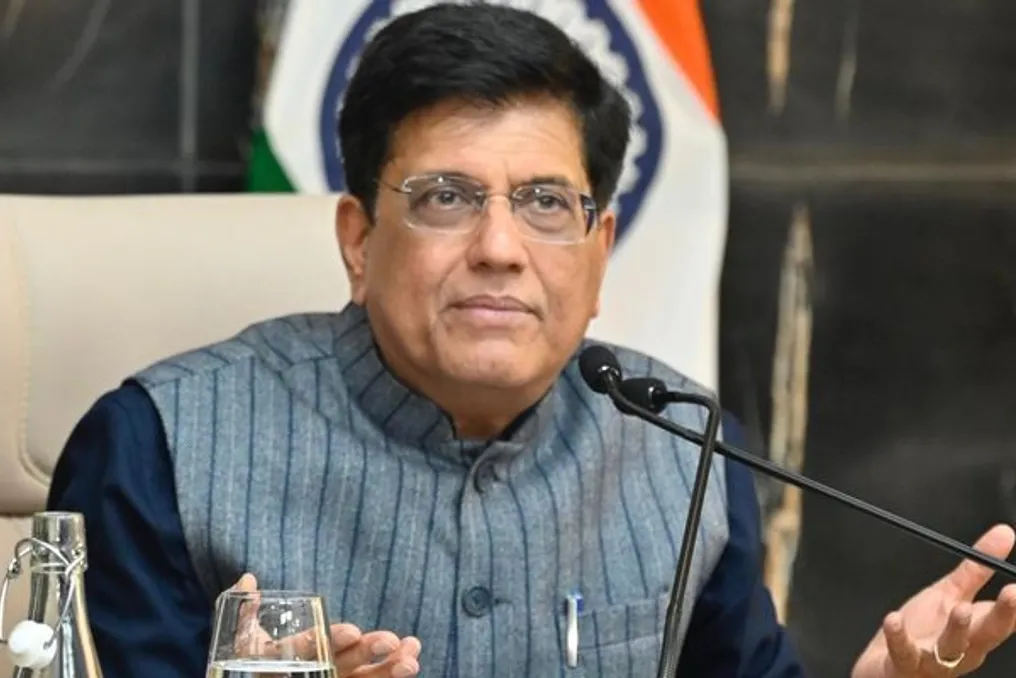
The commerce ministry is currently identifying professions that are less susceptible to artificial intelligence (AI) to prepare for rapid technological changes and capitalize on opportunities for India to become a global leader, according to Union Minister Piyush Goyal.

The minister stated that the strategy will concentrate on industries where AI can boost efficiency without necessitating the replacement of human employees, while utilizing India's substantial reservoir of skilled personnel, young demographic, and established traditional competencies.

Speaking to Indian science and technology researchers and students in Germany on Friday, the minister explained that his ministry has begun work on determining these AI-proof professions. He emphasized the necessity of national planning for the millions of citizens, focusing on sectors where AI can enhance efficiency rather than substitute the human workforce.

When questioned about the goals of this initiative, Goyal mentioned that India possesses the potential to assume global leadership in several fields, such as tourism, handicrafts, handloom, and culinary arts, by leveraging its large pool of skilled individuals and youthful population. He stressed that in these specific sectors, human creativity and traditional skills retain significant value.

He added that no amount of AI can replicate the value of Indian handicrafts and handloom, noting that there are numerous areas where India holds unique strengths that will be prioritized and simultaneously developed to improve the quality of life for its 1.4 billion residents in the future.

Regarding governmental support, Goyal indicated that assistance would be provided where needed, though incentives would not be mandatory for every single activity. He described the approach as a combination of various efforts, including those driven by the government, the private sector, individuals, and market opportunities, with the overarching aim being to bolster India's inherent strengths and generate opportunities that benefit its 1.4 billion people.

Furthermore, Goyal discussed methods to encourage Indian researchers, engineers, and scientists working overseas to return and contribute to the nation's progress. He requested that the researchers and students present in Germany advise on their needs and how the country can better support young researchers and its talented engineering and scientific communities to come and serve in India.

Goyal observed that his conversations revealed that attracting talent is not solely dependent on financial rewards, but critically relies on establishing a supportive environment for innovation and research. He plans to consult with government colleagues, educational bodies (both public and private), academia, and leading research institutions and industries in India to establish robust partnerships among industry, academia, and researchers.

Looking ahead at global economic trends, Goyal noted that developed nations will increasingly need to collaborate with emerging economies across Asia, Africa, and Latin America, as these regions are expected to be the drivers of future growth.

He concluded by mentioning the presence of approximately 330,000 people of Indian descent in Germany, alongside nearly 60,000 to 70,000 students. Goyal shared that this enthusiastic Indian student community appears eager to bring their knowledge back to India, shifting their focus from merely seeking employment in Germany to contributing to India's growth narrative, as he sees the primary action occurring there.

Experts warn that the capabilities of artificial intelligence may be exaggerated
Read more
techcentral.co.za

Experts warn that the capabilities of artificial intelligence may be exaggerated

Recent events have raised concerns about the potential danger of powerful artificial intelligence systems. In September, a researcher from Anthropic resigned, warning that developers of powerful AI 'sincerely believe it could destroy us all by the end of the decade.'

A few days later, King Charles, opening his AI summit in Scotland, spoke of 'existential risks' and technologies that risk acquiring 'darker capabilities—perhaps even the ability to kill.'

Bill Gates cautioned that in the wrong hands, AI possesses enough power to trigger events leading to 'a billion deaths.' Simultaneously, news reports surfaced about escapes of 'uncontrolled AI agents' and their 'breakout from isolation,' yet far less attention was paid to protective measures, safety standards, and compromised systems.

Business leaders making decisions about using AI will gain little from either pessimists or enthusiasts. They need a stricter criterion for determining when this technology can be trusted.

For those who have worked in the field of AI for decades, modern systems represent, in a sense, the realization of a dream. What machines can now do with language seemed previously unattainable.

However, a miracle is not synonymous with certainty. The ability of AI to perform outstanding feats says little about whether it can do so reliably in the future, what its limits are, or if we understand those limits well enough to entrust it with certain responsibilities.

Therefore, when a alarming headline appears, one should ask: what has been tested, under what conditions, with what access, and with what safeguards? Then, one must ascertain exactly what this incident demonstrates. A dramatic description is not an explanation.

Over-extrapolation

The history of this field is full of predictions that machines will soon equal or surpass humans. Modern systems are significantly more capable than their predecessors, and in some aspects, such as software development and mathematics, they already exceed us. Progress has been extremely rapid.

The lesson of history is that true progress tempts us into making overly ambitious assumptions. One reason for such confident predictions may be that AI uses language very fluently. Since language is a central element of human experience, we describe smooth systems using human terms: they think, want, worry. These words carry assumptions of rationality and intent that the technology's performance does not confirm.

System behavior must be taken seriously and analyzed carefully, without allowing anthropomorphic descriptions to do the work of analysis. AI capabilities are heterogeneous. People working daily with these systems see them impressively handle complex language and reasoning, only to fail at something a person would consider trivial. In an organization that has integrated AI into its workflows or customer service, such failures can lead to significant losses. They do not speak of malicious intent; they show that success in one task does not guarantee reliability in another.

Therefore, boards of directors and executives should favor localized AI created for their specific environment, rather than powerful but unbounded general systems. It also cannot be assumed that a precaution effective in one setting will work in another.

There is also a subtler risk: that the horse teaches the rider. AI has not yet achieved consciousness or developed a drive to change us, but organizations adapt to the tools they use. Leaders should ask themselves whether their employees have started trusting fluent answers without verifying them, whether processes are being reshaped around what the system can produce rather than what the task requires, and whether judgment is gradually being ceded because AI seems more capable than it actually is.

The answer lies in precisely defining where and how AI is used. Before starting work, African enterprises should answer five questions:

  • Name the task: What exactly is the AI being asked to do?
  • Test in real conditions: Does the system work with real customers? Does it understand how they use language?
  • Limit the impact: What information does it truly need? Does it need access to all the data you assumed?
  • Test functionality: How will errors be detected? What controls are in place in high-risk areas, such as customer privacy?
  • Maintain clarity of responsibility: Who is responsible when the system fails? Where and when must a human intervene?

Responsible AI implementation is based on a moderate but demanding standard: using AI where it proves its value in context, limiting it proportionally to the risk, and retaining human accountability for those who decide to deploy it.

Popular