GenRobot AI startup specializing in robot training data raises $100 million in Series A+ funding round
Read more
TechNode
technode.com

GenRobot AI startup specializing in robot training data raises $100 million in Series A+ funding round

GenRobot AI, a Beijing-based company that provides data infrastructure for robot development, has successfully closed a Series A+ funding round totaling $100 million. This financing closure occurred in the third quarter of the year, as announced on November 2.

Investors participating in the funding round included SAIC Motor, Eastworlds from Malaysia, Baidu, Shoucheng Holdings, and Galaxy General Robotics. Additionally, financial investors included GL Ventures, CITIC Goldstone, CCB International, and Huatai Zijin.

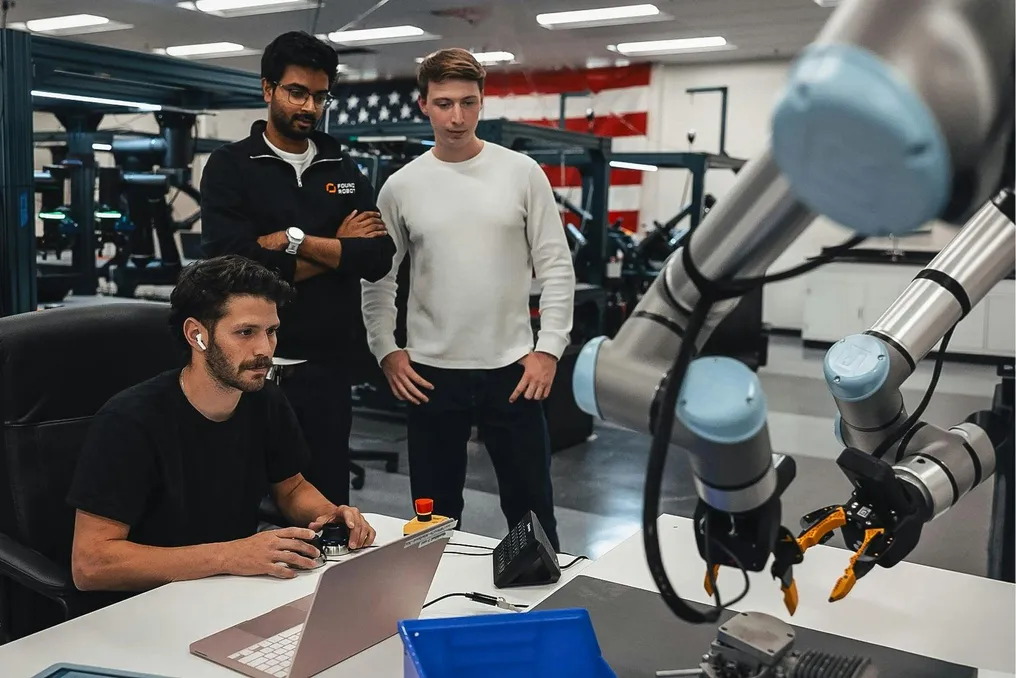
GenRobot AI is engaged in creating software and hardware for collecting demonstrations of human actions, which are subsequently used to train robots. The company's recording systems capture visual information along with hand and body movements when performing tasks in daily life, manufacturing, and logistics. Subsequently, the company's Matrix platform synchronizes, cleans, and labels these recordings, providing robot developers with the necessary data for training and evaluation.

Similar stories

Rendezvous Robotics raises $20 million to create self-assembling spacecraft
Read more
ventureburn.com

Rendezvous Robotics raises $20 million to create self-assembling spacecraft

Rendezvous Robotics has successfully raised $20 million in a re-priced seed funding round. The leaders of this round were MaC Venture Capital and Toyota Ventures. The company officially announced the funding, and this round was its first priced round.

Participants in the round also included University of Michigan Endowment, Astera, and Industrious Ventures. Existing investors, including Aurelia Foundry, ATX Venture Partners, and Mana Ventures, also participated in the financing. Rendezvous Robotics, based in Golden, Colorado, develops spacecraft capable of self-assembly.

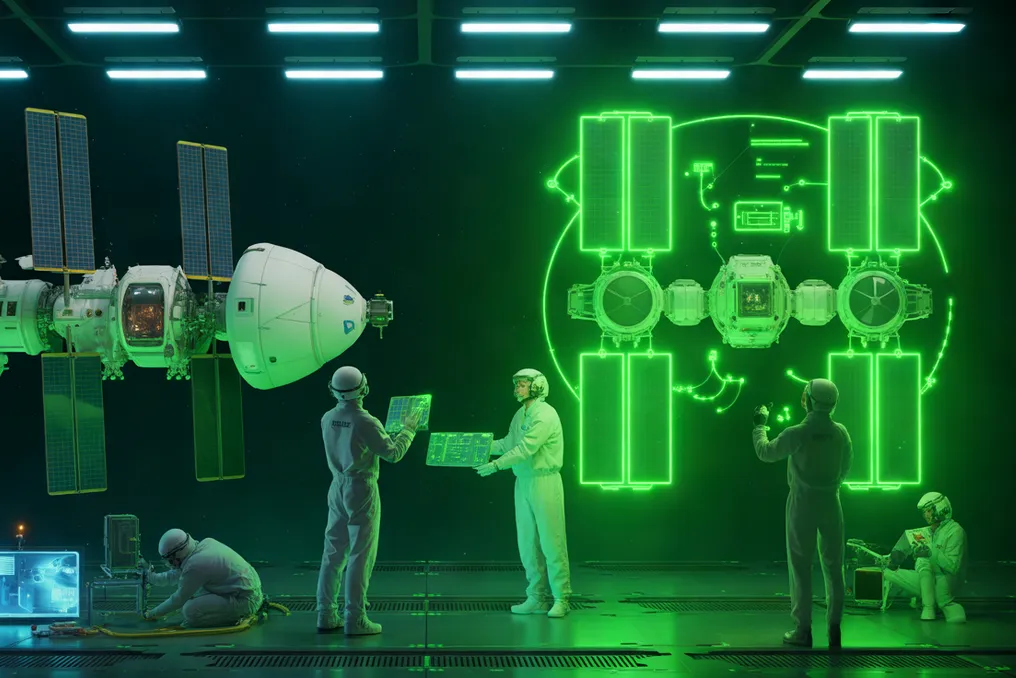
The capital raised will be used for developing next-generation spacecraft, conducting demonstration flights, and hiring additional staff. Instead, the company plans to send elements as small autonomous 'modules.' These modules will be able to reach the rendezvous point independently, assume the required position, and dock in orbit.

Rendezvous aims to create hexagonal tiles about one meter in size, equipped with sensors and onboard processing. The modules will use electromagnetic actuation to ensure movement and self-assembly. After connection, each tile can perform various functions.

Mission operators can add tiles for computing needs, solar energy collection, propulsion systems, communication, and thermal regulation, while having the ability to add or move them as needed. This design can also support future servicing operations. Operators can replace damaged modules or change the satellite's configuration after launch. This could potentially reduce the need to build and launch an entirely new spacecraft if components fail.

This technology is based on nearly ten years of research conducted under the TESSERAE project. The original self-assembly technology was developed by Dr. Ariel Ekblau at the Massachusetts Institute of Technology. The research was subsequently advanced through the Aurelia Institute, which Ekblau founded. Earlier versions of TESSERAE have already flown on a Blue Origin New Shepard rocket and participated in two missions to the International Space Station.

The company has scheduled a campaign of parabolic flights for November 2026. These tests will verify electromagnetic actuation and mobility in microgravity conditions. A separate TESSERAE demonstration is planned for the International Space Station in December 2026. It will involve assembling 32 tiles into a three-dimensional structure in a controlled environment. Rendezvous is also preparing a special low Earth orbit demonstration, scheduled no earlier than April 2028.

During this mission, seven independently deployed space tiles will autonomously connect to form one spacecraft. These modules will then separate and assemble into a different configuration. The goal of the demonstration is to prove that spacecraft can change their physical structure without the aid of external robotic equipment.

Co-founder and CEO Joe Landon believes that this technology can enable spacecraft with more powerful energy generation and larger communication systems. The architecture will ultimately allow for missions that are difficult due to the limitations of traditional launches. MaC Venture Capital and Toyota Ventures believe that robots, modular design, and autonomous control can be a successful combination. This strategy goes against conventional ideas about how to build and launch spacecraft.

The demonstrations have helped solidify the foundations of the technology in microgravity conditions. Toyota Ventures partner Chris Absher emphasized autonomy as a fundamental part of Rendezvous's design. Michael Palank, Managing Partner at MaC Venture Capital, also supported the company's efforts to rethink spacecraft construction. However, a free demonstration is still far off, although its realization should prove the system's ability to successfully and autonomously assemble and reconfigure in real orbit, which could open up new possibilities for building and servicing massive spacecraft.

Foundry Robotics raises $100 million to build America's first AI-powered assembly factory
Read more
ventureburn.com

Foundry Robotics raises $100 million to build America's first AI-powered assembly factory

Foundry Robotics, based in Emeryville, California, announced on Wednesday that it has raised a Series A round of $100 million. These funds are intended for the construction of what the company calls America's first autonomous assembly factory. Additionally, the capital will be directed towards expanding its robotics, engineering, and operations teams, as well as implementing additional artificial intelligence models.

Founded only this year, Foundry is demonstrating a rapid pace of development. Founder and CEO Adarsh Kulkarni has experience with robotics; previously, he was a fourth employee at Ghost Robotics, working on bipedal robots for the US armed forces, and later became the first head of the robotics department at Scale AI.

Co-founder Emmanuel Lamakkiya possesses deep knowledge of manufacturing, having led the Model Y program at Tesla, overseeing the production of approximately 1.5 million vehicles annually. Anup Karmakar, a former software lead at Tesla, also joined the team. The team also includes veterans from the military who have experience working at Raytheon and Northrop Grumman, highlighting their ability to scale production.

Unlike most robotics startups that sell the robots or software themselves, Foundry owns and operates factories independently, offering a manufacturing-as-a-service model. The company installs AI-supported robotic cells at its sites. The FoundryOS system connects these robots, the factory, and cloud services. Each production cycle feeds data back into the models, allowing the system to continuously improve.

For clients, this means faster and more consistent production. Foundry claims it can take a product from design to release in a matter of weeks, eliminating the need to create a new production line or costly equipment retooling. For defense contractors awaiting components, this could shorten program timelines by months.

The company's main specialization is complex electromechanical assemblies such as drones, satellites, wire harnesses, and underwater vehicles. The list also includes components for autonomous vehicles, ground robots, and data center equipment. The new 130,000 square foot facility in Emeryville increases the company's production capacity twentyfold.

In addition to Marlinspike, early investors in the round returned, including Khosla Ventures and Red Glass Ventures. New participants include SE Ventures, Wing VC, and Axiom Ventures. Existing investors Hanabi and Zero Shot Fund maintained their positions. This funding round ranks among the top 3% of registered Series A rounds in US deep tech, a rare achievement for such a young company. Earlier reports indicated initial funding of about $14 million, making the current round a significant leap.

Marlinspike's Managing Director, Mislav Tolusik, noted that manufacturers urgently need in-house production capacity. He also believes that Foundry quickly secures contracts with clients. Duane Fortingham, President of HII Unmanned Systems, stated directly that 'production capacity is a national bottleneck for deploying unmanned systems.' This is where Foundry fits in.

Kulkarni insists that factories capable of reviving American manufacturing must be designed from scratch, not merely repaired. The company's mission is to revitalize US industry. Foundry is not alone in this endeavor; Arda Industries launched this month with $232 million in funding. Maven Robotics also raised $100 million in a Series A round in September. Investors clearly see a shift, but big claims require proof. An 'autonomous factory' is only valid if it delivers reproducible results at scale, and Foundry now has the funds to demonstrate this.

Chinese startup YITA attracts over 100 million yuan in investment from Galbot and Fourier
Read more
technode.com

Chinese startup YITA attracts over 100 million yuan in investment from Galbot and Fourier

The Chinese robotics equipment startup YITA announced on October 20 that it has raised over 100 million yuan in seed and seed plus rounds. Investors included Galbot, Fourier, Matrix Partners China, CCB International, SenseTime Guoxiang Capital, and the L2F fund.

Lighthouse Capital acted as an incubator and exclusive financial advisor for YITA. YITA was founded in May 2026.

YITA's main activity is the development of high-performance joint modules and force-controlled robotic manipulators for embodied artificial intelligence systems. The company's product range includes integrated actuators, dual compliant manipulator systems, and robot manipulation platforms.

The developed equipment allows robots to regulate contact forces when interacting with objects. The company focuses on creating standardized components and hardware for developers of humanoid robots and embodied AI systems.

Popular