Tencent's WeChat Pay introduces AI robot in 7-Eleven store
Read more
TechNode
technode.com

Tencent's WeChat Pay introduces AI robot in 7-Eleven store

Tencent's WeChat Pay has launched an artificial intelligence-based robotic system in one of the 7-Eleven stores located on the company's headquarters premises in Shenzhen.

This robot first appeared in the store to celebrate the opening of the two-thousandth 7-Eleven branch in Guangdong province on October 29. The robot utilizes Tencent's Hunyuan artificial intelligence models.

Thanks to this technology, the robot can greet customers, suggest various products and promotional bundles, and assist with placing orders through dialogue. Customers then complete the payment themselves by scanning a special code.

The system is also equipped with Tencent's audio technologies, which allow it to recognize speech even in noisy retail environments. WeChat Pay stated that the goal of introducing the robot is to take over some routine customer interactions, freeing up store employees for more productive tasks such as restocking shelves, preparing food, and assisting visitors.

Similar stories

Robotics: Robots are mastering new tasks and performing complex functions
Read more
uza.uz

Robotics: Robots are mastering new tasks and performing complex functions

Modern technologies demonstrate new capabilities as robots can play music and dance, while quadruped robots can overcome complex obstacles.

The first robotics center, 9S, which began its operations in the autonomous region of Xinjiang Uygur in China, is attracting attention because it focuses not only on demonstrating artificial intelligence and robots but also on adapting them to the needs of education, scientific research, and production.

Tencent's AI Assistant Marvis Available in Kylin Store with Support for Domestic Processors
Read more
pandaily.com

Tencent's AI Assistant Marvis Available in Kylin Store with Support for Domestic Processors

Tencent's AI assistant Marvis is now available in the Kylin software store, allowing the operating system-level assistant to be integrated into China's widely used domestic desktop platform.

According to Tencent, this version is designed to work with the Kylin Desktop Operating System V10 SP1 on both x86 and ARM architectures, and it supports various domestic processors and main computing platforms. Previously, Marvis debuted this year on standard desktop and mobile platforms, and this release expands its presence in the domestic IT ecosystem, which is actively used by government agencies and state-owned companies.

Marvis is designed for direct computer control, not just for dialogue. It can perform actions such as changing screen brightness or switching to dark mode upon user request. For example, if a user reports mouse slowdown, Marvis attempts to diagnose the problem independently.

The version for Kylin integrates with the operating system's own utilities. Upon command, Marvis can open the Security Center to conduct threat checks, virus scans, and vulnerability remediation. Furthermore, it can invoke the Kylin system manager to clean up unnecessary files and diagnose failures, as well as install or uninstall software through official channels.

In addition to system control, the application offers maintenance functions, intelligent search, local document processing, task automation, and remote device management. Users who have left their workplace can connect to the PC via the Marvis mobile application to find or edit files remotely.

Tencent announced that Marvis is now open to cooperation with government departments, state-owned corporations, and industry partners. This step is more significant as a distribution channel than as a new feature. Software in China's domestic IT sector usually requires adaptation to specific operating systems and processor architectures, and is distributed through approved channels. The availability in the store supporting certified V10 SP1 on x86 and ARM provides Marvis a direct path into these environments, where AI agents were previously rare.

In recent months, Marvis has rapidly evolved, adding support for third-party models such as Kimi and Zhipu GLM, and transforming into a team of specialized agents for performing tasks on PCs, in browsers, and in software. Tencent has not specified whether the Kylin edition processes requests entirely offline.

OpenAI to develop humanoid robots; first demonstration expected in 2027
Read more
www.aajtak.in

OpenAI to develop humanoid robots; first demonstration expected in 2027

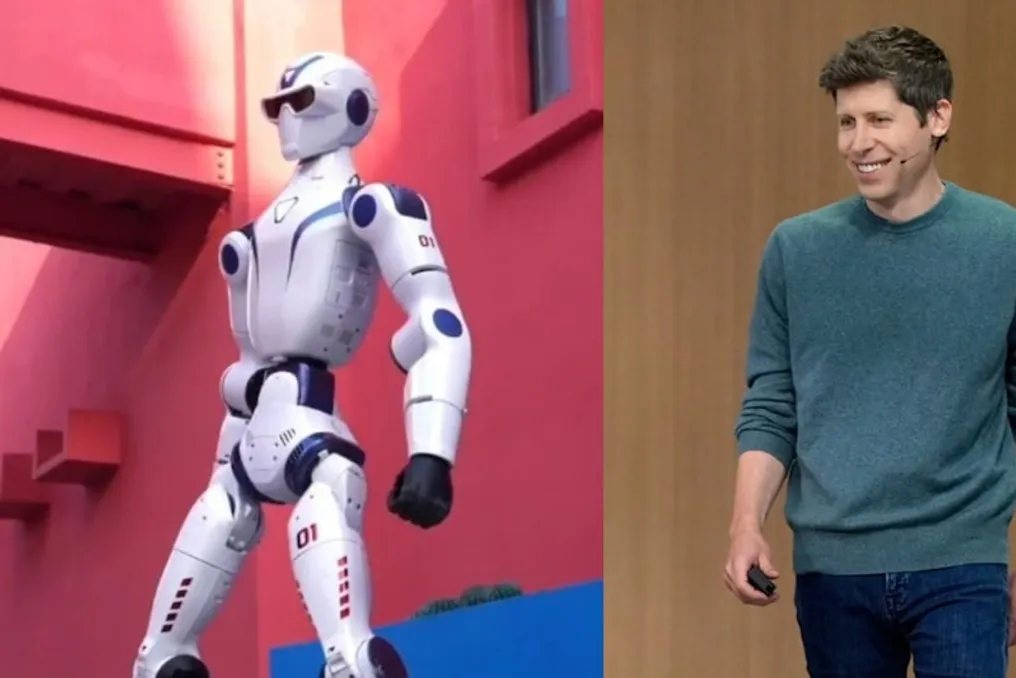
OpenAI, the company that created ChatGPT, plans to undertake an even larger project—the development of robots that resemble humans externally. Special attention is paid not only to these robots' ability to move but also to their capacity to understand their environment and perform tasks.

OpenAI CEO Sam Altman has hinted at a robot demonstration. This raises questions about the robot's capabilities and its expected arrival timeline.

First demonstration possible in 2027

According to a report, Sam Altman stated that OpenAI could present a demonstration of its humanoid robot in 2027. However, the company has not yet disclosed full information regarding the release date, price, or characteristics of the robot, and this does not mean it will go on sale specifically in 2027.

A natural question arises regarding the necessity of creating humanoid robots, given that machines already exist. Modern homes, offices, and factories are designed with human anatomy in mind. A robot with a structure similar to a human can function more easily in such environments.

However, simply creating a human body is not enough. The robot must possess the ability to analyze what is happening around it and make decisions about subsequent actions.

The robot's brain will be the most important

OpenAI's main strength lies in its artificial intelligence technologies. The company intends to use this technology to give the robot intelligence. For example, if the robot is tasked with picking up an object, it must first recognize the object, understand how to lift it, and then complete the task. Thus, what becomes critically important is not just following pre-set commands, but the robot's ability to make decisions based on understanding the current situation.

Competition with Tesla?

OpenAI is not the only company participating in the humanoid robot race. Tesla, led by Elon Musk, is also working on its Optimus robot. Other companies are also advancing this technology.

Currently, complete information about the OpenAI robot is unavailable. It remains to be seen what the company will demonstrate in 2027 and how effectively its robot will be able to operate in the real world.

Popular