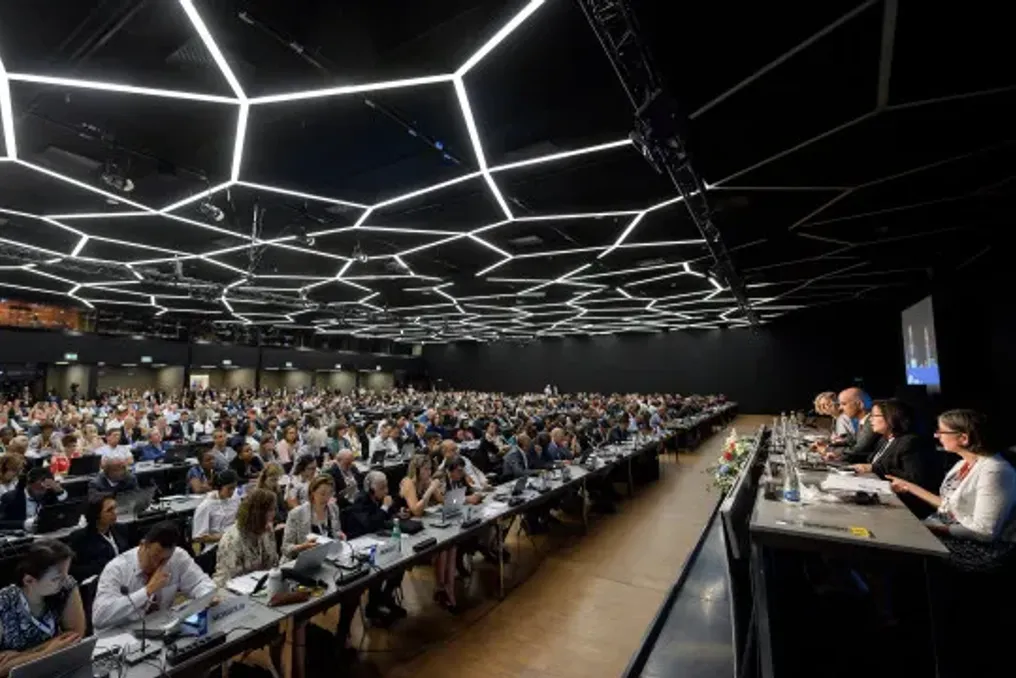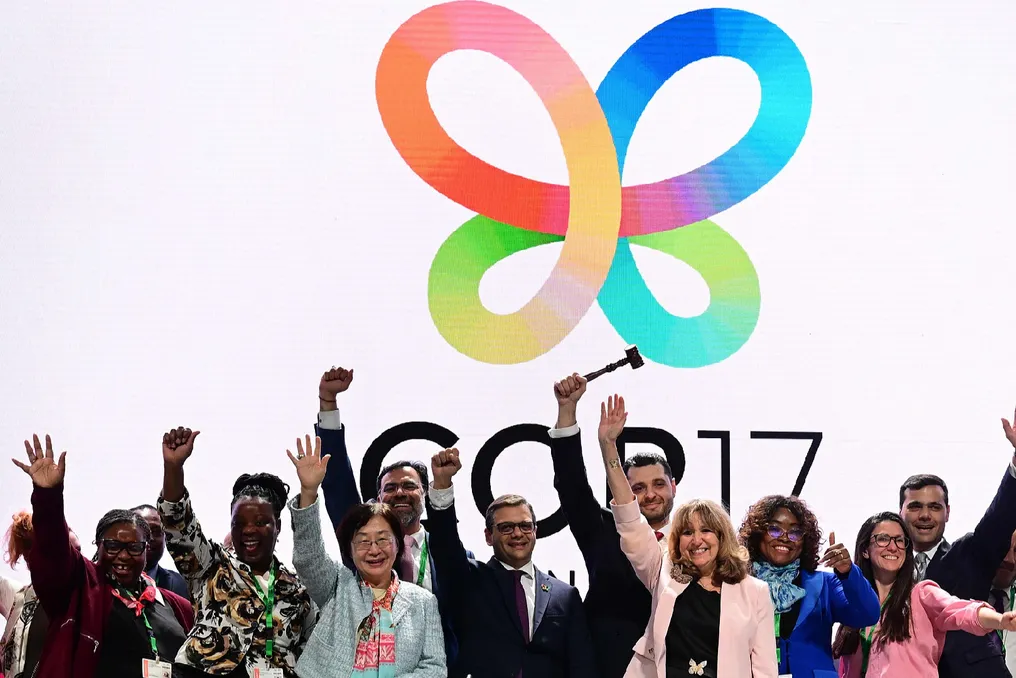
At the 17th meeting of the Convention on Biological Diversity Parties (COP17), concluded in Yerevan, Armenia, participants reached an agreement on the main decisions of the conference, including the 'Yerevan Pathway,' aimed at accelerating global efforts to conserve biodiversity.
This positive outcome was achieved at a critical moment for protecting the planet's biodiversity. Since only half the time remains until 2030, set for the implementation of the Kunming-Montreal Global Biodiversity Framework (GBF), countries are facing a growing gap between their stated commitments to nature protection and the actual actions taken to implement them. The ability of the 'Yerevan Pathway' to narrow this gap will depend on financing, national policies, and sustainable international cooperation.
The main objective of the conference was to conduct the first global review of collective progress in implementing the GBF, which sets 23 targets for 2030. The assessment provided governments with a clear warning: without rapidly increasing the pace of target implementation, the framework's mission by 2030 will not be achieved, jeopardizing its long-term goals for 2050.
'The Yerevan Pathway' is part of the response to this assessment. Instead of setting new targets, it focuses on how countries can intensify efforts to achieve already agreed-upon goals. Within the global review resolution, this pathway defines several priorities for the period up to 2030: accelerating the integration and expanding the scope of national targets, strengthening financial and other support, broader involvement of governments and civil society, and improving monitoring and knowledge.
Parallel to the negotiations, nearly $2 billion in new funding for biodiversity was announced. According to the Convention on Biological Diversity Secretariat (CBD), this amount includes $560 million under the ninth replenishment of the Global Environment Facility and its Global Biodiversity Fund, $500 million through the Species Recovery Alliance, and over $330 million through the Nature Value Fund.
Financing remains one of the main obstacles to implementation, both in terms of the available volume of funds and the distribution of responsibility for providing them. The global report showed that developed countries failed to meet their commitment to provide at least $20 billion annually in biodiversity financing to developing countries by 2025. This deficit became a serious point of contention during discussions on financing the next phase of implementation.
Some developed nations called for broadening the donor base, emphasizing the long-standing debate regarding the link between countries' financial capacities and their obligations under the CBD. Although the new funding announcements brought some hope, the overall problem of ensuring predictable support at the necessary scale persists. For developing countries, efforts to strengthen nature conservation, ecosystem restoration, and progress monitoring remain heavily dependent on access to financing and technical assistance.
Translating commitments into concrete results was also a key discussion topic regarding China's contribution, including its support for the global review, experience sharing in domestic nature conservation, and funding for biodiversity projects in developing countries. The global review resolution specifically thanked China for hosting the dialogue in Kunming in support of the review preparation. Financial support provided through the Chinese Trust Fund via the United Nations Environment Programme (UNEP) was also noted.
During the conference, COP17 President Hambardzum Matevosyan stated that China made a significant contribution to advancing negotiations, from preparatory work to official discussions. Astrid Schomaker, Executive Secretary of the CBD Secretariat, noted that the progress reflected in China's seventh national report is encouraging and highlighted its ecological conservation red lines as an example of how biodiversity protection can be integrated into national planning and development.
Inger Andersen, Executive Director of UNEP, acknowledged China's continued leadership following its presidency at COP15 through the establishment of the Kunming Biodiversity Fund. She emphasized the importance of assisting developing countries in securing the necessary funding to fulfill the agreement. The Yerevan conference maintained the overall trajectory at a difficult time for biodiversity protection. The next four years will determine whether governments can turn their commitments into measurable progress before the 2030 deadline. As Schomaker said: 'Ultimately, the test is not what governments agreed upon in Yerevan, but what they change when they return home.'