Chinese and German automakers strengthen cooperation amid global industry changes
Read more
CGTN
cgtn.com

Chinese and German automakers strengthen cooperation amid global industry changes

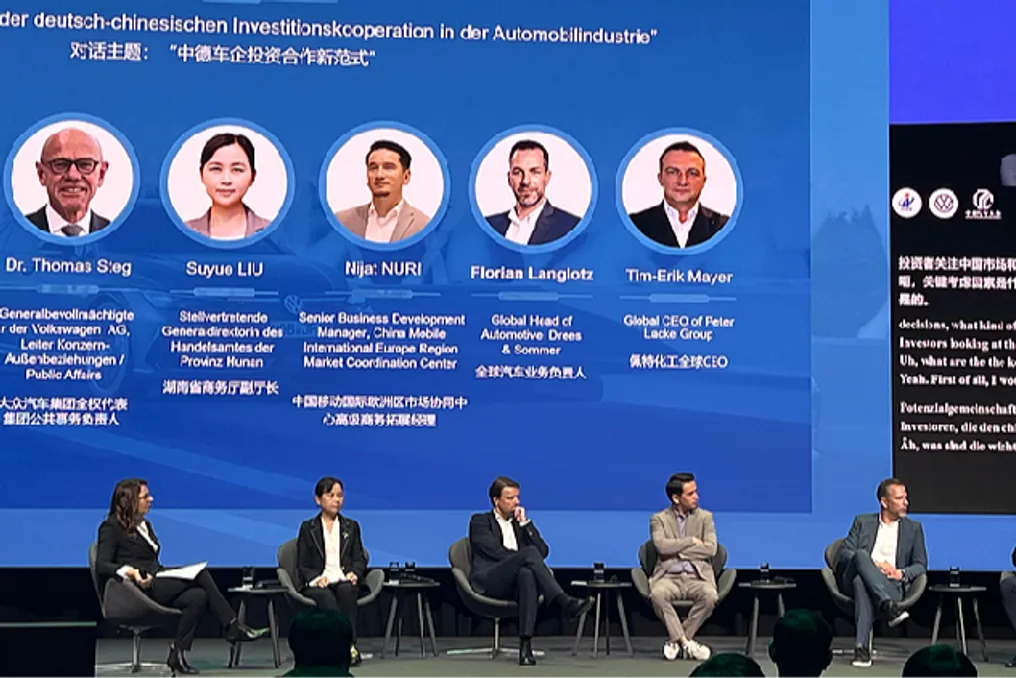
Chinese and German automotive companies explored opportunities to strengthen interaction against the backdrop of deep global transformation and intense competition in the industry on Friday.

The Tenth German-Chinese Automotive Congress took place in Wolfsburg, Germany, on Friday, gathering about 600 representatives from China and Germany.

According to Olaf Lies, Minister-President of Lower Saxony, the automotive industry, including its suppliers and technology sectors, is undergoing one of the most massive and rapid transformations in its history.

Lies noted that this transformation is driven by a number of factors, such as electrification, digitalization of vehicles, the application of artificial intelligence in both production and the vehicles themselves, and autonomous driving, adding that the congress serves as a strong signal for the need to deepen cooperation between Germany and China.

Thomas Schmall, CEO of Volkswagen Group Technology, emphasized that under current conditions, it is crucial for German and Chinese companies to maintain dialogue and build reliable and solid partnerships.

Meanwhile, Liu Minqian, Director General of the Ministry of Commerce of the PRC's Investment Promotion Agency (MOFCOM), stated that the acceleration of transformation is not a negative factor for the automotive industry but rather promotes its modernization and positively affects the provision of higher quality products and services to customers. He called on companies to focus on improving their technologies, products, and services.

Lin Dong, China's Consul in Hamburg, added that cooperation between Chinese and German automakers has gone beyond traditional finished vehicle production, covering areas such as batteries, intelligent connectivity, and technological innovation.

The automotive congress followed the International Supplier Fair, which began in Wolfsburg on Tuesday. Forty-five Chinese automotive suppliers participated in this fair.

The Economic Conference on Trade Cooperation between Hunan Province of China and Germany, also held on Friday, coincided with the German-Chinese Automotive Congress.

Representatives of the German automotive industry reacted positively to delegates from Central China's Hunan Province. At the meeting, Gundula Henkel, a member of the Saxony-Anhalt German-Chinese Association board, observed the presentations with interest and was deeply impressed by China's pace of development. She noted: 'One can see how skillfully China's local strengths are combined with the necessary industries. This is a real breakthrough in understanding.'

Liu Suiyue, Deputy Director of the Hunan Provincial Department of Commerce, summarized the advantages of Hunan as a favorable destination for German investment, naming them the '5Cs': cost, consumer base, complete cluster supply, talented college base, and convenient environment. He stated: 'We are ready to work with you, and I believe our sincerity can bridge the distance from the Yangtze River to the Rhine.'

Several well-known companies from Hunan Province are located in Germany, including Sany Group. The Chinese multinational heavy equipment manufacturer Sany Group acquired Putzmeister, one of the world's leading construction equipment manufacturers, in 2012.

Michael Boese, Chairman of the Board of automotive BerlinBrandenburg e.V., also attended the meeting. He expressed satisfaction with the opportunity to interact with representatives from Hunan, and potentially with Sany Group to discuss vehicles and automotive technologies. As chairman of the German association representing companies in the special transport manufacturing sector, Boese is aware that German companies 'are currently showing great interest and actively seeking contacts in the electric vehicle industry, especially regarding heavy trucks and heavy machinery in connection with China.'

Liu Minqian, an official from MOFCOM, noted in his speech at the meeting that Hunan has a solid foundation in the automotive industry as a major manufacturing province of China. These industrial capabilities not only provide enterprises with supply chains and market expansion opportunities but also create significant room for cooperation between China and Germany in new technologies and products.

Liu Minqian also stated that the purpose of coordinating the Hunan promotional meeting with the Sino-German Automotive Congress is to deepen the understanding of Hunan Province among the German community.

Uwe Fritsch, a specialist in member relations for automotiveland.nrw, the automotive industry cluster in the German state of North Rhine-Westphalia, also emphasized the importance of closer exchange between China and Germany. He agreed with Lower Saxony Minister-President Olaf Lies, stating that more cooperation is needed—in both directions. This implies not only closer economic interaction between German and Chinese companies but also, equally important in the current situation, greater mutual understanding and dialogue.
Similar stories

Uzbekistan and Germany plan to expand cooperation in the agricultural sector
Read more
uzdaily.uz

Uzbekistan and Germany plan to expand cooperation in the agricultural sector

Uzbekistan and Germany intend to deepen their partnership in the agricultural industry by focusing efforts on professional training, scientific research, the implementation of modern technologies, and support for farms.

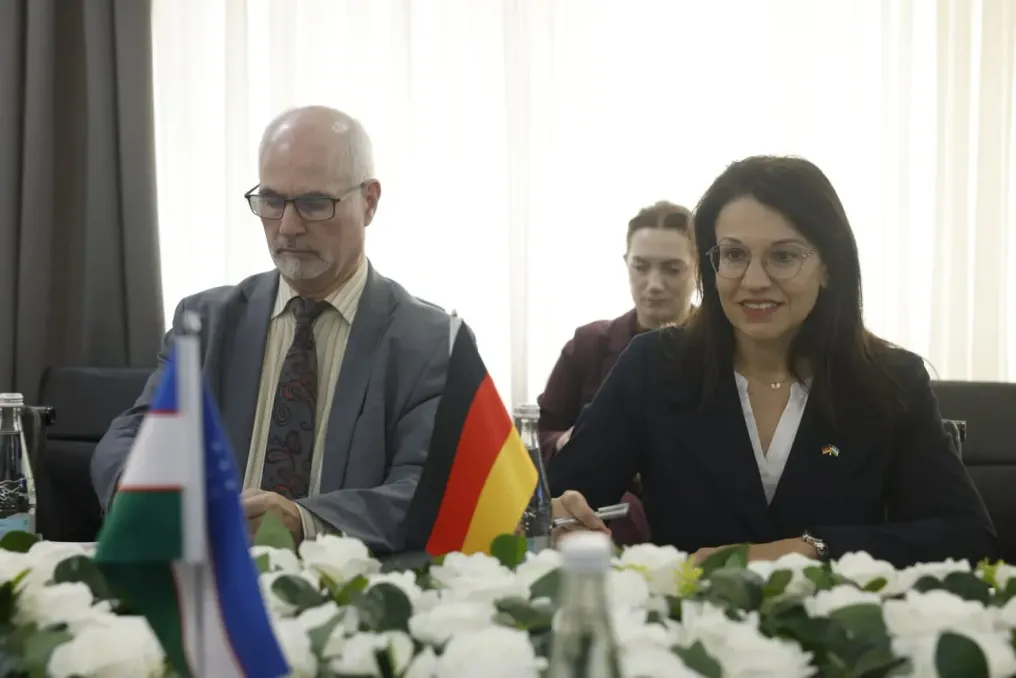
Discussions on the prospects for bilateral interaction took place during a meeting between Uzbekistan's Minister of Agriculture, Ibrohim Abdurakhmonov, and a German delegation led by German Ambassador Matthias Follerth, as well as Martin Englardt-Kopf, Parliamentary State Secretary of the German Federal Ministry of Food, Agriculture and Regional Identity.

According to data presented at the meeting, the volume of bilateral trade in agricultural and food products reached 61.3 million US dollars from January to September 2026.

The countries also noted the existing memorandum of cooperation in veterinary medicine and animal husbandry, signed on September 15, 2024, as a basis for further joint development.

One of the initiatives discussed was the possible establishment of a German agricultural center at the National Center for Knowledge and Agricultural Innovation in Uzbekistan (AKIS). This center is intended to promote cooperation in the fields of agrarian knowledge, innovation, and the application of advanced agricultural practices.

The parties also considered the possibility of developing financial programs for farmers using German experience in agricultural lending, as well as improving the management of agricultural cooperatives. Furthermore, it was proposed to create a regional platform for exchanging agricultural technologies between Central Asian countries.

In terms of agricultural education and practical training, the project of creating a modern educational and demonstration center in cooperation with the University of Applied Sciences Weinstadt-Triesdorf was discussed. The proposed site will include infrastructure for housing 200 head of livestock and an experimental field of 50 hectares. The goal of this project is to combine the educational process with practical training and the application of modern agrotechnologies.

Scientific cooperation also became a key area of discussion. The parties considered conducting joint research with the Julius Kühn Institute of Germany on maintaining soil fertility in rice fields and improving the cultivation technologies for cover crops. Potential interaction with the University of Hohenheim regarding water-saving and digital agricultural technologies for growing fine-spun cotton was also discussed.

These steps will allow for the expansion of interaction between Uzbek and German agricultural institutions in the fields of research, education, and the practical use of agricultural technologies. At the conclusion of the negotiations, the parties agreed to continue working on the stated areas, develop the proposed initiatives, and increase joint agricultural projects.

Toyota requests that vehicles produced in Japan, the United Kingdom, and Turkey receive European certification
Read more
autopapo.com.br

Toyota requests that vehicles produced in Japan, the United Kingdom, and Turkey receive European certification

Toyota has expressed a desire to alter the guidelines that the European Union is developing for the automotive sector. The Japanese automaker is requesting that cars manufactured in Japan, the United Kingdom, and Turkey be considered European, in addition to asking for less stringent emission reduction targets.

These suggestions were formally presented by Toyota Motor Europe last Friday, the 16th, in Brussels. The proposals aim at two initiatives of the bloc: the Industrial Accelerator Law and the Automotive Package, which deals with the revision of carbon dioxide (CO2) goals.

According to the European Commission's proposal, an electric vehicle will only be eligible for public subsidies if it has 70% European components, excluding the battery. Although Toyota agrees with this principle, it advocates for expanding the 'Made in Europe' label to include its trusted partners.

The company argues that excluding these countries would cause harm to investments, job creation, and technological development. With the inclusion of these nations, the potential market would expand to approximately 31 million vehicle units, given the brand's direct interest, which owns factories in the United Kingdom and Turkey.

Additionally, the manufacturer suggests that the requirement for European content be implemented gradually, reaching 70% over a three-year period, and that its validity only begins in 2030. It also asks for the minimum percentage to be 70% of total sales volume, in contrast to the 85% currently under debate, and that hydrogen-powered cars be temporarily exempt from this rule.

Toyota bases its request on the claim that consumer acceptance of 100% electric vehicles is occurring at a slower pace than required by Brussels. The brand estimates that in 2030, about 45% of sales will be allocated to electric cars, while current standards demand more than 55%.

To mitigate this divergence, the company proposes a five-year deadline for meeting the goals, covering the period from 2028 to 2032, and a 90% cut in emissions in 2035, instead of the currently established 100%. Another point raised is the possibility of accounting for points through the use of renewable fuels and low-carbon steel.

In contrast, in Brazil, the policy of protecting national industry follows a different path: the import tax applied to electric cars was raised to 35% in July, after four adjustments. In Europe, the Commission's proposals are still awaiting deliberation by the bloc's members and the European Parliament.

China and EU Reach Agreement on Hybrid Car Trade under WTO
Read more
cgtn.com

China and EU Reach Agreement on Hybrid Car Trade under WTO

China and the European Union have reached an agreement regarding the trade of hybrid vehicles, which is governed by World Trade Organization rules. The Chinese side asserts that this understanding protects the interests of Chinese automakers and promotes fair treatment.

An expert notes that this agreement could bring greater confidence to both businesses and consumers. A question arises as to how this understanding might change car trade between China and the European Union.

Popular