InterstellOr completes modal test of CYZ1 emergency escape capsule, establishing baseline dynamic parameters for reusability
Read more
Pandaily
pandaily.com

InterstellOr completes modal test of CYZ1 emergency escape capsule, establishing baseline dynamic parameters for reusability

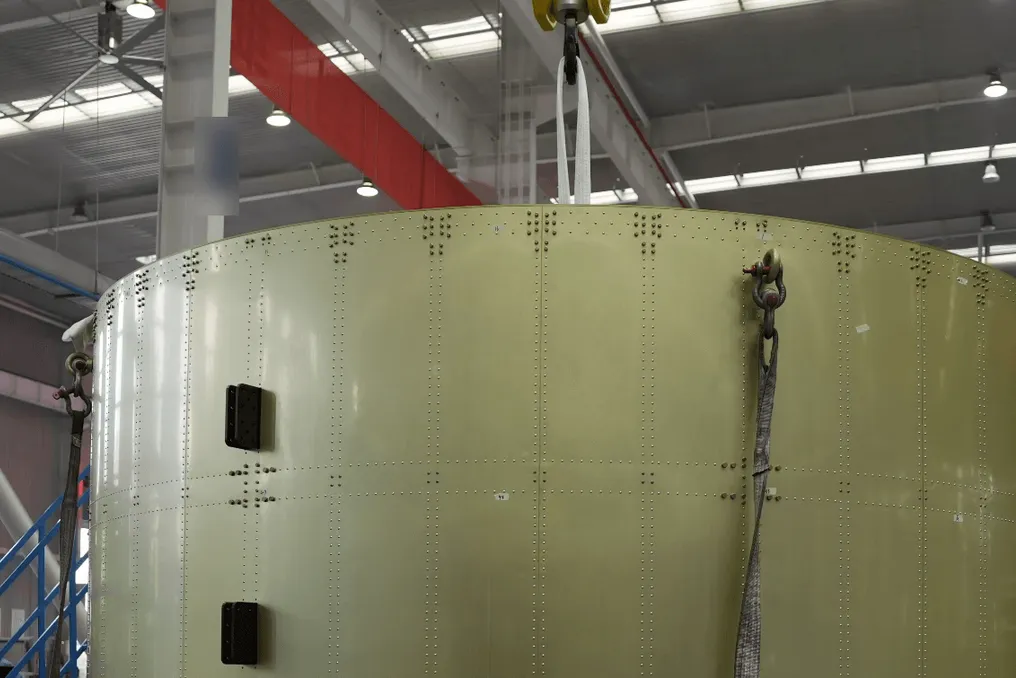
The commercial spaceflight company InterstellOr, based in Beijing, announced the completion of a modal test of the ground test emergency escape capsule for its suborbital crewed spacecraft, InterstellOr One (CYZ1). This information was published by the company via IT Home and Jiemian on November 1.

The test allowed for the measurement of the basic dynamic characteristics of the capsule structure and provided the company with actual data to validate its models and analyze upcoming flight tests involving the activation of the escape system.

Modal testing demonstrates how the structure vibrates. For an escape capsule, it is critically important to understand how it will react when the system activates under extreme conditions, and whether such a reaction threatens the structural integrity or crew safety. This test allows for the determination of three types of parameters: natural frequencies, mode shapes describing the movement of each part, and damping coefficients indicating the rate of vibration energy decay.

The test capsule has a diameter of about 4 meters and weighs approximately 1.1 tons. It was suspended on an elastic system to simulate free-boundary conditions, using a suspension frequency below 2 Hz, which is less than one-fifth of the capsule's lowest elastic mode. Engineers impacted the body with a hammer, while over 100 measurement points, located around the circumference and at different heights, recorded the response. These points covered key interfaces and the solid rocket motor mounting ring, paying special attention to modes related to thrust misalignment, as well as lateral and axial motion.

One of the objectives was to study the ovalization mode, where the circular cross-section of a large thin-walled shell deforms into a flatter shape. If the frequency of this mode is too close to flight vibrations, it could cause localized fatigue or instability. InterstellOr stated that the results of its finite element modeling closely matched the measured shapes, confirming the model the company will use for load prediction and safety analysis.

CYZ1 uses a 'ejection' type escape mechanism, rather than a traditional tower that pulls the capsule out. A spatial truss network converges to a central ring, distributing thrust loads along multiple trajectories. Since there is no mature dynamic data for this structure, the test also establishes a baseline: repeating the test after transport or flight will reveal changes in stiffness caused by fatigue cracks or weakened joints, supporting the reusability check required for a reusable spacecraft.

Similar stories

XHEART Company Releases X7 Ultra Chip with 700 TOPS Performance and Plans X9 for 2027
Read more
pandaily.com

XHEART Company Releases X7 Ultra Chip with 700 TOPS Performance and Plans X9 for 2027

The automotive chip company XHEART, established as part of the Momenta chip program, unveiled its X7 Ultra chip on October 29. The company positions this chip as a solution specifically designed to work with large control models, estimating its computational power for such tasks at 700 TOPS.

The head of XHEART noted that the development began with the observation that driver assistance software is shifting from numerous small models to a single, comprehensive large model, which requires corresponding chip adaptation. When the company was founded in 2023, the decision was made to work in reverse, starting from the models actually used in vehicles, and organizing computation, memory, and data movement around them, leaving room for future models.

The X7 Ultra is equipped with a very large NPU core. XHEART claims that data transfer within a single core occurs orders of magnitude faster, reaching terabytes per second, compared to data transfer between cores. A multi-level cache, designed for high throughput and parallelism, aims to reduce inference latency and power consumption. A specialized operator engine accelerates key Transformer operations, such as LayerNorm, Softmax, and Transpose, and also supports FP16 and FP32 vector mathematics to maintain model accuracy.

According to the company's data, production models running on the chip meet benchmark results with 99.99 percent accuracy, and compute utilization reaches 98.7 percent. Compared to products the company calls industry flagships, XHEART states an 80 percent reduction in memory bandwidth consumption and a doubling of energy efficiency. These figures are presented by the company itself and have not undergone independent testing.

The chip also includes, according to XHEART, China's first mass-produced automotive Armv9 processor, which demonstrates 20 percent higher performance and 10 percent better energy efficiency. The architecture with a large cluster improves the coordination of multi-core processors and access to L3 memory, while the new SVE2 vector engine provides higher signal processing performance compared to the previous generation NEON.

XHEART also demonstrated its next chip. The X9 model targets 3000 TOPS for large model computations and 700 GB/s memory bandwidth per chip, with its release planned for 2027. It will be developed jointly with next-generation world-class models, synchronizing computation and memory access for efficient operation of larger models.

The company reports being in a cycle of producing one generation, developing the next, and researching a third. Two years have passed from its founding until mass production. The first X7 chip was operational within 24 hours of returning from the factory, and on the 17th day, the chip, low-level software, and control model were working together in a full vehicle.

Iluvatar CoreX demonstrated Tiangai 300 GPU performance, claiming 1.05x superiority over H200
Read more
pandaily.com

Iluvatar CoreX demonstrated Tiangai 300 GPU performance, claiming 1.05x superiority over H200

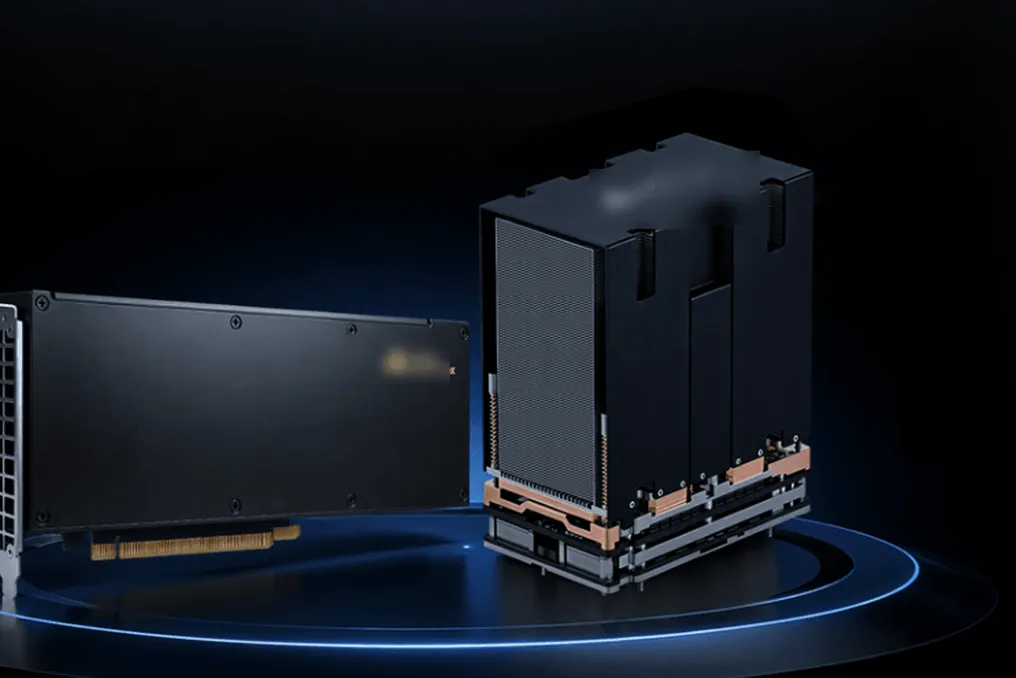
Iluvatar CoreX unveiled the general-purpose Tiangai 300 GPU in a working state on real hardware during its media day on October 28th in Shanghai. Previously, the company's public materials regarding the chip focused solely on architecture and roadmap, not on functioning systems.

The main claim concerns performance comparison. Iluvatar CoreX asserts that Tiangai 300 is the first domestic general-purpose GPU whose measured performance reaches the level of NVIDIA H200. Furthermore, third-party testing, after data conversion, showed that the total throughput of one card is 1.05 times greater than that of H200. It is important to note that the company did not disclose the testing methodology, models used, or workload conditions, so this result cannot yet be independently verified.

This chip is intended for integration into the IXL144 supernode, which the company previously presented at the China International Industry Fair. One such IXL144 rack combines 144 GPUs, 18 CPUs, and approximately 10.1 TB of GPU memory, which Iluvatar CoreX calls the densest GPU supernode in the industry. According to its own estimates, this configuration reduces the cost per million effective tokens by 40% compared to mainstream international solutions.

Information on heterogeneous deployment was also presented at the open day. Iluvatar CoreX reported implementing the first domestic AFD disaggregation scheme between GPU and XPU, which reduced inference latency by 60%. AFD disaggregation typically involves splitting model computation stages, such as attention and forward propagation layers, across different processor types so that each performs the task it is most efficient at.

Regarding peripherals, the company stated that its Tongyang TY1200 chip outperforms NVIDIA Thor T5000 in conducted tests, again without publishing details. The TY1200, previously announced with 300 TOPS of dense computing for AI and embodied intelligence PCs, is also named the first domestic peripheral product capable of performing physics simulation with GPU acceleration based on MuJoCo-Warp—a function critical for training robots in simulation.

Overall, these demonstrations move Iluvatar CoreX's next-generation product line from paper specifications to working systems. The next point to watch will be independent benchmarks with disclosed workloads.

Motorola Edge 70 Pro with long battery life is available on sale with coupon
Read more
tecnoblog.net

Motorola Edge 70 Pro with long battery life is available on sale with coupon

The 256 GB Motorola Edge 70 Pro can be purchased for R$ 3,129 using Pix and the coupon HOJETECH on the Mercado Livre platform. This premium mid-range device from Motorola offers a long-lasting battery and 50 MP cameras, receiving a 30% discount off its original price of R$ 4,499.

The Edge 70 Pro battery has a capacity of 6,500 mAh and, according to the manufacturer itself, guarantees up to 49 hours of usage autonomy. Furthermore, it supports 90W ultra-fast charging, allowing the device to be fully charged in about 9 minutes, which is advantageous for those with busy routines.

The phone's photographic capabilities are a strong point, featuring 50 MP cameras on all modules. The dual wide setup, equipped with OIS and a 122° ultrawide, captures excellent outdoor images. The periscope telephoto lens offers 3.5x optical zoom for detailed close-ups, and the front camera produces great selfies. All sensors record video in 4K, with the rear cameras supporting up to 120 frames per second.

The device's performance is guaranteed by the Mediatek Dimensity 8500 Extreme processor and 12 GB of physical RAM, which support the simultaneous execution of various applications and features of the Moto AI suite. The 256 GB internal storage provides enough space to store photos and videos.

The Edge 70 Pro's 6.78-inch Extreme AMOLED screen features a high refresh rate of 144 Hz and a maximum brightness of 5,200 nits, in addition to HDR10+ compatibility. This configuration allows for the display of vivid colors and great fluidity during application navigation and gaming, ensuring good visibility in different environments.

In terms of durability and protection, the gadget's body uses Gorilla Glass 7i to protect the screen against scratches and impacts. IP68/IP69 and MIL-STD-810H military certifications offer resistance against intense dust, accidental immersion, and extreme environmental conditions, such as high temperatures.

The 256 GB Motorola Edge 70 Pro, currently priced at R$ 3,129 via Pix with the HOJETECH coupon, will have update support until Android 19 and is compatible with modern technologies such as 5G networks, Wi-Fi 7, Bluetooth 5.4, and NFC.

Popular