
Qwen AI Glasses receive OTA update with call and media translation feature
Read more
Pandaily
pandaily.com

Qwen AI Glasses receive OTA update with call and media translation feature

Alibaba has released an Over-The-Air (OTA) update for its Qwen AI Glasses, which became available on November 1st. According to IT Home, this update introduced real-time translation features during calls and media content translation, as well as improved noise handling. Previously, on October 30th, the Qwen AI Glasses account announced an upcoming update on Weibo.

The call translation feature enables real-time translation between different languages during phone conversations and online meetings, intended for communicating with foreign counterparts. Regarding media translation, it covers materials such as international podcasts, online courses in foreign languages, and foreign films.

When using the glasses with media, audio tracks are translated in real time, and the resulting translation is displayed synchronously in the Qwen AI application on the user's phone; thus, the glasses handle listening, while the phone functions as the screen.

The third change concerns enhanced noise resistance. The update improves speech recognition in noisy environments, which, according to the company, makes simultaneous translation more accurate and timely. Clear sound reception is critical for most translation functions, especially in streaming scenarios like calls where speakers do not pause waiting for system processing.

The announcement did not specify which models would receive this update or which languages are supported by the new features.

This update comes amid the rapid growth of the product line this year. The Qwen AI Glasses G1 model was launched for sale in March, followed by the flagship S1 model, which surpasses the G1 in interaction, display, battery life, and hardware. On October 13th, Qwen introduced the N1 series, including N1 and N1 Pro models. Both versions are equipped with a 50-megapixel sensor, 4K video recording capability, and interchangeable earbud batteries. The nominal battery life is 9 hours for the N1 and 8 hours for the N1 Pro. These devices include built-in Qwen applications for notes and AI-powered translation.

The N1 Pro model additionally features eye tracking, which works in lighting conditions from 0 to 100,000 lux with a central accuracy within 1 degree, iris verification for payments developed jointly with GPASS from Ant Group and Qualcomm, and monitoring of heart rate, blood oxygen level, and skin temperature. At the same time, Qwen launched AI clip-on earbuds that also provide real-time translation, meeting note-taking, and voice commands.

Similar stories

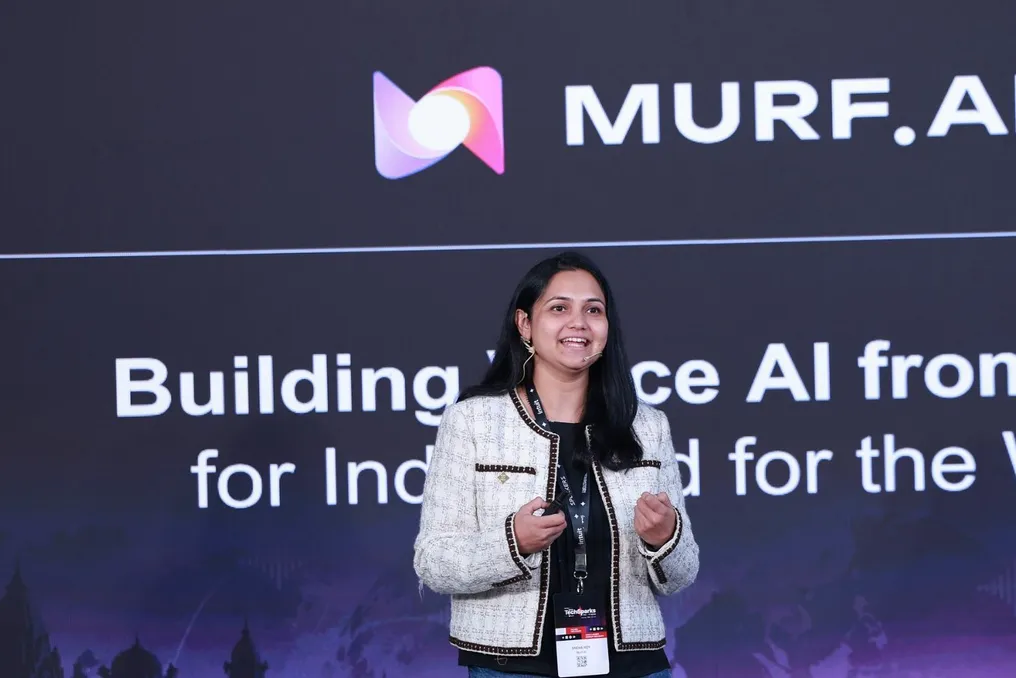
Murf AI Co-founder Claims Indian Voice AI Challenges Could Influence Global Technology
Read more
yourstory.com

Murf AI Co-founder Claims Indian Voice AI Challenges Could Influence Global Technology

The co-founder of Murf AI believes that the complexities associated with voice artificial intelligence in India have the potential to shape global technological trends. What Indian users consider ordinary conversation could become the most difficult test for voice AI, and solving this challenge will open up new possibilities worldwide.

Voice AI is capable of answering questions, confirming orders, or assisting with bookings. However, the question arises: can it correctly pronounce an Indian name, understand an address spoken in a mix of Hindi and English, and respond quickly enough to sound natural?

For Sneha Roy, co-founder and COO of Murf AI, such scenarios are not exceptional; they represent the baseline for creating voice AI that will function in India, and ultimately, globally.

During a masterclass at the TechSparks 2026 event titled 'Building Voice AI from India, for India and for the World,' Roy explained how India's linguistic complexity, infrastructure limitations, and economic considerations affect speech technology development.

She cited examples of products that were first adapted for Indian users before finding broader application. Google Maps implemented offline functionality for areas with limited internet access, and Netflix introduced a mobile-only plan that has since been adopted in 78 countries. Uber tested cash payments in Hyderabad before expanding this option to other markets.

Roy posits that voice AI can follow a similar path. For instance, when calling to check a delivery status in Bengaluru, a customer might mix English with a regional language, use a local pronunciation of an address, and expect the postal code to be spoken numerically.

A model built on standardized English may struggle with such nuances. Roy emphasized: 'If a customer has to change their manner of speaking so that the agent can cope, or constantly repeat their address or name, then we have not finished developing it.'

In her view, the task is to create systems that accommodate people's natural way of speaking, rather than requiring customers to adapt to the technology.

Natural speech is only one part of the problem. Voice agents must also react quickly and operate efficiently at scale when companies process millions of calls monthly. Roy reported that a complete voice agent pipeline, including speech recognition, language modeling, and speech generation, typically has a response budget of 500 to 800 milliseconds. She added that Murf has managed to reduce the latency of its text-to-speech model below 100 milliseconds, including network delays.

To achieve this, the company developed Falcon 2—a smaller speech model designed to run on a wider range of GPUs instead of depending on specific, high-performance hardware. Roy noted that this approach helped maintain low latency across different geographical regions while improving cost-effectiveness.

Similar engineering solutions could be beneficial for markets outside India, especially where computational infrastructure is limited or deploying voice agents at scale remains expensive.

Roy also highlighted the importance of a responsible approach to voice data. She mentioned that Murf collaborates with over 400 voice actors globally through long-term, royalty-based partnerships and does not clone voices without consent.

For clients with strict privacy requirements, the company offers APIs that can process data without storing it, as well as on-premise deployments for sensitive applications. Roy's central thesis is that India's linguistic diversity and infrastructural constraints should not be viewed as secondary requirements; they can help define what voice AI must do before it is ready for widespread adoption. As she put it: 'India is the capital of world specifications.'

Uzbekistan's Minister of Digital Technologies and EY Discuss AI and Technology Development
Read more
uzdaily.uz

Uzbekistan's Minister of Digital Technologies and EY Discuss AI and Technology Development

The Minister of Digital Technologies of Uzbekistan, Sherzod Shermatov, held an online meeting with representatives of EY, including the firm's partner Timothy Grosser, who heads EY's cooperation with NVIDIA and Dell Technologies.

During the discussion, the parties focused on developing Uzbekistan's technological and innovation ecosystem, according to the Ministry of Digital Technologies. Special attention was paid to artificial intelligence, new technologies, and priority areas where Uzbekistan can gain competitiveness in global markets.

Participants also reviewed issues of attracting international technology companies and investments, expanding the export of technological services, and training qualified specialists for this industry. Another area covered was transforming technological initiatives into tangible economic results, specifically through the creation of new, high-paying, and quality jobs.

The Ministry and EY expressed their desire to continue cooperation and define concrete steps for joint work. Furthermore, they plan to explore partnership opportunities with IT Park and Enterprise Uzbekistan. According to the ministry, this interaction is intended to contribute to achieving Uzbekistan's long-term goals in technology development.

Popular