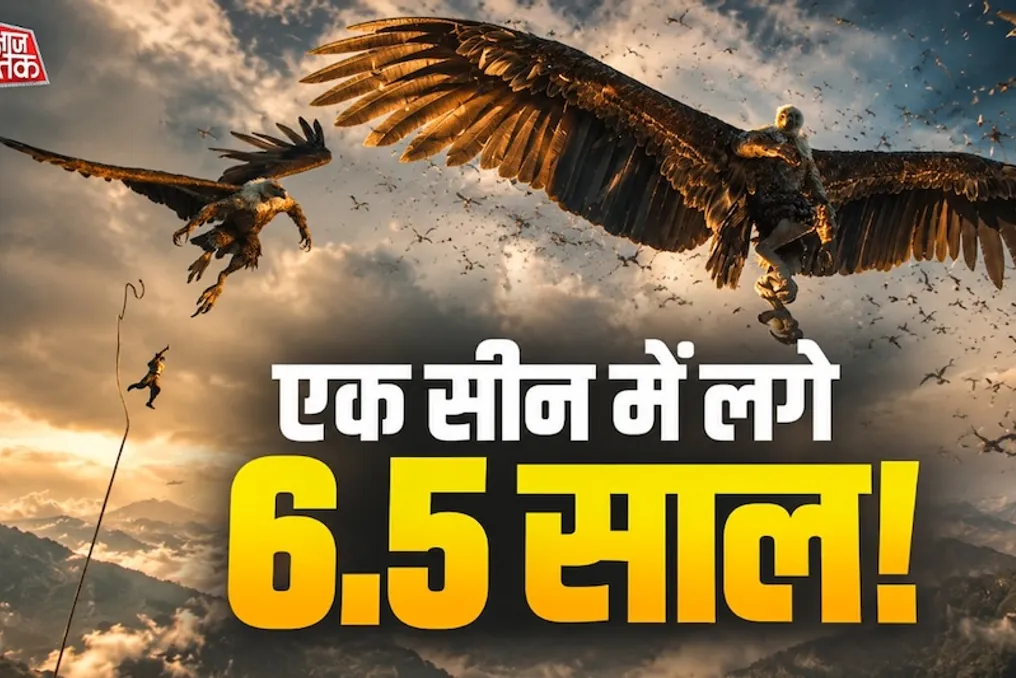
Director Nitesh Tiwari discusses the creation of the Ramayana film: Pushpak Vimana design changed 50 times
Read more
Aaj Tak
www.aajtak.in

Director Nitesh Tiwari discusses the creation of the Ramayana film: Pushpak Vimana design changed 50 times

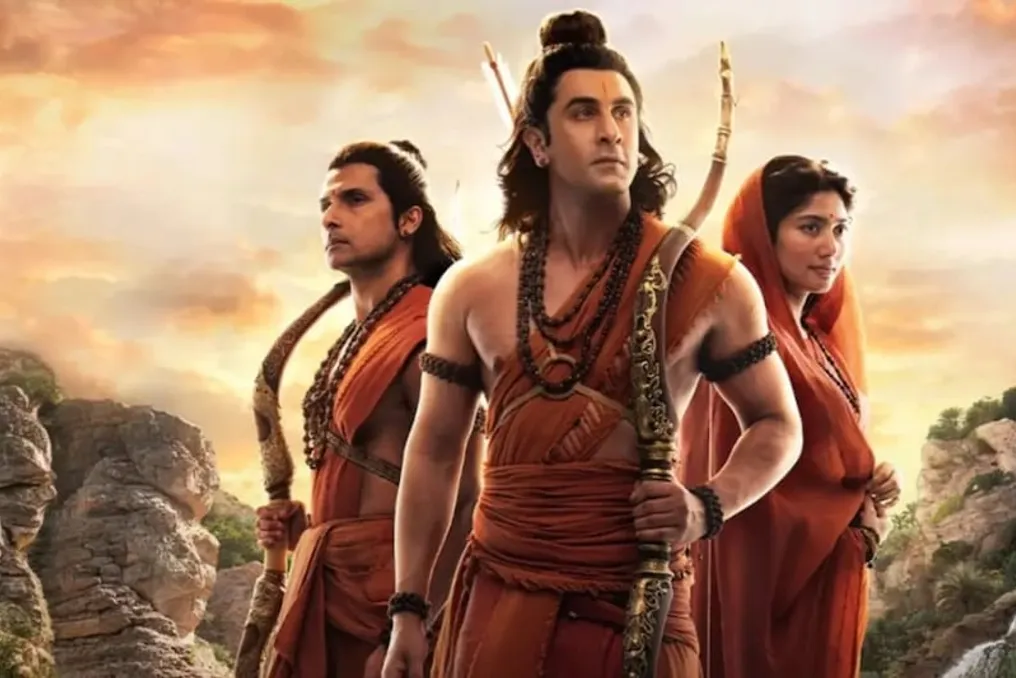
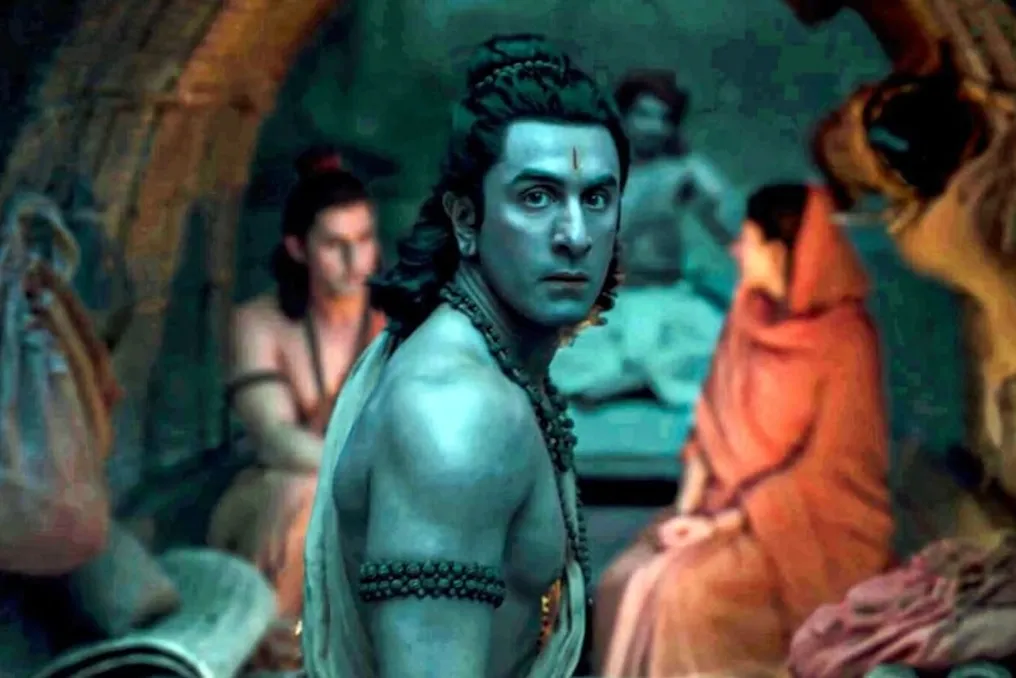
Director Nitesh Tiwari revealed some secrets regarding the large-scale project 'Ramayana' featuring Ranbir Kapoor, which is being created with a budget of 4000 crore. He shared details on how much time was spent creating various parts of the film, including the battle scene between Jatayu and Ravana.

In an interview with host Suma, Nitesh Tiwari elaborated on the labor-intensive process of creating the Pushpak Vimana for the film. According to him, the most time was spent on meticulously developing the script. The team's main objective was to create a version based on Valmiki's Ramayana, while integrating beautiful plotlines from other versions of the Ramayana.

Nitesh noted that there are over 300 different versions of the Ramayana in India, many of which contain small but wonderful stories. He emphasized that all these versions harmonize with each other, even though some characters are depicted differently. The team's goal was to present this great story in a film that people could be proud of, ensuring justice to this epic.

The script preparation process itself proved extremely complex. Following that, a real difficulty arose—how to translate the concept from paper to screen. This required significant preparation, and a lot of time was dedicated to character development and other film elements.

Nitesh Tiwari also discussed the work on visual effects (VFX) in the film, specifically highlighting the fight between Ravana and Jatayu. The director stated that completing this single scene took six and a half years. He explained that creating high-quality VFX requires a lot of time. He gave an example so the audience could grasp the scale of the work: it took six and a half years from the first presentation of this scene to its final realization by the artists.

Hearing this, Ranbir Kapoor added that this referred only to one action sequence, for which so much time was spent on preparation. The director continued that if he started talking about the entire work from the beginning, he could talk for hours, as thousands of people worked on it.

Nitesh Tiwari further specified that the team required about two years to develop the final design of the Pushpak Vimana. However, the work did not end there. Changes in the vimana's design forced the redoing of the Ravana and Jatayu battle scene. He explained that initially, the fight was choreographed considering the old design of the vimana. But when the final design was approved, it differed greatly from the previous one, necessitating numerous revisions to the battle scene.

He gave an example: 'Now Jatayu cannot appear here because a dome-like structure has been formed. So we have to think about what to do next. Thus, the design changed repeatedly for its improvement.' Nitesh also mentioned that before choosing the final design, the team prepared about 40–50 different options. He stressed that they did not want to create a flying machine that looked like it couldn't fly; they aimed for it to have a scientific basis, as they believed everything happened for some scientific reason in that era. The Pushpak Vimana must look like it can actually fly. Nitesh also added that his team knows perfectly how the Pushpak Vimana flies, moves, and what is inside it.

As for Nitesh Tiwari, most of his previous films have been commercially successful. His latest work, 'Bawaal', was released directly on OTT, starring Varun Dhawan and Janhvi Kapoor. Now he presents 'Ramayana', which is set to release on November 5th. It remains to be seen whether the audience will appreciate his diligent effort.
Similar stories

Ramayana film starring Ranbir Kapoor receives U certificate and is announced for release in Russia on November 5
Read more
www.aajtak.in

Ramayana film starring Ranbir Kapoor receives U certificate and is announced for release in Russia on November 5

The film 'Ramayana,' which is currently one of the most discussed Indian pictures online, recently had its world premiere in Los Angeles. Following this screening, public attention focused on reviews of the film, which were mostly positive, leading to an increase in pre-sales in the USA.

Now it is time for the Indian release, and the film has received approval from the film censorship board. The CBFC issued the 'U' certificate for 'Ramayana,' meaning it can be freely watched by people of all ages, including children and the elderly. The censorship board did not require any scenes to be cut.

The film's runtime was also officially confirmed. The first episode of 'Ramayana' is scheduled for 195 minutes, which is three hours and fifteen minutes.

During the world premiere in Los Angeles, the film's runtime was 2 hours and 45 minutes because all musical numbers were excluded. The creators explained that unlike in India, there are no intervals between parts abroad, and they aimed to provide viewers with a higher quality experience. Nevertheless, viewers who attended the world premiere noted that the presence of songs would have made the viewing even more enjoyable.

The film 'Ramayana' is set to be released in India on November 5. Currently, it has collected about 500 million dollars worldwide through pre-sales. Since there are only five days left until the official start, the picture is expected to achieve a major box office success on its opening day. Critics from America show predominantly positive reactions to the film, and now it remains to see how it will be received by the audience in India.

The main roles in the film will be played by stars such as Ranbir Kapoor, Yash, Sai Pallavi, Ravi Dubey, and Arun Govil. Nitish Tiwari directed 'Ramayana,' and Namit Malhotra produced it.

Use of Brahma AI technology to synchronize actors' lip movements in the film 'Ramayana'
Read more
www.aajtak.in

Use of Brahma AI technology to synchronize actors' lip movements in the film 'Ramayana'

The film 'Ramayana' is set to be released in cinemas soon, generating significant interest among fans. A premiere screening of 'Ramayana' recently took place in Los Angeles, USA. The English-dubbed version of the film utilized Brahma AI technology during the screening.

The world premiere of 'Ramayana' was held at the Academy Museum of Motion Pictures in Los Angeles, where the English version of the film was presented. Brahma AI was employed for this English dubbing. Essentially, this is a lip-sync technology used to adapt the actors' lip movements in the English trailer of 'Ramayana' to match the corresponding English dialogues.

The goal of this methodology is to give viewers watching the film in different languages the sensation that the actors on screen are speaking in the same language the viewer hears.

Imagine Ranbir Kapoor delivering a dialogue in Hindi as Rama. The lip movement when pronouncing the same word in Hindi may not be identical when pronouncing the dialogue with the same meaning in English. In standard dubbing, the audio might be in another language, but the actor's lips might continue to move according to the original language, which sometimes leads to a mismatch between sound and image.

Brahma AI aims to eliminate this problem. First, dialogues are created and recorded in another language. Then, experts help determine how the actor's lips should move in accordance with the new lines. Subsequently, artificial intelligence technology is used to synchronize the actor's mouth and lip movements on screen with the new voice. The result is the ability to see Ranbir's, Yash's, or Sai Pallavi's lips moving in sync with the English pronunciation, even when they are speaking English.

The film 'Ramayana: Rise of the Legend,' starring Ranbir Kapoor, Sai Pallavi, and Yash, is scheduled for release in international theaters on November 5th. According to preliminary box office data up to October 28th, the film earned $2.58 million from pre-international sales in five countries. North America accounted for the largest share of these pre-sales, bringing in $1.91 million. Pre-sales also began in India; according to available data, the total first-day pre-sale amounted to 14.07 crore rupees, with the amount excluding reserved seats reaching 11.35 crore rupees.

Popular