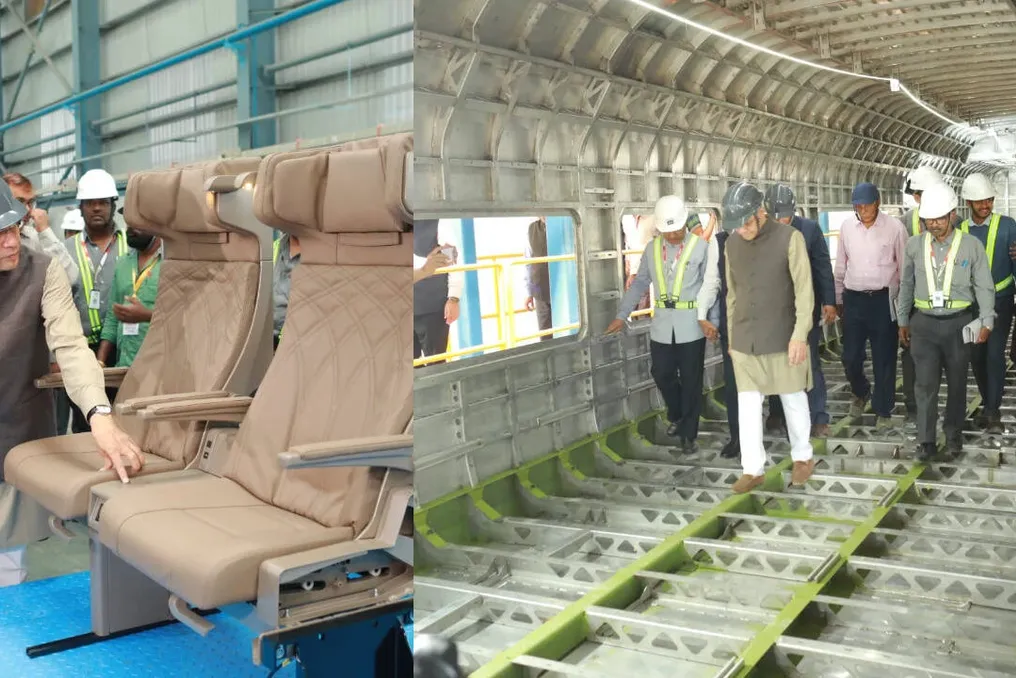
B28 Indian High-Speed Train Body Strength Test Nears Completion
Read more
The times of India
timesofindia.indiatimes.com

B28 Indian High-Speed Train Body Strength Test Nears Completion

The creation process of India's first domestic high-speed train, the B28, is approaching its final stage with the completion of a squeeze test on the first carriage next week.

The Minister of Railways, Ashwini Vaishnaw, personally attended this test, which took place at the BEML facility in Bangalore on Sunday. The squeeze test is a safety assessment aimed at determining the train body's ability to withstand significant external loads and pressure without excessive deformation or structural failure in the event of a collision.

As Vaishnaw noted, the integrated body test is in its concluding phase. Following this, the power plant and all electronic systems will be installed. This will then be followed by climatic tests, during which the carriage will be subjected to high temperatures of 50 degrees Celsius, negative temperatures, as well as conditions of dust and heavy rain.

It is planned that the tests for the high-speed train, designed for speeds up to 249 km/h with a test speed of 275 km/h, will begin in the first quarter of 2027–2028 on the Surat-Vapi section (100 km) of the Ahmedabad-Mumbai high-speed corridor. Commercial operation is scheduled for August 2027.

Each train will consist of eight carriages, with the possibility of adding another eight later. The eight-carriage set can carry 557 passengers. The Central Public Sector Enterprise BEML is responsible for manufacturing the first two such domestic trains.

According to an official, after the successful completion of this test, the prototype should be ready in less than six months, as the B28 (Bharat 28) does not use Japanese Shinkansen technology. The squeeze test confirms whether the body maintains its shape under pressure and if the passenger compartment remains structurally intact.

Previously, the Ministry of Railways, while seeking Cabinet approval to increase the cost of the country's first high-speed train project, stated that two prototypes were expected to undergo testing in the first quarter of 2027. It was also reported that the entire Gujarat section of the corridor is planned to be completed by December 2027, and the full 508-kilometer Mumbai-Ahmedabad High-Speed Rail corridor should be ready by December 2030.

Similar stories

First Vande Bharat sleeper train launched in Uttar Pradesh: details, schedule, and cost
Read more
www.aajtak.in

First Vande Bharat sleeper train launched in Uttar Pradesh: details, schedule, and cost

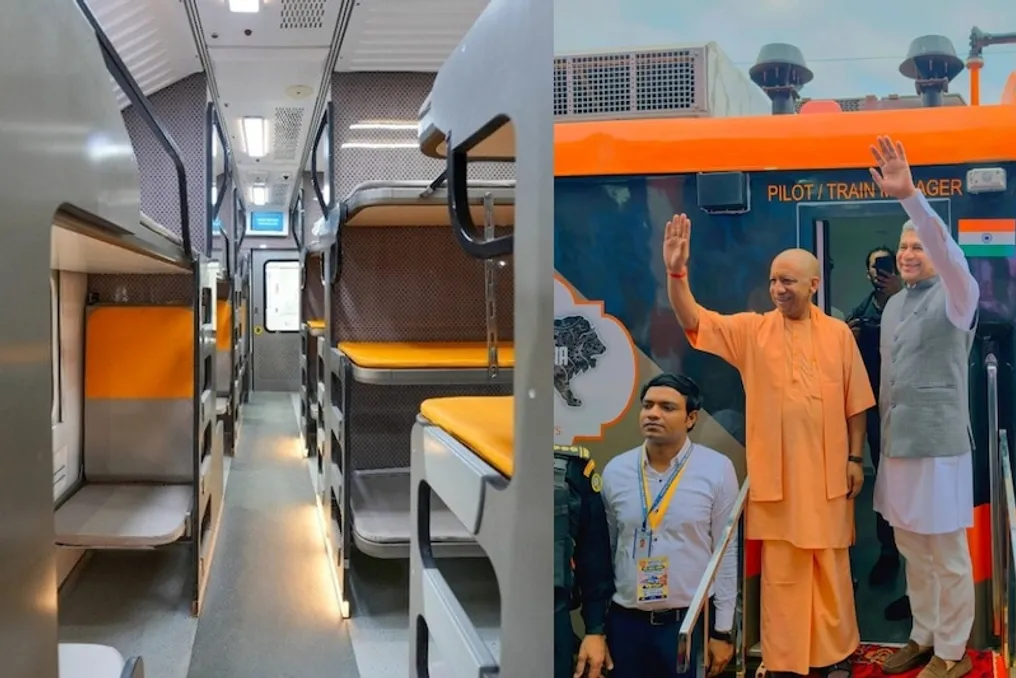
The second most numerous and first Vande Bharat sleeper train in Uttar Pradesh was grandly inaugurated. This train will run between Varanasi and Delhi, covering the distance in just 9 hours and 30 minutes. The train will depart in the evening and arrive in the morning, allowing passengers to spend time traveling while sleeping.

The launch of this train will reduce the travel time between Varanasi and Delhi by 55 minutes, and between Delhi and Varanasi by 35 minutes. The train is equipped with modern amenities, paying special attention to all passenger needs.

The main event was the green light given to the Vande Bharat Sleeper Express between Varanasi and New Delhi by the Minister of Railways Ashwini Vaishnaw and the Chief Minister of Uttar Pradesh Yogi Adityanath on that day.

The new service will connect Varanasi with the nation's capital. Along the way, the train will stop at Prayagraj, Kanpur Central, Aligarh, and Ghaziabad, ensuring connectivity with several important urban centers and surrounding areas. According to the schedule, the train will depart from Varanasi at 20:50 and arrive in New Delhi the following morning at 06:10. The return journey starts from New Delhi at 21:40 and arrives in Varanasi the next day at 07:10.

Compared to the current Shiv Ganga Express, the new service reduces the travel time from Varanasi to New Delhi by 55 minutes, and from New Delhi to Varanasi by 35 minutes.

This train will operate six days a week: it will run daily except for Friday (for the Varanasi route) and Saturday (for the New Delhi route). Thanks to the night schedule, passengers can depart in the evening and arrive at their destination in the morning.

The Vande Bharat Sleeper Express will consist of 16 coaches and offer three classes of service: Third AC, Second AC, and First AC. The train will cover a distance of 760 km between the two cities in nine and a half hours.

According to the schedule, train number 27421 will depart from Varanasi at 20:50 and arrive in Delhi at 05:55 the next day. The return, train number 27422, will depart from New Delhi at 21:40 and arrive in Varanasi at 06:45 the next day.

Information on ticket prices has not yet been published, but according to media reports, fares on this route will be slightly higher than on all other trains and may even exceed the cost of tickets in Vande Bharat Chair Car.

After the service launch, Railway Minister Ashwini Vaishnaw shared details about the benefits passengers will receive and showed the train's interior, discussing the measures taken for traveler comfort.

Speaking about Kashi station, he noted that it is designed with great facilities on both the north and south sides. Among these facilities is a very large waiting area, approximately the size of a football field, where more than 50,000 passengers can be present simultaneously. Furthermore, the southern part of the station is only two kilometers from the Kashi Vishwanath temple, which will allow pilgrims and visitors from around the world to easily reach the temple and the famous Ghats of Kashi. This location is intended to become a major transport hub.

Future high-speed train will pass through a 21-kilometer tunnel under Mumbai
Read more
www.aajtak.in

Future high-speed train will pass through a 21-kilometer tunnel under Mumbai

The dream of a high-speed train is soon to become a reality: by August 15 of next year, the high-speed train will start running on the tracks. Work is currently underway on the daytime project. The Mumbai-Ahmedabad High-Speed Rail (MAHSR) corridor, which is the first high-speed train project in the country, attracts global attention due to its outstanding engineering and technical challenges.

The most exciting and complex part of this project is the tunnel being built under the city of Mumbai. Creating a tunnel beneath such a densely populated metropolis as Mumbai proved to be a difficult task. As part of the project, a tunnel approximately 21 kilometers long is being constructed from Thane Creek to the Bandra-Kurla Complex (BKC), a significant portion of which will pass under the sea.

This tunnel is being built at a depth of approximately 25 to 40 meters below the surface of the earth so as not to cause inconvenience to residents, buildings, and infrastructure located above. Advanced global technologies, such as Tunnel Boring Machines (TBM) and the New Austrian Tunneling Method (NATM), are being used for the construction of this tunnel.

This high-speed train project will not only reduce the distance between the two economic capitals (Mumbai and Ahmedabad) to just over two hours but will also mark a milestone in the history of Indian transport. This train, which will travel at a speed of about 320 kilometers per hour, will provide passengers with modern amenities and safety comparable to air travel.

The tunnel passing under Mumbai serves as a vivid example of India's technological self-sufficiency and the strengthening of its modern infrastructure. The project not only promotes the development of environmentally friendly transport but will also give a new impetus to the country's economic growth. When this high-speed train starts running on the tracks, it will be a cause for pride for every Indian.

Popular