
Itaú launches new payment tool that allows completing online purchases within the bank's application
Read more
Olhar Digital
olhardigital.com.br

Itaú launches new payment tool that allows completing online purchases within the bank's application

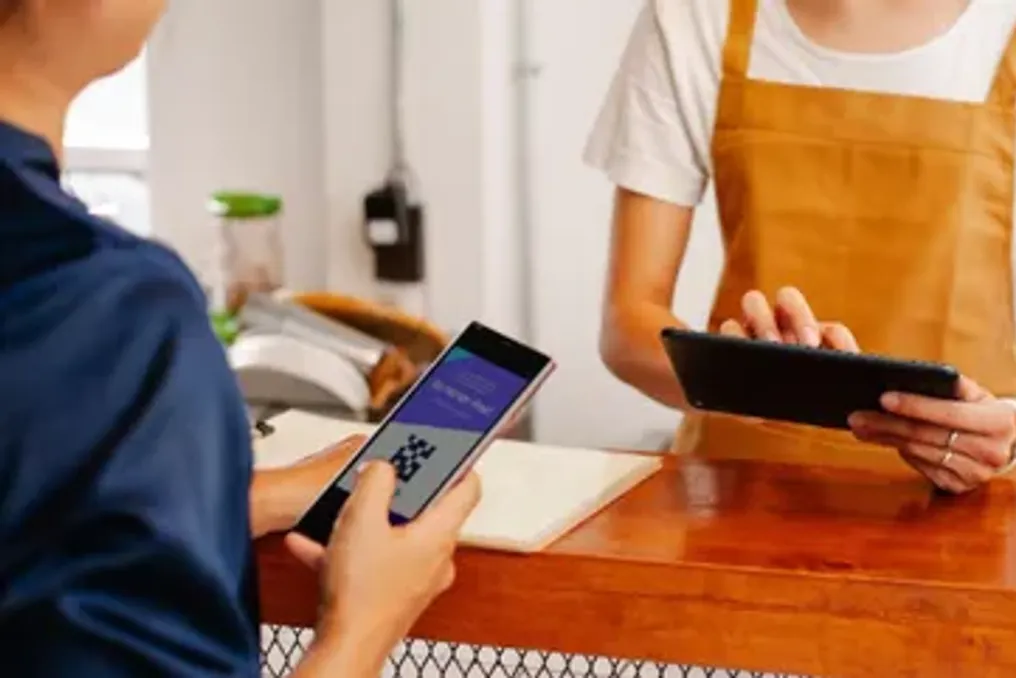
Itaú Unibanco introduced a new payment solution for e-commerce last Friday (the 30th). This feature allows customers to finalize their purchases from partner virtual stores directly through the banking application, unifying financial services, security authentication mechanisms, and credit analysis in one place.

Technologically, the tool aims to solve frequent challenges that negatively impact sales on virtual platforms. The system consolidates customer data, authentication, fraud prevention, and credit offers into a single payment experience, which results in a decrease in transaction rejections.

Angelo Russomanno, Director of Receipts and Acquiring at Itaú Unibanco, explained in a press release the context that drove the creation of this technological platform for the digital market. He pointed out that the checkout process is a critical moment where e-commerce frequently loses sales, either due to rejection because of suspected fraud or lack of limit, data entry errors, or excessively long journeys.

For the consumer, this technology eliminates the need to enter card numbers or security codes on virtual store pages. By choosing Itaú Pay among the available payment options at checkout, the user completes the purchase within the bank's own application, being able to opt to use account balance or credit methods.

The interface presents the financial conditions and the total amount before order confirmation. Furthermore, the system offers eligible customers extended installment options, additional purchase limits, and the possibility of paying using accumulated points from the program.

Companies that implement this novelty should observe an increase in sales efficiency, according to calculations presented by the bank. The financial institution estimates that the technology has the potential to raise the transaction approval rate by up to ten percentage points, minimizing losses caused by fraud and payment rejections. Russomanno emphasized that Itaú Pay represents an integration that unites the bank's relationship with individual and corporate clients, the operation of the Network in payments, and the offering of credit and risk management.

Another goal of the bank is for differentiated payment conditions to encourage higher-value purchases. The institution predicts that extended installment options can increase the average acquisition value by up to fifty percent.

The infrastructure used is based on the payment structure of Rede, an acquiring company belonging to the Itaú group. The Decolar travel platform was the first to incorporate the system, which is already accessible to the company's customers.

The expansion of this service will be carried out gradually in the coming weeks. Companies such as Raia Drogasil, Localiza, Zig, and EBANX are already included in the official schedule to make the modality available to their respective customers in the digital environment.

Similar stories

Payment system reform will simplify and lower the cost of small digital transactions
Read more
iol.co.za

Payment system reform will simplify and lower the cost of small digital transactions

For a long time, all digital payments required processing through a bank. However, the Reserve Bank has set deadlines for the end of this practice, and the first changes will affect not large corporate deals, but everyday, small calculations.

This refers to small amounts, such as paying for parking, topping up a phone balance, or bets in a casino slot machine. These small payments will become more accessible and simpler, which is especially relevant for businesses that heavily rely on small transactions, such as casinos.

What changes and when will they happen

The Reserve Bank presented a schedule of changes at a press briefing on October 16. Telecommunication companies, fintech companies, and retailers will be able to connect directly to clearing and settlement systems, bypassing banks. This opens up the possibility for a much larger number of players to participate in processing daily monetary operations.

September 2026

A draft Law on the National Payment System was published for comments, outlining the main framework. Initially, non-bank organizations will be able to independently perform seven types of payment operations.

November 2026

The approval of rules regarding payment operations and exceptions, as well as the standardized QR+ code, is expected. According to a TechCentral report, this QR+ code will allow even a parking attendant to accept digital payments without fees.

Around March 2027

The launch of licensed non-bank organizations is planned, leaving time for testing before commencing operations. By this time, a national money service belonging to the Reserve Bank should also be established.

By mid-2027, the system will be fully open to non-bank operators. The goal for PayShap by 2029 is to reach 500 million monthly transactions, compared to approximately 60 million currently.

Every step aims to make a small digital payment as fast and cheap as handing over cash, whether it's paying in a convenience store, taking a taxi, or a round in casino slots.

Small payments, big changes

Pradeep Maharaj, head of the Reserve Bank's payment ecosystem modernization program, stated that transactions below a certain threshold should be free. This is most significant where people spend small amounts, namely where cash payment still dominates.

Cash accounts for 56% of consumer transactions by volume and costs the economy approximately 88.5 billion rupees annually. Casinos demonstrate why this is important. Sun International, which owns 46% of the land-based casino market, earned 5.36 billion rupees from slots last year compared to 1.43 billion rupees from table games; slots are where people play small amounts by spinning reels.

At the same time, revenue from land-based casinos nationwide decreased by 4.6% in 2025, while online channels now account for about 60% of the gaming market, reflecting Sun International's shift in strategy towards digitalization. Casino gaming is moving to phones, and on the phone, payment is the entry point.

Online entry into casinos was initially built on small amounts. Many casinos in the UK allow deposits starting from £10, a level set so that people can try games without investing a large sum upfront, and this only works if the transfer of a small amount happens quickly and cheaply. Local betting sites operate based on such small top-ups, from vouchers bought at the counter to transfers via apps. Any fee on such a top-up eats up a large portion of it, so free low-cost payments will have the greatest impact right here.

What this means for your wallet

The first advantage is reduced fees for small transfers. The second is choice, as telecom wallets, retail apps, and fintech companies will be able to integrate directly into the system instead of renting access from a bank. Maharaj noted that 'Banks do an excellent job and will continue to do so,' so the essence is competition, not replacement.

Cash will also become more convenient. The Reserve Bank has instructed banks to brand their ATMs so that each machine processes deposits, withdrawals, and balance inquiries. A pilot project will begin in January, and the first batch of machines should be rolled out nationwide by the end of 2027. The most noticeable changes will be in locations with high cash usage, including casinos.

Casino groups are already planning a transition to a more digital customer. Sun International CEO Ulrik Bengtsson stated that the group aims to 'use digitalization and innovation to enhance our value proposition, expand our offerings, and enter attractive markets.' Cheaper small payments facilitate this both on the casino floor and via phone.

For players, small and controlled deposits suit those who play for fun within a set budget. Instant top-up of a small amount without a fee that eats into it helps better stick to that budget than depositing a larger sum to avoid charges.

The month to watch

November will be the month when this begins to show. The rules and the QR+ code will show how low the 'free' threshold can be and who can offer it. If this threshold falls within the range of small payments, the change will first be felt at the checkout, in taxis, and in casinos, long before the full-scale launch in mid-2027.

Alipay AI Pay launches PAYATHON 2026 hackathon to assess commercial viability of AI products
Read more
pandaily.com

Alipay AI Pay launches PAYATHON 2026 hackathon to assess commercial viability of AI products

Alipay AI Pay has announced the launch of its annual PAYATHON 2026 hackathon. The goal of the event is to encourage developers to integrate payment solutions into their applications, skills, and AI-based agents, and subsequently test them with real customers.

The announcement of the competition was made on October 24th in collaboration with the AI product community, according to sources IT Home and Leiphone. Registration will run until December 1st, and the final offline stage is scheduled for December 26th. The total prize pool amounts to 200,000 RMB.

The competition is divided into five tracks. Two main tracks cover autonomous applications and agent skills built around Alipay's Vibe Pay and Skill Pay concepts. The remaining three tracks—Token Pay, Machine Pay, and Agent Pay—focus on usage-based billing, recurring subscriptions, and transactions between machines or agents.

A distinguishing feature of this event is the evaluation system for submissions. In addition to product completeness and technical execution, organizers emphasize commercial metrics and actual user payments as key criteria. Alipay presents this as part of its developer-focused AI Pay strategy: simplifying the process of collecting payments, delivering goods, and setting prices so that small teams can turn working prototypes into monetized products.

Alipay provided examples of early developers already using the service. One team, led by a content creator, developed a tool for selecting themes, scenarios, and cover designs that attracted over 1,000 registered users and more than 300 authors but had no paying customers. After 159 days of trying to set up payments, the team utilized the AI-friendly integration guide, used Codex for coding, and went live in just 73 minutes, securing its first ten orders shortly thereafter, according to Alipay. The image and text generator Redink received nine orders, while another developer creating tools based on CodexGuide and GPT-Image2 reported receiving over 500 real orders.

It should be noted that the figures presented by the organizers are case studies and have not undergone independent verification. The hackathon reflects a broader shift in China's agent ecosystem—a transition from building tools to conducting transactions. Payment platforms are competing to become the standard checkout level for skills and agents, and Alipay is betting that solving billing issues for one-person teams will attract developers to the company's AI Pay stack at an early stage.

Popular