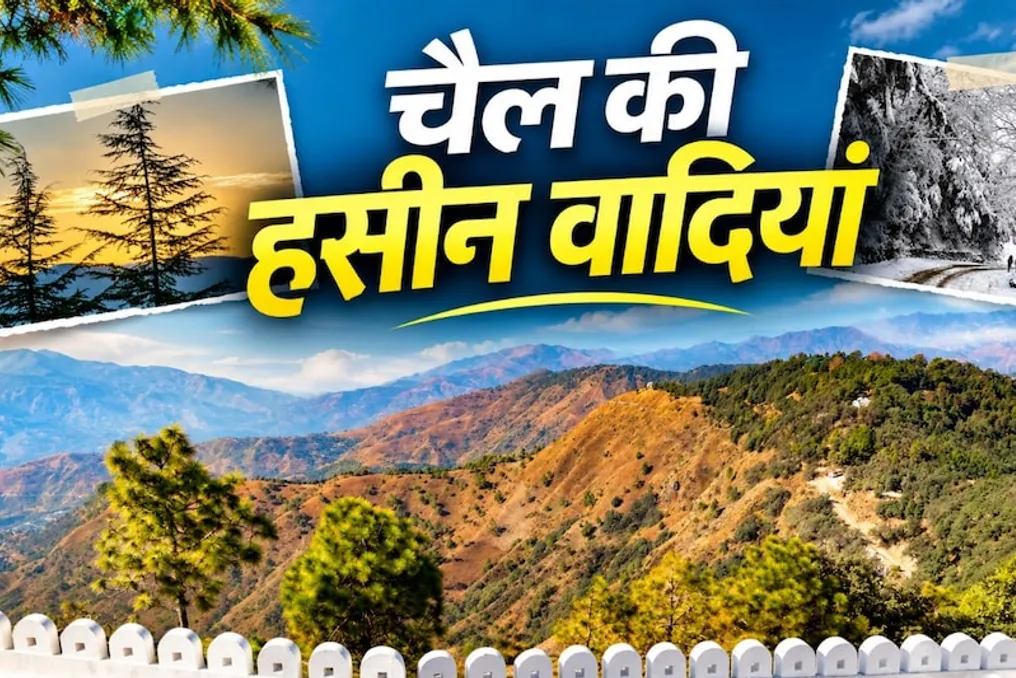
Chail in Himachal Pradesh: A tranquil mountain resort, an alternative to Shimla and Manali
Read more
Aaj Tak
www.aajtak.in

Chail in Himachal Pradesh: A tranquil mountain resort, an alternative to Shimla and Manali

When Himachal Pradesh is mentioned, most people picture places like Shimla, Manali, and Dharamshala. However, if you wish to spend time among the mountains in an atmosphere of peace and tranquility, you can plan a trip to Chail. This picturesque mountain resort is surrounded by dense cedar and pine forests, lush green hills, and magnificent landscapes.

Compared to popular destinations such as Shimla and Manali, Chail has fewer visitors. The calm atmosphere, cool air, and beautiful mountain views can delight your mood. Located at an altitude of over 2000 meters above sea level, this corner is ideal for those who want to escape the city hustle and spend time alone with nature.

In Chail, you can see many beautiful spots, including temples, forests, riverside cafes, and local markets. If you aim to get closer to nature or simply want to relax in a quiet place, there are many attractions here. Whether you are planning a short weekend trip or a multi-day vacation, Chail will offer you the opportunity to enjoy peaceful time amidst the mountains.

The best time to visit Chail is from March to June and from September to November. In summer, the weather is pleasant, allowing you to enjoy the mountains, forests, and beautiful views without problems. Furthermore, from September to November, after the rains, the greenery and mountain scenery look especially picturesque. Thanks to the clear weather in September-November, the travel experience can be even better. If you want to see snowfall, it is worth visiting this place from December to February. Nevertheless, it is quite cold in winter, so it is crucial to bring warm clothing.

Chail can be reached by road, train, or plane. However, there is no railway station or airport in Chail itself. To arrive, you must use road transport from nearby cities.

By Train: The nearest railway station is Kandaghat, which is on the Kalka-Shimla tourist train route and is located about 25-30 kilometers from Chail. You can take the tourist train to Kalka and then transfer to a taxi or local bus to Chail.

By Car: The distance from Delhi to Chail is about 350 kilometers. You can travel by private car or bus. From Shimla to Chail, it is approximately 45-49 kilometers, and from Solan—about 38 kilometers. Taxi and bus services are available from Shimla or Solan.

By Plane: The nearest major airport is Chandigarh, which is 110-120 kilometers from Chail, from where you can reach it by taxi. There is also the option of Jubbarhatti Airport in Shimla, but it has limited flights.

For travelers from Delhi: If you are traveling from Delhi, you can go by road. The car journey will take about 8-9 hours, but the travel time may vary depending on weather conditions and traffic on mountain roads.

Similar stories

A Story of Rivalry Between the Cities of Kanpur and Lucknow
Read more
www.aajtak.in

A Story of Rivalry Between the Cities of Kanpur and Lucknow

The cities of Kanpur and Lucknow are often compared to siblings whose lives are inseparable and who frequently visit each other. However, when a third party appears, they do not hesitate to criticize one another. As is known, residents of one city may lack good manners in eating, dressing, or speaking, and despite any attempts to imitate others, they cannot become the same.

For example, Kanpur might claim: 'Look, this Ikan-Vikan stadium operates seven days a week, they boast about it. But our Green Park Stadium has been functioning for decades. We first defeated Australia in sixty-eight. You see, they just brag.'

At the same time, the people of Lucknow consider themselves noble, living in houses dressed in exquisite attire, yet, in their opinion, living in luxury.

Lucknow responds: 'We don't say we dislike changing our temperament, but as for Idris brother's biryani, will you find it in his spicy biryani with pepper? These people love sweets; they don't know what shirmal is. Our sophistication, our refinement, what can be said about the Urdu language... And look, our culture is known worldwide. We have the Pandan system, and they have the Gutka system.'

The author admits that both cities are dear to him and that he has ties to both, but today's story is dedicated to this friendly squabble between the two cities. He will tell when this squabble began and who was Kanpur's Siknder Chacha, who swore that there would be no connections with Lucknow in his family, and what the conflict between Lucknow and Kanpur entails.

This issue arose around 2007. A family was on board one of the coaches of the 'Awadh Express,' which stopped at platform number three of Kanpur Central Railway Station. This was a time when highways between Lucknow and Kanpur had not yet been built, and the roads were in poor condition, so people preferred to travel by train. This family belonged to Quddusi Sahab, and his son, Sharik, was planning to visit family in Lucknow.

Sharik, although a decent person, was working as a food blogger in Kanpur at the time. His job involved visiting street stalls selling chaat, momos, and chhole bhature, where he would ask questions like: 'Hey brother, what is this here? Coriander... and they added this white thing... Okay, salt... do they add salt too? And what is this thing... I see it for the first time... Okay, oil... will you add this much oil? Wow! Ahaha.'

On the train were Sharik himself, Sharik's uncle, Siknder Chacha, and Sharik's mother. When the train started moving slowly, Sharik's mother, now called Chchi, said: 'Hey, the train is late. They said we would go. Who listens? We are going to the girls' house, and they are from Lucknow. You gentlemen act as if you are very noble; what the hell are you doing in two minutes?'

Siknder Chacha smoked gutkha out the window and, wiping his mouth, replied: 'What are these complaints of yours... They will boast as if everything is Nawab-like, and they ride in horse carriages. Look, everyone is sitting in auto-rickshaws. Brother, drive slower. Now there are as many people in Nakhallu as there are auto-rickshaws.'

Before continuing the story, it should be noted that the reason for Siknder Brother's dislike for Lucknow was related to the fact that a girl from Lucknow once broke his heart. She studied Kathak in Bathkhand, and an affair occurred. Since then, he has felt strong irritation towards Lucknow, and his secret goal was to prevent this connection.

This meeting was arranged with Shizo, the daughter of Anwar Sahab, a retired teacher in Lucknow. Shizo was very modest and homebody, making wall hangings from empty egg cartons and manufacturing side lamps from empty boxes. However, she loved to eat well, often going to eat Maggi around ten or nine in the evening, and knew how to express her opinion, for example, arguing with taxis from Charbagh about why they seat four passengers instead of three. She was beautiful and good.

Eventually, the train stopped at Charbagh station, and they got into the compartment to head to Anwar Sahab's house. On the way, Chchi said: 'Brother, as soon as we arrive, we will go to the bathroom first.' When asked why, she replied: 'Brother, to understand a person, you must look at their shoes; to see a house, you must look in the bathroom. Do you understand? That shows how much they value cleanliness.'

The compartment stopped in front of an old two-story white house in an alley. Upon approaching the car, Mamunne Mamoo, Shizo's uncle, met the guests almost running, greeting them: 'Greetings, greetings...' and inviting them inside. Siknder Chacha said: 'Mamoo, brother, give us some time... You won't go inside... The car will stay outside.'

Muling in Himachal Pradesh: A picturesque remote village in the Lahaul Valley offering solitude
Read more
www.aajtak.in

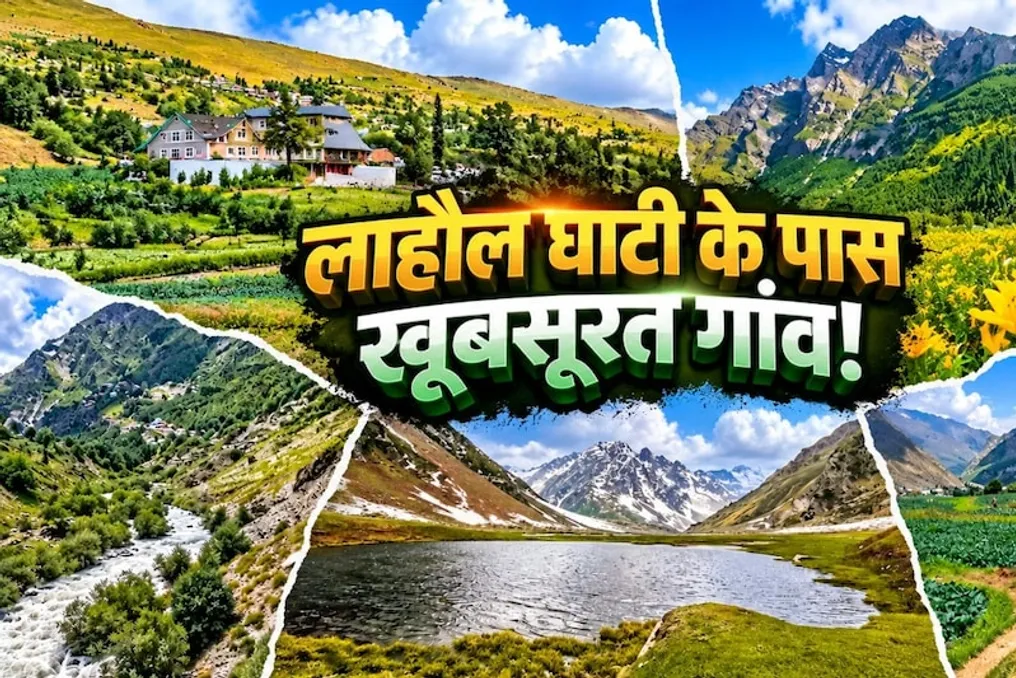
Muling in Himachal Pradesh: A picturesque remote village in the Lahaul Valley offering solitude

If you wish to spend time in the quiet amidst the beautiful landscapes of Himachal Pradesh but want to avoid the hustle and bustle of Manali, you can visit this remote village in the Lahaul Valley. This village, situated among the mountains, is known for its tranquil atmosphere, traditional dwellings, and natural beauty. Here, you can enjoy time away from the city rush and also have the opportunity to get acquainted with the local culture.

Muling might appeal to travelers who value not only visiting famous photo spots but also deep immersion in the local culture. In the village, you can walk through the streets, admire the surrounding natural scenery, and spend time outdoors. It is an ideal place to relax from office routine and create unforgettable memories.

Muling is a small village located in the Lahaul Valley, Himachal Pradesh. To reach it, you need to drive through the Atal Tunnel from Manali towards Sissu. The road passes through high mountains, picturesque valleys, and changing nature, making the journey itself special. If you are planning a trip to a quiet place in Himachal, it is worth including Muling in your list of places to visit.

Muling can be reached via the road from Manali. The route includes passing through the Atal Tunnel to Sissu. According to available information, the distance from Manali to Muling is about 45 kilometers, and the journey takes approximately one and a half hours. Sissu is near Muling, and from there, you can take a local taxi to the village. However, it should be noted that the actual distance and travel time depend on your starting point, road conditions, and weather conditions. Therefore, before traveling, be sure to check information about local road conditions, weather, and available means of transport.

Firstly, you can enjoy walks through the village streets. The best way to explore Muling is by walking through its streets. Here, you can see traditional Himachali houses built from clay and wood. The architecture of these houses and the surrounding nature allow one to understand the local lifestyle of Lahaul. However, permission must be obtained before photographing anyone's house or private property.

Secondly, you should visit the apple and apricot orchards, which can be seen in the Lahaul Valley depending on the season. The view around these orchards will be especially picturesque in spring and summer. It is also a great place for photography enthusiasts.

Thirdly, you can get to know the culture of Lahaul by visiting local monasteries. The culture of the Lahaul Valley is heavily influenced by Buddhist traditions. Visiting small monasteries allows one to experience local religious customs and the peaceful atmosphere. When entering a monastery, established rules must be observed, and silence should be maintained during prayers or religious events.

Fourthly, you can go for a nature walk. If you enjoy trekking and mountain hiking, you can explore the trails and views around Muling. To enjoy the natural beauty, long hikes are not necessary; even short walks can make your trip memorable. It is important to avoid solitary walks on unfamiliar routes and always check the weather forecast.

Fifthly, you can observe the starry sky at night. Since the village is far from city lights, stars can be seen in some areas of the Lahaul Valley if the sky is clear. Under favorable weather conditions, you can also spend time outdoors in Muling. For this, choose a safe spot away from light sources and try not to stray too far from the village at night.

Sixthly, be sure to try the local cuisine of Himachal. Any trip seems incomplete without getting to know the local food. In Muling or nearby local guesthouses, you can try dishes such as thukpa, momos, and siddu, depending on availability. If you have the chance to stay with locals, you can learn more about traditional diet and lifestyle.

Before traveling to a small mountain village like Muling, it is necessary to book accommodation and transportation in advance. One cannot assume that public transport or grocery stores will be constantly available. It is also recommended to bring warm clothing to protect against the cold and plan the trip taking into account the characteristics of the mountain climate.

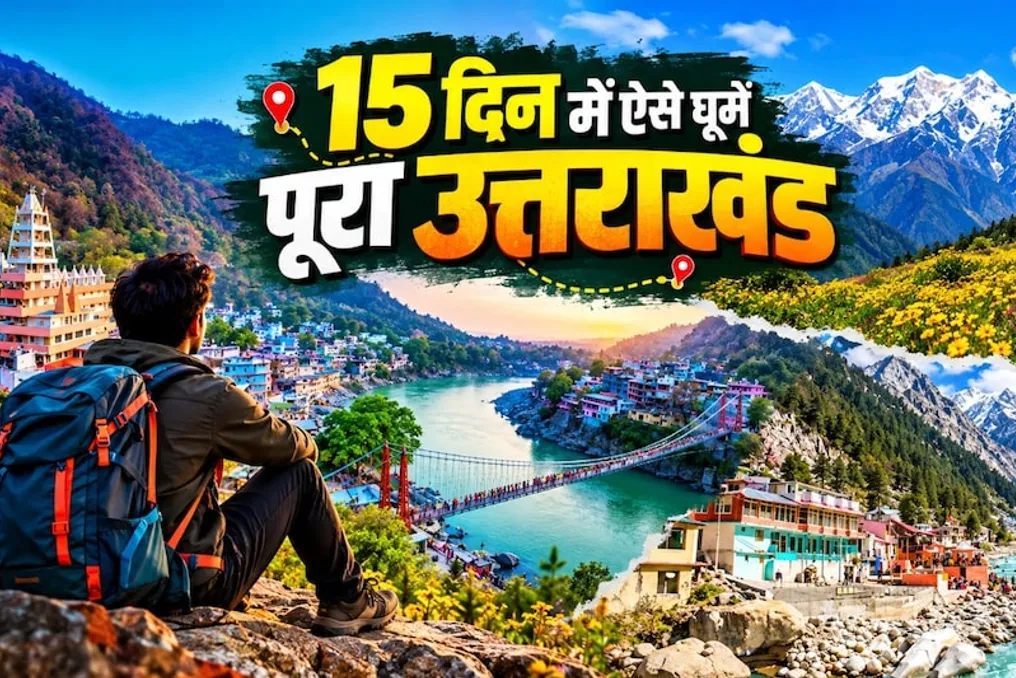
15-Day Uttarakhand Travel Plan: A Route from Haridwar to Nainital
Read more
www.aajtak.in

15-Day Uttarakhand Travel Plan: A Route from Haridwar to Nainital

If you wish to escape the daily hustle and bustle and spend time in the mountains, you can plan a trip to Uttarakhand. Here, you will find high mountain ranges, lush forests, picturesque lakes, flowing rivers, and ancient temples. A distinctive feature of the region is the diversity of places to visit: adventure lovers can engage in trekking and rafting, while those seeking a peaceful retreat can enjoy nature by the lakes and in the mountains. With fifteen days, you can visit many beautiful spots in both Garhwal and Kumaon. Below is a plan on how to organize a 15-day trip to Uttarakhand and which attractions to include in your list.

15-Day Uttarakhand Travel Itinerary

The journey can begin in Haridwar, where you can watch the Ganga Aarti at Har Ki Pauri and visit nearby shrines. Afterward, you should proceed to Rishikesh to spend time on the banks of the Ganges, stroll through Ram Jhula area, and relax in a cafe. If the weather permits and you love adrenaline, you can also go rafting on the river here.

Days three and four are planned for visiting Mussoorie. Spending two days in Mussoorie allows you to walk along Mall Road, visit Company Garden, and see Kempty Falls. The city also has cafes and markets amidst the mountains that are worth exploring; it is recommended to arrive early in the morning to avoid crowds.

The fifth day is dedicated to traveling from Mussoorie to Dhanaulti and Kanatal. These places are famous for their green forests, mountains, and tranquil atmosphere, making them ideal for nature lovers. It is important to book a hotel or guesthouse in advance for accommodation.

Next, days six and seven are dedicated to Chopta and Tungnath. Chopta is considered one of the most beautiful mountain locations in Uttarakhand, offering magnificent views of mountains and green fields. Depending on the weather and physical fitness level, you can plan a trek to the Tungnath temple. Before hiking, you must consult local guides and study information about the route and weather.

From the eighth to the tenth day, a trip is planned from Chopta to Joshimath, and then to Auli and Badrinath. Joshimath serves as the starting point for visiting Auli, known for its snow-capped peaks and beautiful mountain scenery; on a clear day, you can see the high Himalayan peaks. The next day, considering the time and road conditions, you can travel to Badrinath Dham and Mana village. In this region, you should proceed slowly due to the altitude and mountain roads.

Eleventh day is allocated for travel and rest after continuous mountain excursions. On this day, you can stay in a town like Karnaprayag or Rudraprayag located along the route. This will allow you to recover from the long journey and facilitate further travel.

On the twelfth and thirteenth days, tourists head to the Kumaon region, visiting Nainital. In Nainital, you can take a boat ride on Naini Lake, walk along Mall Road, and make a pilgrimage to Naina Devi Temple. It is also worth enjoying the local markets and surrounding hills; at Nainital, you should allocate at least one full day.

Fourteenth day is reserved for visiting Bhimtal and Sattal, located near Nainital. These places offer greenery and a quiet environment around the lakes, which is perfect for those who want to avoid crowds. In the evening, you can return to Nainital or stay in a neighboring town.

The last, fifteenth day, is dedicated to preparing for the return. If time permits, you can stop at a local market or a favorite spot on the way. Remember that traveling through mountainous areas can take more time, so you need to allow sufficient time for the return according to the train or bus schedule.

Important Things to Keep in Mind Before Visiting Uttarakhand

For a 15-day trip to Uttarakhand, it is best to choose the period from early April to June or from September to October. During these months, you can plan visits to Mussoorie, Rishikesh, Nainital, and other mountain areas. However, you must check the opening dates of temples such as Badrinath. In July and August, trips may be difficult due to heavy rains and landslides, so be sure to check the weather and road conditions before leaving.

Note: This 15-day itinerary is only a suggestion, including many places in both Garhwal and Kumaon. The journey from Joshimath to Nainital can take a significant amount of time, so you should research the route and estimated travel time before departure. Furthermore, before visiting the Char Dhams, high-altitude areas, and trekking spots, you need to learn about local rules, road conditions, and weather forecasts.

Popular