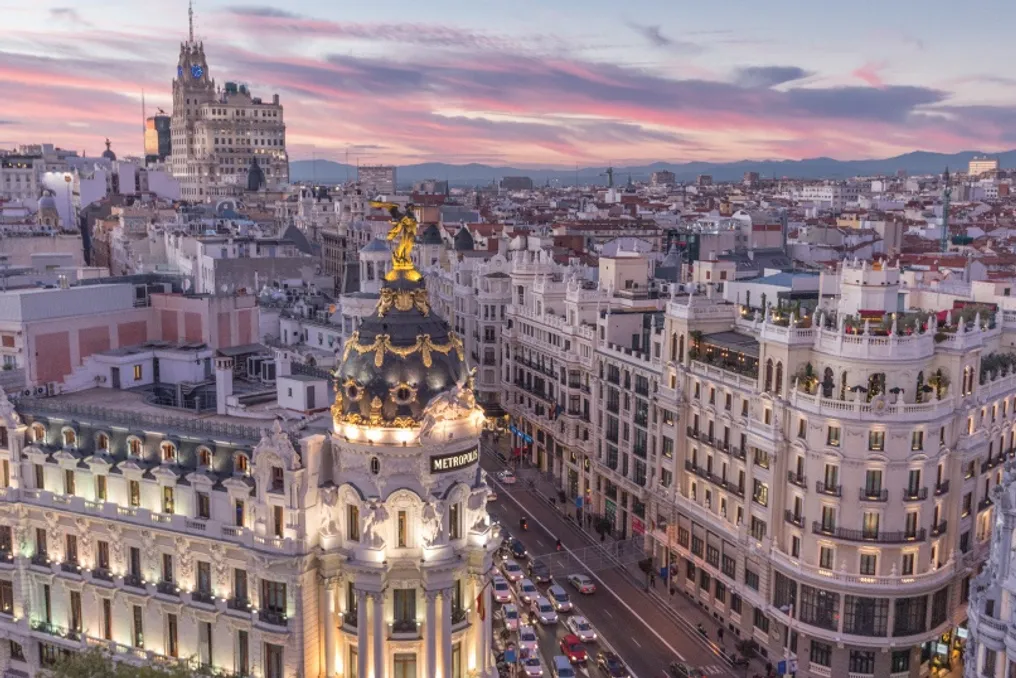
There are buildings that are part of the city, and others that become its own image. For over a century, the dome of the Metrópolis building occupied such a place in Madrid: it appears on postcards, in films, photographs, and travel souvenirs, marking the intersection of Alcalá Street and Gran Vía, one of the busiest avenues in the capital of Spain.
Now this building is gaining a new function with the opening of Metrópolis Hotel & Club. It transforms one of Madrid's architectural symbols into a space combining a hotel with 19 suites, a private club, gastronomy, wellness services, and a program related to the city's culture and social life.
History of the Metrópolis Building
The Metrópolis building was constructed between 1907 and 1911 for La Unión y Fénix Español, which was an old Spanish insurance company. The design was entrusted to French architects Jules and Raymond Février. This space appeared almost simultaneously with Gran Vía.
Its Neo-Renaissance architecture, rotunda with Corinthian columns, allegorical sculptures dedicated to trade, industry, agriculture, and mining, and above all, the slate dome with gold details, made it one of Madrid's most recognizable buildings.
Thanks to the renovation carried out by Grupo Paraguas, the building is now opening its doors to guests who can tour its interior and admire Madrid from the windows.
Metrópolis Hotel & Club features 19 suites, designed to ensure tranquility in a building located in one of the city's busiest spots. Gran Vía and Alcalá Street are outside. Within a few steps are Círculo de Bellas Artes, Triángulo das Artes, comprising the Prado, Thyssen-Bornemisza, and Reina Sofía museums, as well as galleries, restaurants, and other cultural spaces in Madrid.
Inside, the interior design project explores the relationship between the building's historical architecture and modern design. Noble materials, cozy textures, and works of art coexist with the structure of the early last century, while large windows provide panoramic views of the city.
Among the most exclusive rooms are the Circular Suites of about 80 m², whose geometry corresponds to the shape of the building's rotunda. The Cibeles Circular Suite, located on the fourth floor, and the Victoria Circular Suite, on the third, offer 360° panoramic views of Madrid. The largest room is about 117 m² and combines one of these circular suites with the Upper Suite, forming the Grand Suite 360º. Other configurations offer views of Alcalá Street or Gran Vía and share common features such as natural lighting and selected materials.
The hotel is part of a larger ecosystem. Club Metrópolis revives the tradition of social clubs, offering a modern concept that combines gastronomy, music, art, and social gatherings in spaces also available to club members. This means that part of the city's cultural life can be found right in the hotel. The program includes musical and artistic events, gastronomic and seasonal activities, private meetings, and personalized tours.
Personalization extends to the services provided. Suites may include a butler, airport or train station transfer, sommelier services, and private dining. The concierge can arrange everything: from cultural itineraries and priority access to city restaurants to personal shopper services.
The hotel boasts seven gastronomic areas distributed across different floors of the building. Among the restaurants is Tasca Fina, a modern interpretation of a Spanish tavern focused on the culture of shared consumption and quality ingredients. And Spa de Langostas offers an immersive dining experience where lobster is the main character of a menu inspired by the sea.
The variety of restaurants and bars allows Metrópolis to have various functions throughout the day. Breakfast, lunch, dinner, drinks, or late-night meetings are all part of the concept.
Metrópolis also has wellness areas, including a cosmetic treatment area and a fitness space equipped with Technogym equipment. Guests can also request personal training sessions, yoga, Pilates, and functional training.
In addition to its proximity to the main tourist attractions of the Spanish capital, the building is approximately 20–25 minutes away from Adolfo Suárez Madrid-Barajas Airport.