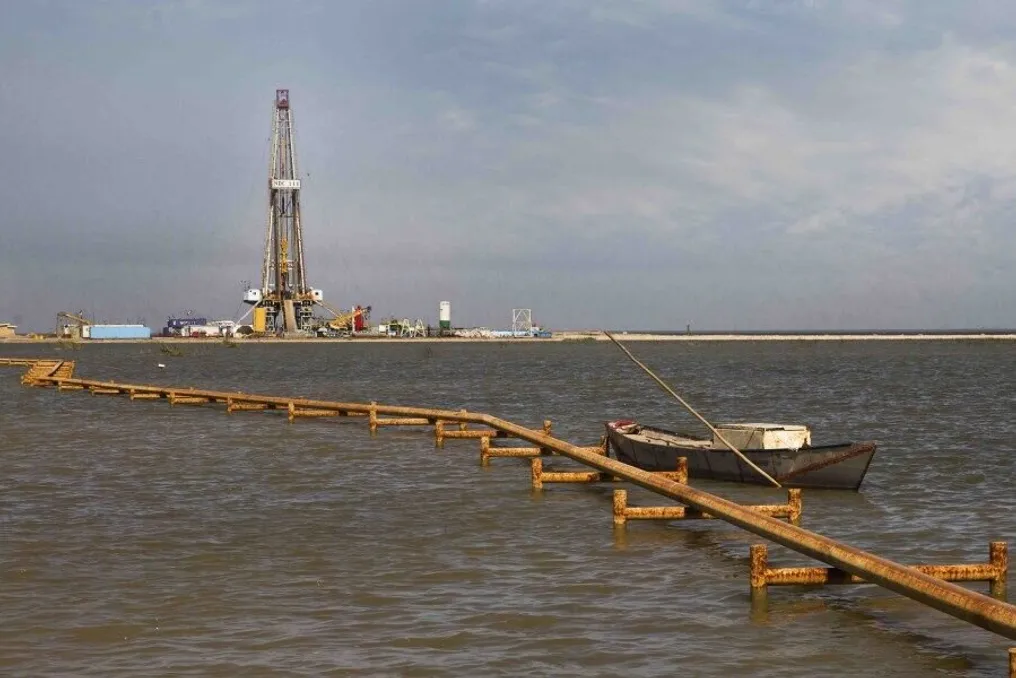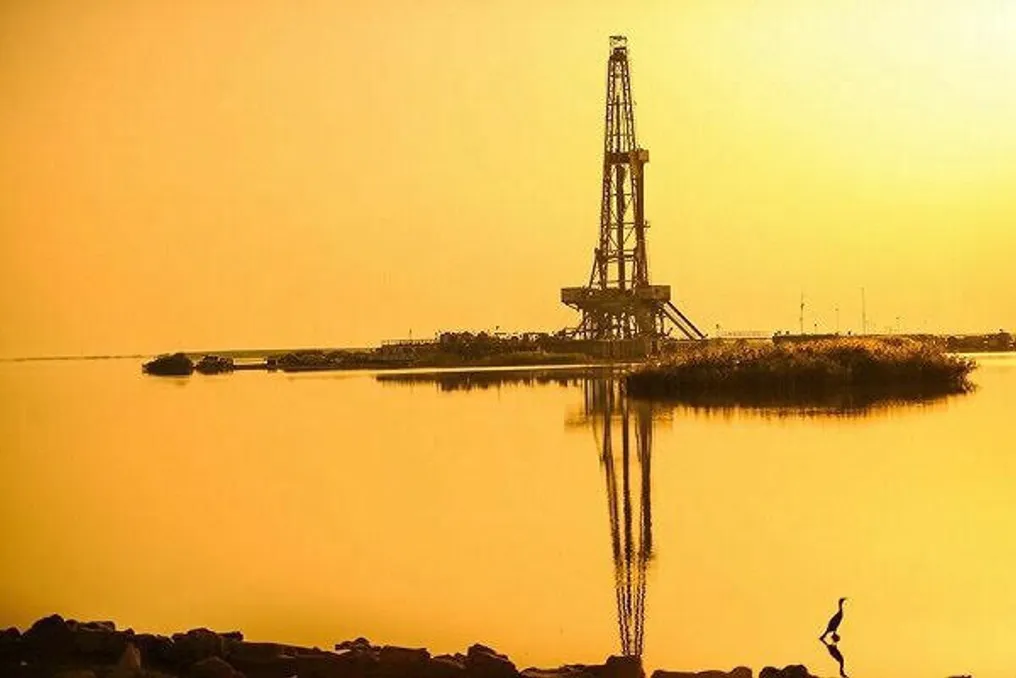
The completion of refining facilities in South Azadegan has increased the capacity of the West Karun complex and transformed the oil production process. According to Nachrichtenagentur Mehr reporter, the South Azadegan field, one of the country's largest and most strategically important hydrocarbon reserves, plays an indispensable role in ensuring energy stability, strengthening national production, and increasing foreign currency revenues.
This massive field in the West Karun region, due to its hydrocarbon reserves shared with a neighboring country, has always been a priority for Iran's oil and gas industry in terms of development and exploration projects. Recent events in the region demonstrate that despite all sanctions pressure and geopolitical complexities, the completion of the value chain—from the wellhead to the refining facilities—has opened a new horizon for significant growth in crude oil production in the country.
In this context, the full operation of the Central Petroleum Refining Complex (CTEP) in South Azadegan is considered a crucial milestone in creating sustainable infrastructure for maximizing the production potential of this strategic field, which has accelerated the oil and gas industry roadmap.
During the implementation of the first phase of development plans for the South Azadegan field, serious managerial and engineering steps were taken to significantly increase the recovery factor in this shared field. In this foundational stage, the drilling, completion, and commissioning of 203 oil wells were successfully completed, fundamentally organizing the field's production structure. The results of these large-scale measures led to a noticeable acceleration of daily production figures: oil production in South Azadegan increased from approximately 130,000 barrels per day at the start of the 14th government to over 183,000 barrels per day. Furthermore, at the time of transferring the project to a new contractor, the total oil production from the North and South Azadegan fields reached 237,000 barrels per day. This shift in course and upward trend in production proves the strategic importance of stabilizing engineering mechanisms and maximizing extraction from the shared reservoirs in West Karun.
The full operation of the Central Petroleum Refining Complex (CTEP) of the South Azadegan project, which includes four oil refining lines, has made this industrial complex the largest and most comprehensive crude oil refining center in the entire country, with a final capacity of 320,000 barrels per day. Before the completion of the initial lines, Lines C and D of the project, which started operating in Dey last year by presidential order, played an important role in the initial increase in production. The third line was launched on Esfand 29, 1403, and achieved stable operation on Ordibehesht 24, 1404, while the fourth line was launched on Azar 30, 1404, and began stable operation on Dey 4. The next step was the completion of the first and second lines (A and B), which began in Bahman 1404, accompanied by the successful installation of two super-heavy separators, each weighing 102 tons, with a diameter of 6.8 meters and a length of 33 meters. After pre-commissioning tests of the equipment and system coordination, following a four-day shutdown for integrating the control and safety systems of the first and second lines with the third and fourth, permission was granted to feed oil, and finally, on Mehr 19, 1405, the central center reached its full refining capacity of 320,000 barrels.
The completion of the South Azadegan central project is not just a local achievement; it is viewed as the mother infrastructure for the entire West Karun basin. With the commissioning of this center's capacity of 320,000 barrels per day, the cumulative ceiling for oil refining and exploitation in the West Karun fields has increased to an exceptional figure of 820,000 barrels per day. Due to its geographical location and advanced process design, this center plays a key role in the regional oil transportation, refining, and stabilization systems, providing a reliable and sustainable platform for developing the potential of other satellite and neighboring fields. Considering these achievements, the overall progress of the South Azadegan project exceeds 80 percent, and the documentation for the main section of onshore oil refining facilities has been finalized—an achievement gained through close interaction between the Oil and Gas Design and Development Company, the Petropars group, the client, subcontractors, and the country's technical and engineering bodies.
One of the most striking operational moments of the South Azadegan field development project was the uninterrupted and bold continuation of construction and engineering work amidst the extremely dangerous 12-day war and the third declared war. In circumstances where threats to the field could have led to project stagnation, there was no forced halt or reduction in production; development work continued at full strength. During these difficult days, about 30 drilling rigs operated across various fields under management; they were only suspended for about a week strictly for safety compliance, after which they quickly resumed operations. Even in international logistics, although sea transport for supplying a limited number of heavy loads, such as separators, faced short-term delays, project experts, using optimal risk management, did not allow this problem to stop progress; as a result, the first and second lines were completed without significant delays, and national production remained stable during a serious test.
The development of the South Azadegan field was not unidirectional; environmental requirements and optimal energy resource management are at the heart of its projects. The associated gas section is the final stage of the South Azadegan CTEP project, and all the energy of the executive agents is focused on its swift completion. According to the plan, installations for processing and compressing associated gas will be commissioned, and according to the official schedule, the first line of the gas sector will officially join the operational cycle by the end of the current year. With the full operation of the gas processing plants, this center will be able to collect 200 million standard cubic feet of associated gas daily and, instead of flaring it, send it to the NGL 3200 plant for purification and sanitary and industrial use; this action, in addition to creating significant economic value and supporting downstream petrochemical industries, will have a very positive impact on the atmosphere of the West Karun region.
Following the finalization of the first phase of development, South Azadegan entered the next stage with much broader goals. Starting in Ordibehesht (April), the second phase of the project for the entire Azadegan field (North and South) entered operational phases, including deep engineering studies, process design, major tenders, and the supply of heavy drilling rigs, modern well pumps, and modern well completion equipment. Parallel to field development, a balanced and multidimensional approach to development is being pursued in other West Karun projects, including the Sohrab field, where official environmental permits were issued after revising plans to reduce damage to the Hur al-Azim wetlands ecosystem, and work continues; or the West Karun power plant with a capacity of 435 megawatts, which, by supplying 100 megawatts to facilities, has provided about 300 megawatts of surplus and stable electricity to the national grid since 1400. Furthermore, doors for foreign investment remain open for further participation of Chinese companies in fields such as Yadavaran, and for signing development contracts with Russian companies in the Aban, Paydar Garb, Cheshmeh Khosh, Dalpari, and Paydar Shark fields—especially in the area of supplying well pumps—which places South Azadegan at the forefront of wealth creation, industrial independence, and technological synergy.