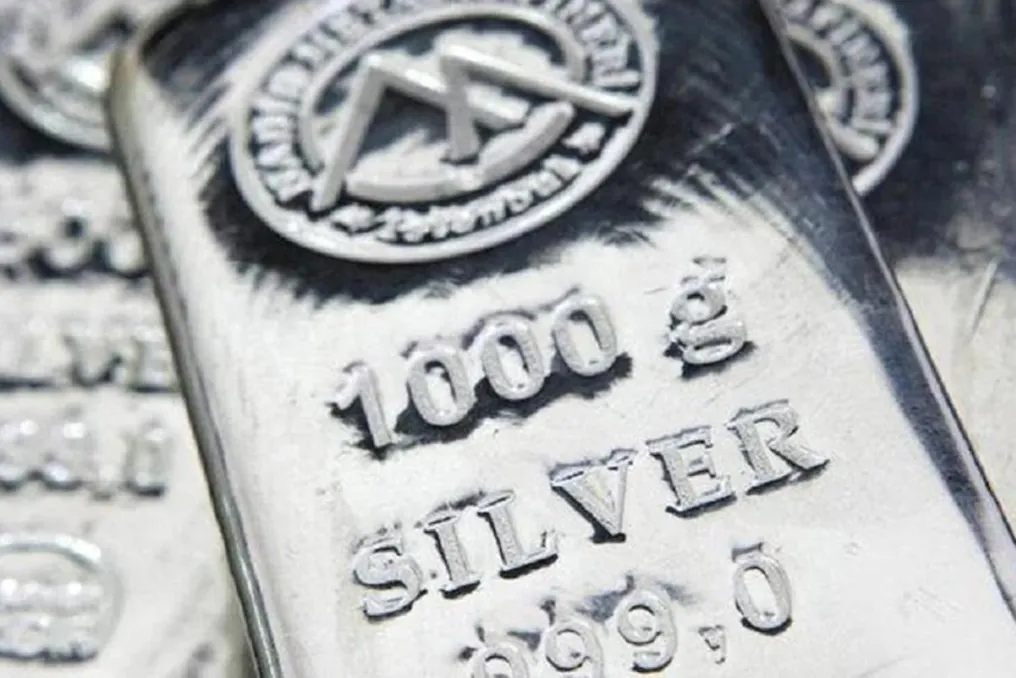
A significant decline in prices for gold and silver has been observed in the commodities and precious metals markets. A sharp drop in the value of both metals occurred on Friday, leading to a substantial decrease in silver prices and a rapid fall in gold.
On the MCX exchange, the price of silver is 178,900 rupees per kilogram. On Friday, the cost of silver decreased by 10 thousand rupees. Similarly, the price of gold fell to 1.38 lakh rupees for 24-carat gold, showing a decrease of 4000 rupees.
Previously, the price of silver on MCX reached a record high of 4.20 lakh rupees per kilogram in January, but it has now dropped to 1.78 lakh rupees. Thus, the total loss in the value of silver amounted to 2.42 lakh rupees.
On the IBJA website, the price of 999 purity silver reached 1.82 lakh rupees per kilogram. On Friday, a drop of more than 8000 rupees was recorded there. Over one week, the price of silver in the precious metals market decreased by 13000 rupees.
In India, silver coins are issued in various weights. However, coins weighing 10 grams, 20 grams, 50 grams, and 100 grams are most frequently purchased. Coins of larger weights are also available in the market, as well as a 5-gram coin; the 10-gram coin is the most common.
When purchasing a silver coin in the precious metals market, its cost may be as follows:
- Coin weighing 5 grams — 910 rupees
- Coin weighing 10 grams — 1820 rupees
- Coin weighing 20 grams — 3640 rupees
- Coin weighing 50 grams — 9100 rupees
- Coin weighing 100 grams — 18,200 rupees
It is important to note that the specified prices do not include any manufacturing charges or VAT. If the jeweler charges more money, you should clarify exactly which charges were added and in what amount.
According to the new silver stamping rules, effective from September 1, 2025, silver items with a stamp feature three elements: the standard BIS mark, the purity class, such as 999 purity, and a six-digit alphanumeric HUID code. Authenticity can be checked by entering the HUID code into the BIS Care application. Additionally, genuine silver can be tested by placing it on a magnet—genuine silver is not attracted by a magnet. If a coin sticks to a magnet, it may indicate that it is counterfeit or made of an alloy. Another method is to place a piece of ice on the silver; since it is warm, the ice will begin to melt quickly. You can also tap the silver coin against another metal coin; the sound will be clear and prolonged. Authenticity can also be determined by the weight and shape indicated on the silver.