Virtual Studio Project at the A Coruña Arms Factory by Diaz y Diaz Architects
Read more
ArchDaily Brasil
archdaily.com.br

Virtual Studio Project at the A Coruña Arms Factory by Diaz y Diaz Architects

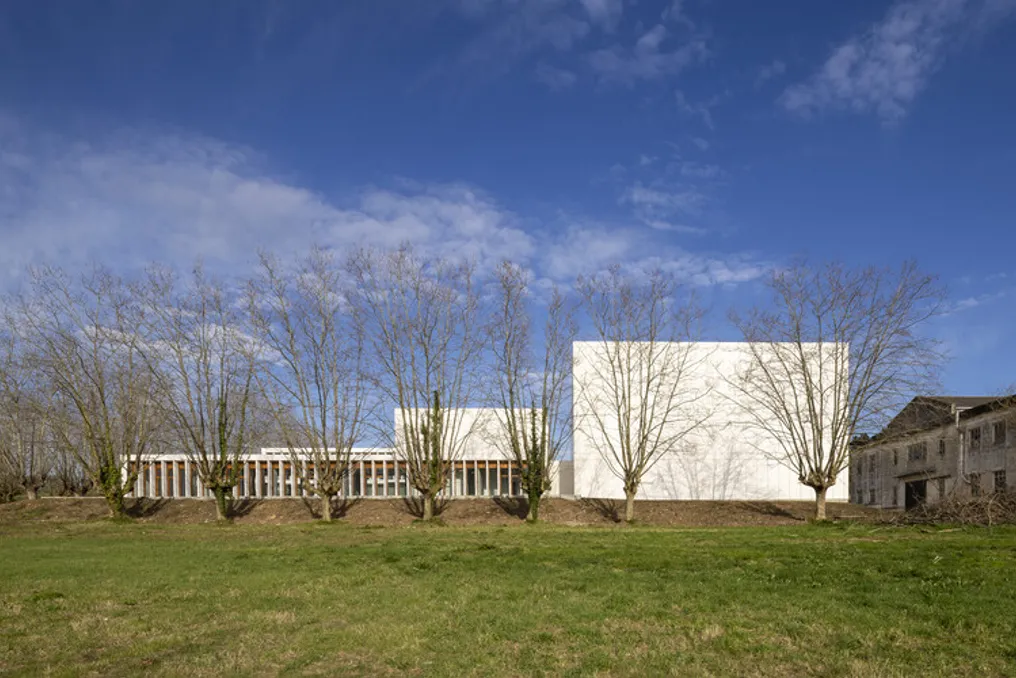
The design team provided a detailed description of the Virtual Studio located in the former A Coruña Arms Factory. This project translates into architectural terms a fundamental duality at the site.

This duality manifests through two contrasting elements: a hermetic structure, intended for creating digital environments, and an open body that establishes a direct dialogue with the natural surroundings and the industrial history of the site.

Similar stories

ACE Robotics and NTU S-Lab introduce Mundo—a world model for creating robot training scenes from photographs
Read more
pandaily.com

ACE Robotics and NTU S-Lab introduce Mundo—a world model for creating robot training scenes from photographs

ACE Robotics, in collaboration with S-Lab from Nanyang Technological University, has released Mundo—a world model capable of generating an interactive and explorable environment based on a small number of real-world images. This was reported by the Chinese news outlet Robot Pro on October 31.

The team asserts that Mundo can reconstruct a scene, display it from various angles, and simulate it over time, which allows for testing and training robots within a digital copy of a specific space.

According to the GitHub repository, the code and model weights will be available by the end of November.

How Mundo Works

Mundo accepts one to twelve contextual images and generates new views along a specified camera path. When using only a single image, the system extrapolates the visible style and structure to unseen areas, while increasing the number of images reduces uncertainty in unphotographed zones.

For large spaces, the model can generate camera movements lasting from tens of seconds to several minutes, selecting the most appropriate photographs for each segment and overlaying them to ensure consistency.

Technical Details of the Model

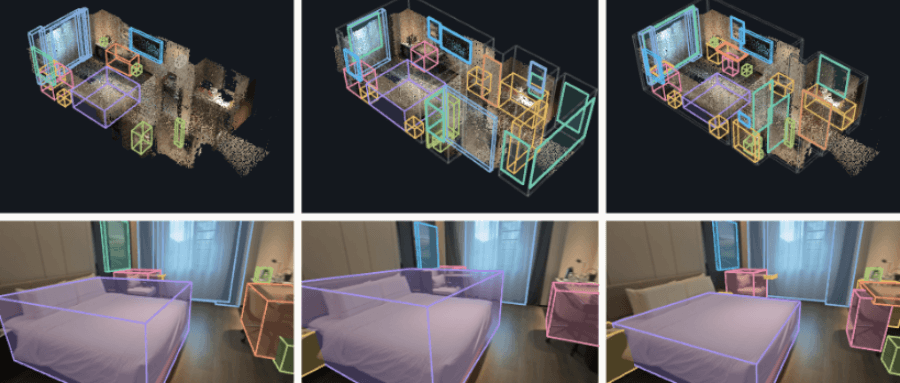
The core functionality relies on a three-dimensional fundamental model that reconstructs camera poses and dense geometry. Simultaneously, a 3D detector creates an initial bounding box for every major object. Since detectors may miss objects or inaccurately estimate their sizes, a vision-and-language-based agent edits the scene program, renders it from each input viewpoint, compares the result with the original photographs, and determines what needs correction. Concurrently, numerical optimization fine-tunes the position, size, and orientation of the boxes.

A separate verification agent monitors consistency without interfering with scene editing. The scene program records the name, pose, size, mass, and friction coefficient of each object. Scripts apply forces and actions, and the physics engine, currently MuJoCo, calculates motion, contact, and collisions. Finally, a video diffusion model visualizes the simulation in the style of the original shots.

The team refined the MiniMax reference-to-video model using approximately 40,000 paired videos of size 640x480, generating clips of 124 frames and reusing the last 34 frames from each clip to maintain continuity in long videos.

Use Cases and Limitations

Demonstrations include scenarios where robots navigate a recreated hotel floor, open a washing machine in a laundry room, place an apple in a bowl, and stack blocks, utilizing views from head and wrist cameras, as well as recorded trajectories.

The team clearly outlined the system's limitations: the reconstruction process takes between 10 and 20 minutes, rendering is performed at approximately 1.5 frames per second on eight A800 GPUs with 20 inference steps. It was also noted that small objects might appear to float, and there is no long-term memory for scenes that change over extended periods.
Jiang Guanjun from the Qwen team presented a personal agent framework based on models, memory, and ecosystem
Read more
pandaily.com

Jiang Guanjun from the Qwen team presented a personal agent framework based on models, memory, and ecosystem

The Qwen team from Alibaba described the process of creating a personal agent, asserting that the next stage in the development of AI assistants depends on the coordinated operation of three components: the model, memory, and service ecosystem. Jiang Guanjun, Head of AI Algorithms Department in Qwen Alibaba's business unit, presented this concept on October 22 at the China National Computer Congress (CNCC) in Chengdu.

Jiang divided the evolution of AI applications into three stages: chat, agent, and assistant. In the chat stage, AI responds to user queries. In the agent stage, the system performs assigned tasks. The assistant, which he says is where the industry is heading, combines professional knowledge with the user's personal context, plans actions around the user's goals, and detects needs they have not noticed. He emphasized that a true personal agent must provide added value and offer proactive, individualized service.

He suggested that theoretically, a personal agent is capable of solving almost all daily problems in work, study, and personal life. However, the main obstacle is the system's ability to correlate its capabilities with the optimal path to solving each specific problem.

Model Development Approach

Regarding the model, Qwen focuses on stable task execution. The team developed what is called a user needs map covering over 30 major industries and detailed it down to more than 8000 atomic requirements for the model's capabilities. Industry experts were involved in evaluating and tuning the model.

Memory Mechanism

Jiang noted that a personal agent must ensure long-term understanding of the user, avoiding the simple accumulation of chat history, which increases noise and computational costs. Qwen constructs its memory based on the degree of event interconnectedness, storing and retrieving them at various levels. For example, an assistant that remembers an elderly user mentioned their pension can give more relevant advice when the same family later asks about finding a job for a child.

Role of the Ecosystem

Concerning the ecosystem, Jiang stated that as models and management methods improve, the ability to link and coordinate external services becomes crucial. Qwen creates a model-oriented open service ecosystem that integrates professional knowledge, tools, industry skills, and third-party agents, while also connecting to e-commerce, local services, healthcare, and education.

In his view, these three elements combine to provide proactive service: memory provides personal information, the model uses expert knowledge to determine needs and plan, and the ecosystem executes the work, such as tracking a patient's rehabilitation schedule or alerting to new financial risks for the user. This report represents the most detailed public description of the technical concept behind the Qwen Go! personal agent, which Alibaba opened for registration this month.

Popular