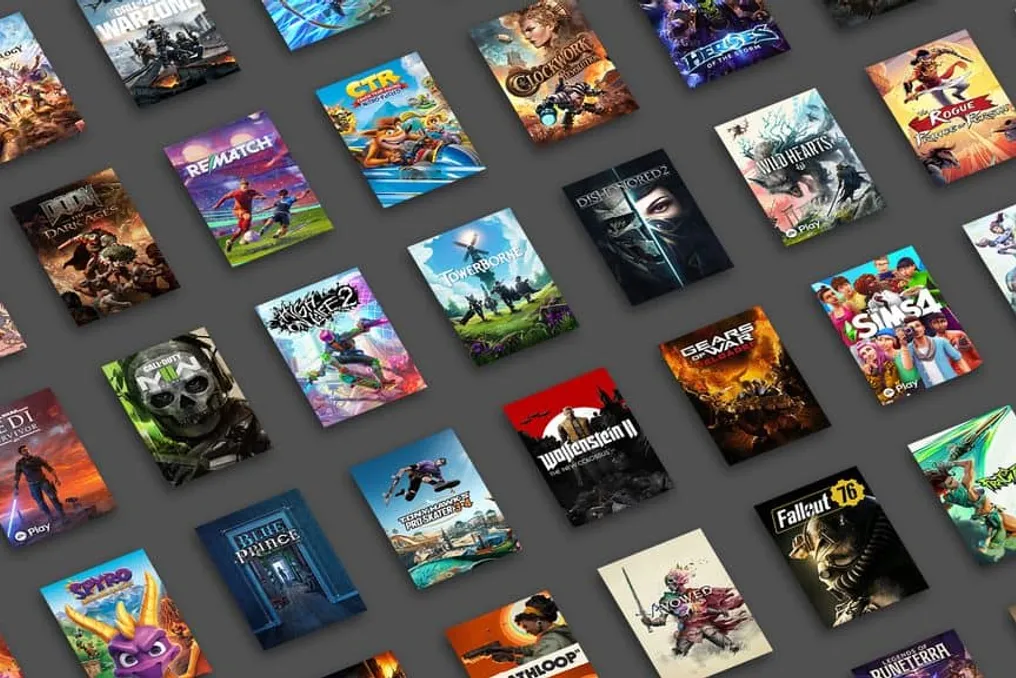
Xbox Game Pass has significantly changed how consumers access video games, allowing subscribers access to a vast catalog that includes both independent productions and major releases, instead of needing to purchase each title separately.
Although this proposition is very attractive to the consumer public, the situation presents greater complexity for those who develop and publish games. The question arises whether including a title in a subscription service serves to broaden the audience or ends up harming direct sales.
This debate gained prominence in 2023 when documents provided by Microsoft to the British competition authority (CMA), during the investigation into the acquisition of Activision Blizzard, indicated that the company itself observed a decrease in sales of certain games after their integration into Game Pass.
According to the records presented to the CMA, internal analyses conducted by Microsoft pointed to a drop in specific game sales in the twelve months following their addition to the service. The exact percentage of this drop was not made public.
This finding diverges from previous statements made by Phil Spencer, head of the Xbox division, who argued that the availability of games in the catalog could actually boost their popularity and stimulate sales.
However, the two scenarios are not mutually exclusive. It is possible for a game to attract new players and gain notoriety initially but register a lower volume of individual purchases over time.
The effect of this model is also influenced by factors such as the size of the studio, the terms of the contract established, and general public behavior. For independent studios, platforms like Game Pass function as a showcase, enabling them to reach players who would otherwise not buy the title individually.
Conversely, there is the risk that some of this audience will refrain from purchasing the game, particularly when it is released directly on the subscription service. Furthermore, the model involves financial considerations; depending on the agreement reached, the revenue generated for the developer may offset the reduction in conventional sales, while in other situations, the participation may be less beneficial.
Thus, there is no definitive answer regarding the benefits that subscriptions bring to the industry. Despite the controversies, Game Pass has not replaced traditional video game purchases, keeping both models coexisting and offering distinct ways to access the same products.
For players, subscriptions represent savings and the chance to try unknown titles. For studios, the decision to participate requires a careful evaluation of reach, potential revenue, and possible effects on sales.
Therefore, the discussion transcends the simple classification of Game Pass as good or bad; the core issue lies in determining whether a model that benefits the consumer can simultaneously be sustainable for game producers, with this answer varying considerably from one release to another.