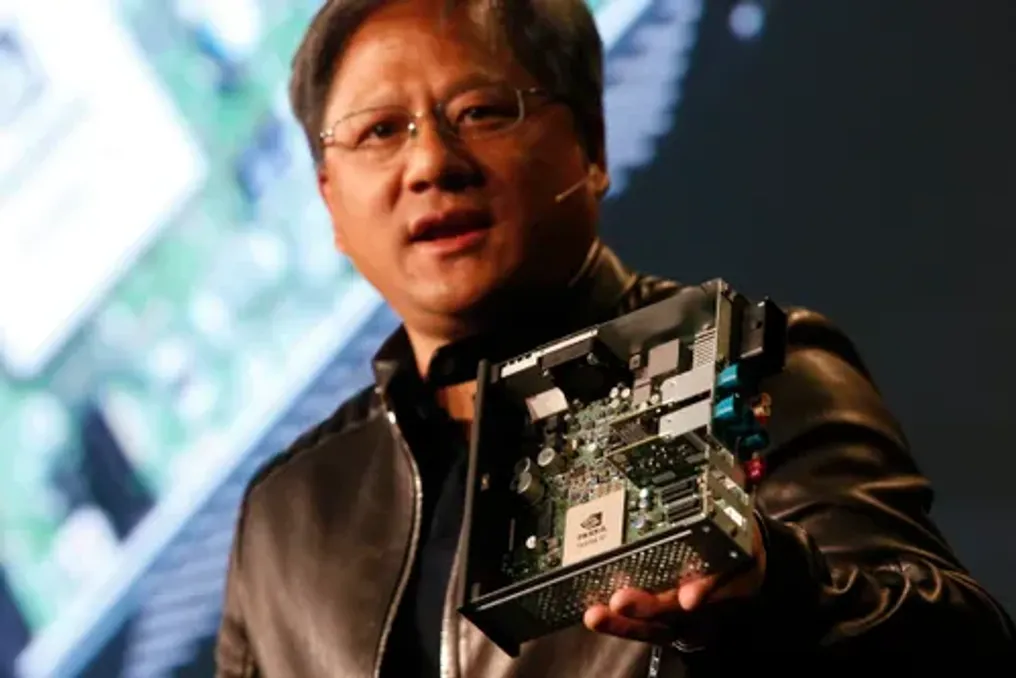
Nvidia, having invested $3 billion in Meta stock sales, continued to expand its portfolio, which includes equity stakes, loans, and guarantees. Through these actions, the semiconductor giant has acquired a status that some analysts call the central bank of artificial intelligence stocks.
This complex set of deals helped maintain high demand for Nvidia processors, which are a key component of the AI revolution and power vast data centers worldwide. This high demand has made Nvidia the most valuable company in the world by market capitalization, and CEO Jensen Huang—a major player in the AI sector.
However, these investments have raised concerns among some Wall Street skeptics regarding whether Nvidia is contributing to an AI bubble.
In What Projects Is Nvidia Investing?
Nvidia has acquired stakes in leading AI developers such as OpenAI, Anthropic, and Elon Musk's xAI, which is now part of SpaceX. The company has also invested in so-called 'neo-cloud' companies, including CoreWeave and Nebius, which provide computing power built on Nvidia chips.
Nvidia's investments extend beyond the United States. In Europe, the company supported the French AI developer Mistral and the British autonomous driving startup Wayve. In Asia, Nvidia is collaborating with the South Korean group SK Group to build data centers.
Beyond equity investments, the company has provided financial guarantees, acting as a backstop buyer. In the case of CoreWeave, Nvidia committed to purchasing up to $6.3 billion of unused computing power if another client did not take it. Furthermore, according to US media, Nvidia holds about $36 billion in cloud service guarantees and a guarantee of up to $105 billion related to the OpenAI data center.
Why Is Nvidia Taking These Steps?
Experts suggest that Nvidia's massive profits leave it with no other attractive options. Michael Kusuman, a professor at MIT Sloan School of Management, noted that the company is 'essentially becoming a bank,' and directing these funds toward infrastructure investments tied to purchasing Nvidia hardware is a sensible decision because alternatives are less appealing.
Kusuman added that building its own data centers would put Nvidia in competition with its largest customers, which could trigger numerous antitrust complaints. Gil Luria, head of technology research at D.A. Davidson, believes that Nvidia is identifying underserved segments of the AI ecosystem and channeling funds there to fill gaps. He stated that this is 'unprecedented, but it seems to be working.'
Huang defended this approach, arguing that cutting-edge AI labs represent a first generation of startups that require not millions, but tens of billions of dollars to get started. Nvidia's investments effectively give these companies more time to succeed.
Is This 'Circular' Financing?
Critics compare these deals to the dot-com era, when companies artificially inflated growth by investing in startups that subsequently purchased their products. Paulo Carvalho, a senior fellow at Harvard Kennedy School, noted that 'there is nothing inherently wrong with Nvidia helping its customers,' but he stressed that the closer these relationships, the harder it is to assess true sustainable demand.
Luria countered that not all demand is equal. He explained that 'if Nvidia gives CoreWeave money so it can turn around and buy Nvidia chips, it is not as good as if Microsoft buys Nvidia chips, because they have a customer in OpenAI who has a customer in enterprise technology ready to pay for it.'
What Are the Risks?
The main issue is concentration. According to the company's annual report, two direct customers accounted for 22% and 14% of Nvidia's revenue in its 2026 fiscal year. Carvalho warned that a network of overlapping investments increases contagion risk if a weak company, such as CoreWeave, encounters difficulties.
He suggested: 'If AI demand disappoints, cost reductions could simultaneously affect chip manufacturers, data center builders, and their financiers.'
These concerns intensified this month when shares of several Nvidia-related neo-cloud companies, including CoreWeave, Nebius, and IREN, dropped by at least 30% in October amid fears of tightening credit for AI projects.
Carvalho noted that the AI chip market remains supply-constrained. He predicted that demand will continue to grow for another 12–18 months before stabilizing. Kusuman expects high demand for Nvidia chips to persist for three to five years.