
Former Microsoft engineer leaves company for AI startup, misses out on 1.5 million payout
Read more
Aaj Tak
www.aajtak.in

Former Microsoft engineer leaves company for AI startup, misses out on 1.5 million payout

Deciding to forgo a high-paying job for one's own business is a difficult step, especially when it turns out that staying a little longer could have brought in a significant sum of money after leaving. Atishay Jhin, a former software engineer at Microsoft, faced this situation. He left the company to create his AI startup, but shortly after his departure, Microsoft introduced a voluntary separation program that could have earned him around 1.5 million rupees.

Despite losing this amount, Atishay does not regret his decision. Previously, Atishay Jhin worked at both Microsoft and Nutanix. Last month, he left Microsoft to dedicate himself fully to his AI project, ScaleWorks AI.

Atishay shared in a LinkedIn post that he made the decision to leave too hastily, quitting a month earlier than planned. If he had stayed with the company for one more month, he could have received about 1.5 million rupees under Microsoft's voluntary separation offer. He noted that these 1.5 million rupees were offered in exchange for leaving the very job he had already decided to quit. Although the loss of this amount disappointed him, he emphasized that he does not regret his decision to leave the job.

Atishay also mentioned in his post that his startup, ScaleWorks AI, has achieved significant success in its first month after his departure. According to him, the startup officially became a member of the OpenAI partner network. Furthermore, he managed to get into the global freelancer network Toptal. Atishay believes that now, with the time freed from work, he can focus entirely on developing his startup, allowing him to work on his ideas faster.

In his post, Atishay questions whether he lost 1.5 million by leaving a month early or gained an extra month to pursue his dream. In his opinion, only time will provide the answer to this question. In conclusion, he asked to be asked about this decision in two years. His story serves as an example for those willing to take risks, leaving stable employment and guaranteed salary for their own venture. Nevertheless, startup success is not guaranteed, and such decisions always involve financial risks.

Similar stories

CM Yogi recounted the police's helplessness against land mafias
Read more
www.aajtak.in

CM Yogi recounted the police's helplessness against land mafias

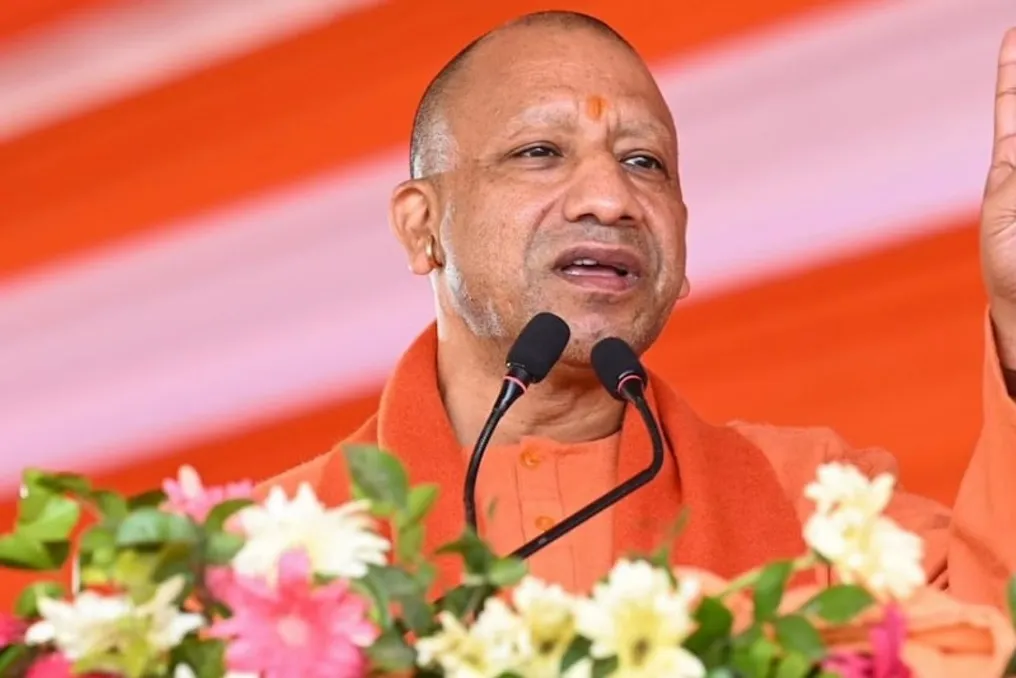
Uttar Pradesh Chief Minister Yogi Adityanath made significant remarks on the use of Artificial Intelligence (AI) during the 'TechSangam 2026' event held in Lucknow. He stated that while AI can be helpful, it should not be the final decision-maker. The Chief Minister also highlighted controlling criminals through technology and the expansion of forensic facilities in the state. On this occasion, he shared an incident of a land mafia who had registered government land in his name, and at that time, the police situation was extremely pitiable.

At the 'TechSangam 2026' event at the Uttar Pradesh State Institute of Forensic Science (UPSIFS) in Lucknow, Chief Minister Yogi Adityanath spoke about the importance of Artificial Intelligence, cybersecurity, and forensic science. His view was that technology should be used to improve human life, but humans should not become completely dependent on technology.

Chief Minister Yogi Adityanath emphasized that 'Artificial Intelligence can be our assistant, but AI should not be our decider. We must follow our own judgment, not AI's judgment. If we start doing everything by depending entirely on it, that power itself can become a threat to us.' He mentioned that currently, discussions are happening on AI and modern technologies in Lucknow, whereas ten years ago, imagining such events in Uttar Pradesh was a dreamlike idea.

The Chief Minister also referred to the land on which the Uttar Pradesh State Institute of Forensic Science is currently established. He explained that initially, this land was in disarray. A land mafia had manipulated documents to register this land in his name. Yogi Adityanath stated that he was informed of this matter by the then DGP of Uttar Pradesh. He said that even the world's largest civil police was helpless against the land mafia.

According to the Chief Minister, he requested the file related to the DGP and investigated the matter. Subsequently, an FIR was registered. When the accused reached the High Court, another FIR was also registered. Eventually, the person surrendered and started apologizing.

The Chief Minister explained by giving the example of the popular TV serial CID that five family members used to watch this show together. This show depicted how doctors could reach the culprit by examining a person's death, such as hair or nails. He mentioned that such examination was not possible at that time, but today, this work is being done through modern forensic technology. With the help of science and technology, it has become difficult for criminals to escape.

Chief Minister Yogi Adityanath gave an example of a mafia who committed his first crime in Uttar Pradesh in 1980. When his government took action against him in 2017, he was sent to Punjab. He mentioned that it took three years to bring that mafia back from Punjab to Uttar Pradesh, for which the government had to go to the Supreme Court. According to the Chief Minister, finally, after an interval of 42 years, that mafia received punishment.

The Chief Minister also stated that previously, adequate facilities for forensic investigation were not available in Uttar Pradesh. DNA samples used to remain in the waiting list for ten years for testing. Due to the lack of timely availability of scientific evidence, the accused would escape legal consequences. He informed that now, 12 forensic laboratories are ready in the state, and more than 150 forensic vans are available. Samples can now be tested with the help of modern means and reports can be presented before the court.

The Chief Minister further stated that before 2017, there were only two cyber police stations and four forensic laboratories in Uttar Pradesh, and the conviction rate was less than 30 percent. Currently, cyber police stations are established in all 75 districts of the state, and work is progressing towards establishing a forensic laboratory in every division. He concluded that 'TechSangam 2026' is discussing topics such as AI, cyber forensics, quantum technology, and data protection. The goal of this event is to connect technological innovation with citizen safety, a robust judicial system, and new opportunities for education, research, and employment for the youth.

Using AI in Resumes and Candidate Screening: The Problem of Human Factor in the Hiring Process
Read more
www.aajtak.in

Using AI in Resumes and Candidate Screening: The Problem of Human Factor in the Hiring Process

Job applicants spend time improving their resumes, tailoring cover letters to job requirements, and matching their skills with company needs. After submitting documents, there is often a period of silence, after which they may try again or use artificial intelligence to enhance their application.

On the other hand, recruiters can use AI to analyze hundreds of resumes. Since candidates strive to stand out, and companies want to quickly find a suitable person, the use of the same technology is growing both in the application process and in hiring, turning this procedure into a machine versus machine competition.

AI is capable of simplifying the job search for applicants by helping write resumes, prepare applications, and practice for interviews. However, a rapid increase in the number of prepared applications does not guarantee an increase in their quality.

According to a September 2025 report, one applicant sent 87 applications in a month using AI. Errors were found in these documents, such as incorrect company and job titles. The report warns that AI-generated materials without verification can harm candidates.

When applicants apply for numerous vacancies, the volume of incoming applications for companies increases. Although automated screening seems useful for companies, the question arises as to which candidate will be paid attention to in this process.

Monitoring systems allow companies to organize resumes and find candidates whose experience matches the job requirements. Nevertheless, if the candidate's necessary competencies are described in words that the system does not recognize, they may be ignored.

A October 2025 report details how monitoring system tools match resumes with job requirements. The risk is not limited to missing keywords.

In May 2024, concern was raised that qualified candidates might be rejected by automated hiring systems, with the report emphasizing the need for human oversight.

If the rejection decision is made solely by software, a suitable candidate will never reach the recruiter, and the applicant will not know the reason for rejection.

This pressure is not limited to India. A BBC report mentioned a 22-year-old geography graduate from Medstone, UK. Before getting a restaurant manager position, he submitted over 200 applications. He noted that AI helped in processing applications, but the entire process was exhausting.

Business Insider reported that Google integrated AI tools, including Gemini, into some software development interviews. During these interviews, candidates' ability to understand code and work with AI was tested.

These examples show that applicants are using AI for job searching, while companies expect them to demonstrate AI-related skills. This raises the question: will the technology make the hiring process more efficient or add another level of competition?

Even after submitting an application, applicants may wait without knowing whether their application is being considered. According to a September 2026 report based on the Indeed hiring confidence index, 29% of Indian applicants reported that lack of response after applying is their biggest problem.

The study involved 1073 applicants and 735 employers from India. Simply speeding up screening will not solve this problem; candidates also need clear information and the ability to track the status of their application during the hiring process.

The task for applicants is not to send template applications when using AI and not to claim non-existent skills. The task for companies is not to consider recommendations from fully automated technologies as the final solution.

AI can help candidates better present their experience, and recruiters can manage workload. However, an attractive resume and quick screening do not guarantee that a suitable candidate matches the right job.

For a person waiting for a response after applying, the most useful change will not be a new tool to speed up applications, but a more transparent and impartial hiring process that can identify the person behind the resume.

Founder claims ability to save 10 million rupees on hiring using AI; met with 11 candidates in a week
Read more
www.aajtak.in

Founder claims ability to save 10 million rupees on hiring using AI; met with 11 candidates in a week

Finding candidates for vacancies and establishing contact with the right specialists is a complex task for companies, especially when dealing with senior management positions such as vice presidents or C-suite roles, as this process can require significant time and financial investment. However, artificial intelligence (AI) is beginning to transform certain aspects of this process and provide support.

An example of this change is actively being discussed on social media: one founder stated that he managed to save about 10 million rupees on hiring by utilizing AI tools. In a post published on the X platform, Aditya Kulkarni shared the experience of a founder who was involved in searching for personnel for senior positions.

According to Kulkarni's message, the founder used tools such as Claude, Apollo, and Instinct to accomplish this task. The first step involved using Claude to analyze public reports from relevant funds over the past five years to identify potential candidates and their professional background.

Subsequently, Apollo was used to gather the candidates' contact information. Then, the process of further interaction and scheduling meetings was carried out using Instinct. Thus, AI tools were engaged at several stages—from candidate sourcing to meeting coordination. According to the post, the founder met with 11 candidates within one week.

Kulkarni explained that the founder was closing three positions, including vice president and C-suite level roles. The post mentioned that traditional recruitment agencies can charge a commission reaching 30 percent of the salary for such positions. According to the statement, the total salary base for these positions exceeded 10 million rupees, which could have led to very high recruitment costs. The founder claimed that AI helped avoid these expenses.

Nevertheless, it should be noted that the figure of 10 million rupees is merely a claim made on social media. Furthermore, the material lacks convincing information regarding the quality of candidates selected using AI and a comparison with candidates found through traditional recruitment agencies.

This case raises the question of whether AI is capable of reducing companies' personnel costs. AI tools can be useful in the initial stages of candidate search, checking public records, gathering contact information, and scheduling meetings. However, assessing a candidate's actual abilities, experience, leadership qualities, and suitability for the role remains critically important. Simply obtaining contact details or scheduling an interview does not guarantee successful hiring.

Popular