Amid pressure from the United States and China, the European Union and Canada are preparing a series of agreements for Friday aimed at strengthening ties between them to an unprecedented level. These agreements cover critical minerals and artificial intelligence technologies.
On the second day of the summit, which also includes talks between Canadian ministers and high-ranking EU officials, EU President Ursula von der Leyen and Antonius De Micheli will meet with Mark Carney from Canada in Montreal.
Carney noted that 'recognizing our values and the ability to work together has never been more important,' emphasizing that Brussels and Ottawa face a 'rift in the global system.' Despite an existing free trade agreement, both partners seek closer cooperation after Donald Trump's return to the White House altered relations with traditional Washington allies.
Both Canada and the EU have faced threats in the form of tariffs and territorial risks.
Strengthening EU-Canada Cooperation: Critical Minerals and Infrastructure Investment at the Montreal Summit
Ursula von der Leyen stated at the event, organized by a research institute in Montreal on Thursday, that 'we both want to take our relationship to the highest possible level.' According to Carney, this implies enhancing interaction across all strategic sectors.
Critical minerals are a central theme of the summit, as they are essential for 'green' technologies such as wind turbines and batteries. Europe primarily sources these resources from China, but they are abundant in Canada. Nevertheless, Canada requires significant investment in infrastructure to stimulate its mining industry.
An agreement is expected to be presented at the summit allowing the European Investment Bank to support Canadian critical mineral extraction projects.
AI Cooperation
Brussels and Ottawa also intend to join forces in artificial intelligence, where they lag behind the United States and China. Von der Leyen explained that 'our industries are increasingly dependent on access to these technologies. And when this access depends on a few large companies, decisions made elsewhere can jeopardize our business and essential services. That is why we are uniting.'
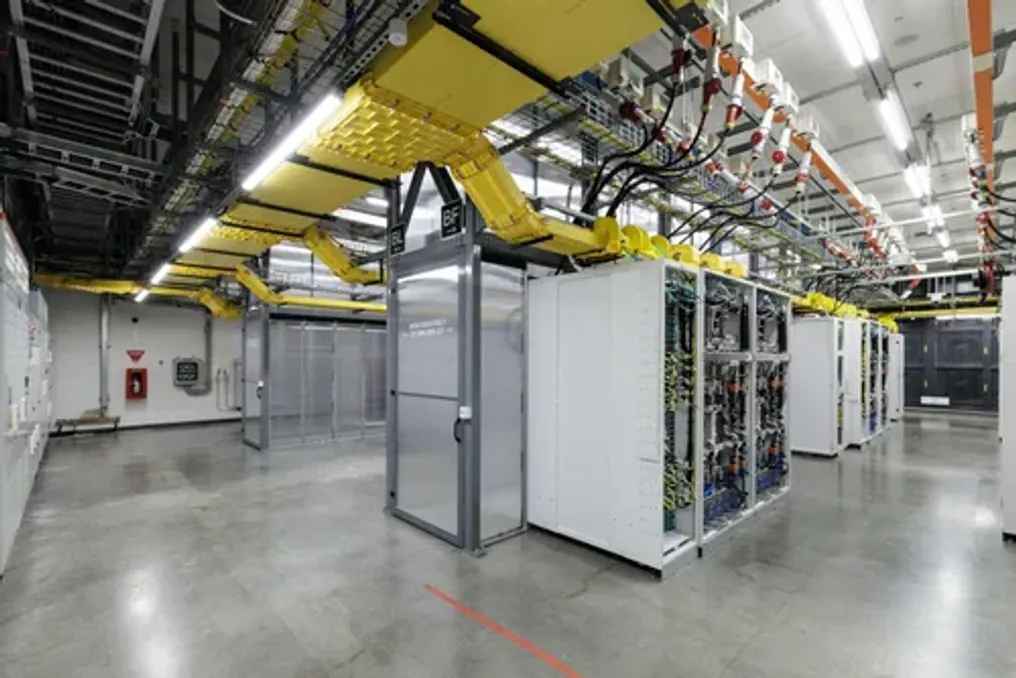
She added that Europe will provide its supercomputing infrastructure to Canadian researchers, industrialists, and startups. On Thursday, Ottawa announced investments of $1.6 billion CAD ($1.1 billion USD) in the Canadian firm Cohere. This company recently partnered with German Aleph Alpha, which Carney believes is an example of what Europe and Canada can achieve together.
Carney stated: 'We are not waiting for the future of AI to be decided elsewhere by people we do not know or trust.'
A digital trade agreement is also expected to be presented in Montreal, which will ensure faster and cheaper online transactions. The summit will further lay the groundwork for Canada's participation in EU initiatives, such as the Erasmus youth program, which allows university students to spend a semester abroad, and the Galileo satellite program, which serves as an alternative to the American GPS system.
The new alliance between the EU and Canada was not well received in Washington, with Trump calling the idea 'ridiculous' and an 'act of hostility.' However, Carney attempted to reassure his southern neighbor on Thursday, stating that the United States could also benefit from diversifying Canada's ties.