Cape Town Photographer Documents Culture of Huni Kuin People in Brazilian Amazon
Read more
IOL
iol.co.za

Cape Town Photographer Documents Culture of Huni Kuin People in Brazilian Amazon

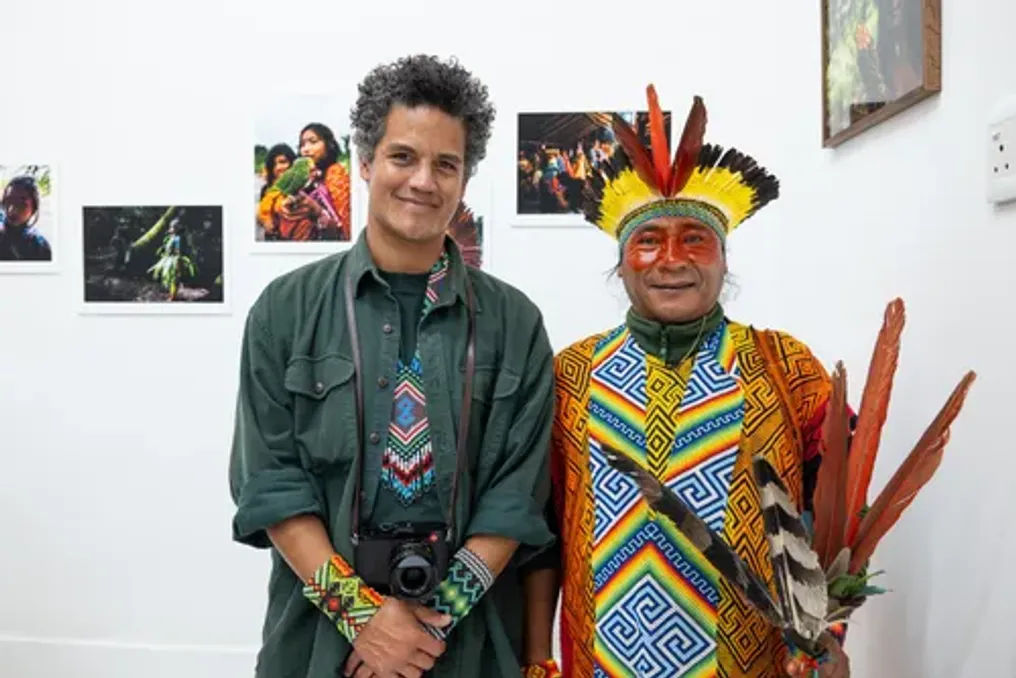
An exhibition of photographs created by Cape Town photographer Gary Van Wyk offers a deep dive into the life, culture, and spiritual traditions of the Huni Kuin people living in the Brazilian Amazon. This people are closely tied to their identity with the forest environment.

The exhibition, titled 'Novo Futuro: The Huni Kuin of the Amazon,' marks the first time Van Wyk's work has been displayed. His shots were taken through establishing trusting relationships and shared experiences during a visit to a Huni Kuin village in the state of Acre, in the Brazilian Amazon.

The main goal of the project is to go beyond formal portraits, capturing personal moments and connections between people, their ancestral knowledge, and nature.

Van Wyk made contact with the Huni Kuin people through a mutual acquaintance who invited him to meet with the community's spiritual leaders. Following this, he was invited to visit the village, where he spent about twelve days. This experience formed the foundation for the exhibition, which aims to convey the community's stories through photographs shaped during the interactions.

Van Wyk stated that this work is intended as a gift to the people he photographed. He emphasized that he wants the images to carry the energy and beauty of the Huni Kuin beyond their village, helping viewers learn about these people and their role in protecting the Amazonian nature.

When discussing the inspiration for documenting the Huni Kuin people for 'Novo Futuro,' Van Wyk explained that he met them through a mutual friend who invited him to meet with the spiritual leaders. Then, at the leaders' invitation, he visited the village and stayed in the Amazon for almost twelve days. This experience defined the exhibition.

In response to the question of how the exhibition can establish a meaningful connection between the audience and the Huni Kuin people, Van Wyk repeated that it is 'a gift to the Huni Kuin people, a special gift from every person in the village.' He added that it is important for his works to transmit the energy and beauty of the Huni Kuin, bringing them to people so they can recognize and see these people who protect nature from the depths of the Amazon.

For the Huni Kuin people, the forest is more than just a place to live; it is central to their worldview, culture, and spiritual life, which is reflected in all of Van Wyk's photographs. The exhibition explores how the community honors its ancestors and maintains a connection with the surrounding world.

At the opening event, the Huni Kuin spiritual leader Ninawa Pai da Mata performed traditional music and sacred chants, allowing visitors to experience elements of the community's living cultural traditions. The photographs captured moments of joy, emotion, and daily life, offering an intimate look at the people behind these images.

Van Wyk's approach focuses on authentic human connection, presenting portraits that aim to convey individuality and candid moments, rather than merely documenting appearance.

This exhibition is part of Van Wyk's broader creative journey dedicated to exploring the interconnections between people, place, and identity. Among his previous projects are documentation of conservation initiatives by the organization ORCKA in Namibia, as well as the Nama people from Richterfeld in the award-winning documentary 'Out of Mined.' His latest work with the Huni Kuin continues this interest in communities, their environment, and the stories they share.

Through photography, Van Wyk seeks to bring these stories to a wider public while maintaining respect for the people who entrusted him with their stories.
Similar stories

Exhibition 'Levitation' held in Tashkent dedicated to the memory of sculptor Bayat Mukhtarov
Read more
gazeta.uz

Exhibition 'Levitation' held in Tashkent dedicated to the memory of sculptor Bayat Mukhtarov

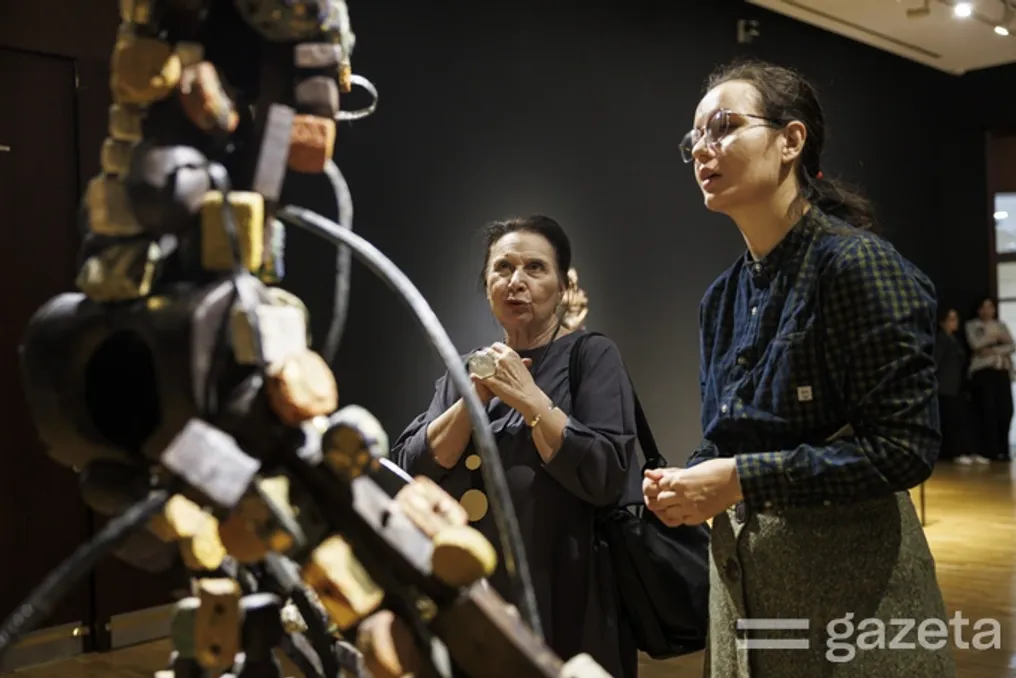
The exhibition titled 'Levitation' was held at the Uzbekistan National Museum of Fine Arts (NBU) in memory of the Uzbek sculptor Bayat Mukhtarov, who lived from 1946 to 2015. The exposition showcases works created by the artist in the final years of his life, during which he sought to move away from traditional concepts of sculpture.

The exhibition features works from the collection of the National Bank of Uzbekistan, as well as from the artist's private collection, provided by his relatives. Bayat Mukhtarov was born in Andijan, but his personality developed in Tashkent. In 1979, he studied at the Tashkent Theatre and Art Institute, specializing in monumental and decorative plasticity.

Nevertheless, in his creative process, the sculptor consciously refused to adhere to academic standards. He was interested in non-standard forms and avant-garde approaches. As recalled by his classmate Ludvig Nesterovich, Bayat always possessed a spirit of freedom and disliked naturalistic copying, preferring to find new methods of expressing thoughts through composition, combining various materials, and using symbolic imagery.

After graduating from the institute, when the demands for realistic portraits lessened, Mukhtarov began working in his own unique style. Ludvig Nesterovich notes that the value of his work lies precisely in this individuality, in being unlike others.

One of the significant influences on Bayat Mukhtarov was the British sculptor Henry Moore, known for his monumental semi-abstract figures. Mukhtarov was attracted to the expressiveness of unusual forms, and according to Nesterovich, he saw energy and monumentality in Moore's works even where proportions might seem incorrect or the solution quite simple. However, Mukhtarov never copied others' methods, striving to create his own artistic language.

Literature and philosophy also played an important role in Mukhtarov's life. Among his favorite authors were Kant, Hegel, Hemingway, Vonnegut, Bradbury, Lao Tzu, and Confucius. Marina Borodina, a sculptor, emphasizes that, like many members of his generation, the artist was fascinated by science fiction, and this interest was reflected in his works. Fantastic and mythological plots served as a tool for discussing the real world and its potential.

Marina Borodina notes that in Mukhtarov's works, Eastern Islamic art, classical American literature, and philosophy are uniquely combined. Islamic art often features the fragmentation of large surfaces into numerous small details, which removes weight from the volume and creates a sense of dissolution in space. The artist achieved a similar effect by using details to impart a light feeling. He avoided precise anatomical depiction, allowing figures to be guessed at through silhouettes and motifs, which attests to the artist's broad scope in culture and history.

Mukhtarov worked with diverse materials, including metal, stone, ceramics, glass, enamel, and sand. In his layered compositions, rough textures are placed next to shiny metallic elements and colored inserts. Individual components retain their independence and are not mixed into a single mass.

Borodina explains that, unlike academic sculpture, which is based on power and monumentality, Mukhtarov dismantled these canons, striving to give the sculpture an almost weightless appearance. Even heavy metal in his works seems to 'float' in space due to his unconventional approach to materials, allowing him to create a multilayered synthesis that is relevant today.

The name of the exhibition is directly related to the central work—a sculpture from 2009 made of wood, metal, and enamel. This sculpture lacks a single solid volume. Its core consists of wooden beams and plates, metal details, and blue-and-white enamel fragments. The composition is framed by metal arches that freely curve around it and extend beyond its boundaries. The space between the elements allows the viewer to see through the sculpture, and the open structure creates a sense of movement and lightness.

Ludvig Nesterovich believes that the title reflects not only the visual impression of the work but also the inner state of the artist during its creation, comparing it to a state of 'floating.' He asserts that Mukhtarov's works evoke such otherworldly sensations.

In addition to sculptures, the exhibition also features relief canvases. Marina Borodina shares that the artist initially found the image in graphic works and only later transferred it to three-dimensional space. Over time, the drawing acquired independent value.

Borodina concludes that Mukhtarov's works require careful study. Initially, the viewer's attention is drawn to individual details—be it the curve of metal, a fragment of wood, a colored insert, or an image on a panel. Then, these details come together to form an image that can transform when viewed from different angles. Mukhtarov's example demonstrates that there is no need to follow established rules in art; one can find their own path and create something original.

The 'Levitation' exhibition will be available until November 14th. The gallery operates from Tuesday to Saturday from ten in the morning to six in the evening, and entry to the exhibition is paid.

Roberto Higa shares his journey in photojournalism from Mato Grosso do Sul and speaks about cancer
Read more
g1.globo.com

Roberto Higa shares his journey in photojournalism from Mato Grosso do Sul and speaks about cancer

Roberto Higa, a prominent figure in the photojournalism of Mato Grosso do Sul, shared in an interview with TV Morena an overview of his life, including decades of historical records of Campo Grande and the recent challenge posed by cancer.

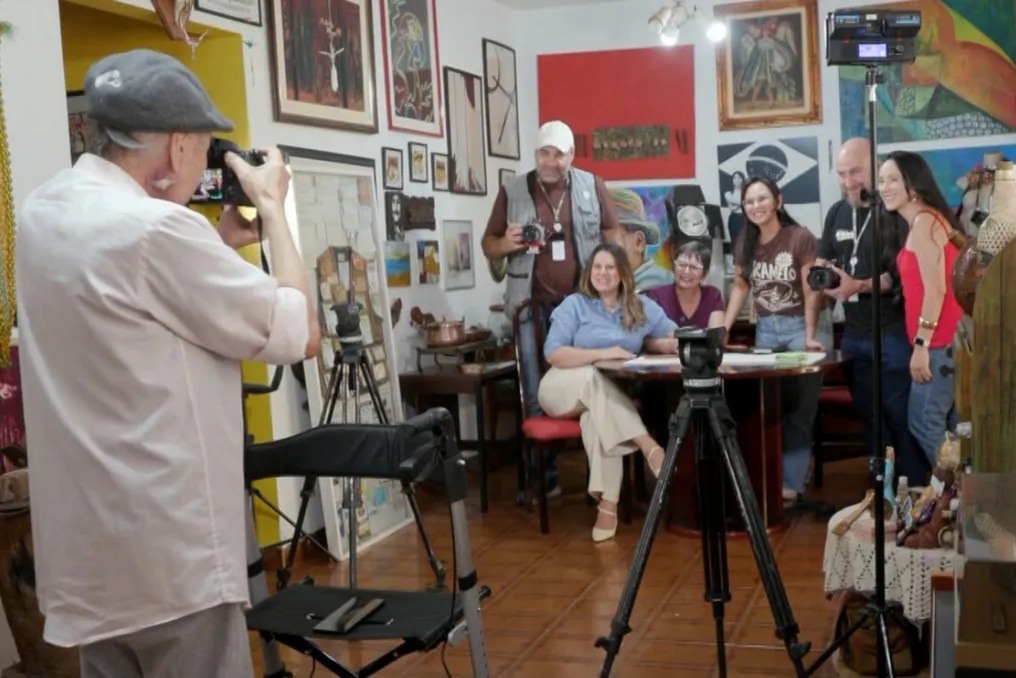
At the photographer's residence, the garage houses the family vehicle alongside portraits of notable personalities, while the interior of the house functions as a private gallery, filled with photos and paintings that narrate the history of Higa, son of Japanese immigrants and a reference in state photojournalism.

Back in the 1960s, he began documenting significant events using the photographic equipment of the time. Higa reported being the professional who photographed presidents the most during their visits to the state, citing names such as Medici and Geisel. Despite current physical limitations, the photographer stated that he continues to work with the camera daily.

Higa's trajectory is also linked to that of Sandra, his wife. Their relationship began at the pedal boats of the State University of Mato Grosso, which is now the Federal University of Mato Grosso do Sul (UFMS), in Campo Grande, before the state's separation. It was there that he took his first picture of Sandra, near the Olympic pool.

The couple's memories are preserved, including the wedding invitation, civil ceremony photos, religious ceremony photos, and the party held at the former residence. In the 80s, the camera captured the birth of their first child, resulting in a maternity album, a format that would only become popular much later. Furthermore, during one of their children's births, he covered the hospital with flags of Operário, the team he supports.

From street interactions to political records

Higa also dedicated his lens to recording youth festivals and gatherings in Campo Grande. He followed the movement of Avenida da Paquera, located on Avenida Afonso Pena, an area that is now part of the city center. At that time, the location was a meeting point for young people and had loudspeaker systems to aid romantic encounters.

He recalled how the young women paraded on the asphalt, and there were loudspeakers on every corner announcing, for example: 'Attention attention, you girl in the pleated skirt, white blouse, maria-chiquinha in your hair, so-and-so is waiting for you on Maracaju Street.' Higa mentioned that circulation needed to be restricted to ensure the holding of inaugurations.

His records extended to political events. He documented the changes to a monument, from its initial configuration and removal to location modifications and the installation of the current model. The arrival of the first escalator in a department store in downtown Campo Grande was also captured, showing the public's reaction to the novelty.

Throughout his career, the photographer covered rallies and crucial events for the formation of the state, such as the State Constituent Assembly of 1979, responsible for creating the Constitution of Mato Grosso do Sul after the division of the former Mato Grosso. Records from this period are also part of his archive.

On one occasion, during a visit by then-President Emílio Garrastazu Médici to Campo Grande, a rainy day was marked. Higa recounted having photographed Medici smoking, something unusual, since the president should not enter smoking, but it was his habit.

At that time, Higa possessed an ID badge that gave him access to covering presidents and candidates for President of the Republic. Many of his professional cards are displayed in a frame in his home. The history of the Matogrossense Communication Network (RMC) and the Zahran family's communication group is also documented at the residence, with Sandra responsible for organizing and preserving some of this material. She informed that the images are organized in notebooks and envelopes, each with its negatives, totaling more than 8,700 envelopes recorded in a single notebook.

The archive of life and the challenge of treatment

This year, Higa's journey took the form of a documentary and a film. While his career receives new records, the photographer faces one of the most difficult moments of his life. Diagnosed with laryngeal cancer, he received treatment in Campo Grande, at a hospital he had been following since its founding. During this journey, he and his family documented the various phases of the process.

After completing a cycle of treatment, Higa rang the bell at Alfredo Abrão Hospital, an act that symbolized the end of a phase. Months later, a video recorded in his living room brought news of a recurrence of the disease. Currently, he is receiving palliative care and relying on family support. When asked about his perception of everything he has achieved in his life, Higa replied: 'I have, and I am satisfied.'

Popular