Gautam Gambhir states he cannot please everyone; Vaibhavi Suryavanshi is again left out of the Indian squad
Read more
Aaj Tak
www.aajtak.in

Gautam Gambhir states he cannot please everyone; Vaibhavi Suryavanshi is again left out of the Indian squad

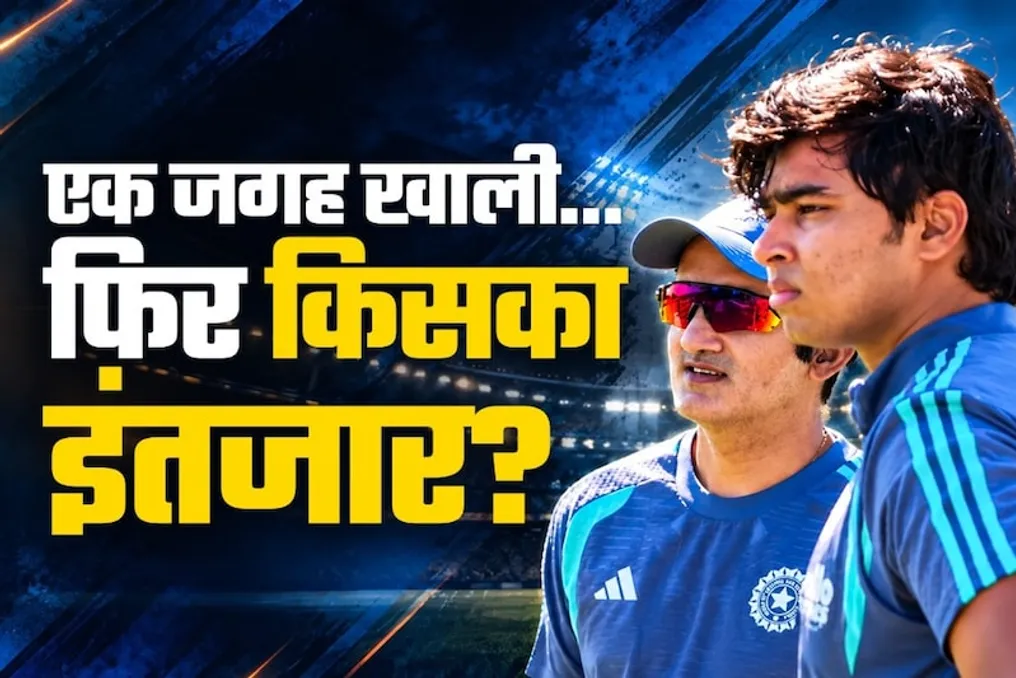
In the fifth T20 match between India and New Zealand, held at Seddon Park in Hamilton on Sunday (November 1), Bhuvneshwar Kumar and Varun Chakravarthy returned to the Indian team. However, young player Vaibhavi Suryavanshi once again had to wait for his chance in the starting lineup.

This young athlete, who has attracted attention due to consistently high performance and talent, has not been included in the first eleven for the second consecutive match, raising questions about his future prospects.

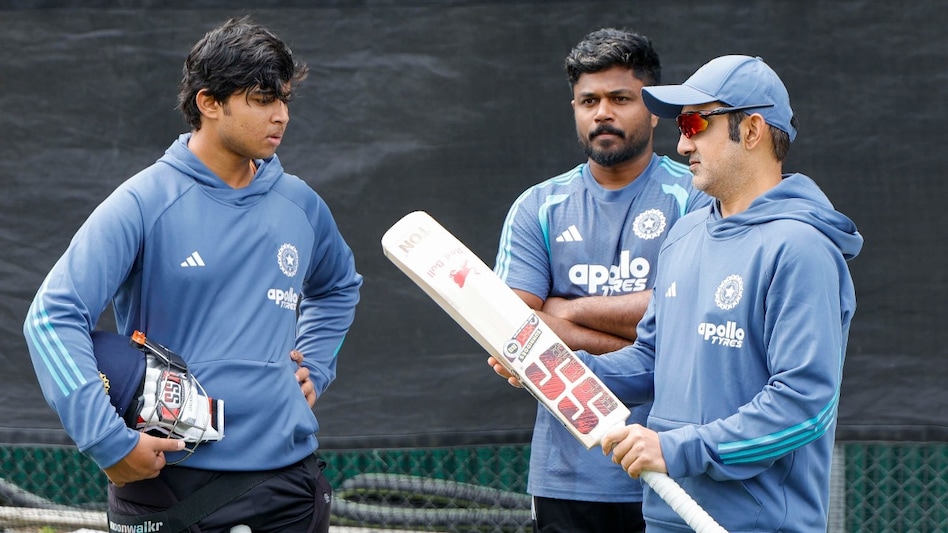
Meanwhile, the head coach of the Indian team, Gautam Gambhir, made an important statement regarding the player selection process. He emphasized that his role is not to please everyone, but to make decisions that serve the interests of the entire team. Gambhir noted that in the age of social media, it is easy to make popular decisions, but the management's focus must remain on the correct strategic steps.

Before this match, Gautam Gambhir told Sky Sports that his duty is to make the right decisions, not to follow popular opinions. The Indian coach also hinted that talent alone is not enough to secure a spot in the team. He added that players who demonstrate good results over a long period need to be provided with sufficient opportunities and support. This is why a talented player like Vaibhavi has to wait his turn.

Gautam Gambhir stressed that the team possesses significant potential in the dressing room, but those who consistently show a high level of play should be given extended playing time. His statement is viewed in the context of the current squad, where the management continues to show confidence in the duo of Sandeep Samson and Abhishek Sharma.

India's squad for the fifth T20 included: Sandeep Samson, Abhishek Sharma, Ishan Kishan (as wicketkeeper-batsman), Shreyas Iyer (captain), Tilak Verma, Nitish Kumar Reddy, Naman Diar, Bhuvneshwar Kumar, Arshdeep Singh, Prince Yadav, and Varun Chakravarthy. New Zealand's squad for the fifth T20 consisted of: Finn Allen, Tim Seifert (as wicketkeeper-batsman), Daryl Mitchell, Glenn Phillips, Devon Jackson, Michael Bresshaw, Mitchell Santner (captain), Nathan Smith, Adam Milne, Jacob Duffy, and Blair Tickner.

Similar stories

Expert discusses the rush with player Vaibhav Suryavanshi and his new position in the third T20 match against New Zealand
Read more
www.aajtak.in

Expert discusses the rush with player Vaibhav Suryavanshi and his new position in the third T20 match against New Zealand

The Indian team is preparing to play the third T20 match against New Zealand, scheduled for Tuesday, October 27, and both teams could present a high-scoring encounter.

Vaibhav Suryavanshi, who has attracted attention due to his powerful playing style, has once again become a subject of discussion ahead of this match.

Former Indian cricketer and commentator Akash Chopra shared his opinion regarding Vaibhav Suryavanshi's game and his position in the squad. Analyzing the game on his YouTube channel, Chopra noted that young players like Vaibhav Suryavanshi are not lacking in talent, but they need the right environment and proper batting order to establish themselves at an international or higher level.

He emphasized that sudden excessive pressure or placing a player in a position where he feels uncomfortable does not contribute to his development. According to Chopra, the national team management and staff should ensure the proper utilization of young talent so that he can freely demonstrate his natural playing style without unnecessary psychological stress.

Akash Chopra continued, noting that this young athlete has successfully demonstrated his productivity in the IPL. Nevertheless, he reminded that maintaining the same form for a long time is very difficult. Chopra advised the Indian team management to avoid any haste regarding Vaibhav.

Continuing his thought, Akash Chopra stated that Vaibhav should be given the opportunity to bat at the top order in upcoming matches, as the team will not get a better chance. He also added that since being included in the team, Vaibhav has only been training on the field, so his form cannot yet be established.

Who will replace Hardik Pandya: Three Indian players demonstrated potential in the match against New Zealand
Read more
www.aajtak.in

Who will replace Hardik Pandya: Three Indian players demonstrated potential in the match against New Zealand

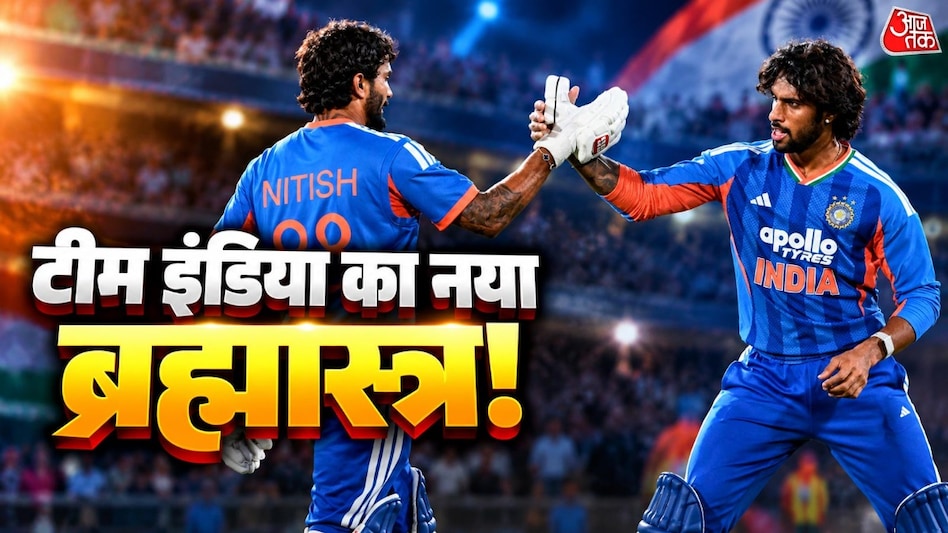
The search for a player capable of replacing Hardik Pandya, who is a valuable all-rounder, remains relevant for the Indian team. Such a player must be able to play in the starting lineup, reliably bowl four overs, and have the ability to finish the match at a critical moment. However, if Hardik is unavailable, the Indian team found an answer to this question in Christchurch when playing against New Zealand, thanks to Tilak Verma, Naman Dheer, and Nitish Kumar Reddy.

Instead of preparing one player to replace Hardik, the team bet on three young athletes. India needs players who can contribute both in attack and defense. Therefore, the search for alternative all-rounders constantly remains important. This season, Shivam Dube played his role in the T20 World Cup, and players like Nitish Kumar Reddy and Naman Dheer also received opportunities. Tilak Verma possesses attacking qualities that strengthen the team's middle order.

In the second T20 International match against New Zealand, India needed to score 181 runs. At one point, the team lost five wickets with only 70 runs. Mitchell Stainer's bowling created difficulties for the Indian batting, taking four wickets while conceding 21 runs in 4 overs.

Naman Dheer helped revive hopes of an Indian victory by scoring 31 runs off 17 balls, including a six against Stainer. After Dheer came out, Tilak Verma and Nitish Kumar Reddy took responsibility. Tilak remained on the field with 51 runs unbeaten, and Reddy scored 26 runs unbeaten off 13 balls. Both players formed a strong partnership of 69 runs for the seventh wicket.

India won by four wickets, scoring 181 runs in 19.5 overs with six wickets down, gaining a 2-0 advantage in the five-match series. This partnership was the largest in the history of Indian T20 International cricket for the seventh wicket.

Tilak demonstrated that he is capable not only of stabilizing the innings under pressure but also of scoring quickly, scoring 51 runs unbeaten off 26 balls. The specialty of his game lies in understanding the bowler's plan and choosing appropriate shots. New Zealand bowler Jacob Duffy tried to play considering the long boundary from the outside, but Tilak changed his position and utilized the short boundary on the left side. He did not rush, waiting for the right moment, and stayed on the field until the end.

Like Hardik, Tilak is capable of big hits under pressure, but his main role is related to the attack. Thus, he may not be a direct replacement for Hardik, but rather a player who strengthens the team's middle order and finishing ability.

Naman Dheer scored 31 runs off just 17 balls in this match. His innings gave speed to India at a time when the pressure to score was increasing due to consecutive wicket losses. He adopted an aggressive stance against spinners and showed that he can counter bowlers even in difficult circumstances.

Dheer's usefulness is not limited to just batting; he can also bowl, giving the team an additional option. Nevertheless, to fulfill a regular role in four overs, like Hardik, he will need to consistently contribute to his defensive play.

Nitish Kumar Reddy is one of the most natural options for an all-rounder in this trio. He bowls fast and is capable of scoring quickly in the lower middle order. In the second T20, he supported Tilak well, scoring 26 runs unbeaten at a strike rate of 200. At the end of the match, playing in the attack, it is important to know how to read the bowler's next move and remain calm. Reddy managed this task in a difficult situation, helping India take control of the match and scoring the winning runs.

India is preparing him to take on important responsibilities in defense. However, quick innings in the attack alone will not be enough to replace Hardik. Reddy must regularly influence the defensive play as well.

The performance of Tilak, Dheer, and Reddy showed India a useful alternative. Together they scored 108 runs off 56 balls, proving their potential in a tough match. However, Hardik's specialty is that he contributes significantly in both attack and defense. These young players are still in the process of fulfilling such comprehensive responsibility at that level. The good news for India is that it has young players with various strengths. If Tilak continues to score in the middle order, Dheer will contribute to the defense with aggressive batting, and Reddy...

Questions about the possible inclusion of Vaibhav Suryavanshi in the squad after Ishan Kishan's injury
Read more
www.aajtak.in

Questions about the possible inclusion of Vaibhav Suryavanshi in the squad after Ishan Kishan's injury

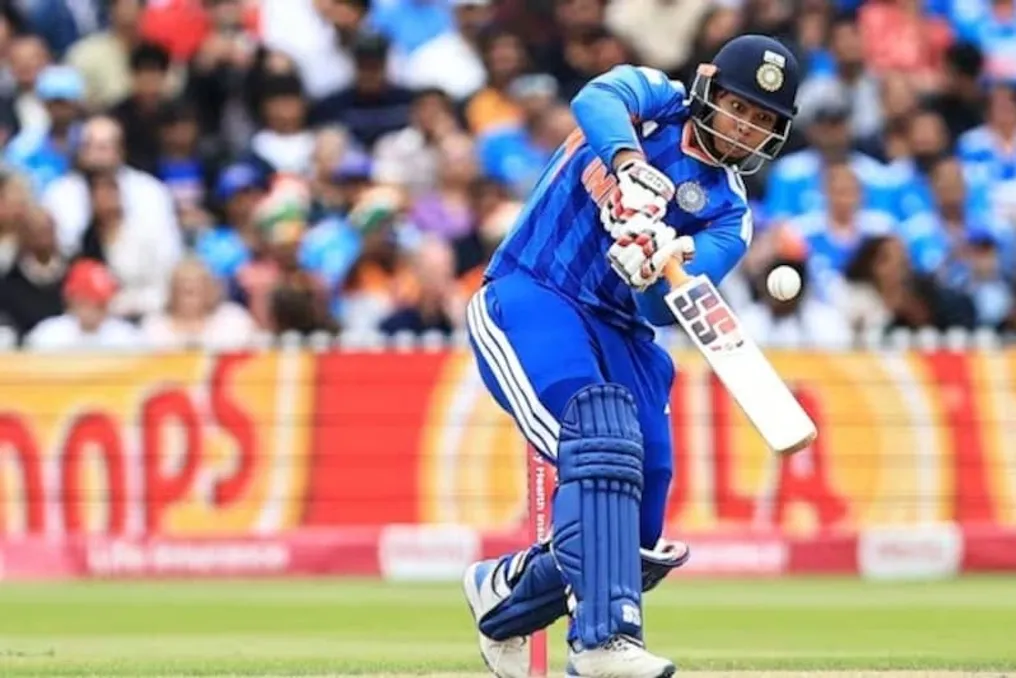
It is not easy for young players in the Indian team to secure a spot, and the lack of chances in the starting lineup, even after making the team, presents a serious challenge. Vaibhav Suryavanshi is currently going through such a period. Attracting attention with his explosive batting, Vaibhav awaits his chance during the tour to New Zealand, but this wait is getting longer.

Whether it is the series against Afghanistan, matches against West India, or the current tour in New Zealand, Vaibhav constantly has to sit on the bench. The question is not whether Vaibhav can replace Sandeep Samson and Abhishek Sharma at the top order. The question is whether there is another way for Vaibhav if the team management does not want to part with this pair.

Before the second match of the five-match T20 series against New Zealand, the Indian team received a blow: wicketkeeper-batsman Ishan Kishan was ruled out due to a hamstring strain. This injury occurred during the first T20 match of the series. Following Ishan's injury, the possibility of Vaibhav playing naturally comes up, as a batsman's spot has opened up. However, there is no convincing reason to believe he will immediately be brought into the starting XI.

The team management could give a chance to another available player instead of Ishan. The pair of Sandeep and Abhishek played a key role in India's victory by four wickets, chasing a target of 226 runs in the first T20. Therefore, the decision to break up this pair will not be easy.

But here arises an important question: is opening batting the only path for Vaibhav? Why shouldn't he play at number three or four?

The team management's strategy regarding Vaibhav can be understood. Sandeep Samson and Abhishek are both in good form and have proven their usefulness in chasing big targets. Thus, changing a successful combination just for one young player could be a risky move.

However, the team composition does not mean that all paths are closed for the young batsman. If Vaibhav is considered part of future plans, then the possibility of testing him at number three or four should be considered.

Undoubtedly, there is a difference between opening and batting in the middle order. Facing a new ball and coming onto the field in the middle of an innings are two different types of tasks. Preparing Vaibhav for this role will also require time. But until he is given a chance, the question of assessing his multi-faceted abilities will not arise.

The team management needs to clarify whether Vaibhav is exclusively a future opener or if the team has plans to use him in various situations.

Vaibhav has another option. Ranji Trophy matches are being held in India. If he does not see a real chance to play in the New Zealand series, the team should consider the benefit of constantly sitting on the bench. Fielding Vaibhav for Bihar in the Ranji Trophy could give him an opportunity to play competitive cricket. First-class cricket, long-form games, and testing technique in different conditions would be beneficial for his development.

Nevertheless, sending him back to India mid-series is not a simple decision. This requires considering the team's needs, selectors' plans, and the schedule of matches in Bihar. But the general question remains: is it better to stay in the team without playing, sitting in the dressing room, or to play?

For a young player like Vaibhav, training is extremely important. Net practice is not enough to unlock talent; the real test happens on the field, where decisions must be made with every delivery and the innings managed under pressure.

Constant lack of opportunities does not automatically prove that the team management is against him. In international cricket, a place is determined by performance, team needs, and squad composition. The good play of Sandeep and Abhishek gives them a solid foundation to retain their spots in the starting XI.

However, the role of the young player in the team and the future plan must be clearly defined. If Vaibhav cannot be given a spot at the top order now, will he be prepared for the middle order? And if there is no chance in the near future, will the possibility of releasing him from the team to participate in competitive matches be considered?

Following Ishan Kishan's injury, all attention is now focused on the team management's decisions. Whether Vaibhav will be given a chance will be known later, but the team must explain when and how his talent will be utilized.
Popular