Bosch aims for double-digit market share in Indian air conditioners within two years
Read more
Business Standard
business-standard.com

Bosch aims for double-digit market share in Indian air conditioners within two years

European provider of heating and cooling solutions, Bosch Home Comfort Group, plans to capture a significant share of the Indian air conditioner market, aiming for a double-digit figure within the next two years. The company intends to launch air conditioners under the Bosch brand next year.

According to Managing Director Sanjay Sudhakaran, the company also aims to enter the top five leading brands in the medium term. Bosch Home Comfort Group, part of the German industrial giant Bosch GmbH, is accelerating its expansion in India using a dual branding strategy.

In August 2025, the company acquired the global business for residential and small commercial air conditioners from Johnson Controls and Hitachi. According to the developed strategy, Hitachi will be positioned in mass demand and premium segments, while Bosch will occupy the performance-premium and super-premium niches to cover various consumer groups.

Furthermore, Bosch Home Comfort is strengthening its long-term commitment to India by planning to invest 80 million euros (equivalent to approximately 900 crore rupees) in the coming years. These funds will be directed towards expanding production capacity, increasing localization levels, and strengthening the company's engineering and testing capabilities.

Strategy after acquisition

Following the takeover, Bosch Home Comfort Group took over Hitachi's air conditioning business in India. Here, the company plans to reform its product range to strengthen its presence in the fast-growing mass demand and mass premium segments. Air conditioners under the Bosch brand will target the niche performance-premium segment, competing with brands such as O General and Mitsubishi Electric, with a price range of 45,000 to 50,000 rupees and above.

Sudhakaran emphasized that 'we are positioning Bosch as a super-premium category, and Hitachi as a mass category,' adding that both brands will have differentiated product lines, features, and value propositions. Bosch will rely on its heritage of German engineering and premium positioning, while Hitachi will continue to leverage its expertise in air conditioning and Japanese engineering excellence.

The company aims for 'a strong double-digit market share in India within the next two years' and hopes to become 'one of the top five brands in the country's cooling and comfort sector in the medium term.' He noted that India offers 'huge growth potential' due to low penetration of residential air conditioners (RACs), rising disposable incomes, and the development of the country's economy.

Investment of 80 million euros

These investments will support the company's expansion in small commercial air conditioning, including Variable Refrigerant Flow (VRF) systems under the Hitachi brand, alongside the residential air conditioning business. Currently, the company manufactures the latest line of Hitachi VRF products at its facility in Kadi, Gujarat. Additionally, the global R&D division in Ahmedabad has been expanded to focus on small commercial air conditioning technologies.

The Kadi plant produces over 10 lakh units of air conditioners annually. Sudhakaran stated that they will use capital expenditures in the most sensible way, following the philosophy of 'growing with the market.' The company may also explore establishing a new manufacturing facility in South India, although Sudhakaran neither confirmed nor denied this idea.

Localization and integrated manufacturing

Local manufacturing and backward integration remain central elements of the company's strategy as it seeks to enhance price competitiveness and expand its product range. Sudhakaran reported that about 75 percent of the company's procurement is sourced locally, with imports accounting for approximately 25 percent. He noted that the company is among the highly localized manufacturers in the air conditioning industry, possessing an integrated production complex that manufactures several components in-house.

The Kadi factory manufactures heat exchangers, inner unit molds, condenser units, sheet metal components, tubes, and coils, and also conducts painting operations. He added that only what is unavailable domestically is imported, and the company has always prioritized local production over relying on imports when exchange rates or other macroeconomic conditions made imports more attractive. The company also has access to compressor supplies through a joint venture with a major global compressor manufacturer that has a plant in Ahmedabad.

Distribution synergy

Bosch Home Comfort India will utilize Hitachi's existing distribution and retail network to support the expansion of both brands, while also exploring opportunities through Bosch's home appliance retail network. The company plans to collaborate with the Bosch home appliance sales business to make Bosch-branded air conditioners available in Bosch and BSH stores. Major retail chains, regional dealers, and online platforms will remain important sales channels, with a significant overlap in customers served by both brands.

Sudhakaran stated that the company expects to achieve synergistic effects in sales and service networks, production operations, research and development, new product development, supply chain, and human resource management. He concluded: 'We can synergize all back-end processes. On the front end, we will develop differentiated positioning based on product, features, and channel.'

Similar stories

JTL Defence stock increased from 7 to 570 rupees in a year, providing significant profit to investors
Read more
www.aajtak.in

JTL Defence stock increased from 7 to 570 rupees in a year, providing significant profit to investors

There are many stocks in the stock market that bring huge profits to their investors. Some of these multibagger stocks have enriched long-term investors, while others have become real money machines for investors in a very short time.

One such little-known asset is the stock of JTL Defence, which belongs to the defense sector. In one year, the price of this stock has grown from 7 rupees to over 570 rupees.

The price indicators of JTL Defence stock allow for an easy assessment of how profitable this asset has been for investors. Just a year ago, on October 27, 2025, the value of one JTL share traded for only 7.14 rupees. However, on the last working day of last week, despite hitting the lower price level, it closed at 583.10 rupees, and on Monday it opened and dropped to 571 rupees. The maximum price of the stock over the last 52 weeks reached 924 rupees.

Based on the changes in the price of JTL Defence stock over the year, investors achieved an impressive multiple return of 8066 percent. If an investor had invested 100 thousand rupees in the company's shares at a price of 7 rupees and held that position, their funds would have increased to 8,166,000 rupees.

The company belongs to the small-cap segment, and its market capitalization is 613.79 crore rupees. Nevertheless, the stock proved capable of making investors wealthy. In just six months, the price of JTL Defence stock grew by 151 percent, meaning that investors' invested funds more than doubled during this period.

It should be noted that JTL Defence Limited was previously known as RCI Industries & Technologies Limited. The company changed its name in April of this year. JTL Defence Limited is engaged in the production of products made from copper, brass, and other special metals. This product is used in the defense, electrical, automotive, electronic, and industrial sectors.

RBI Governor Sanjay Malhotra states that top-tier NBFCs must be listed on stock exchanges
Read more
business-standard.com

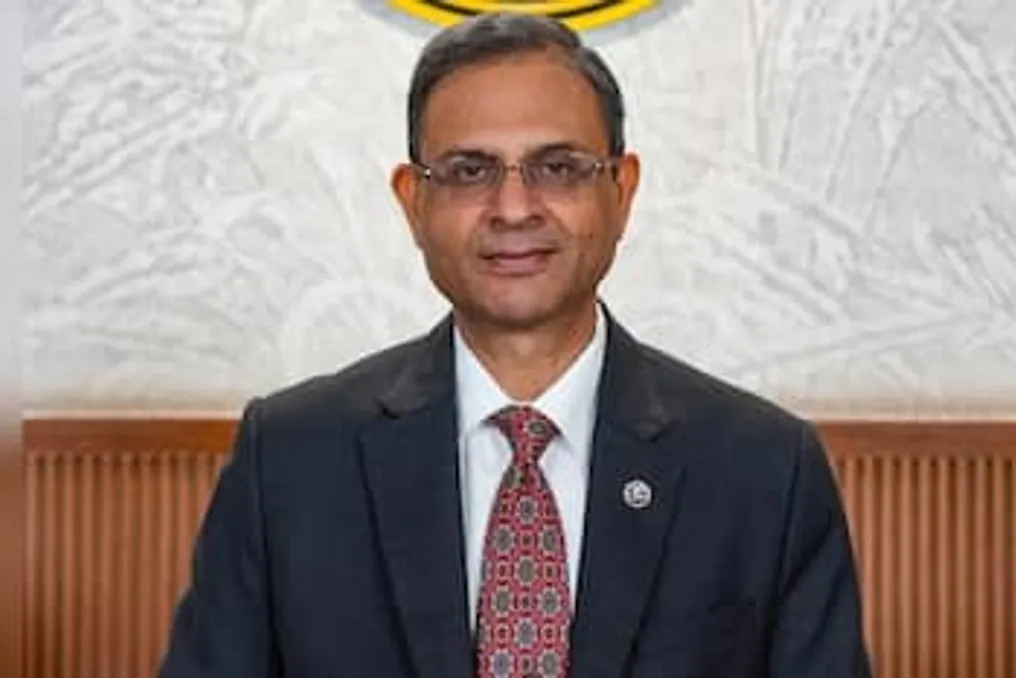
RBI Governor Sanjay Malhotra states that top-tier NBFCs must be listed on stock exchanges

Reserve Bank of India (RBI) Governor Sanjay Malhotra announced on Friday that companies classified as Central Investment Companies (CIC) which access public funds, directly or indirectly, are required to register with the central bank. Furthermore, top-tier Non-Banking Financial Companies (NBFCs) must be included in the stock exchange listings.

These statements came amid discussions regarding whether a public offering is required for Tata Sons, the holding company of India's largest conglomerate, the Tata Group.

Malhotra noted at the NDTV World summit in New Delhi: 'We do not answer questions concerning any specific regulated entity.' However, he added that NBFCs and CICs, such as Tata Sons, are required to register with the RBI due to systemic risks. This is because they are at the top of group companies where they can raise funds by using the balance sheets of these companies for repayment.

When separately asked about the rules governing top-tier NBFCs, Malhotra clarified: 'As long as it is an NBFC within our definition, it is a CIC, it has access to funds, directly or indirectly, it is obligated to be registered, and if it is at the top tier, then it is obligated to be listed.' He also emphasized that registration is only not required if the CIC does not have direct or indirect access to public funds.

The central bank classified Tata Sons as a top-tier NBFC in 2022, granting the company three years until 2025 to go public. Instead, the company repaid its outstanding debts and requested the cancellation of its CIC registration. Nevertheless, last month, the RBI rejected this request and demanded that Tata Sons comply with the requirements applicable to top-tier NBFCs.

For its part, Tata Trusts, which controls Tata Sons, proposed merging Tata Electronics Systems Solutions (TESS) and Tata Consulting Engineers (TCE) into a holding company. The goal of this proposal is to avoid an Initial Public Offering by restructuring Tata Sons in a way that, according to the Trusts, would cause it to cease meeting the criteria for an NBFC or CIC. This plan requires approval from the Tata Sons board of directors and consent from the RBI.

Turning to monetary policy, Malhotra stated that the RBI generally does not use interest rates to solve financial stability issues, relying instead on macroprudential measures. However, he did not rule out the possibility of applying monetary policy in certain situations, noting that the decision remains with the Monetary Policy Committee (MPC). He added that the effectiveness of such intervention would depend on the circumstances and would be reviewed by the MPC.

In its latest meeting this month, the MPC raised the key repo rate by 25 basis points to 5.50 percent and changed its stance from neutral to 'calibrated tightening.' The Governor also acknowledged growing cybersecurity risks to the financial system, as banks report data breaches in the dark web. Separately, he expressed concern over the impact of Artificial Intelligence (AI) on financial stability, stating: 'These risks are real. They cannot be ignored, so I will not downplay these risks.'

Malhotra highlighted two main areas of concern: data security and cyberattacks capable of disrupting or disabling systems. He noted that the RBI has a robust regulatory and supervisory system to address both issues, but the rapid pace of software development means vulnerabilities may continue to emerge.

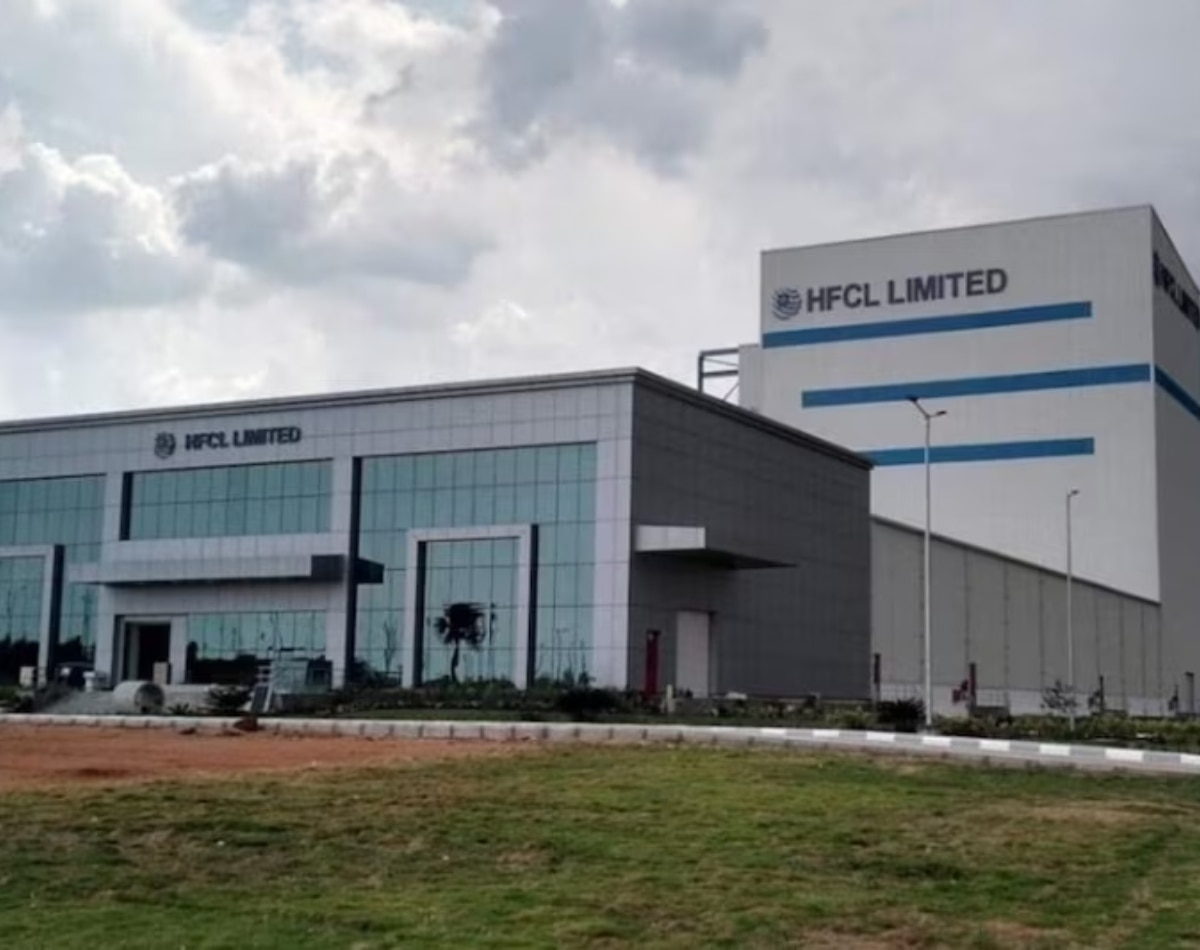
Brokers predict 53% growth in HFCL Limited shares; company showed 296% return over the year
Read more
www.aajtak.in

Brokers predict 53% growth in HFCL Limited shares; company showed 296% return over the year

Although it is impossible to predict which stock on the stock market will bring significant profit to investors, there are numerous examples of such success. One such example is the shares of HFCL Limited, which became a multibagger stock for its investors in 2026, providing them with substantial returns.

Currently, brokers are optimistic about this stock, expecting the HFCL Share Price to grow by 53%.

HDCL Ltd is an Indian technology company engaged in the design, development, and manufacturing of telecommunication equipment, fiber optic cables, and other related electronic equipment. The company's shares are listed on both the Bombay Stock Exchange and the National Stock Exchange. As of the last trading day on Monday, the HFCL Share Price closed at 268.81 rupees, and the company's market capitalization is 41130 crore rupees.

HFCL shares proved to be a multibagger instrument for investors in 2026. This is evidenced by the return received by investors. Specifically, on the last working day of last year, December 31, 2025, the HFCL Share Price was 67.79 rupees, and currently, it has yielded a return of 296.53% for investors.

Nuvama Institutional Equities expressed confidence in HFCL Limited and raised its target price from the previous 380 rupees to 410 rupees. Compared to the current price, the broker sees potential for this multibagger asset to grow by 53 percent.

The brokerage firm Nuvama not only expressed confidence in HFCL shares by significantly increasing the target price but also advised investors to purchase these shares and include them in their portfolio. Nuvama confirmed its 'Buy' rating for HFCL, citing HFCL's excellent second-quarter results as well as a positive outlook.

The broker noted that the company's record quarterly performance, high revenue forecasts, growing orders, strong cash flow, and improved working capital position were the reasons for raising the initial target price. In the second quarter of the 2027 fiscal year, HFCL's revenue grew by 144% compared to the previous year, and EBITDA demonstrated a year-on-year growth of 231%.

Popular