
Visual artist Ande Magoso presents exhibition based on Zulu folklore
Read more
IOL
iol.co.za

Visual artist Ande Magoso presents exhibition based on Zulu folklore

Visual artist from KwaZulu-Natal, Ande Magoso, integrates Zulu folklore, ancestral memory, and the complexities of cultural identity in a new collaborative exhibition. This exposition translates traditional narrative into a contemporary artistic space.

The exhibition, titled uMbulumakheqe II: Sound, Story, Image, explores the ancient Zulu tradition of izinganekwane—oral narratives traditionally shared by elders after dark. Magoso, working with poet and storyteller Mbali Malimela, reinterprets this nocturnal storytelling tradition in a gallery setting, using painting, soundscapes, and live narration to examine the relationship between memory, identity, love, longing, and loss.

The exhibition also features works by artist Ntobeko Chiliza. The opening will take place on Friday at 6:00 PM in the Main Gallery of KZNSA Gallery in Glenwood, Durban. The central figure of the project is uMbulumakheqe—a figure existing between worlds, lineages, and various forms of belonging.

The exhibition draws upon the folkloric warning that telling izinganekwane in daylight will cause the narrator to grow horns. By bringing these stories into the light, the artists invite viewers to reconsider the place of oral traditions in modern society.

Born in Kokstad in 1997, Magoso grew up in an area situated between Kokstad, uMzimkhulu, and KwaNgcolis in the Valley of a Thousand Hills. His upbringing in culturally diverse parts of KwaZulu-Natal has shaped an artistic practice focused on intercultural identity, migration, ritual, and sense of belonging.

As the son of a Xhosa mother and a Zulu father, he explores the intersections and contradictions of cultural heritage through surreal figures combining human, goat, and sheep forms. These recurring hybrid images serve as metaphors for cultural crossing, sacrifice, identity, and the complexities of belonging.

His work is inspired by sepia portraits by Gerard Bengu and the oral mythologies of poetry laureate Dr. Mazisi Kunene, particularly Amalokotho kaNomkhubulwane. Magoso describes his approach to painting as a form of speculative narrative, where folklore, memory, and absurdity coexist in psychologically tense spaces.

Magoso noted: 'At the heart of the exhibition is the story of Mbulumakheqe, a character whose journey unfolds through a series of encounters, landscapes, and experiences. Through collaboration with poet and storyteller Mbali Malimela, we have merged different forms of narration, allowing the narrative to exist in both visual and oral languages.' He added that visitors can expect to see paintings, characters, and environments that form part of a larger world, accompanied by sounds that add another dimension to the experience. 'Ultimately, I want people to feel like they are entering a world and encountering a story, rather than just looking at an exhibition.'

Magoso views his practice as a continuous process of world-building. 'Each painting contributes to it, whether it is a character, a landscape, or an encounter. Instead of viewing each artwork as an isolated image, I am interested in how these works relate to each other and gradually reveal a larger universe.'

From Durban to Germany

Magoso developed his visual art practice through the African Art Centre Development Program and the The BAT Centre Artist Residency Program in Durban. Additionally, in 2023, he undertook a residency at the Fancy Museum. In 2026, he participated in an international residency at Stiftung Künstlerdorf Schöppingen in Germany, where he created new series of works and engaged with the international contemporary art scene.

During his time in Europe, he also received private commissions for artworks, expanding his reach beyond South Africa. His works are held in several institutional and private collections, including the National Museum in Bloemfontein, Bürgerstiftung Schöppingen in Germany, and the Fancy Museum in Durban. His works are also held in the Deitau collection in Cape Town.

Through the exhibition uMbulumakheqe II: Sound, Story, Image, Magoso and his collaborators continue to explore how traditional stories can resonate with contemporary experiences while preserving the cultural memories and oral histories that shape identity.

Similar stories

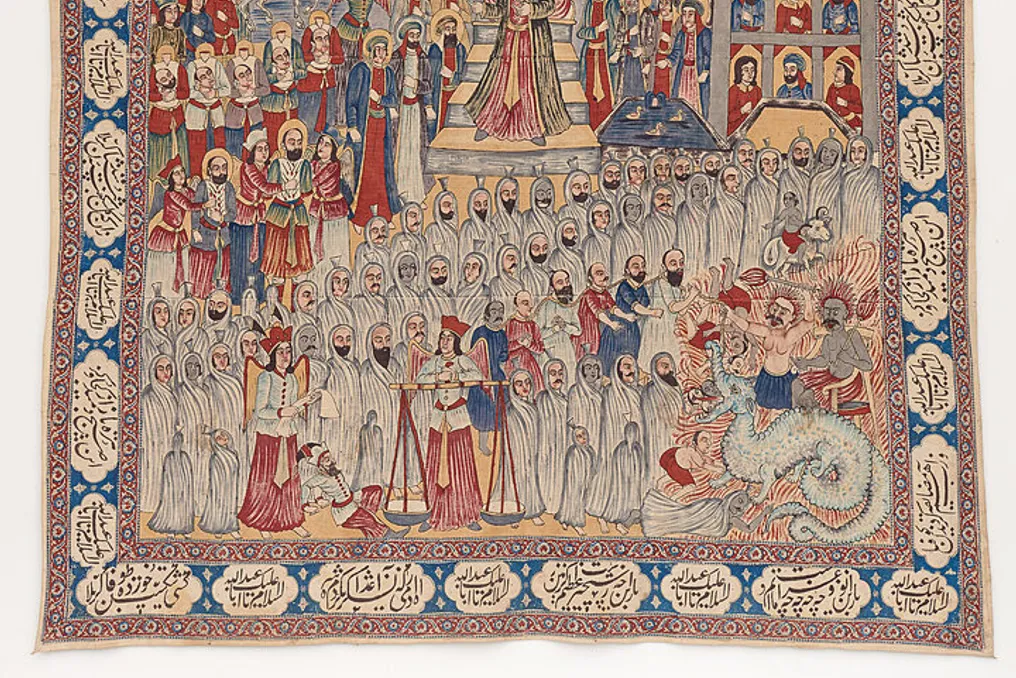
Kalamakari: An age-old art of printing stories on fabric in Isfahan
Read more
www.tehrantimes.com

Kalamakari: An age-old art of printing stories on fabric in Isfahan

In the historic Iranian city of Isfahan, which has shaped one of the country's richest cultural landscapes over centuries through artistic genius, an ancient craft continues to thrive. This art, known as Kalamakari, brings colors, patterns, and narratives to fabrics. It combines the hand-carving of wooden stamps, carefully prepared dyes, and intricate Persian ornaments to create decorative textiles that are both functional and artistic.

Kalamakari, rooted in the long traditions of Iranian craftsmanship, gained particular renown in Isfahan, especially during the Qajar era, when its printed goods became among the city's most famous artistic products. Beyond its decorative appeal, some of these textiles served as visual narratives, depicting episodes from Persian epics, historical events, and religious traditions.

Isfahan, nicknamed Nasf-e Jahan, meaning 'Half of the World,' was the capital of Persia during the Safavid era and an important hub for international trade, diplomacy, and artistic exchange. Under the rule of Safavid monarch Shah Abbas I, the city experienced a significant cultural and architectural flourishing, helping to establish its reputation as one of the most important centers of Persian art and craftsmanship. Today, it remains one of Iran's leading tourist destinations and a notable center for traditional crafts.

Art Formed by Wood, Color, and Fabric

Kalamakari, sometimes transliterated as Kalamari, is a traditional method of decorating textiles by printing using hand-carved wooden blocks. Artisans use these stamps to transfer intricate patterns onto the fabric, often combining multiple colors and motifs to create richly detailed compositions.

The design draws inspiration from a wide range of Iranian artistic traditions, including Persian carpets, architectural decoration, and the complex mosaics of historical mosques. Recurring motifs include floral and botanical patterns, animals, arabesques, geometric constructions, hunting scenes, and Persian calligraphy.

Flowers, cypresses, and other natural elements hold a prominent place, often evoking associations with the visual richness of traditional Persian gardens. The resulting compositions reflect a unique aesthetic where symmetry, repetition, and harmonious color combination play a central role.

Cotton is one of the most frequently used materials for Kalamakari due to its ability to absorb dyes. Silk, canvas, and muslin were also used, depending on the intended purpose and desired finish.

The traditional production process requires high precision. First, the artisan designs the pattern and selects appropriate wooden stamps, each carved with a specific section of the intended design. The raised surfaces of the blocks are coated with dye and pressed onto the fabric to transfer the image.

Creating multi-colored patterns requires the use of several stamps, each corresponding to a different color or part of the composition. Their placement must be carefully coordinated so that individual elements align correctly. Even a slight shift can disrupt the overall design. Thus, this craft involves much more than just pressing a wooden block onto the cloth; it requires knowledge of dyes, fabric preparation, pressure, intervals, and precise registration of patterns. In some examples, hand painting is combined with block printing to achieve more complex effects.

A Craft with a Long History

The exact origins of Kalamakari in Iran remain uncertain, and no definitive historical source establishes when this craft first emerged. However, according to the renowned art historian Arthur Upham Pope, this art was already practiced in Iran during the Ghaznavid period. It subsequently developed through various historical periods, reaching a special peak during the Safavids. The reign of Shah Abbas I was particularly significant for the artistic and commercial development of Isfahan, as the city became an important center for the production and exchange of Persian crafts.

Although Kalamakari flourished under the Safavids, it was during the Qajar period that Isfahan's printed goods became particularly famous. Their popularity extended beyond decorative use: various fabrics were used as clothing, tablecloths, curtains, and large wall hangings. Some pieces featured repeating floral and geometric patterns, while others included complex figurative compositions. In the latter, the fabric became a surface for storytelling, uniting characters, landscapes, and historical or religious episodes.

When Fabric Became a Medium for Narrative

A particularly interesting aspect of Iranian Kalamakari is its ability to convey stories through images. Several historical examples preserved in international museum collections demonstrate that these textile items were not always intended solely for home decoration. Some depicted scenes from Persian heroic literature, while others illustrated religious beliefs and historical events.

For instance, the Weltmuseum Wien (Vienna World Museum) houses several samples of Iranian printed and painted textiles attributed to Isfahan and dating from the 19th century. One of them is a cotton wall hanging from the mid-19th century, belonging to the Qajar period, measuring 176 centimeters high and 116 centimeters wide. Originally part of the Austrian Trade Museum collection, this exhibit features diverse traditional Iranian motifs, including scenes inspired by Persian epics, floral compositions, cypresses growing from vases, and animal figures.

Another remarkable piece, titled 'Day of Judgment,' is a late 19th-century cotton wall hanging attributed to Isfahan. It combines printing and hand painting and depicts scenes related to Ashura from a Shia religious perspective, including references to the Battle of Karbala and the fate of its martyrs and adversaries. The museum also holds another textile from the late Qajar period, cataloged as pictorial Kalamakari, which includes verses attributed to the Persian poet Omar Khayyam. Its message reflects on the passage of time and the importance of appreciating fleeting moments of life.

Together, these works illustrate the astonishing range of themes that Iranian textile masters could incorporate into a single piece of fabric. They also show how Kalamakari could preserve aspects of Persian literary, historical, and religious culture through visual narrative.

Challenges, Decline, and Revival

Like many traditional Iranian crafts, Kalamakari faced significant difficulties as economic conditions and global markets changed. In the 19th century, the appearance of cheaper, and in some cases higher quality, fabrics from Britain and Russia made competition increasingly difficult for Isfahan producers. According to Encyclopaedia Iranica, the quality and price of local Kalamakari fabrics could not always compete with imported counterparts.

To sustain production, some manufacturers began importing unfinished white fabrics and printing their designs on them in Iran before selling the finished products. While this helped support the industry for a time, it could not fully resolve its underlying problems.

Preserving a Living Heritage

Today, Kalamakari continues to be produced in Isfahan, where generations of artisans work to preserve the techniques and knowledge associated with this craft. Its products include tablecloths, curtains, decorative wall hangings, and other home textiles. While traditional floral, geometric, and figurative designs remain popular, contemporary producers have also adapted their products to changing tastes and practical applications.

In 2023, Isfahan Kalamakari received international recognition from the World Crafts Council, reflecting the cultural significance of this craft and the city's ongoing contribution to traditional textile production. Isfahan is widely considered a jewel of Iran's craft industry, where artisans work to preserve skills passed down through generations. Kalamakari represents an important part of this heritage, uniting textile production, wood carving, dye making, and visual design within one artistic tradition. For visitors to Isfahan, discovering Kalamakari offers a chance to look beyond the city's famous mosques, palaces, bridges, and historical squares and explore another dimension of its cultural identity.

Four South African Music Releases from Maali, Jabulile Majola, Myra Gold, and FKA Mash
Read more
iol.co.za

Four South African Music Releases from Maali, Jabulile Majola, Myra Gold, and FKA Mash

South African musicians are presenting fresh concepts in the music industry, covering genres from soulful electronic sounds to sincere reflections on love, personal growth, and self-discovery. These four releases are recommended for listening, whether you are looking for a soundtrack for a trip, music for difficult life moments, or tracks that inspire change.

Maali released his three-track EP 'Damage You Demanded' on September 24th. This singer-songwriter explores the complex nature of toxic relationships, blending elements of R&B, pop music, Afro-inspired, and alternative pop sounds in his work. He uses the project to contemplate themes of love, responsibility, and lessons learned from failed connections.

Maali explains that 'the idea that toxic relationships can be mutual is true. Yes, you can be with someone prone to self-destruction, but the choice to stay with them makes you responsible for how you feel at the end of the day. It's two sides of the same coin.' The project is also based on personal experiences, as he calls the inspiration a 'series of happy accidents.' He notes that relationships that ultimately did not bring him joy taught him valuable lessons about self-care and love.

Beyond the music, 'Damage You Demanded' marks a new stage in his artistic career, uniting music videos, fashion, listener parties, and merchandise within a single creative vision. According to him, 'this project allowed me to become more and understand how much more I need to become.'

For singer-songwriter Jabulile Majola, music has always been connected to hope, even when life gets tough. Following his acclaimed debut EP 'Isitifiketi,' Majola presented his debut album 'Ipasi' on September 11th. The album reflects themes of growth, change, and shifting perspectives that arise during the process of overcoming life's difficulties.

Majola spoke about his artistic development, noting that 'Isitifiketi' brought much newness, changes, and challenges, and he learned a lot about himself on this journey. The album title speaks to this evolution, as 'Ipasi' explores changes that are an inevitable part of human existence. He believes it represents his constantly evolving view of life as he lives and grows in real time.' Ultimately, Majola hopes his music reaches listeners at any point in their lives, including difficult times, and gives them hope to keep moving forward.

South African singer-songwriter Myra Gold focused on identity, self-worth, and creative freedom in her second album 'Alchemy,' which consists of seven tracks. The project is dedicated to transformation and realizing that personal growth often means acknowledging the value that has always been within us. Gold describes the inspiration for the album as the 'magic of becoming.'

She shares that she wanted to explore what happens when life transforms a person, and she realized that the gold she was searching for had been inside her all along. For Gold, this journey includes accepting different versions of herself, including experiences that left a mark and lessons that helped her grow. She asserts that 'Alchemy' is her process of learning how to surrender without losing oneself. It is accepting every version of yourself: the lessons, the scars, and the softness, and turning all of it into gold. She hopes listeners will find a reflection of their own experiences in the music and find comfort in the reminder that personal growth does not always happen in a straight line.'

If you prefer electronic music, South African DJ and producer FKA Mash offers his unique vision of the genre with his debut album 'EXITECHNO,' released on September 25th. This project combines deep, soulful techno with futuristic production, paying homage to the electronic music that shaped his musical journey, and demonstrating a willingness to experiment beyond traditional genre boundaries.

FKA Mash states that 'EXITECHNO' is a message of love for the electronic music he listened to as a child. He emphasizes that the approach he used, similar to how he always approaches his music, pays tribute to everyone who inspired him at this stage. Growing up in Soweto, the energy and cultural identity of this township significantly influenced his sound. He describes Soweto as a place with an undeniable sense of authenticity—vibrant, fast, alive, and relevant. He adds that the first experience of listening to different types of music there shaped how those sounds became part of him. Collaborations with artists like Dave DK and Nduduzo Makhathini also reinforced the importance of embracing one's individuality. He concludes: 'it really taught me the importance of having and sticking to my own path. I like being different. I like when people discuss where and how to categorize my music, and they can't.'

Popular