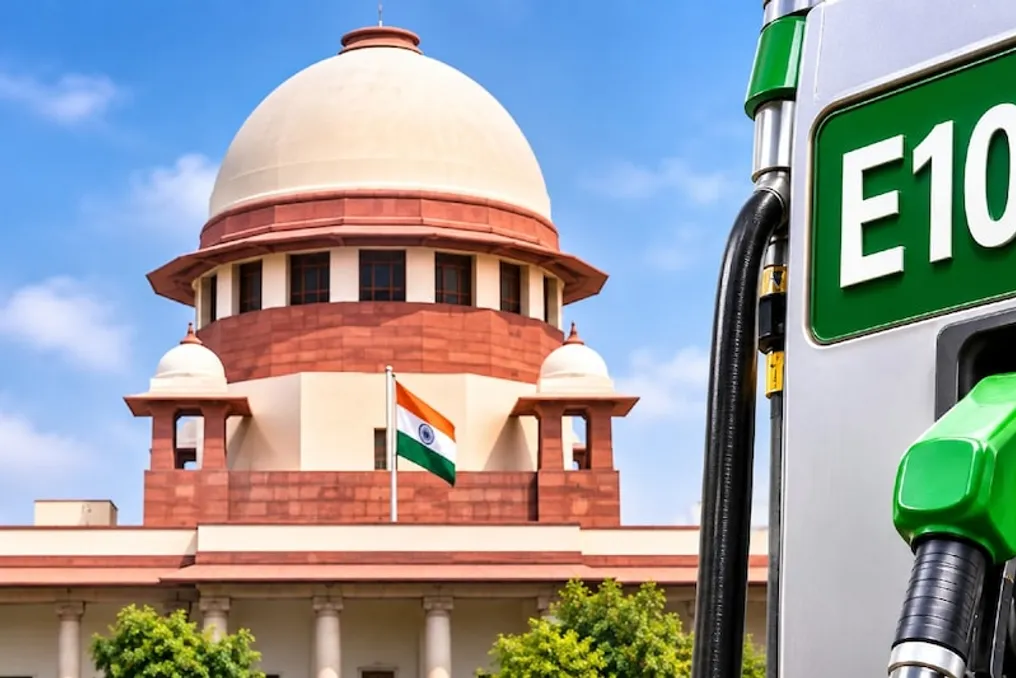
Supreme Court questions government on logistics of supplying fuel for 100% ethanol vehicles
Read more
Aaj Tak
www.aajtak.in

Supreme Court questions government on logistics of supplying fuel for 100% ethanol vehicles

The country is preparing to promote ethanol as an alternative to gasoline. The government recently introduced changes to the rules allowing the operation of flexible fuel vehicles capable of running on 100% ethanol. However, this decision has raised a serious question: how will such a large quantity of fuel be ensured in the country if cars begin to switch entirely to ethanol?

The Supreme Court also highlighted the need to consider the interests of farmers when discussing ethanol policy.

During hearings related to ethanol last Thursday, the Supreme Court requested clarification from the central government regarding the provision of sufficient fuel for vehicles that will operate exclusively on 100% ethanol.

Judges M.M. Sundares and Prasanna B. Varale, citing recent media reports, mentioned that newspapers had published information about the government's permission for using 100% ethanol vehicles. They emphasized that it is crucial to understand how the supply of ethanol for such a large number of vehicles will be managed.

In response to the court's query, Attorney General R. Venkataramani stated that this would require a massive overhaul of production and manufacturing systems. He noted that if the use of 100% ethanol vehicles increases in the future, the country must prepare on a large scale.

During the session, the Supreme Court pointed out the necessity of linking ethanol policy not only to fuel and environmental issues but also to the interests of farmers. Judge Sundares stressed that this situation must be viewed from the perspective of benefit to ordinary citizens, and that the aspect of strengthening the country's farmers is extremely important alongside ecology.

He added that a significant portion of the country's population still lives in rural areas, and the issue of strengthening farmers is not sufficiently covered. The bench stated the need to support broad segments of the population, especially residents of rural areas.

The Attorney General assured that he would take into account the aspects related to farmers in his arguments. One lawyer present at the hearing stated that promoting ethanol would benefit farmers in one way or another. Another lawyer countered that the current central government policy already includes the interests of farmers.

The Supreme Court scheduled the next hearing on this matter for next month.

This issue arose during the consideration of petitions concerning the distribution of ethanol for the ESY 2025-26 period. Previously, on June 30, the Supreme Court ordered the status quo to be maintained regarding the High Court of Karnataka's ruling, which required consideration of increasing ethanol supplies. This was because a petroleum trading company filed a lawsuit with the Supreme Court, claiming that the High Court's ruling could affect the policy of blending 20% ethanol in gasoline.

The Ministry of Transport and Road Affairs issued a notification on October 26, 2026, regarding the amendment of the Central Motor Vehicles Rules of 1989. These changes paved the way for flexible fuel vehicles capable of running on E100, meaning nearly pure ethanol. This implies that the number of such vehicles running on pure ethanol will increase in the country in the future.

Previously, the ministry also changed rules concerning vehicle emission certification, including E100 alongside E85. E85 fuel consists of 85% ethanol and 15% gasoline, whereas E100 contains almost entirely ethanol. Flexible fuel vehicles are designed to run on fuels with a higher ethanol content than regular gasoline. Nevertheless, their engines and fuel systems undergo certain modifications compared to standard gasoline cars.
Similar stories

Old cars like Wagon R can be converted to electric for 2.25 lakh; information on RTO costs and process
Read more
www.aajtak.in

Old cars like Wagon R can be converted to electric for 2.25 lakh; information on RTO costs and process

If you have a desire to purchase an electric vehicle, but the cost of new cars exceeds your budget, owners of old gasoline or diesel cars aged 10–15 years can consider an alternative. Instead of sending the car to the scrap heap due to approaching service life limits and possible restrictions, there is an option to convert the old car into electric transport.

A company based in Bhopal claims that it can convert vehicles manufactured before 2009 into electric vehicles. According to the company, this modification may cost around 2.25 lakh rupees. This approach involves dismantling the engine and fuel system of the old car, followed by installing an electric motor and battery pack.

The technical head of Shriyan Electric Vehicle Private Limited shared information about the process, cost, and necessary documents for electrifying old cars during a conversation with AajTak. He stated that the company has been working in this field since 2019 and has already converted over 500 vehicles using electric kits.

In this conversion, the standard gasoline or diesel engine is replaced by an electric motor, and a battery block, motor controller, and other necessary electrical components are installed. It is important to note that the amount of 2.25 lakh rupees refers to the basic conversion kit; the total cost increases depending on the car model, battery capacity, and other devices used.

Not all old cars are suitable for electrification. The car model, its current condition, available space, and compatibility with the installed electric system are critically important. The company states that it can work with vehicles up to 2009 model year. The technical head emphasized that they can easily convert small vehicles weighing up to 1000 kg into EVs. Models mentioned include compact hatchbacks such as Maruti Omni, Wagon R, Alto, Maruti 800, Swift, Hyundai Santro, and i10.

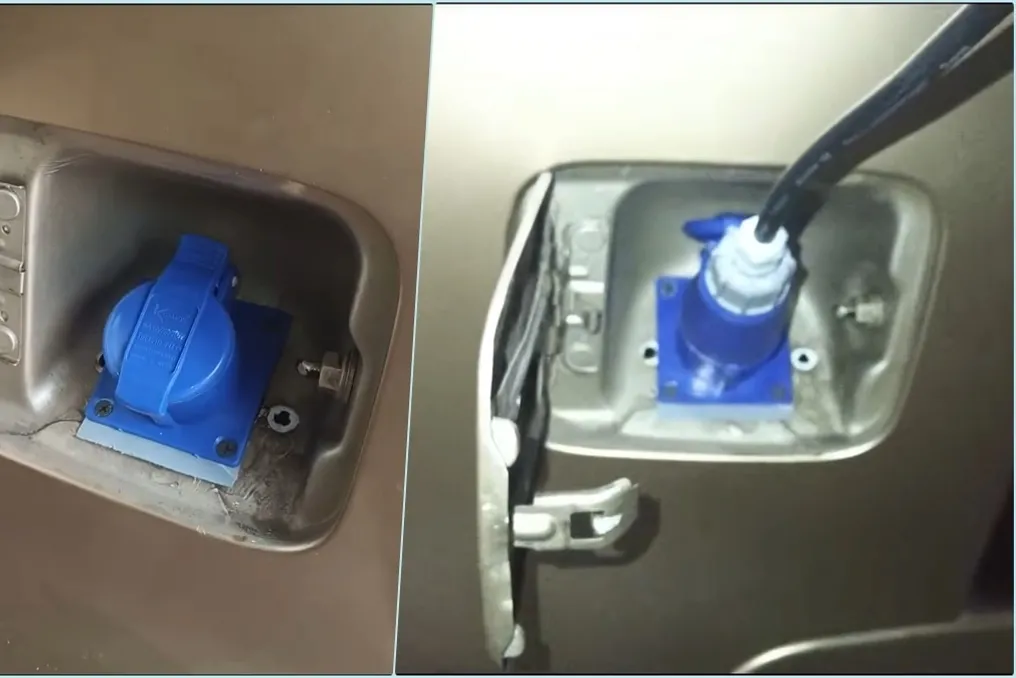
The electrification kit for four-wheeled transport includes approximately 16 components. The client can order installation at their own workshop or purchase the kit and install it themselves in a convenient location. The cost of installing this conversion kit is up to 7,500 rupees for Non-AC models and up to 12,500 rupees for AC models.

The list of components includes: motor (48/60 Volts, 5 kW), controller, gas (accelerator), 3 MCB blocks of 40 Amperes, DC-to-DC converter, battery placement tray, gearbox mounting plate, charger (72 Volts, 20 Amperes), battery (7.2 kWh, 72 Volts, 100 Ah), charging plug assembly, battery capacity indicator, SoC wiring (for displaying battery charge status), gas wiring (with 3-speed and reverse/forward function), power wiring (16–20 sq. mm for connecting the controller, battery, and MCB), relay and connectors, as well as optional installation service.

Shriyan Electric states that it provides a service warranty only for vehicles where the conversion kit was installed in their workshop. This warranty implies that if problems arise after EV conversion, the client must pay for parts replacement, but the labor cost is covered by the company.

This is the most important question in this process. Simply installing an electric motor and battery in a gasoline or diesel car does not automatically make it eligible for legal road use. To make such changes to a vehicle, traffic rules, technical permits, and registration conditions must be complied with. Therefore, permission from the registered RTO of the vehicle must be obtained before conducting the conversion, and all necessary paperwork must be completed.

The company previously handled the RTO matters for vehicles that underwent EV conversion. However, now clients obtain approval from the RTO for their own vehicle, after which it can be converted to an EV. Bhagwan Singh points out that the RTO process for a small hatchback can cost around 24,000–25,000 rupees, which is not included in the conversion price and is paid separately by the client. Furthermore, this amount may vary depending on the regional RTO in the country. Overall, this expense accounts for approximately 60–70 percent of the registration costs of a new car.

The RTO process includes specific fees and documentation procedures. It should be noted that these expenses can vary depending on the specific RTO and location in the country.

Additionally, information on the range and charging time of the electric vehicle is useful, as its practical value heavily depends on the battery capacity and driving range. The distance it can cover on a single charge after converting an old car is determined by the battery pack capacity and the weight of the vehicle itself.

Government permits use of E85 and E100 fuel for vehicles, promoting flexible fuel development
Read more
www.aajtak.in

Government permits use of E85 and E100 fuel for vehicles, promoting flexible fuel development

Vehicles will be able to run without gasoline because the government has legalized the use of E85 and E100 fuels. Although previously there was discussion about the problem with gasoline and dependence on crude oil imports, this situation took a new turn thanks to ethanol. After heated discussions surrounding E20 gasoline, authorities have now paved the way for vehicles running on E85 and E100 fuels, meaning that in the future, car engines can function almost entirely on ethanol instead of pure or blended gasoline.

However, there is an important condition: E100 cannot simply be poured into an existing gasoline car. This is only possible in models specifically designed for this type of fuel. The government has taken significant steps to stimulate the use of ethanol fuels by approving amendments to the Central Motor Vehicles Rules.

The Ministry of Road Transport and Highways published a notification regarding amendments to the Central Motor Vehicles Rules of 1989 dated October 23, 2026. These changes include not only E85 but also E100. This opens up a legal possibility for vehicle manufacturers to create and bring to market cars specifically designed to run on ethanol.

The government notification introduced changes to provisions concerning emission norms, fuel quality, and vehicle inspection, according to rule 115. Various sub-rules now mention both E85 and E100 to establish clear standards for testing and certifying vehicles running on 100% bioethanol. This step is critically important for automakers preparing to introduce E100 fuel vehicles to the Indian market.

Furthermore, within this notification, the limits for vehicle weight were adjusted. In sub-rule (18) of rule 115, the limit for the gross mass of the vehicle was increased from 3000 kg to 3500 kg. It was also clarified that E85 or E100 must only be used in flexible vehicles specifically developed by the OEM for this fuel.

The consideration of these proposed government changes took place in April of this year. Progress in this direction is expected to boost the production and use of flexible vehicles. This is also important for companies planning to launch E100 fuel vehicles in the near future.

E85 and E100 represent fuel mixed with ethanol. E85 contains about 85 percent ethanol, with the remainder being gasoline. Whereas E100 uses almost exclusively ethanol. For operation on such fuel, the engine and fuel system of the vehicle must be appropriately prepared. Consequently, E100 vehicles differ from regular gasoline cars.

E85 or E100 cannot be directly used in standard gasoline cars running on gasoline or E20. E20 contains a maximum of 20 percent ethanol, with the rest being gasoline. The use of fuels mixed with more than 20 percent ethanol, including E100, is only possible in vehicles that have been specially designed for this purpose and possess the necessary certifications. Thus, before filling high-ethanol content fuel in your current vehicle, you must ensure its compatibility.

This government move is seen as vital for advancing flexible vehicles in the country. Such vehicles are prepared to run on a mixture of gasoline and ethanol in various proportions. After the approval of rules related to the use of E85 and E100, manufacturers will find it easier to develop models based on this technology.

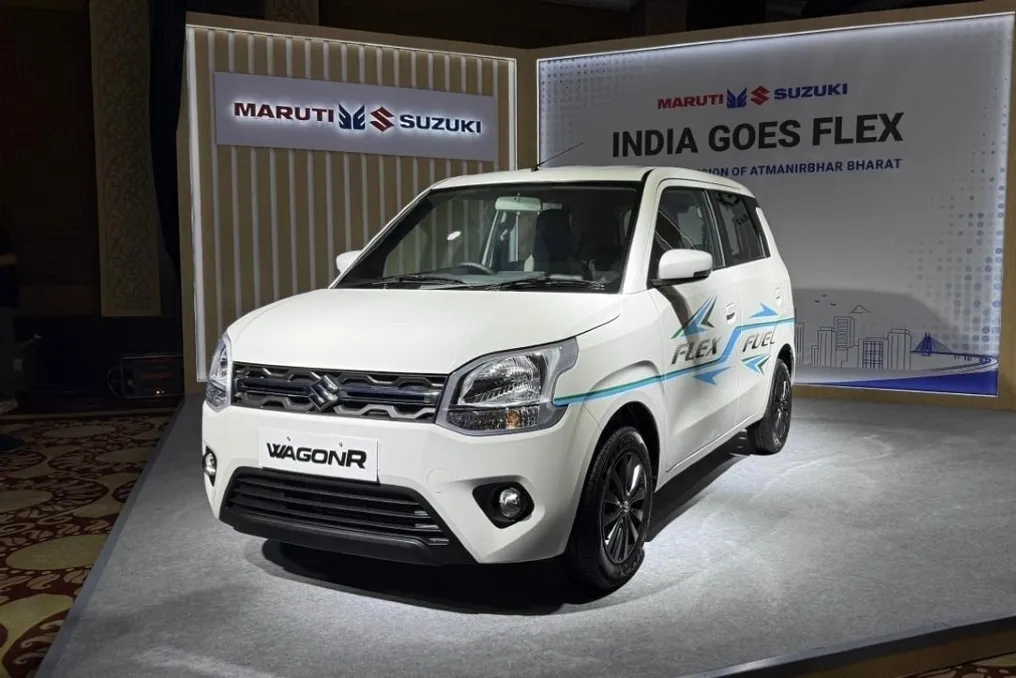
Recently, Maruti Suzuki introduced the Maruti Wagon R Flex Fuel as the first flex-fuel vehicle in the country. The Minister of Road Transport and Highways, Nitin Gadkari, presented this model. At the launch, the company stated that this vehicle runs easily on E85 fuel, which is approximately 20 rupees cheaper than regular gasoline (Rs 102.12 per liter). In Delhi, the price of this fuel is Rs 82.12 per liter.

The WagonR flex-fuel variant was tested by Business Today. The car was driven about 30 kilometers through busy streets, flyovers, and open roads of Delhi. The biggest surprise was that the driving felt exactly like in a regular WagonR, with no noticeable differences in engine smoothness or acceleration.

Popular